Imperial Guard Parade

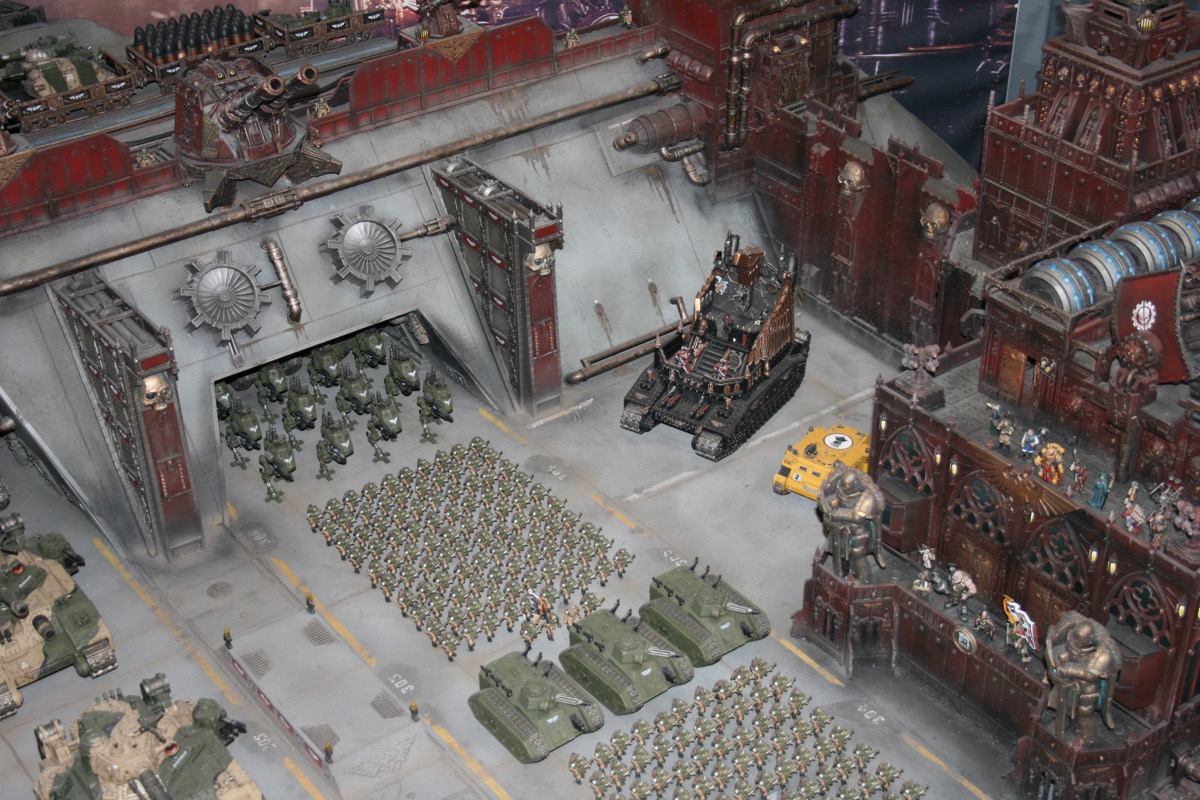
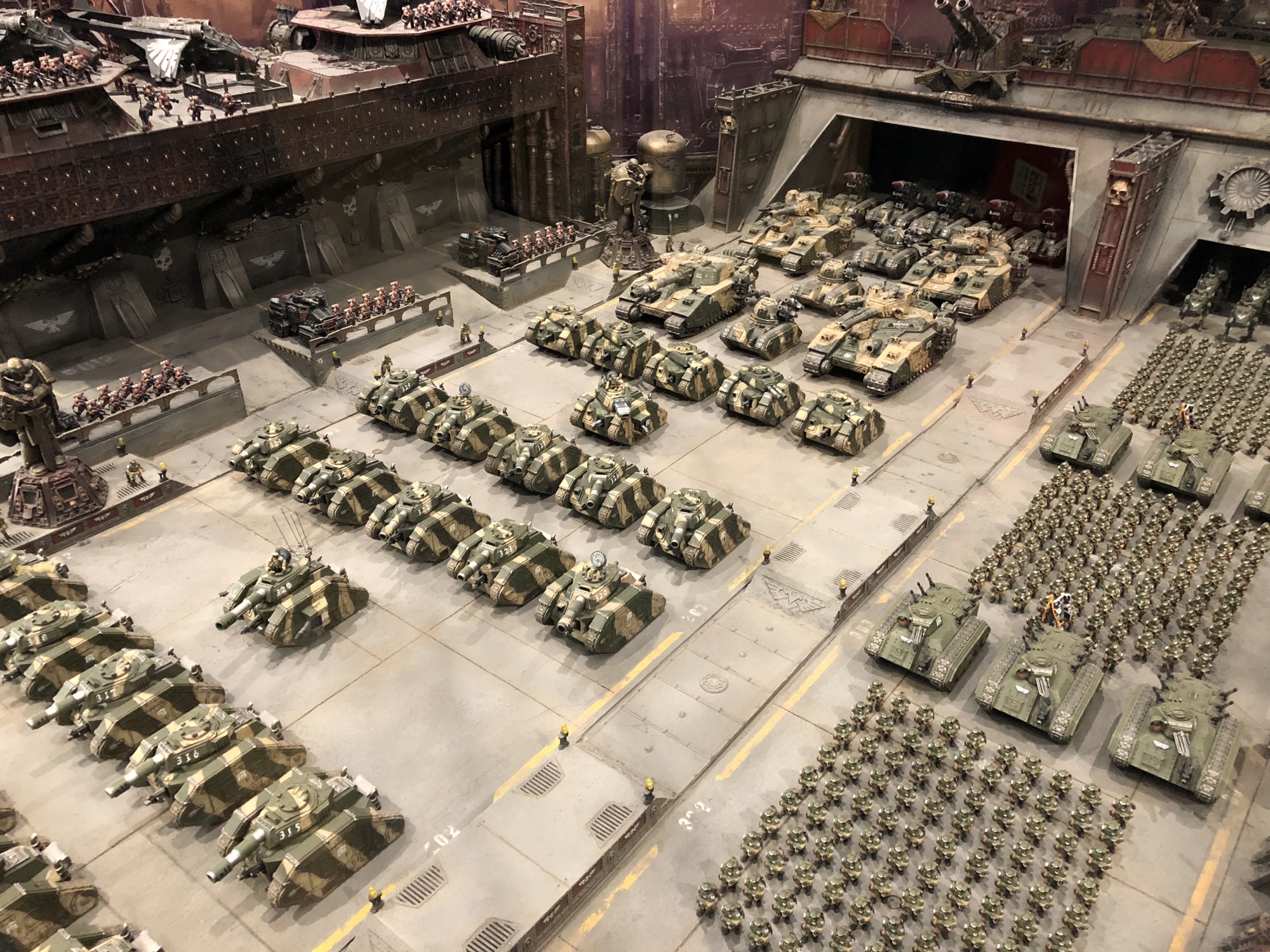
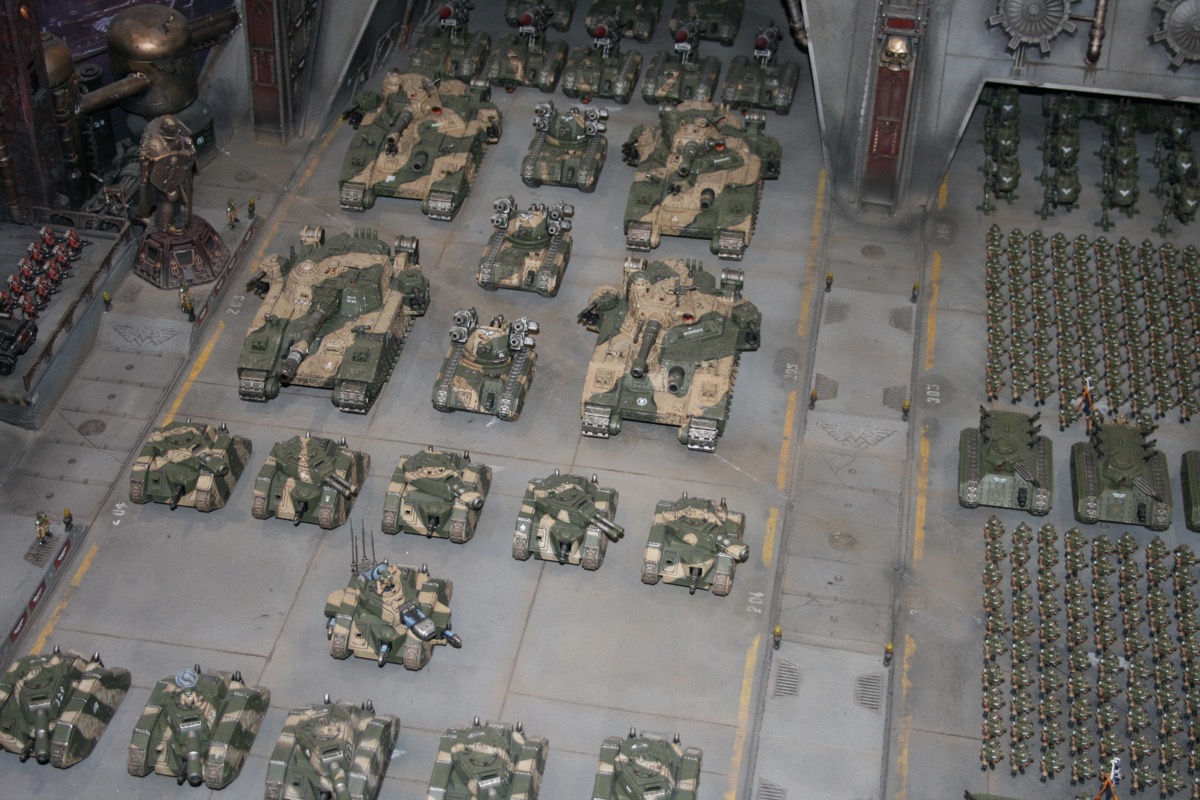
This incredible Imperial Guard Parade was on display at Warhammer World. You can see Leman Russ tanks in front and coming up behind are super heavy tanks like the Baneblade and the Shadowsword.

The Astra Militarum, also known as the Imperial Guard, is the largest coherent fighting force in the galaxy. They serve as the Imperium of Man’s primary combat force and first line of defence from the myriad threats which threaten the existence of the human race in the late 41st Millennium.

Imperial Guard Parade

It is comprised of countless billions of men and women, hundreds of thousands of different regiments, supported by a vast array of light and heavy armoured vehicles that provide the Guard’s primary offensive punch.

In the display there were also Sentinel walkers, infantry and Chimera APCs as well.

Imperial Guard Parade

Watching the whole thing was Imperial officials and a solitary Imperial Fists Rhino was in there too.

Terrax Pattern Termite Assault Drill

Terrax Pattern Termite Assault Drill at Warhammer World

Terrax Pattern Termite Assault Drill
Terrax Pattern Termite Assault Drill at Warhammer World

A specialised transport vehicle, the Termite is capable of deploying a full squad of warriors onto the battlefield whilst bypassing enemy fortifications and sentries.

Terrax Pattern Termite Assault Drill at Warhammer World

It is capable of tunnelling rapidly through even the densest of materials at speeds comparable to surface transport craft, thanks to the grinding drill of the Termite which utilises a linked array of melta-cutters and phase-shield generators to aid in its progress.

Terrax Pattern Termite Assault Drill at Warhammer World

Once at its target location, it emerges onto the surface, or even directly into the lower level of macrofortifications, scattering nearby enemies with its melta-cutters before disgorging its deadly cargo.

SdKfz 251/8 half track

The Sd.Kfz. 251 (Sonderkraftfahrzeug 251) half-track was a World War II German armored fighting vehicle designed by the Hanomag company, based on its earlier, unarmored Sd.Kfz. 11 vehicle. The Sd.Kfz. 251 was designed to transport the Panzergrenadier (German mechanized infantry) into battle. Sd.Kfz. 251s were the most widely produced German half-tracks of the war, with at least 15,252 vehicles and variants produced by seven manufacturers.

This Sd.Kfz. 251 was on display at Bovington. It was captured by British forces in the desert. One of the pictures taken after its capture shows a barrel strapped to its right exterior. It has a special step near the rear doors that identifies it as an ambulance.

Sd.Kfz 251 half track

I previously published on the blog a photo of the OT-810 at Duxford. The OT-810 is a post war production copy of the German World War Two Sd.Kfz 251 half track.

I have a 15mm Flames of War versions on my workbench:

In addition I have an old SDD one that was on the workbench too:

SdKfz 251 Miniatures Gallery

Weathering Techniques for Aeronautica Imperialis

I did quite like this video about weathering techniques for Aeronautica Imperialis models.

Aeronautica Imperialis models on my workbench:

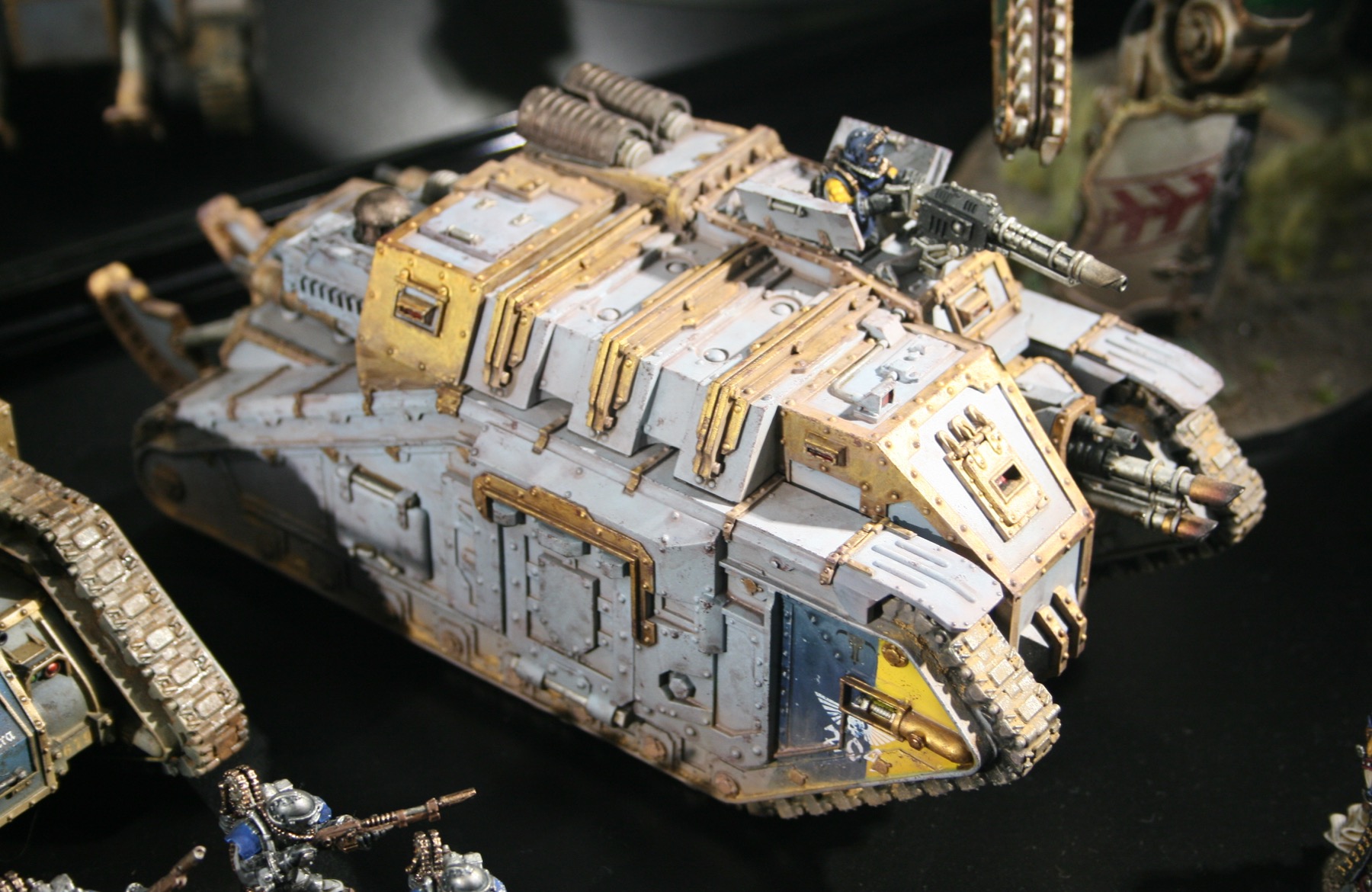
Solar Auxilia Dracosan Armoured Transport

The Dracosan Armoured Transport is manufactured to standards only usually required of war machines destined for service with the Legiones Astartes. It is large enough to accommodate a full strength Solar Auxilia Infantry Section of twenty auxiliaries, and heavily armoured enough to protect them from intense enemy fire.

Solar Auxilia Dracosan Armoured Transport

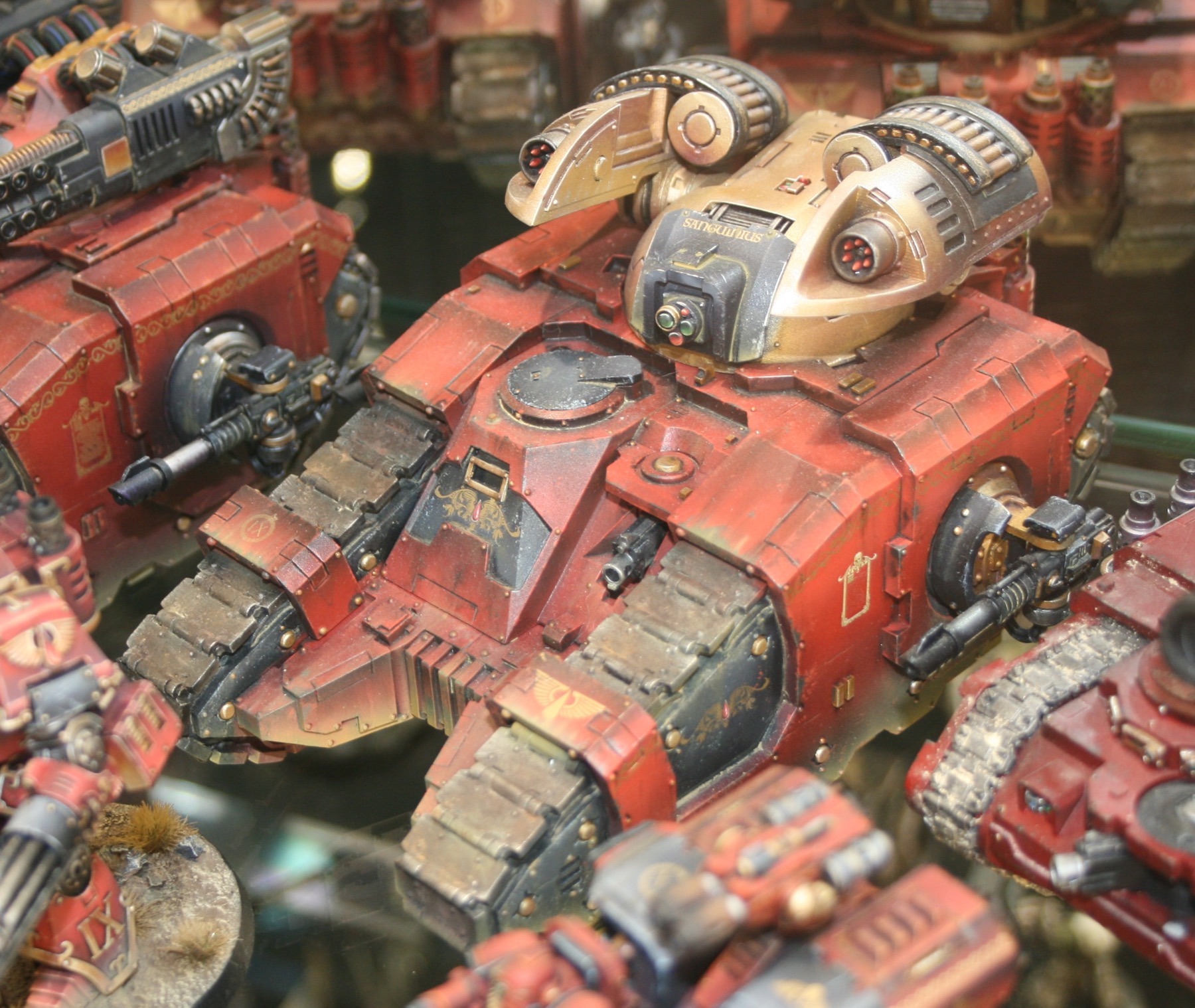
Legion Sicaran Arcus Strike Tank

This Legion Sicaran Arcus Strike Tank was on display at Warhammer World.

Legion Sicaran Arcus Strike Tank

Once the Arcus strike tank was one of the most advanced support platforms available to the Space Marine Legions, but for reasons long since lost to the past, the Adeptus Mechanicus holds the pattern as a slight against the Omnissiah and refuses to produce or repair such vehicles. Without the specialised knowledge of the Machine God’s adepts, the advanced launchers of the Arcus have slowly failed and been replaced with more common rotary launchers and stocks of its rare warheads have dwindled. Now it is used by the Space Marine Chapters that retain examples of this rare pattern as a fast strike tank, racing it forwards to saturate a target area with incendiary devices of a more commonplace provenance and using its renowned speed to escape unscathed, enabling them to clear otherwise redoubtable bunkers and fortresses with brutal efficiency.

Javelin Attack Speeder with Missile Launchers

This Javelin Attack Speeder with Missile Launchers was on display at Warhammer World.

It was part of The Battle of Signus Prime diorama at Warhammer World, where the Blood Angels Legion are advancing towards the Cathedral of the Mark across the devastated landscape of Signus Prime.

Larger and more heavily armoured than the common pattern of Land Speeder, the Javelin Attack Speeder is a nigh-irreplaceable relic of a bygone age of technological mastery. Gravitic nullification plates, the secret of whose production and maintenance have long since been lost, allow the Javelin to mount an array of heavy weaponry more akin to a heavy tank destroyer than a nimble Land Speeder, allowing them to make pinpoint strikes on enemy armour or infantry with devastating lascannon or missile barrage. Those Chapters of Space Marines whose histories stretch back into the grim days of the Imperium’s founding may, if they are fortunate, still possess a few justly revered Javelins within the sanctified depths of their armouries.

Land Rover Centaurs in Wessex

The Laird Centaur was the brainchild of Laird (Angelsey) Limited and was the result of intensive engineering development combining the Land Rover and the Alvis designed tracks of the FV101 Scorpion light tank. 

Many years ago I wrote and had published an article in Wargames Illustrated called Wessex: The Second English Civil War.

Wessex: The Second English Civil War

On March 17th, 1998, Royalists rose up in defiance and took control of key government buildings, airfields and broadcasting stations in the West Country and Cornwall. Supported by army units and Sea Harriers from what used to be the Royal Navy, there was little bloodshed. People came out onto the streets and cheered. The King who had been in exile in Canada flew back and landed at Bristol airport. The Kingdom of Wessex and Duchy of Cornwall was born. The Republican Prime Minister was, of course, very angry at what had happened. He mobilised his Democratic Guards and ordered them to defeat the Royalist rebellion. The Second English Civil War had started. Three hundred and thirteen years after the last pitched battle to take place on English soil, there were going to be more.

My recent blog post on the Laird Centaur Half Track and their proposed different versions got me thinking about what if the Laird Centaur Half Track was a commercial and military success and was used extensively by both sides in the Wessex Civil War.

In the marketing materials they did advertise an armoured version. This got me thinking about scenarios involving an Armoured Laird Centaur Half Track in Wessex.

A Democratic Guard patrol on the M4 near Reading, comprising three Armoured Laird Centaur Half Tracks and a Scorpion Light Tank is ambushed by Royalist Special Forces. The objective of the ambush is to disable the vehicles and then withdraw.

Royal Marines Armoured Laird Centaur Half Tracks are guarding the entrance to the 40 Commando Royal Marines base at Norton Manor Camp. There then follows an assault by Republican paratroopers to rescue POWs being held at the camp.

A Royalist convoy, with Laird Centaur Half Tracks is approaching Gloucester when it is ambushed by a force of Democratic Guards using light scout vehicles, motorbikes and a single Armoured Laird Centaur Half Track.

Democratic Guards using Laird Centaur Half Tracks are landed on the beaches of North Somerset by landing craft, to sabotage the nuclear power station at Hinkley Point. Local royalist forces rush to defend the power station and push the Democratic Guards back into the Bristol Channel.

I’ve not found any models of the Laird Centaur, but I do remember once an article in a magazine about how to convert a 1/76th version using the (then) JB Models Land Rover and Scorpion models. Both kits are now available from Airfix.
Consolidated PBY Catalina

The Consolidated PBY Catalina is a flying boat and amphibious aircraft that was produced in the 1930s and 1940s. It was one of the most widely used seaplanes of World War II. Catalinas served with the RAF, as well as every branch of the United States Armed Force, and in the air forces and navies of many other nations. The last military PBYs served until the 1980s. The aircraft continues to fly as a waterbomber (or airtanker) in aerial firefighting operations in some parts of the world. None remain in military service.

This PBY Catalina was on display at RAF Cosford. On one visit it was outside on display.

On another visit it was inside.

I have always found this an interesting plane design. I once had a 1/300th metal model of it, which never stayed together due to the way the wings are connected to the fuselage. That was a badly designed model kit.

This was a Royal Danish Air Force Catalina.

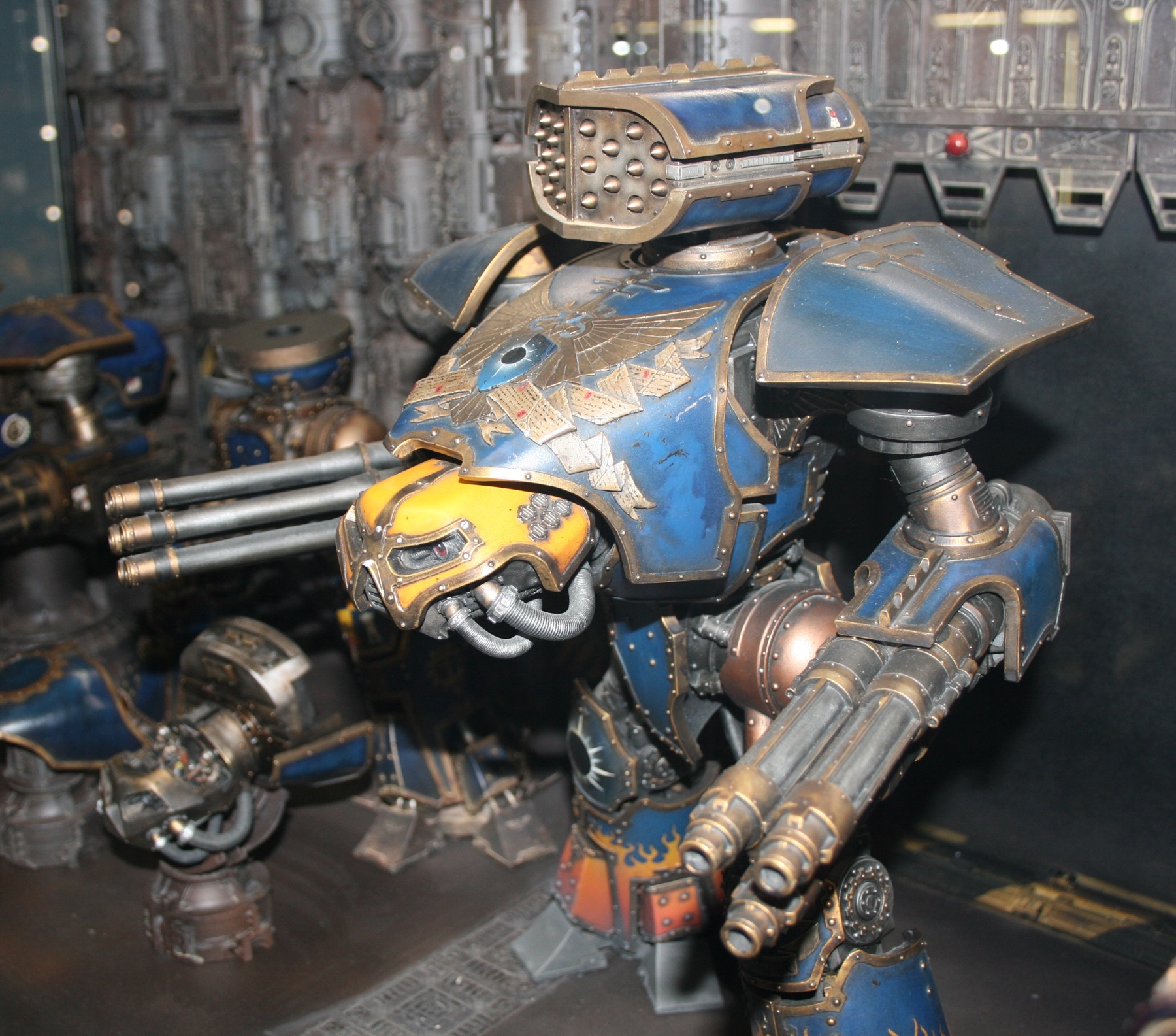
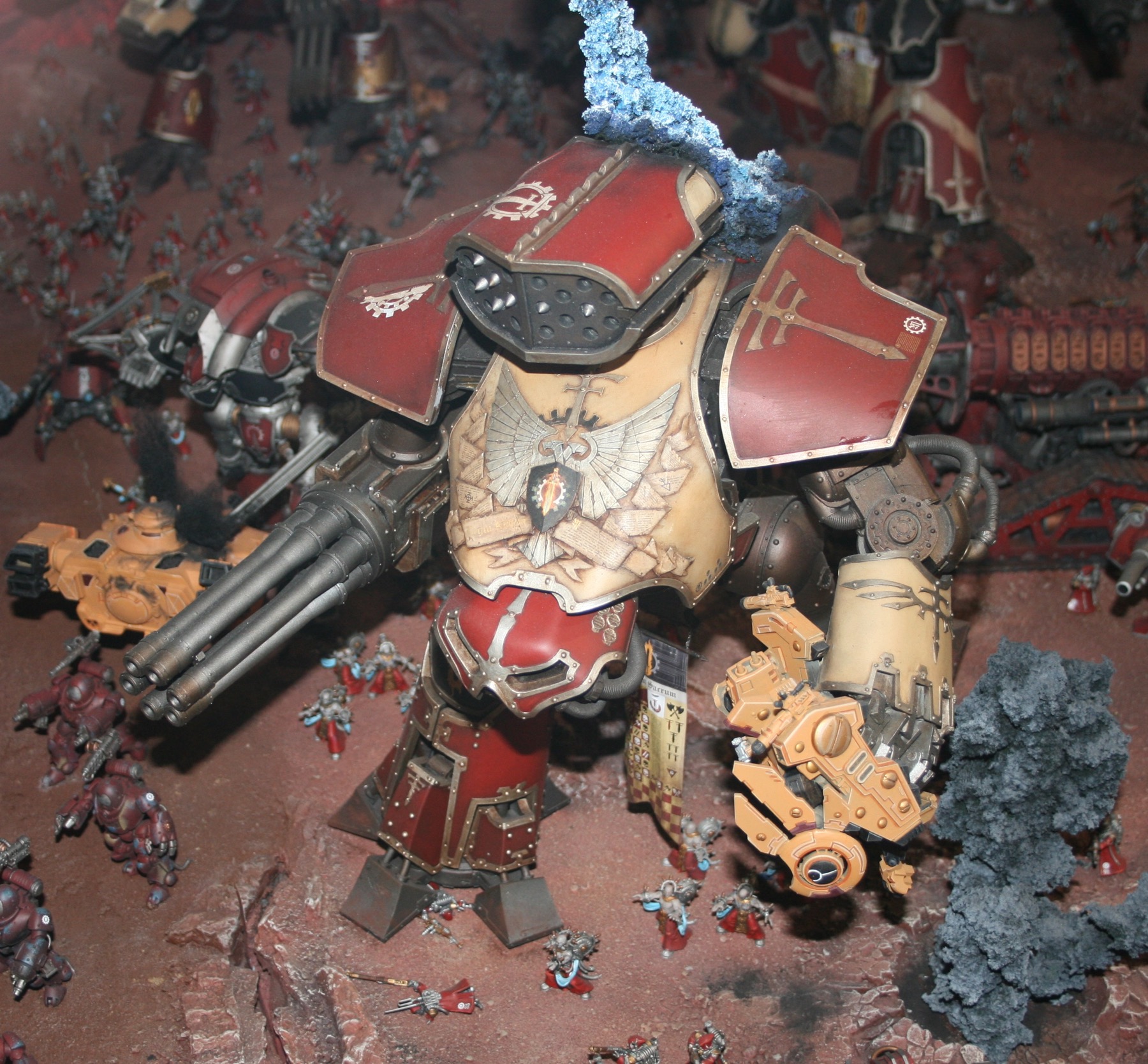
Forge World Reaver Titan

These huge Mars Pattern Reaver Titans were on display at Warhammer World.

The Reaver Battle Titan is a frontline combat titan, designed for direct confrontation with the enemy.

Reavers primarily serve as vanguards for the Warlords, there to fan out and prevent the larger and slower Warlords from being flanked, so they can keep the enemy boxed into the Warlord’s field of fire.

Reaver Battle Titan Miniatures Gallery