Plastic Land Raider Proteus perhaps?

With the announcement of the plastic Spartan Land Raider Assault Tank it got me thinking, will we also a plastic Land Raider Proteus?

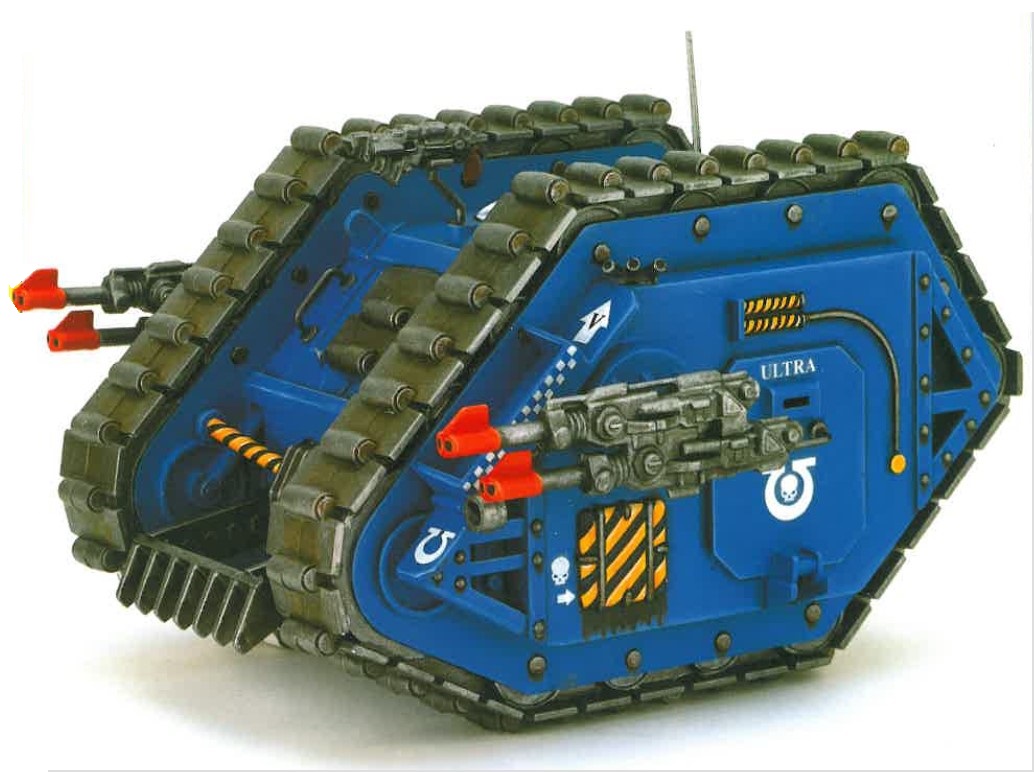
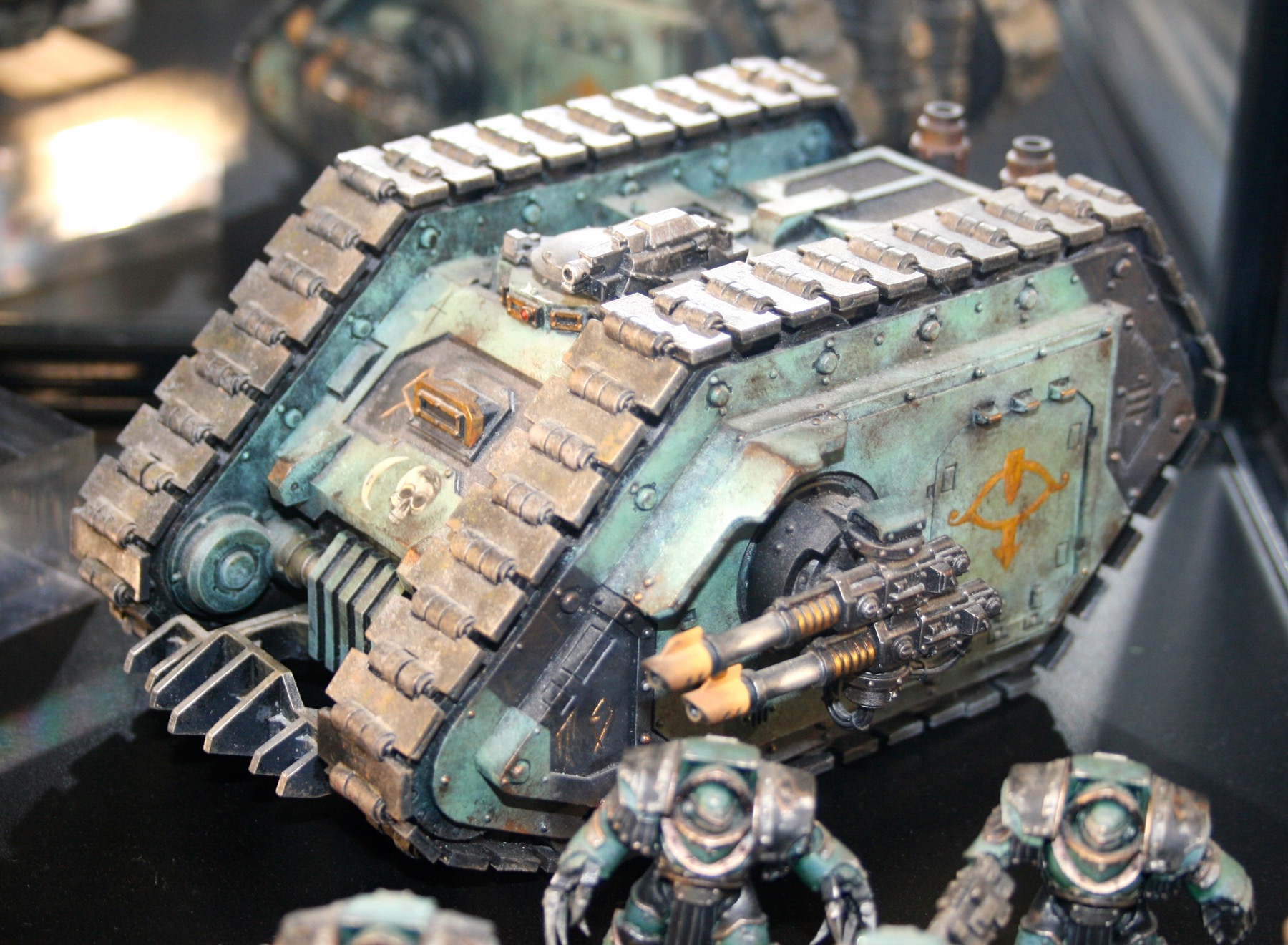
Land Raider Proteus
Land Raider Proteus on display at Warhammer World

There is a resin model from Forge World currently available.

It wouldn’t be too much of a step to have a plastic kit of this Land Raider? Essentially the Spartan is a stretched Land Raider.

Spartan Assault Tank

It would mean producing a new hull for the plastic tracks, but that would mean replacing potentially one sprue with another.

Of course this would mean returning full circle to the original plastic Land Raider model which was released in 1988, well nearly.

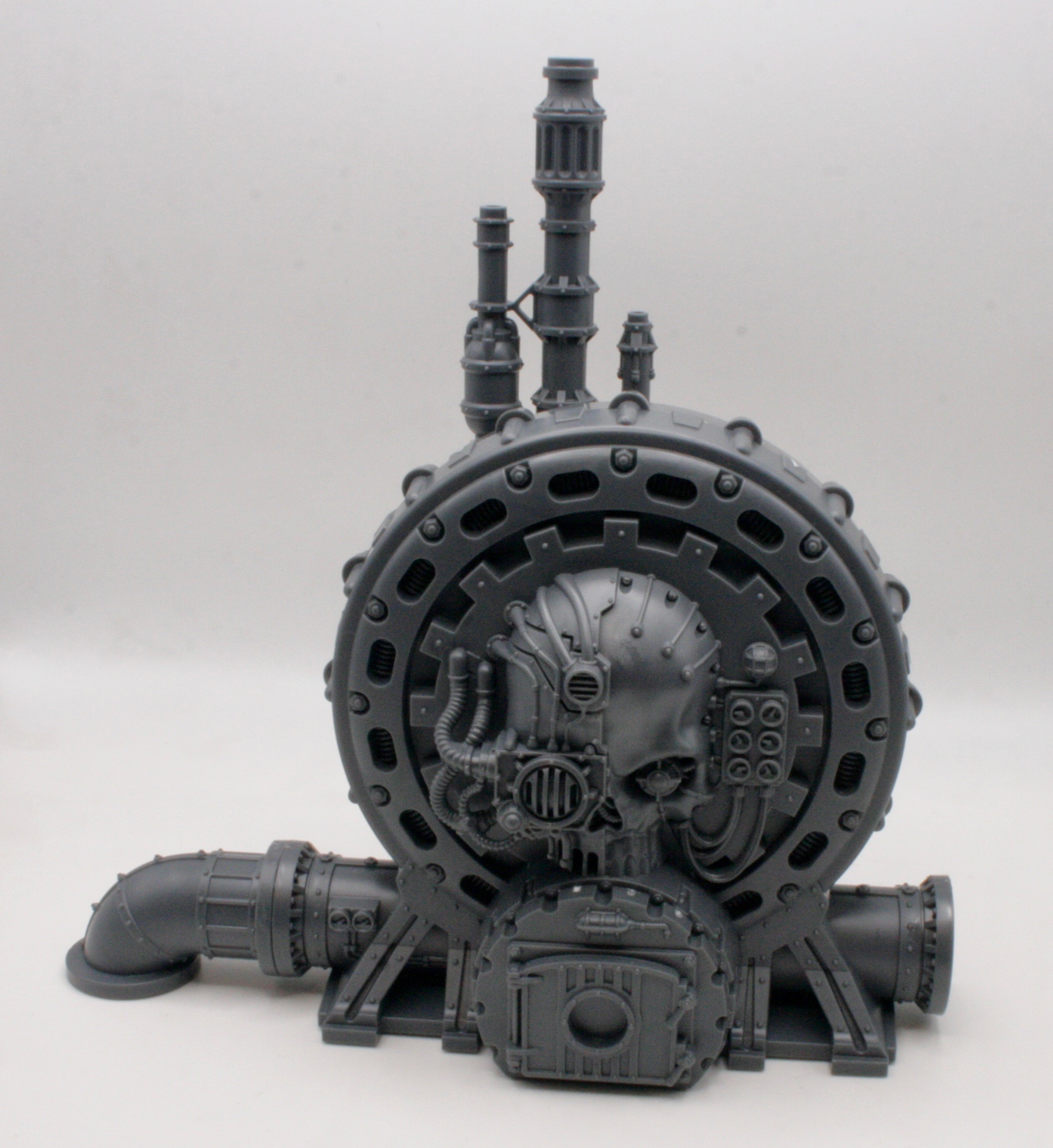
Constructing the Haemotrope Reactor

After picking up a copy of Warhammer Imperium with a Ruined Factorum I did start thinking about whether to get some future issues, or picking up some past issues. In the end I bought issue 27 which came with a Haemotrope Reactor.

The sprue has fifteen parts. I really do like the thick plastic they use on these kinds of models, gives them real heft and weight. The model goes together quite easily.

The instructions do provide advice on which parts to leave to dry before continuing the build. I made the mistake of removing parts 11a, 11b and 11c whereas the instructions were clear to do each part individually and affix it to the model, before moving onto the next piece. So I had to guess where they went.

The reverse of the model.

The next stage will be a white undercoat.

Plastic Spartan Assault Tank

Over on the Warhammer Community site they have revealed a new plastic Spartan Assault Tank .

Spartan Assault Tank

The mighty Land Raider is a design that has stood the test of time ever since Arkhan Land dug it out of the catacombs on Mars – but what’s a Legion Praetor to do when their prized Terminator squads can’t quite squeeze into its armoured hold? They reach for the Spartan Assault Tank – and now, with a stunning new plastic kit, you can too.

I do quite like the new model, the retro vibe, I might get one.

Also known as the Land Raider Spartan, this armoured carrier was designed to punch through the most overwhelming enemy defences and deliver a knock-out blow of massed Astartes infantry. It became a common assault vehicle during the Great Crusade, where its nigh-impervious chassis could shrug off regular anti-tank weapons as it ferried up to 26 Legionaries – or 13 Terminators – into the fray, with a surprising turn of speed for its size.

Of course we have had the Forge World resin version for some time now, though this has been deleted from the Forge World store.

This was based on a conversion from White Dwarf 119.

The article in White Dwarf had instructions for the conversion of a Land Raider and a Rhino into two new Imperial vehicles. One was the Spartan, Terminator Battle Tank using the kit parts with the addition of plastic card or cardboard. and an Imperial Tank Hunter utilising the remainder of the parts from the two kits.

The article also had an overview of the Spartan Assault Tank.

Horus had thrown around the captured Adeptus Mechanics city of Aries Primus. This was then the second city of Mars and the largest single source of war munitions in the Imperium. With the city in Horus’ hands, the besieged Earth stood no chance against the forthcoming attack from his Rebel forces. Only by recapturing Aries Primus and its weapons factories could Earth’s hard-pressed forces be resupplied. Horus had ordered a defensive plasma ring to be constructed around the city and called it the Ring pair can shoot against targets on that of Death. Without vehicle transport, even the Terminators were unable to get through. The Imperium had lost most to hit with each pair – so either both of its armoured carriers in the first battle for Aries Primus, and facilities to replace them were meagre. So, taking what spare parts and production facilities were available elsewhere, the Spartan and vehicles much like it were hastily devised. Although many died attempting to cross the Ring of Death, it was eventually penetrated and destroyed, and the city was carried thanks to the devotion and sacrifice of the Terminator Suicide Squads. The Spartan design proved so successful that it was refined and retained as a standard part of Imperial equipment.

The Spartan is a special conversion based on the well known Land Raider. The extra luggage space and open-top main hatch are designed to accommodate the extra bulk of Space Marines wearing Terminator Armour. The Spartan is armed with two sets of twin lascannon, exactly as the standard Land Raider, and it is provided with an additional forward facing heavy bolter and rear facing bolt gun. Both these hull-mounted weapons are designed to be operated by a Terminator standing in the Spartan.

 

Drybrushing some tiny planes

I did some more painting of my Asuryani Flyers. These are the Asuryani Flyers (though I think of them as Eldar Flyers) that came with the Wrath of Angels boxed game. You get three Nightwing fighters, in the Wrath of Angels boxed game, you also get three Phoenix Bombers.

I had given the models a base coat of Ork Flesh contrast paint. After touching up bits of the model that I had missed, I then gave the models a drybrush of a green dry paint to bring out the highlights.

This is one of the Nightwing fighters.

This is a Phoenix Bomber.

Hawker Hart

This Hawker Hart was on display at RAF Cosford.

The Hawker Hart is a British two-seater biplane light bomber aircraft that saw service with the Royal Air Force (RAF). It was designed during the 1920s by Sydney Camm and manufactured by Hawker Aircraft. The Hart was a prominent British aircraft in the inter-war period, but was obsolete and already side-lined for newer monoplane aircraft designs by the start of the Second World War, playing only minor roles in the conflict before being retired.


Constructing the Ruined Factorum ruin

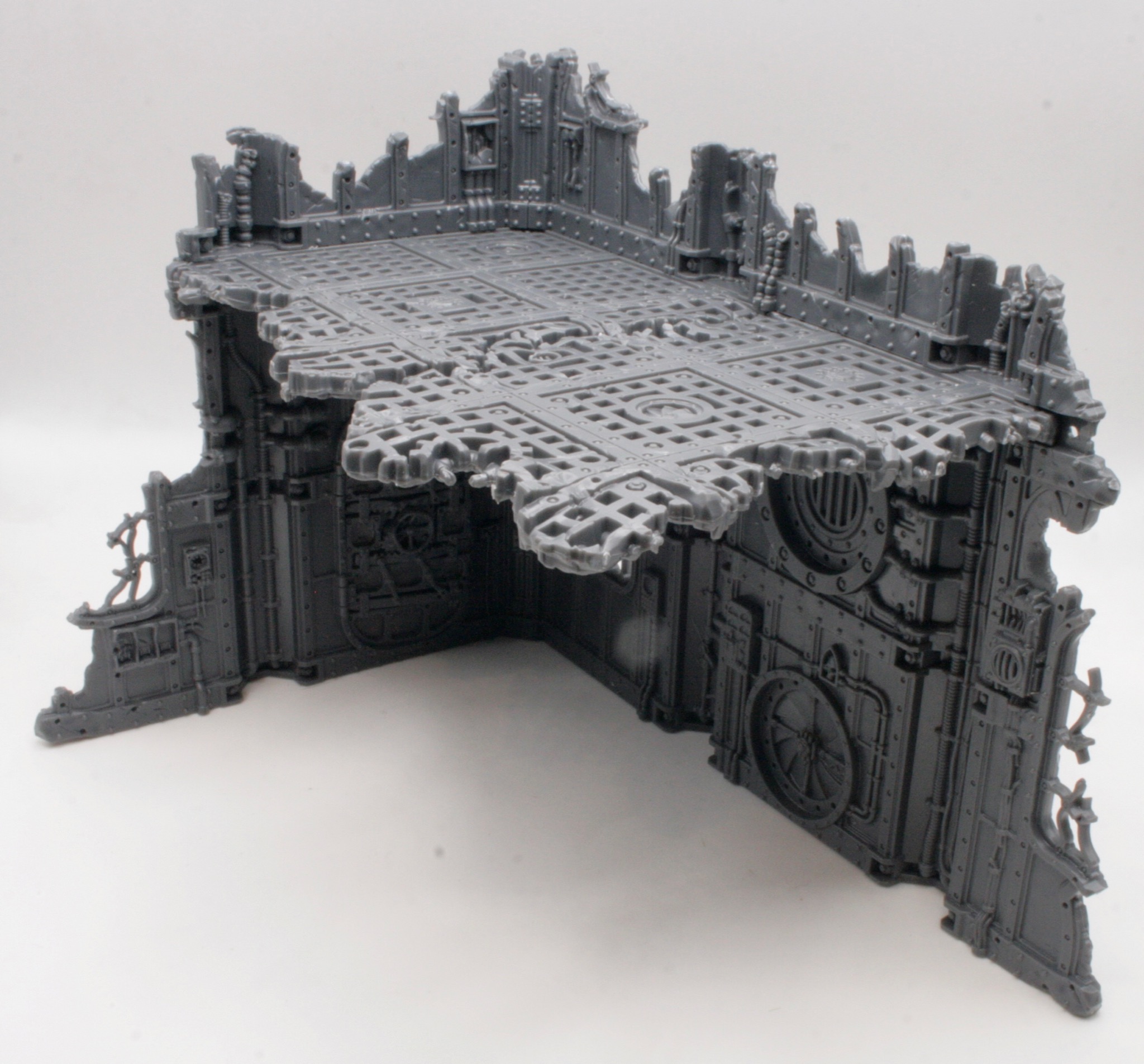
A couple of weeks back I bought the  latest issue of the part work series Warhammer 40000 Imperium. I usually see the first few issues of part works in the newsagents or at WHSmith, so was interested to see they had issue #31 in stock. I haven’t really been paying attention to this series, however I thought I would see what was “free” with his issue and I was quite intrigued to see they had a Ruined Factorum sprue. So I bought it.

The model has two pieces, a larger ruined building and a smaller ruined corner. The larger ruined building has five parts. Two walls, two floor pieces and a skull Cog Mechanicum symbol. I really do like the thick plastic they use on these kinds of models, gives them real heft and weight.

The first stage is to affix the skull Cog Mechanicum symbol to the round hole in the wall.

Then glue the two walls together, letting it dry before adding the floors.

The other side.

The walls look like metal rather than stone. This has got me thinking about how to paint the model.

The next stage will be a white undercoat.


Percival Provost T.1

The Percival P.56 Provost is a basic trainer aircraft that was designed and manufactured by British aviation company Percival.

The Provost entered service with the RAF during 1953 and quickly proved to be more capable than the preceding Prentice. It was a relatively successful aircraft, being exported for multiple overseas operators. Various models were developed, both armed and unarmed, to meet with customer demands. The Provost later adapted to make use of a turbojet engine, producing the BAC Jet Provost. During the 1960s, the type was withdrawn from RAF service in favour of its jet-powered successor. It continued to be used for decades after with various export customers.


Constructing the Ruined Factorum smaller corner

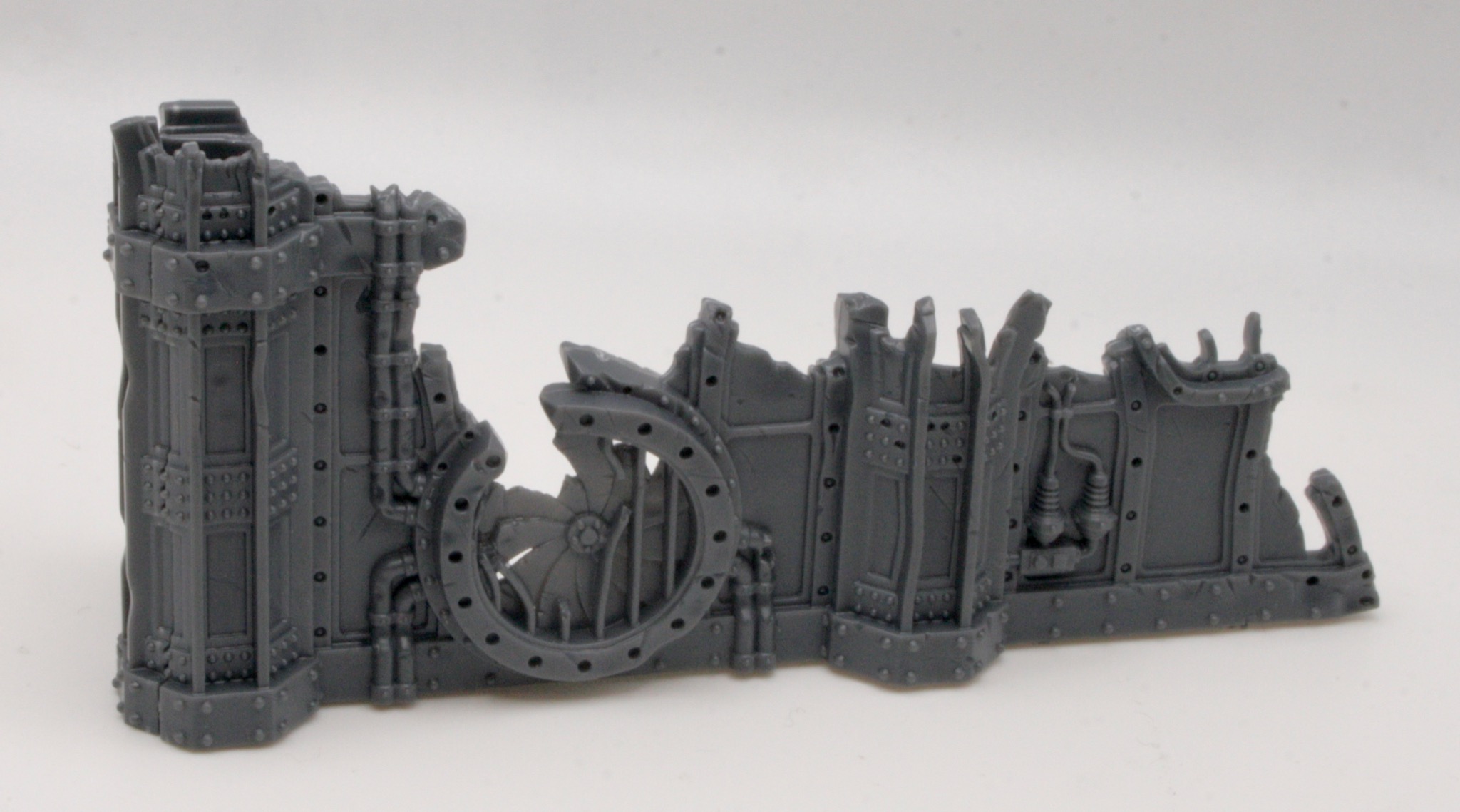
Last week I bought the  latest issue of the part work series Warhammer 40000 Imperium. I usually see the first few issues of part works in the newsagents or at WHSmith, so was interested to see they had issue #31 in stock. I haven’t really been paying attention to this series, however I thought I would see what was “free” with his issue and I was quite intrigued to see they had a Ruined Factorum sprue. So I bought it.

The model has two pieces, a larger ruined building and a smaller ruined corner. The smaller corner piece has two parts and they fit together easily.

The other side.

The next stage will be a white undercoat.


Drybrushing the Grot Bommers for Aeronautica Imperialis

I have been working on my Grot Bommers for Aeronautica Imperialis. The Grot Bommers are one of my favourite planes from Aeronautica Imperialis.

Having constructed the models I gave them a white undercoat. This was then followed by a base coat of Blood Angels Red contrast paint.

I did quite a thick coat, though reading round the use of contrast paints, two or more thinner coats would have been better. Something to do in the future with future models and contrast paints. I am even tempted to repaint my Adeptus Astartes flyers.

After touching up bits of the model that I had missed, I then gave the models a drybrush of Astorath Red dry paint to bring out the highlights and this actually toned down some of the dark patches I had by using the contrast paint.

The second of the two Grot Bommers.

Next stage will be adding the detailing before washing the model.

Royal Aircraft Factory S.E.5a

The Royal Aircraft Factory S.E.5 is a British biplane fighter aircraft of the First World War. It was developed at the Royal Aircraft Factory. It was one of the fastest aircraft of the war, while being both stable and relatively manoeuvrable. 

A formidable fighter, second only to the Sopwith Camel in reputation, the S.E.A was the most successful Royal Aircraft Factory design.

Wartime urgency meant five companies produced 5,125 S.E.5 aircraft in less than 18 months.

The S.E.5a at RAF London was one of a fleet of Hendon-based S.E.5a aircraft operated by the Savage Skywriting company from 1924 to 1930. It was built in Birmingham In 1918 and flew with the RAF Occupation Forces In Germany In 1919.