Adeptus Titanicus Manufactorum Imperialis

I have had the Manufactorum Imperialis box on my wishlist for a while now.   When I visit a gaming store I always promise myself that I will buy it if there isn’t something else I want or what I want isn’t in stock. Alas even when it has been at the top of my shopping list I have found it was either not stocked or unavailable. So was pleased to receive the box recently as a present.

The Manufactorum Imperialis box allows you build terrain and scenery for your Adeptus Titanicus battle.
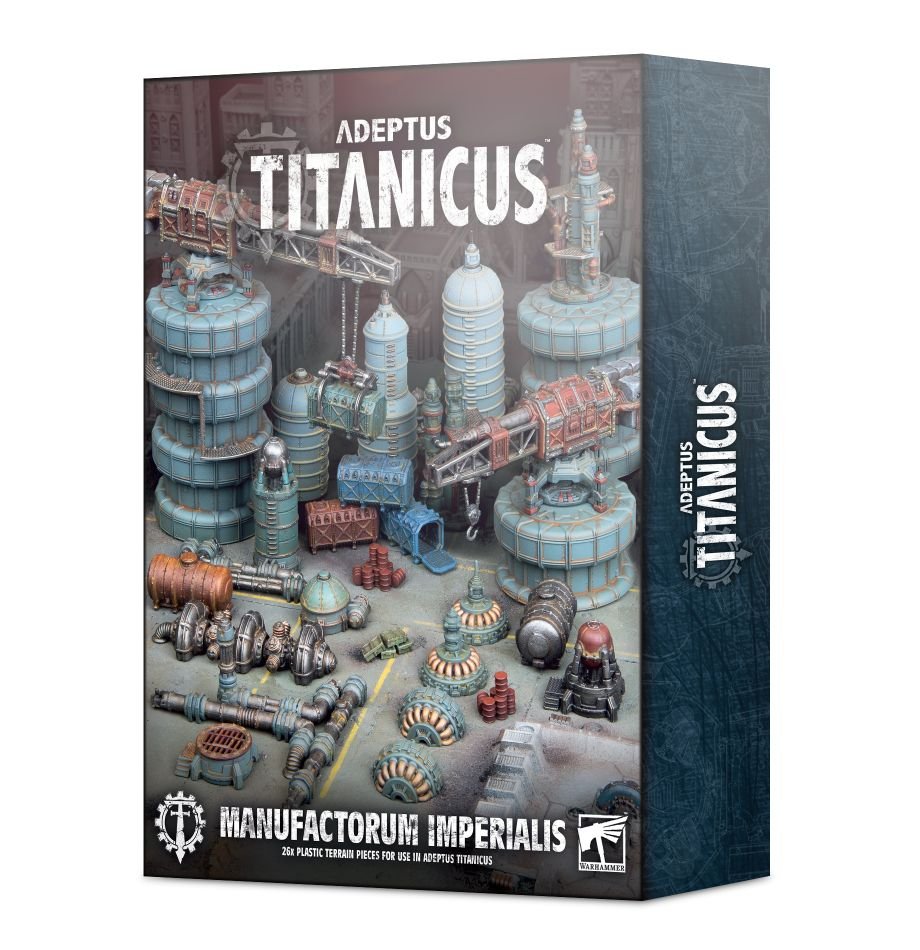
Across the war-torn worlds of the Age of Darkness, Titans battle amongst ruined cities. Some of the most hotly contested battlefields are industrial sectors, their resources greatly desired to repair and refuel the mighty god-machines and their allies.

The Manufactorum Imperialis box has 234 parts to build 26 pieces of terrain.
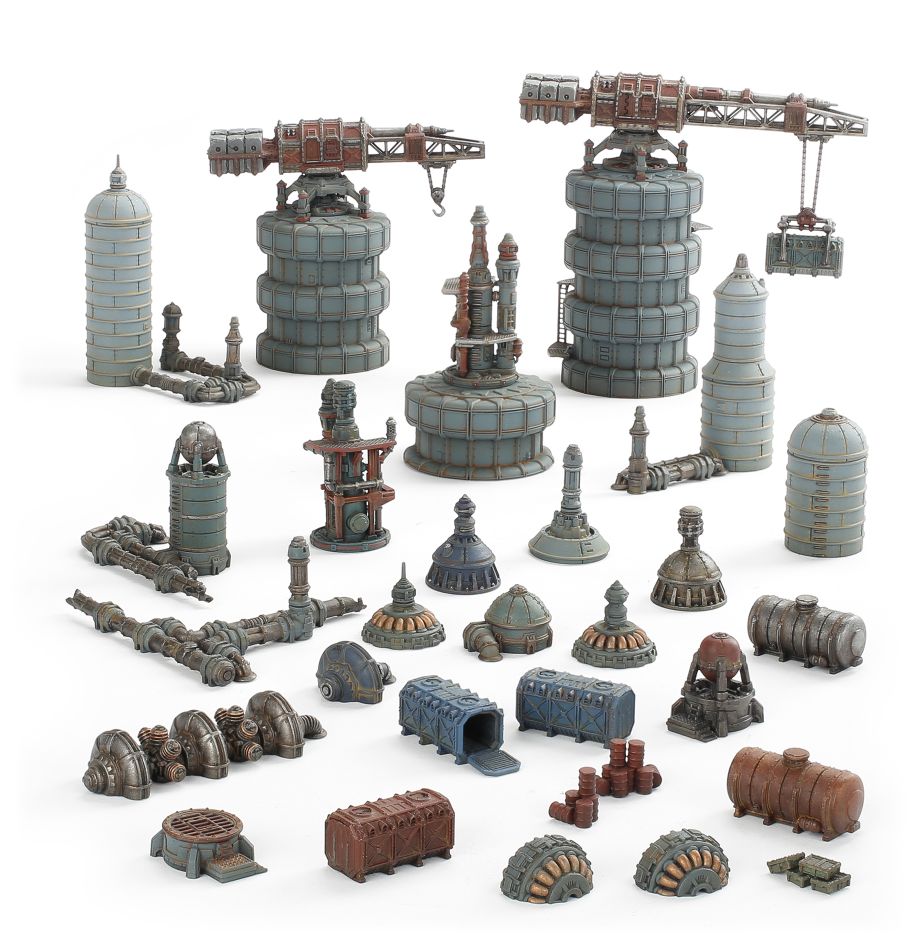
I do think that the box does show that GW has both the potential and the technical capability to deliver an Adeptus Titanicus version of Epic 40000 or (Epic) Space Marine in this new(ish) scale. Technically they can do it, however I suspect the reason they wouldn’t is that they don’t have the capacity to stock and sell the range of models required (and would be demanded), and I also think there is a real risk it would (at the larger scale compared to Epic) it could cannibalise sales of the full size Warhammer 40K. There is also the pricing issue, I would expect the prices of any Adeptus Titanicus scale tanks to be quite high.

For example original metal 1997 Epic 40000 Thunderhawk was £7.00, whereas the Aeronautica Imperialis Thunderhawk plastic kit has a list price of £28 four times as expensive. Yes it has been over twenty years, but even so this means we would be paying over £6 for an Ork vehicle and £12 for a Land Raider if GW ever did go down a path of making vehicles and infantry for Adeptus Titanicus.

Ah well, one can dream.

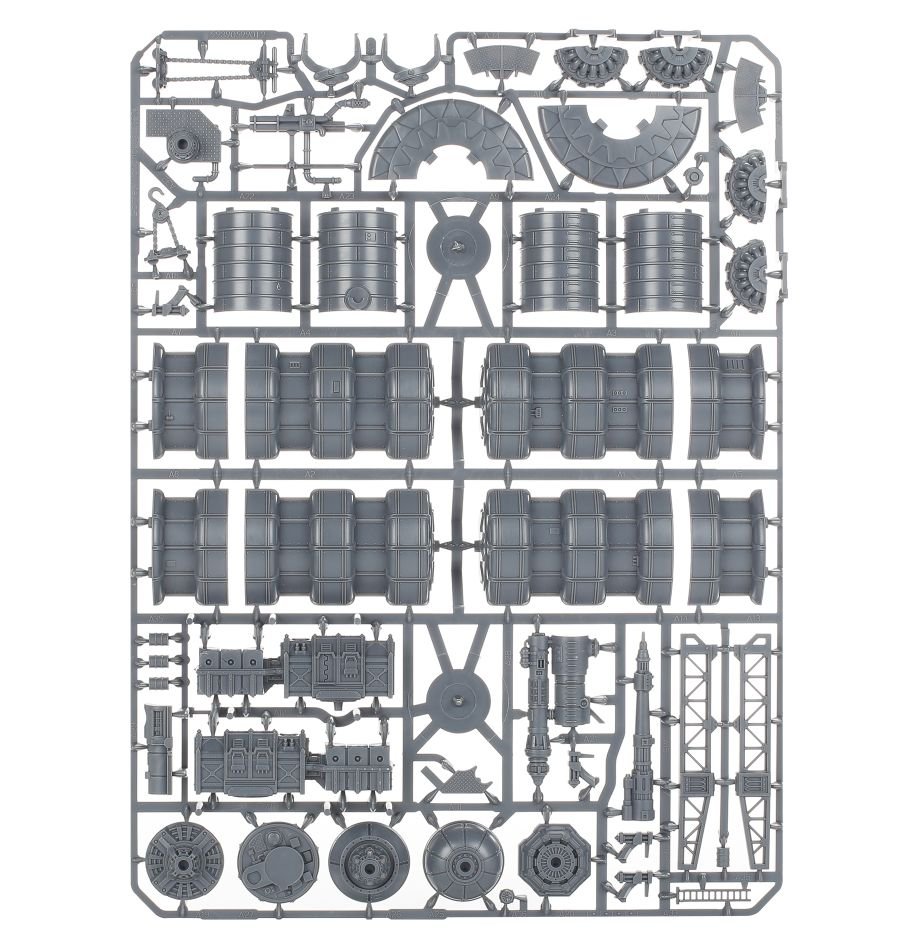
There are four sprues in the box, two of the larger sprues with the cranes on.
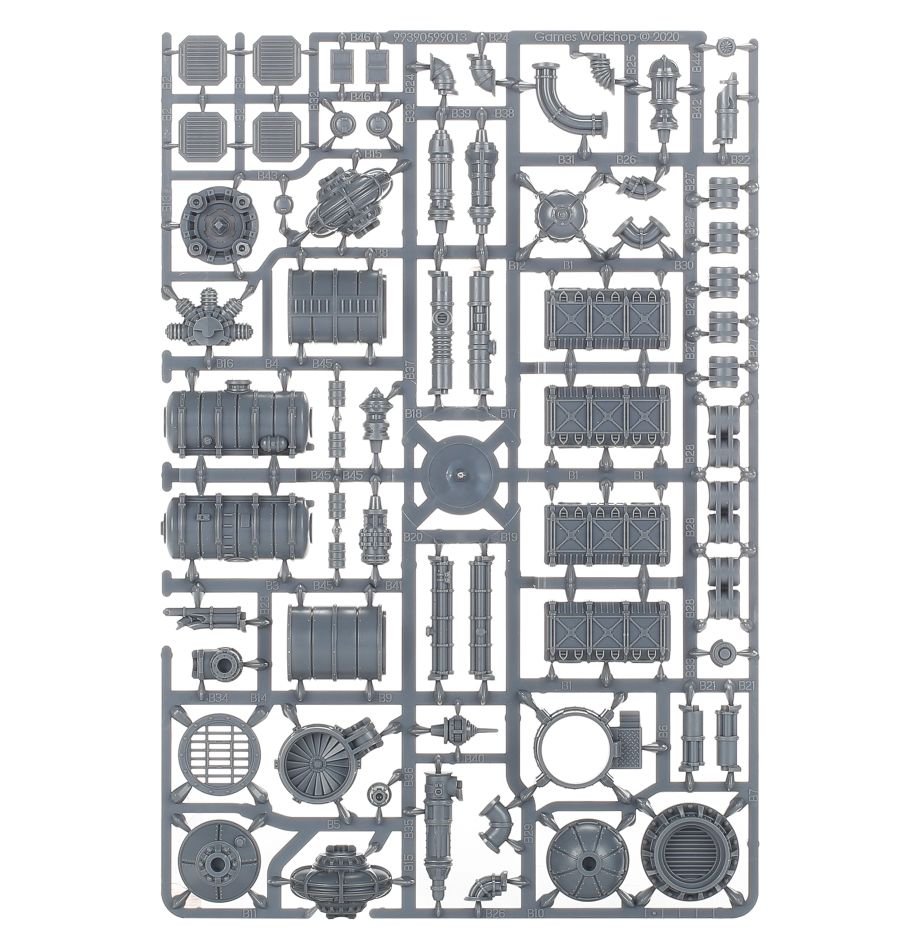
There are two smaller sprues for the containers and other smaller pieces of terrain.
One consideration is how to use the terrain, as individual pieces or to base them, or to add them to a terrain board. So how do you use your Adeptus Titanicus Manufactorum Imperialis terrain?

Royal Aircraft Factory F.E. 2b

The F.E. 2b was originally introduced as a two-seat fighter on the Western Front in late 1915, escorting unarmed reconnaissance aircraft in patrols over enemy lines.

German fighter aircraft could outperform F.E.2s by late 1916. Later F.E.2s were adapted for night bombing.

The fuselage frame of this composite reconstruction at RAF London is the largest original F.E.2b component known. It survived unfinished in the maker’s factory near Lowestoft. It is marked as F.E.2b A6526, which served in three squadrons until being written off by a forced landing on a night bombing sortie on 8 October 1918.

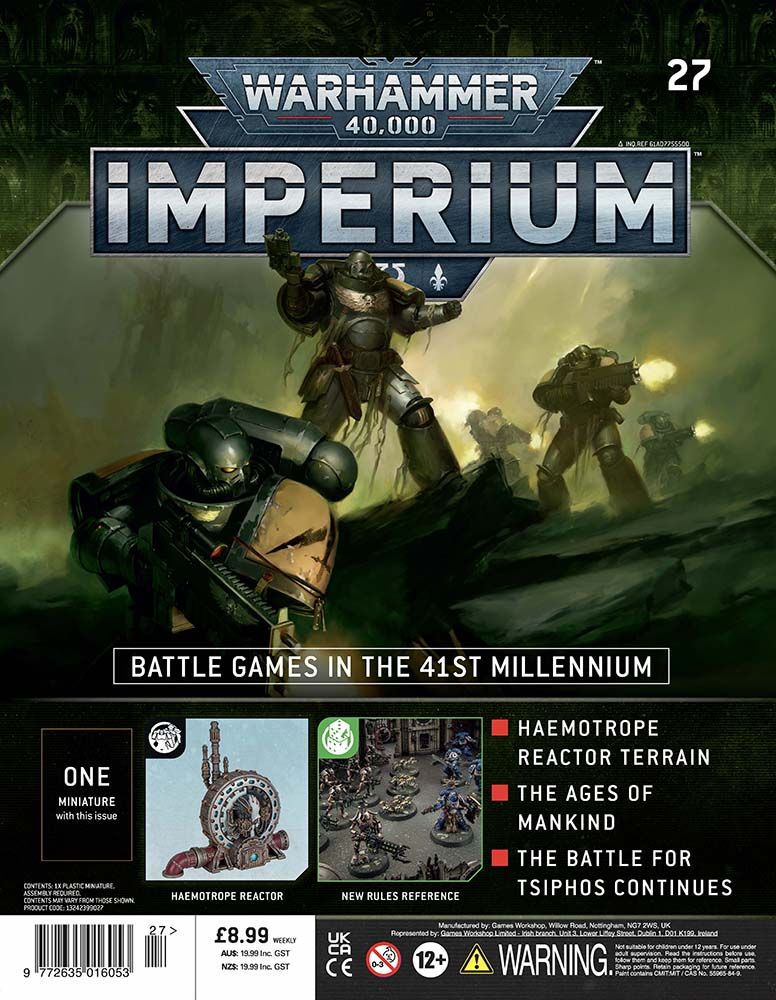
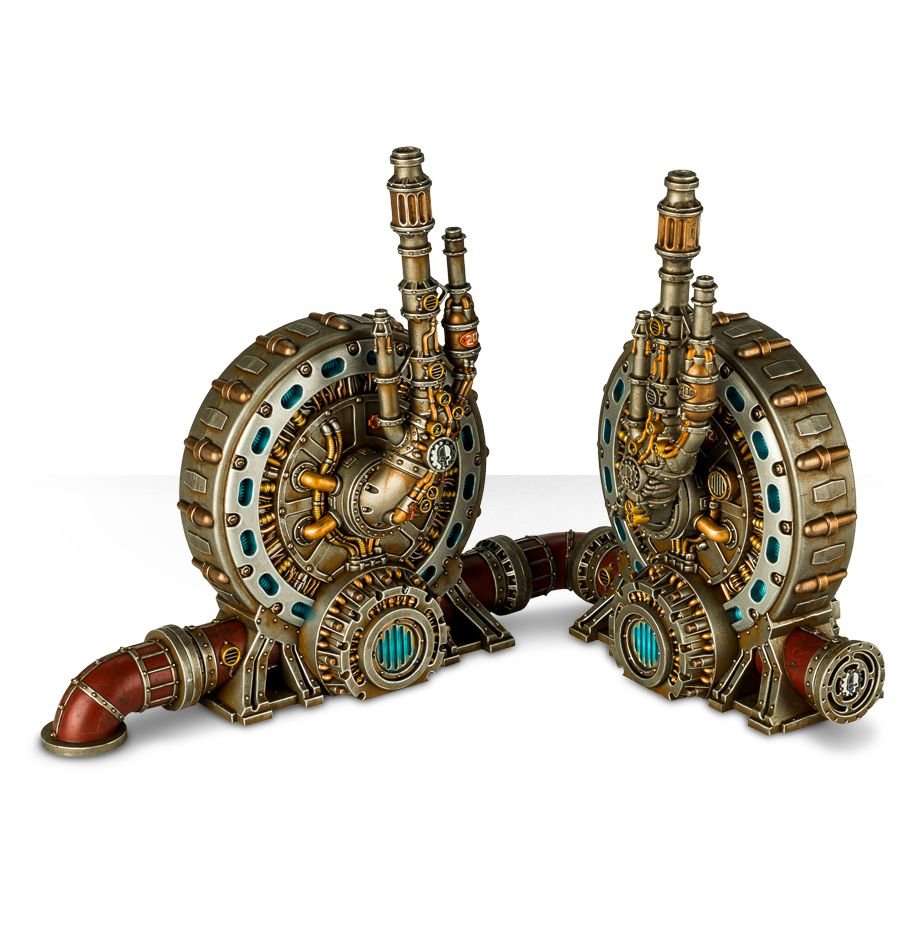
Haemotrope Reactor

After picking up a copy of Warhammer Imperium with a Ruined Factorum I did start thinking about whether to get some future issues. I was less interested the figures, but was curious about what scenery models were in the series.

I did review previous issues and there were three issues with containers! I have a box of the Munitorum Armoured Containers so was less interested in these.

Looking over the previous issues, issue 27 had a Haemotrope Reactor.

Designed and deployed to provide additional power on the battlefield, the Haemotrope Reactor is an indispensable tool for armies wishing to unleash ever-more destructive waves of plasma upon their enemies. An imposing structure, understood fully by few, it is used to bolster the defensive capabilities of the Void Shield Generator – or amplify the already intimidating destructive capacity of the Plasma Obliterator. In a pinch, the Haemotrope Reactor can be used as cover; this can be a terrible decision however, as the cowering warrior opens himself up to the potential of horrific injuries resulting from power leaks…

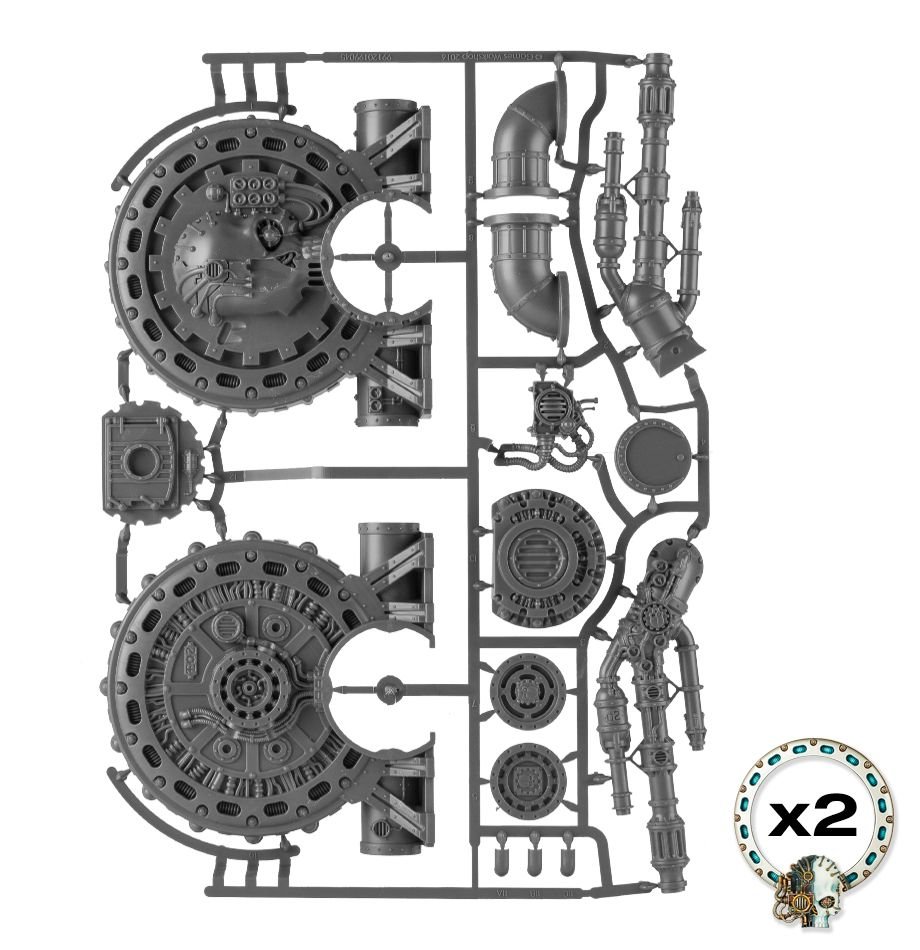
I managed to pick up a back issue of this from Forbidden Planet. As well as the magazine there is the single sprue with the parts for the Haemotrope Reactor.

Looks like a simple kit to put together.

I see though from the Games Workshop site that the Warhammer 40K version of the kit is being withdrawn from sale on the 24th April.

Sopwith F.1 Camel

This Sopwith F.1 Camel was on display at RAF London.

The Sopwith Camel is a British First World War single-seat biplane fighter aircraft that was introduced on the Western Front in 1917. It was developed by the Sopwith Aviation Company as a successor to the Sopwith Pup and became one of the best known fighter aircraft of the Great War.

The Camel was powered by a single rotary engine and was armed with twin synchronized Vickers machine guns. The Camel was the highest scoring British fighter of the First World War. It took its name from the hump over the breeches of the two machine guns.

It was challenging to fly well, it could kill an unwary pilot. Though difficult to handle, it was highly manoeuvrable in the hands of an experienced pilot. Camel pilots have been credited with downing 1,294 enemy aircraft, more than any other Allied fighter of the conflict.  It was ideal for daylight combat but versatile enough to allow it to be used for night fighting and ground attack, especially towards the end of the war when newer aircraft had better dogfighting capabilities.

This aeroplane was probably built by Boulton & Paul at Norwich. Sold as war-surplus, it briefly flew re-engined with a 45hp Anzani engine in 1923 and was part of the renowned Nash Collection from 1936. Restored at Heathrow airport 1958-1962.

Revealed – The Cargo-8 Ridgehauler

Look what we’re getting…

Back in January we were given a glimpse of a vehicle used in the Ash Wastes of Necromunda, though we had no idea what it was. It looked interesting though, I did like the concept of a land train running though the ash wastes and getting attacked by raiders. There were echoes of Mad Max and Car Wars in all this. However at this stage this was a concept, and we got some idea about the vehicle from the drawings in the animation.

We now know from the recent announcement on the Warhammer Community that this vehicle is a Cargo-8 Ridgehauler.

Goods from the hive manufactories are ferried across the poisoned wastes on great land trains. There’s money to be made from protecting the Guild of Coin’s Cargo-8 Ridgehaulers, which are juicy targets both for the nomadic denizens of the Ash Wastes and for gangs of underhive bandits.

In March we were saw that the Ash Wastes were revealed in full at AdeptiCon. There was though no vehicle included in the game and I was a little disappointed by the look of the game, even with the quad bikes and buggies. There was also no sign of the Ridgehauler.

However the recent announcement of the Cargo-8 Ridgehauler gives us a much clearer view of the forthcoming model. You can certainly build a land train with the models.

My immediate reaction was a little muted. It wasn’t quite what I was thinking it might be. It seems to have been built around the Munitorum Armoured Container and I am not sure if this works. Well I get that the background is about moving goods across the ash wastes, so need containers to move it.

I guess we will get one model released, though I know I would like to see future expansions with additional trailers. 

So still a bit on the fence on this one.

Bristol F.2b Fighter

The Bristol F.2 Fighter is a British First World War two-seat biplane fighter and reconnaissance aircraft developed by Frank Barnwell at the Bristol Aeroplane Company. It is often simply called the Bristol Fighter, “Brisfit” or “Biff”.

Although the type was intended initially as a replacement for the pre-war Royal Aircraft Factory B.E.2c reconnaissance aircraft, the new Rolls-Royce Falcon V12 engine gave it the performance of a fighter.

This particular example has been re-built to represent the aircraft flown by Captain W.F.J. Harvey and Captain D.E. Waight, No.22 Squadron, from Agincourt on 1 July 1918. The aircraft was modified, by the squadron, to take an extra Lewis machine gun on the centre section of the top mainplane.

Despite a disastrous start to its career, the definitive F.2B version proved to be a manoeuvrable aircraft that was able to hold its own against single-seat fighters while its robust design ensured that it remained in military service into the early 1930s. Some surplus aircraft were registered for civilian use, and versions with passenger cabins were converted.

There was also a Bristol F.2b Fighter at Duxford.

A Bridge Too Far

I have been meaning to watch this film again for a while after reading Antony Beevor’s The Battle of Arnhem: The Deadliest Airborne Operation of World War II.

In the book, Antony Beevor, using often overlooked sources from Dutch, American, British, Polish, and German archives, has reconstructed the terrible reality of the fighting.

On September 17, 1944, General Kurt Student, the founder of Nazi Germany’s parachute forces, heard the groaning roar of airplane engines. He went out onto his balcony above the flat landscape of southern Holland to watch the air armada of Dakotas and gliders, carrying the legendary American 101st and 82nd Airborne Divisions and the British 1st Airborne Division. Operation Market Garden, the plan to end the war by capturing the bridges leading to the Lower Rhine and beyond, was a bold concept, but could it have ever worked? The cost of failure was horrendous, above all for the Dutch who risked everything to help. German reprisals were pitiless and cruel, and lasted until the end of the war.

The film, A Bridge Too Far, was shot on-location in the Netherlands, in many of the real locations where the historical events took place. At the time of its release, it was the most expensive film ever produced.

Richard Attenborough directs this star-studded account of the failed 1944 Arnhem assault. The story follows the events of Operation Market Garden, a plot that was intended to allow the Allies access to the German lines to seize control of bridges in the occupied Netherlands. The cast includes Dirk Bogarde as Lieutenant-General Frederick Browning, James Caan as Staff Sergeant Eddie Dohun, Robert Redford as Major Julian Cook and Sean Connery as Major General Roy Urquart.

I have watched it many times, but still find it a fascinating and enjoyable film.

It’s a long film at nearly three hours long, but it covers the preparation the three air drops, the ground assault and much of the fighting across the bridges and other objectives.

Yes you can quibble about some of the vehicles used, the floating Sherman tank for example, or the use of the Leopard post-war tank as a German Panther. However there are many other accurate period vehicles used (which were being decommissioned at the time from various European armies).

Lots of gaming ideas in the film as well.

Get A Bridge Too Far on Blur-Ray.

Ford Model T Light Tender

Ford Model T Light Tender

This Ford Model T Light Tender was on display at RAF London.

Despite manufacturer Henry T Ford declaring he would not allow the Model T to be used in the European was, thousands found their way into military service.

Many Model T vehicles were used as ambulances and staff cars for carrying officers. They were also used as light tenders for carrying good and people. A small number were even used as fire engines on aerodromes.

1919: Britain’s Year of Revolution

A few years ago I wrote a blog post about an alternate history, called The 1919 British Revolution.

As well as looking at the general feeling of discontent across the country I did focus on an incident in Glasgow.

In Great Britain the government feared a bolshevik uprising and was quick to oppress any potential threat to the established order. One of the biggest areas for concern were the labour movements and trade unions. One strike in Glasgow in 1919 eventually resulted in a street battle between strikers and police, which was so bad, the army was called in. The “Battle of George Square”, also known as “Bloody Friday” and “Black Friday”, was one of the most intense riots in the history of Glasgow; it took place on Friday, 31 January 1919. Clashes between the City of Glasgow Police and protesters broke out, prompting the War Cabinet to make soldiers available to the civil power, to prevent the violence from escalating.

I also saw this post the first of a series of blog posts.

In future blog posts I want to have a look at potential battles in the 1919 British Revolution and the forces involved.

I did start thinking about possible scenarios and forces. I have in the cupboard the boxed set of Battlefront’s 15mm The Great War Mitchell’s Marauders.

Mitchell's Marauders (GBRAB1)

The boxed set includes one Company HQ, two Rifle Platoons, one Machine-gun Platoon, one Royal Artillery Gun Detachment. It also has one Medium Tank Platoon comprising a single Mark A Whippet and a Heavy Tank Platoon which is two Mark IV tanks.

I was thinking that this would be a good starting force for the 1919 British Revolution.

In my original blog post I used a couple of contemporary photographs, one was of the tanks, Medium Mark C tanks, and soldiers at the Glasgow Cattle Market in the Gallowgate waiting to be called in for action in Glasgow. The other photograph though was a Mark IV tank on the streets of Dublin.

British army tank in Dublin

I realised that I wanted to do some more research into this era and as you do went to Google. As well as finding more photographs from the era I also discovered that there was a book about a range of incidents across 1919.

1919; Britain’s Year of Revolution tells the story of an almost unknown passage in British history. On the August Bank Holiday that year, the government in London despatched warships to the northern city of Liverpool in an overwhelming show of force. Thousands of troops, backed by tanks, had been trying without success to suppress disorder on the streets. Earlier that year in London, 1000 soldiers had marched on Downing Street, before being disarmed by a battalion of the Grenadier Guards loyal to the government. In Luton that summer, the town hall was burned down by rioters, before the army was brought in to restore order and in Glasgow, artillery and tanks were positioned in the centre of the city to deter what the Secretary of State for Scotland described as a ‘Bolshevik uprising’. Industrial unrest and mutiny in the armed forces combined together to produce the fear that Britain was facing the same kind of situation which had led to the Russian Revolution two years earlier. Drawing chiefly upon contemporary sources, this book describes the sequence of events which looked as though they might be the precursor to a revolution along the lines of those sweeping across Europe at that time. To some observers, it seemed only a matter of time before Britain transformed itself from a constitutional monarchy into a Soviet Republic.

Well time to buy that from Amazon then.