Crossly Light Tender

The first Crossley vehicles in the Royal Flying Corps were six cars bought in 1913 for driving staff officers around. By November 1918 around 6,000 Crossly vehicles had entered service.

This Crossly 20/25hp Light Tender was on display at RAF London.

The most common body was the Light Tender, shown here. 

Each squadron had eleven of these for carrying the airmen and towing small trailers and aeroplanes. Two Crossley Staff Cars were used for transporting the officers.

Crossley 25/30 hp Tenders were utilised by the British Army in Ireland from 1919 until their withdrawal in 1922. The Irish Army continued to use them for troop transport throughout the Civil War period. 

The 20/25 model was also the first vehicle to be supplied to London’s Metropolitan Police Flying Squad in 1920, some of which were fitted with radio equipment.

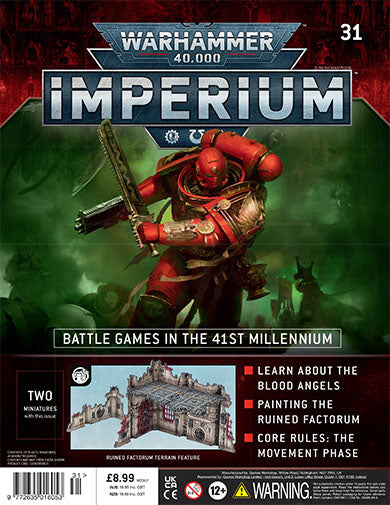
Ruined Factorum

I popped into my local newsagent to see if they had the latest issue of Wargames Illustrated in stock, which they did. I also saw they had the latest issue of the part work series Warhammer 40000 Imperium.

I usually see the first few issues of part works in the newsagents or at WHSmith, so was interested to see issue #31 in stock. I haven’t really been paying attention to this series, as partly at £8.99 a week can get expensive after a while, but also I have enough to paint, without buying more plastic. However I thought I would see what was “free” with his issue and I was quite intrigued to see they had a Ruined Factorum sprue.

So decided to pick the issue up for the plastic.

The Battlezone: Manufactorum – Sub-cloister and Storage Fane costs £37.50 at Games Workshop and contains two similar sprues. So at £8.99 you are making a saving of £9.76. The other sprue will be in issue 34.

Well the magazine, all twelve pages has a useful tutorial on painting the scenery. Along with a lot of other stuff which is probably useful if you have been collecting the whole part works, which I’m not, so not too useful.

The first stage will be to glue it together.

Fokker D.VII

Fokker D.VII

The Fokker D.VII was a German World War One fighter aircraft designed by Reinhold Platz of the Fokker-Flugzeugwerke.

This Fokker D.VII was on display at RAF London.

Fokker D.VII

Germany produced around 3,300 D.VII aircraft in the second half of 1918. In service with the Luftstreitkräfte, the D.VII quickly proved itself to be a formidable aircraft. 

Fokker D.VII

It was so successful that it was the only aircraft to be singled out by the Allied Powers in the Armistice Agreement section which detailed war material to be handed over: Germany was required to surrender all D.VIIs to the Allies. Surviving aircraft saw much service with many countries in the years after The Great War.

The early days

Back in the day, my first “experience” of wargaming was back in the 1970s with those bendy and flexible Airfix and Matchbox model soldiers and often using Britain’s matchstick firing weapons.

One of my favourite toys and probably the thing that got me into gaming more than anything else was the 1:32nd Matchbox Counter Attack Playset.

Matchbox Counter Attack

In the set you got a set of American infantry with an M8 Greyhound. Their job was to attack the enemy.

On the German side, you got German infantry, a watchtower and they took refuge in a ruined cafe or restaurant. Watching Saving Private Ryan decades later I was reminded of the building as I watched the defence of the ruined village.

In the box you had two air pump weapons, a machine gun and a rocket launcher. The building was designed that you could knock down and put back together. Pieces fell off it as it was hit by the weapons.

It was an incredible toy that I really loved playing with. I think I was always a little disappointed that they never did more sets in this range.

You could certainly add more infantry, even tanks and trucks, but there was no more scenery or buildings to be had.

It was this game that got me into gaming, and where did I got next, well 25mm Napoleonics.

Albatros D.Va

The Albatros D.V was a fighter aircraft built by the Albatros Flugzeugwerke and used by the Luftstreitkräfte (Imperial German Air Service) during World War I. The D.V was the final development of the Albatros D.I family and the last Albatros fighter to see operational service. Despite its well-known shortcomings and general obsolescence, approximately 900 D.V and 1,612 D.Va aircraft were built before production halted in April 1918. The D.Va continued in operational service until the end of the war.

With its distinctive plywood-skinned oval section streamlined fuselage, the Albatros D.V entered service in May 1917, but from October 1917 was supplemented in large-scale production by the strengthened Albatros D.Va with different upper wing and aileron control system.

With over 3,000 produced, of which only two survive, in the U.S.A and Australia.

The replica on display at RAF London is painted as a D.V aircraft from a batch of 400 ordered in May 1917. 

This flying replica was built by New Zealand Company The Vintage Aviator Ltd (TVAL) in 2011, and uses an original contemporary Mercedes D.III engine from RAF Museum stocks. It represents an aircraft flown on the Western Front by Jasta 61in 1918.

Flown a number of times in New Zealand and the UK in 2012, it arrived at Hendon in October 2012.

Strange New Worlds

After the teasers we now have the full official trailer for Star Trek: Strange New Worlds.

I am actually quite looking forward to this. I did enjoy season two of Discovery, but this I think will be even better.

Actually does feel like what TOS (the original series) could have been if they had the technology we have today in terms of look and feel.

Have to wait until May though.

The Squats are back!

In a double bluff April Fool, Games Workshop have confirmed that the Squats are coming back to Warhammer 40000.

Squat

It has come to our attention that yesterday’s stunning reveal of the next Warhammer 40,000 faction fell on an unfortunate date. This was an honest mistake that absolutely anyone could have made. To make it up to you, we have a rather special announcement.

They’re real.

Humanity’s long-lost cousins actually are making their return to the 41st Millennium as a full Warhammer 40,000 faction.

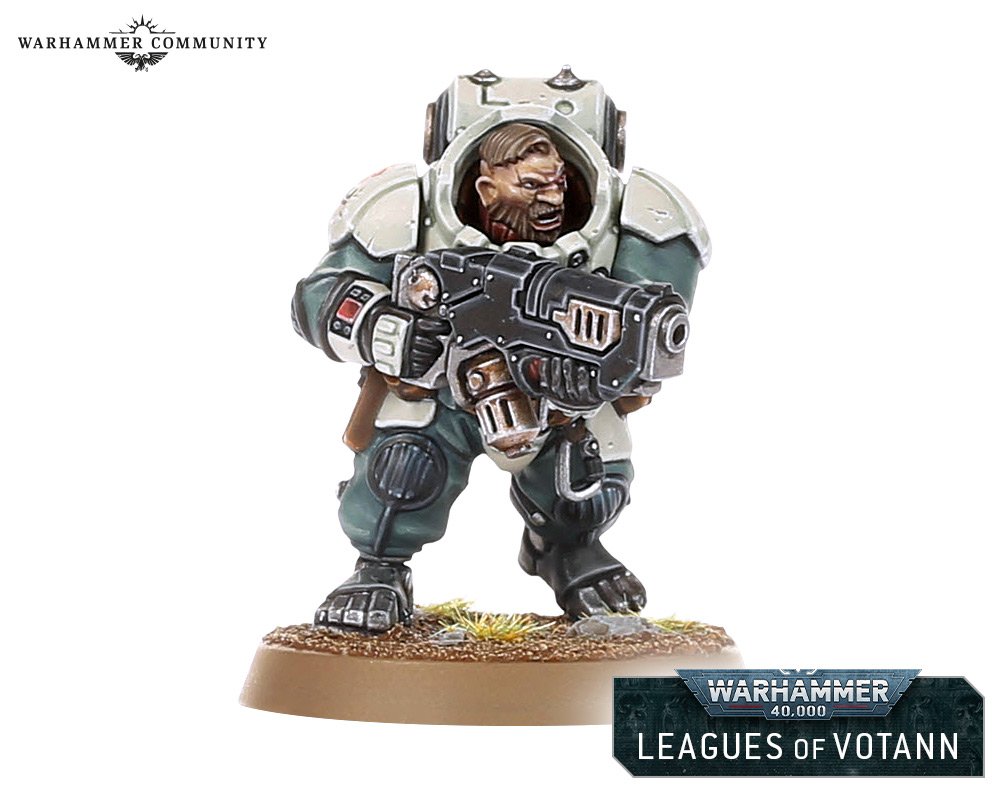
The Leagues of Votann are a new faction in Warhammer 40,000 and are by any other name Squats.

Although their civilisation shares common roots with Humanity, the Leagues of Votann have an uneasy relationship with the Imperium of Man. Unlike their superstitious Human cousins, the Leagues emerged from the Age of Strife with far more of their ancient technology intact, including some infamous advances the Imperium would consider extremely heretical.

So expecting to see some powerful and reliable weaponry. We also know that Squats used Rhino transports as well.

Will we see bikes and trikes? These when they were originally released did divide opinion.

What about the Iron Eagle Gyrocopters which function as a fighter-bombers and Overlord Armoured Airships for Aeronautica Imperialis? I can see that at some point we might see models for the Leagues of Votann.

Unlike most other Imperial armies, the Squats don’t build Titans. Instead, the Engineering Guild provides the army with a variety of Praetorian Super Heavy War Engines. Will we see these in Adeptus Titanicus. These would be ideal opposition for Imperial Titans, but I think this is probably a no. We’ve not see Ork Gargants, or Eldar Titans, so unlikely we would see Squat engines of war.

 Will Forge World make bigger versions for Warhammer 40,000? Well they already make the termite assault drills, which can be used by Squats. As for the aircraft, maybe, as for the Praetorian Super Heavy War Engines I would have thought not.

I would like to see for Adeptus Titanicus or Warhammer 40,000 the Squat Land Trains, these would be fun models, even if they were released more as terrain rather than unit models.

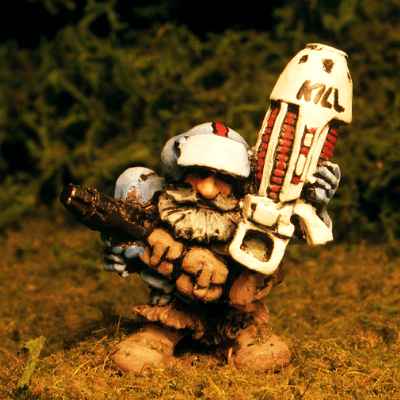
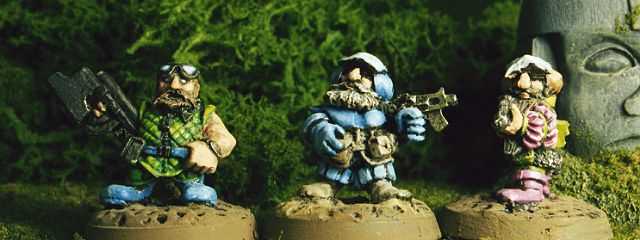
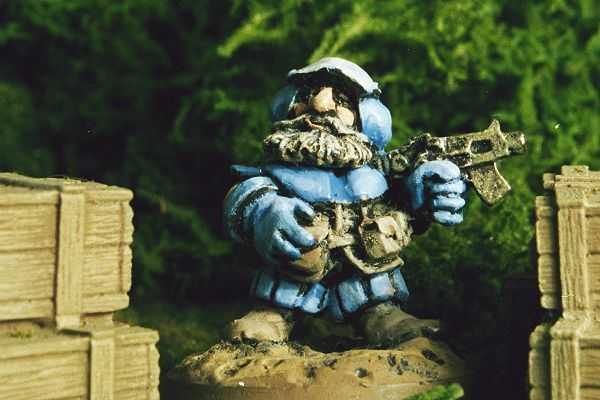
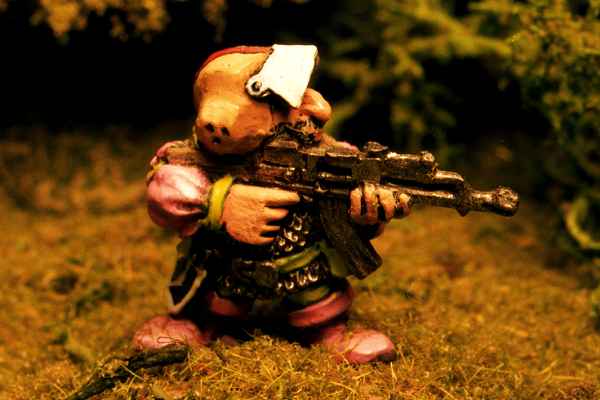
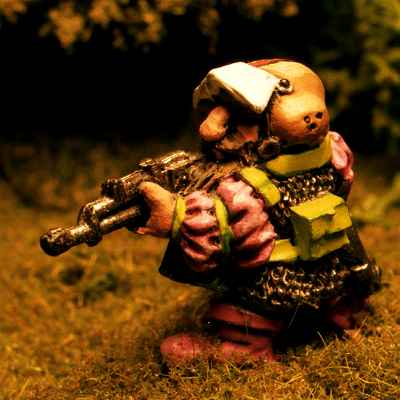
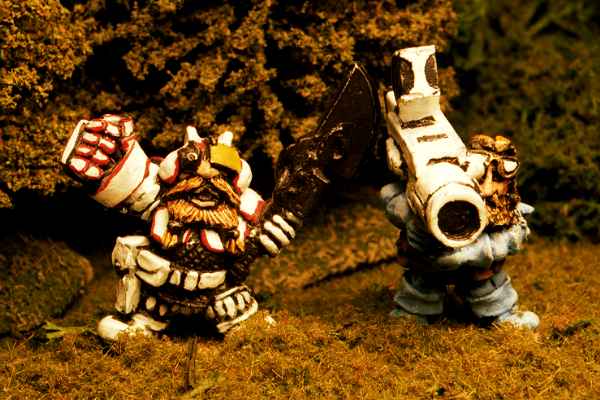
In the meantime here are some photographs of my Warhammer 40,000 Squats from the last century!

These are original Space Dwarfs, which I enjoyed painting in a particular style, which for some reason included pastel colours.

The bases were enhanced with milliput and then holes were made with the end of the paintbrush.

These also demonstrate my early attempts at blending and highlighting.

There was a real mix of weapons on these old models, from las rifles to bolters to power fists.

I loved the power armour on the leader of my little group of Squats and the Heavy Weapons Dwarf was certainly carrying something probably way too big for him.

I wish I had been able to buy more of these at the time of their release. I much preferred the high-SF scheme I went for compared to the space bikers look that the squats eventually evolved into, before disappearing…

And now they’re back!

Royal Aircraft Factory R.E.8

The Royal Aircraft Factory R.E.8 was a British two-seat biplane reconnaissance and bomber aircraft of the First World War designed and produced at the Royal Aircraft Factory. This Royal Aircraft Factory R.E.8 was on display at RAF London.

This was the most widely used reconnaissance aircraft in the Royal Flying Corps and RAF from 1917, serving with about 21 Squadrons. Its stability meant it lacked manoeuvrability when attacked and casualties remained high.

Nick-named the Harry Tate’ after a music-hall comedian, this stable reconnaissance/artillery spotting aircraft entered limited service in late 1916. 

Royal Aircraft Factory R.E.8

This flying replica, in No. 9 Squadron colours, was built in New Zealand by The Vintage Aviator Ltd in 2011, using original R..8 rudder, wing and fuselage parts held by the RAF Museum as patterns. 

Lego DeLorean

Lego are going to release a Lego DeLorean from Back to the Future.

Lego DeLorean

Inspiring fans to fire up their brick building engines, the LEGO Group and Universal Brand Development have revealed a brand new three-in-one reproduction of one of the most iconic vehicles of all time – the Back to the Future DeLorean Time Machine.

Inspired by the DeLorean car seen in the time travelling adventure film franchise from Universal Pictures and Amblin Entertainment, the LEGO Back to the Future Time Machine set allows builders to create the car from either the first, second or third film. What’s more, it comes complete with a light-up flux capacitor, a box of plutonium, Marty’s hoverboard and LEGO minifigure versions of Doc Brown and Marty McFly.

You can build one of three versions of the iconic vehicle.

Tempted.

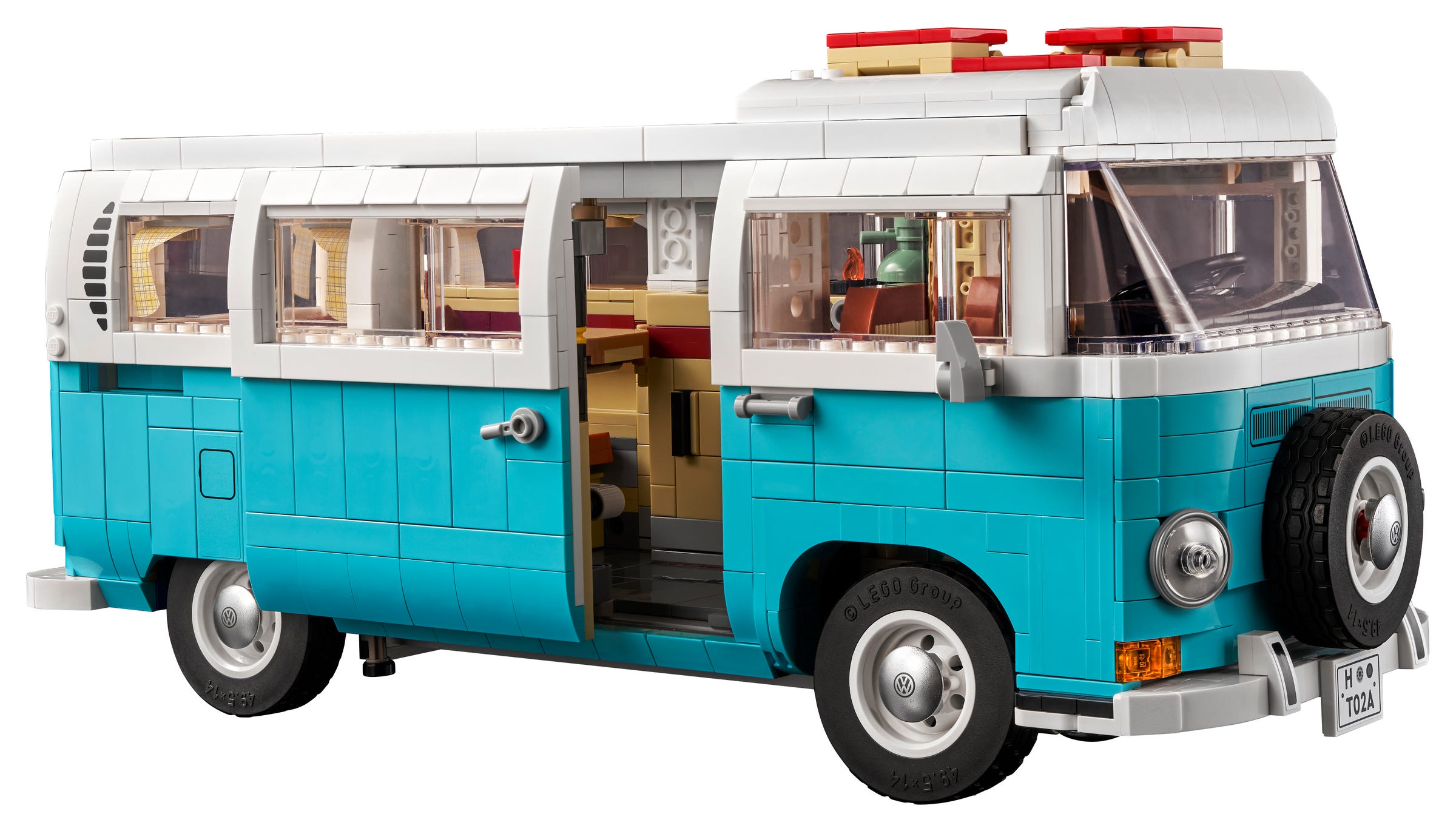
I wonder if it is the same scale as the Lego Volkswagen T2 Camper?

Then (with a little work) you could recreate that scene in the Twin Pines Mall.

Sopwith 5F.1 Dolphin

The Sopwith 5F.1 Dolphin was a British fighter aircraft manufactured by the Sopwith Aviation Company. It was used by the Royal Flying Corps and its successor, the Royal Air Force, during the First World War. The Dolphin entered service on the Western Front in early 1918 and proved to be a formidable fighter. The aircraft was not retained in the postwar inventory and was retired shortly after the war.

The Dolphin’s unusual wing arrangement gave its pilot an excellent view. It was heavily armed with up to four guns. Many pilots removed one or both Lewis guns from the top wing. No. 87 Squadron repositioned them on the lower wings outside the aircrew arc to increase the volume of fire when ground strafing.

This Sopwith 5F.1 Dolphin was on display at RAF London.

This example is a composite reconstruction with original tail surfaces, fuselage frame parts and nose cowlings from three separate aircraft. Its identity comes from the original Sopwith built rear fuselage section, from an aircraft built in 1918 and probably used by a training unit.