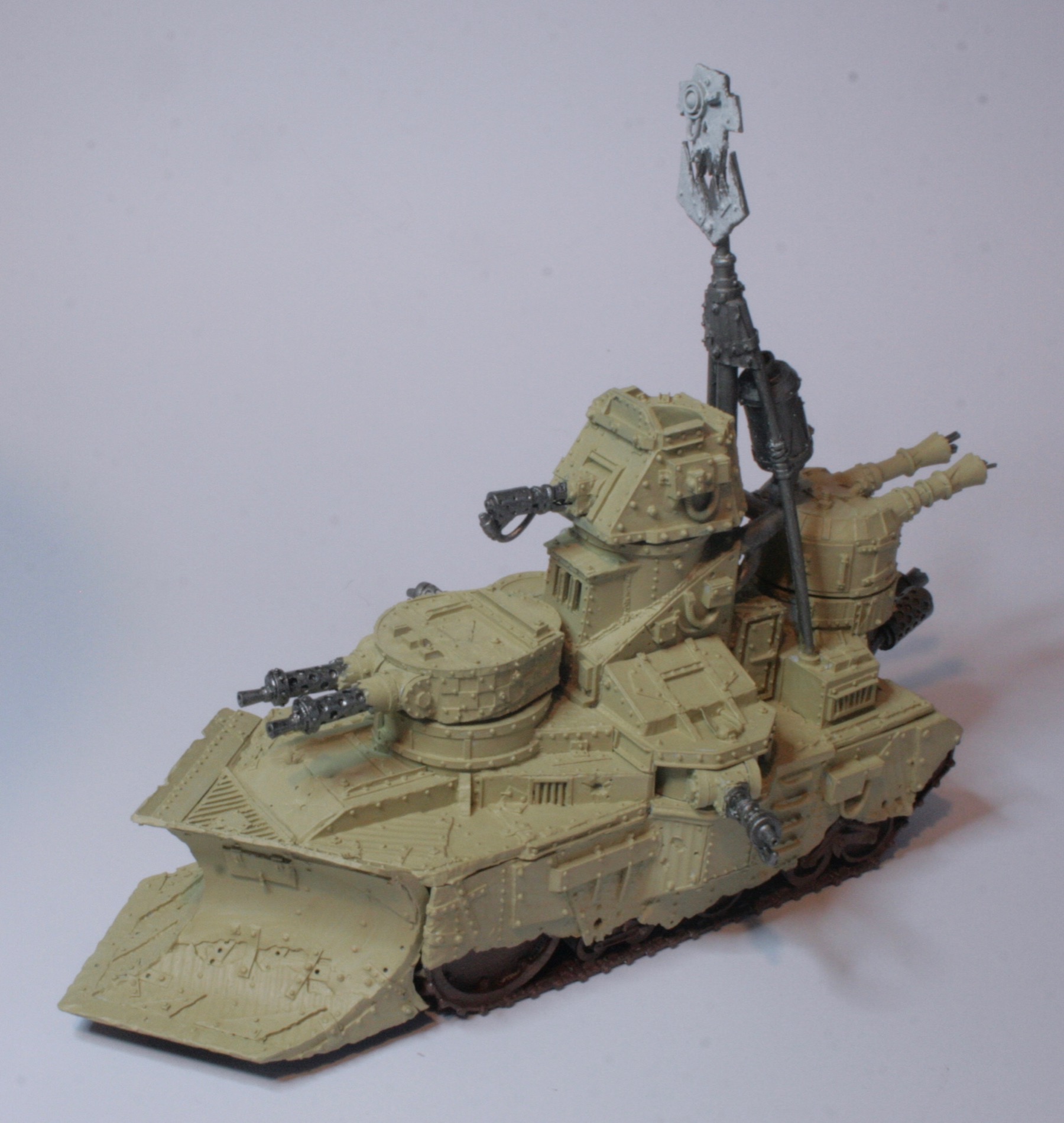
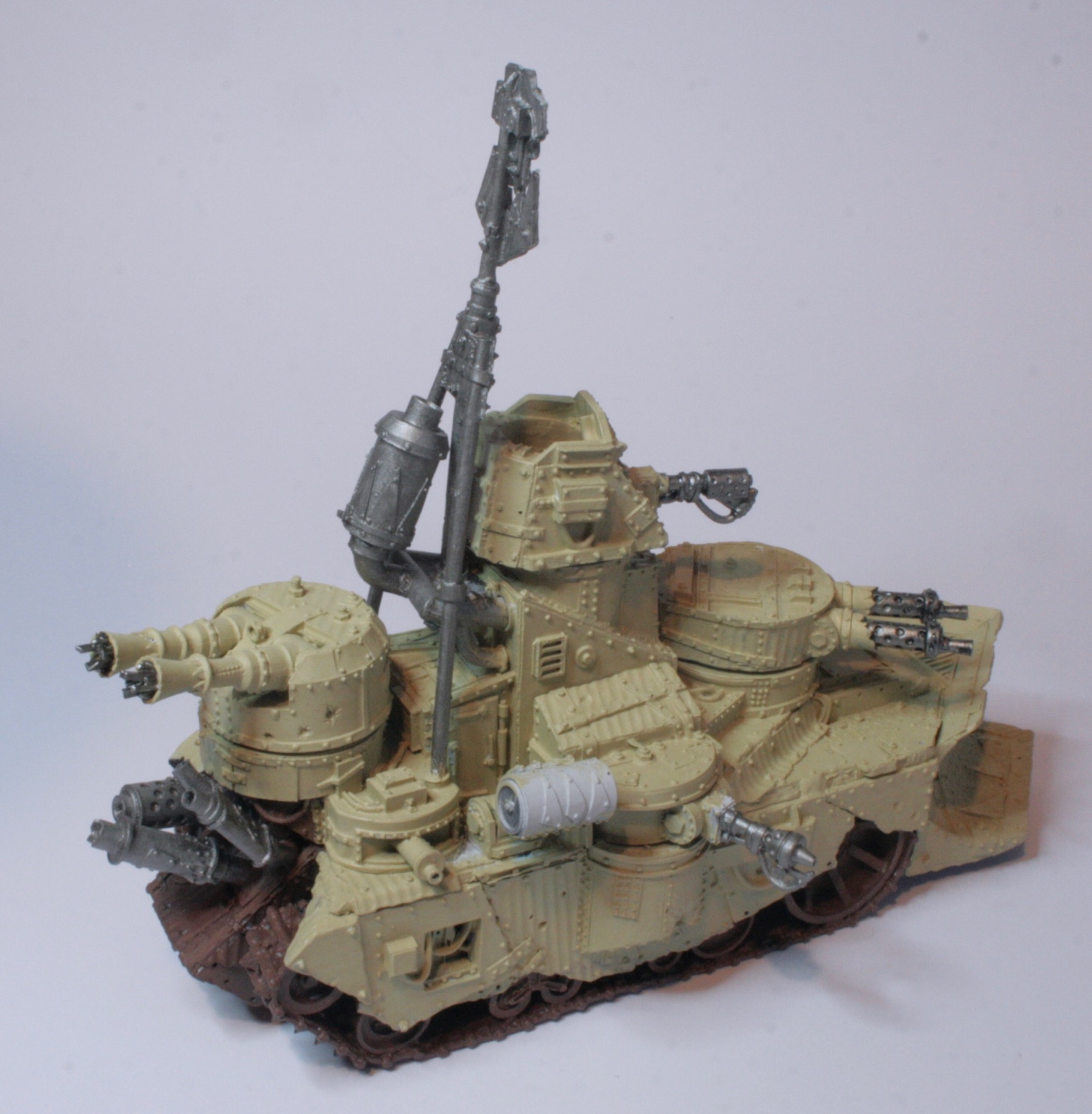
Mark IX Beast, or that tank from Indiana Jones!

Probably my favourite Indiana Jones film is Indiana Jones and the Last Crusade. The combination of archaeology, mythology, nazi soldiers and lots of wonderful pulp action. Watching it recently I was reminded of that tank!

Though we know it wasn’t real, and though we know that there was no actual historical version of it; I am sure most of us who have thought about recreating the Indiana Jones films on the table have wanted to use that tank.

Yes the tank from Indiana Jones and the Last Crusade.

Tank from Indiana Jones and the Last Crusade

It appears at first glance to be a Mark VIII with a turret, the reality was that it was built specially for the film and was built up from an excavator.

Mechanical effects supervisor George Gibbs said this movie was the most difficult one of his career. He visited a museum to negotiate renting a small French World War I tank, but decided he wanted to make one. The tank was based on the tank Mark VIII, which was thirty-six feet (eleven meters) long, and weighed twenty-five tons. Gibbs built the tank over the framework of a twenty-five ton excavator, and added 6.4 ton tracks, that were driven by two automatic hydraulic pumps, each connected to a Range Rover V8 engine. Gibbs built the tank from steel, rather than aluminum or fiberglass, because it would allow the realistically suspensionless vehicle to endure the rocky surfaces. Unlike its historical counterpart, which had only the two side guns, the tank had a turret gun added as well. It took four months to build, and was transported to Almería on a Short Belfast plane, and then a low loader truck.

Tank from Indiana Jones and the Last Crusade

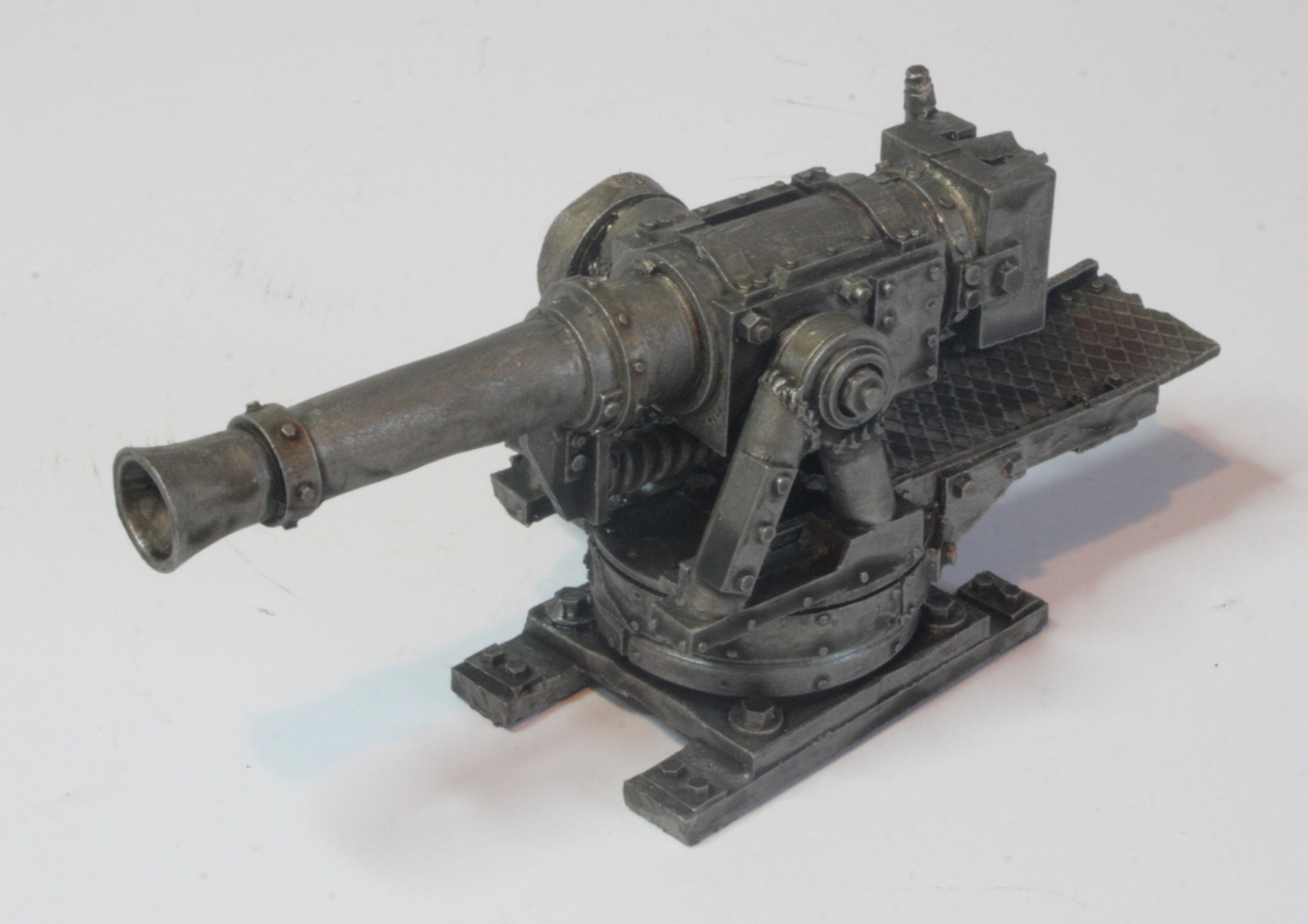
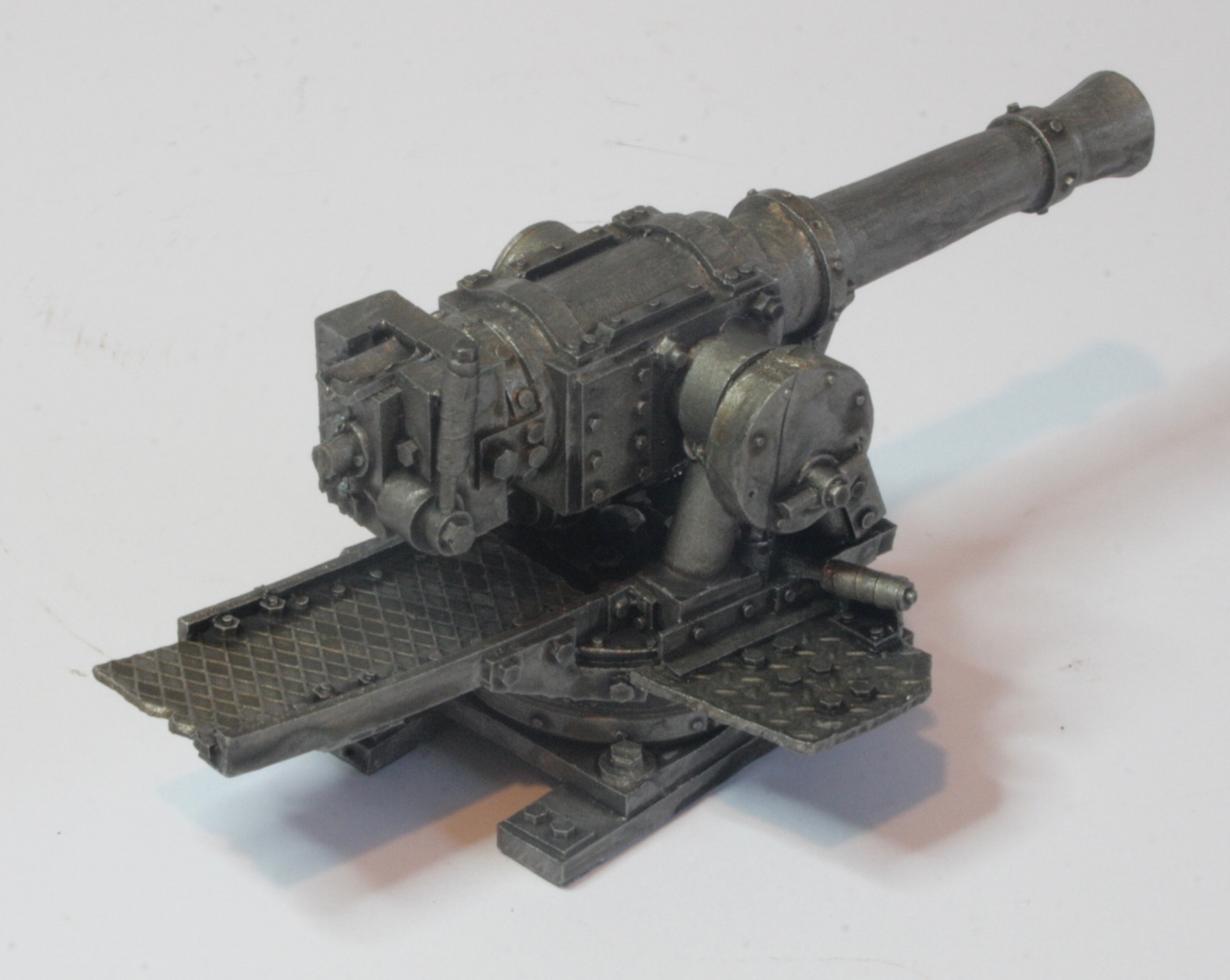
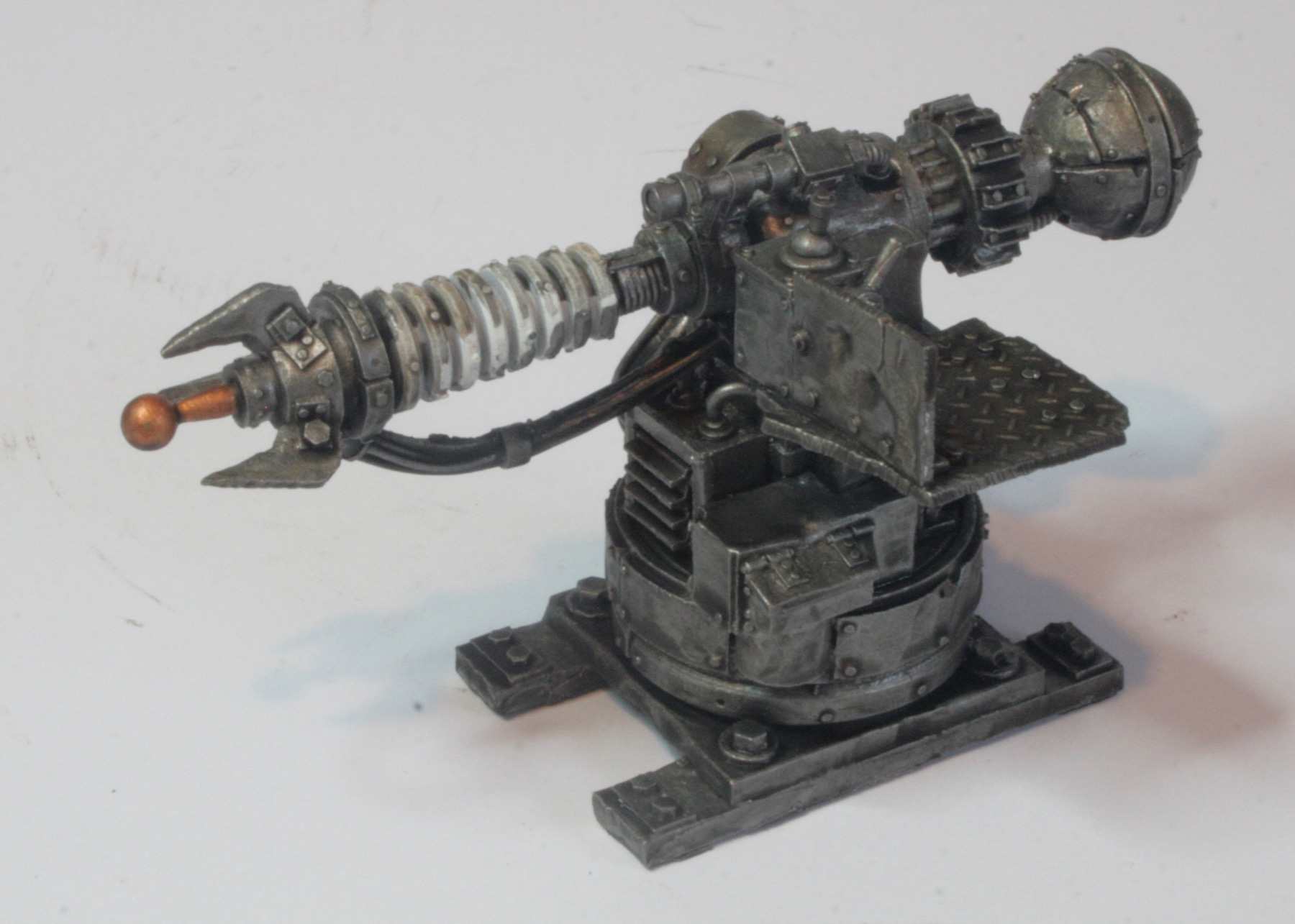
I wrote back in 2012 about finding a 28mm model of the tank. I did think about buying it back then, but put off my purchase. I thought back then it was a Copplestone Castings model, the reality was that it wasn’t from Copplestone Castings.

So it appeared that it wasn’t even a Copplestones Castings, but was by the Honourable Lead Boiler Suit Company (HLBSCo), alas that company no longer is around.

Sometimes you should buy things when you see them and not wait…

So it was originally designed and manufactured by the Honourable Lead Boiler Suit Company (HLBSCo) they were small and relatively new. I even remember discussing licensing the models for a commercial version of Tally Ho!

So I did some searching on the Google and found that the tank is available today with the other HLBSCo models from Empress Miniatures.

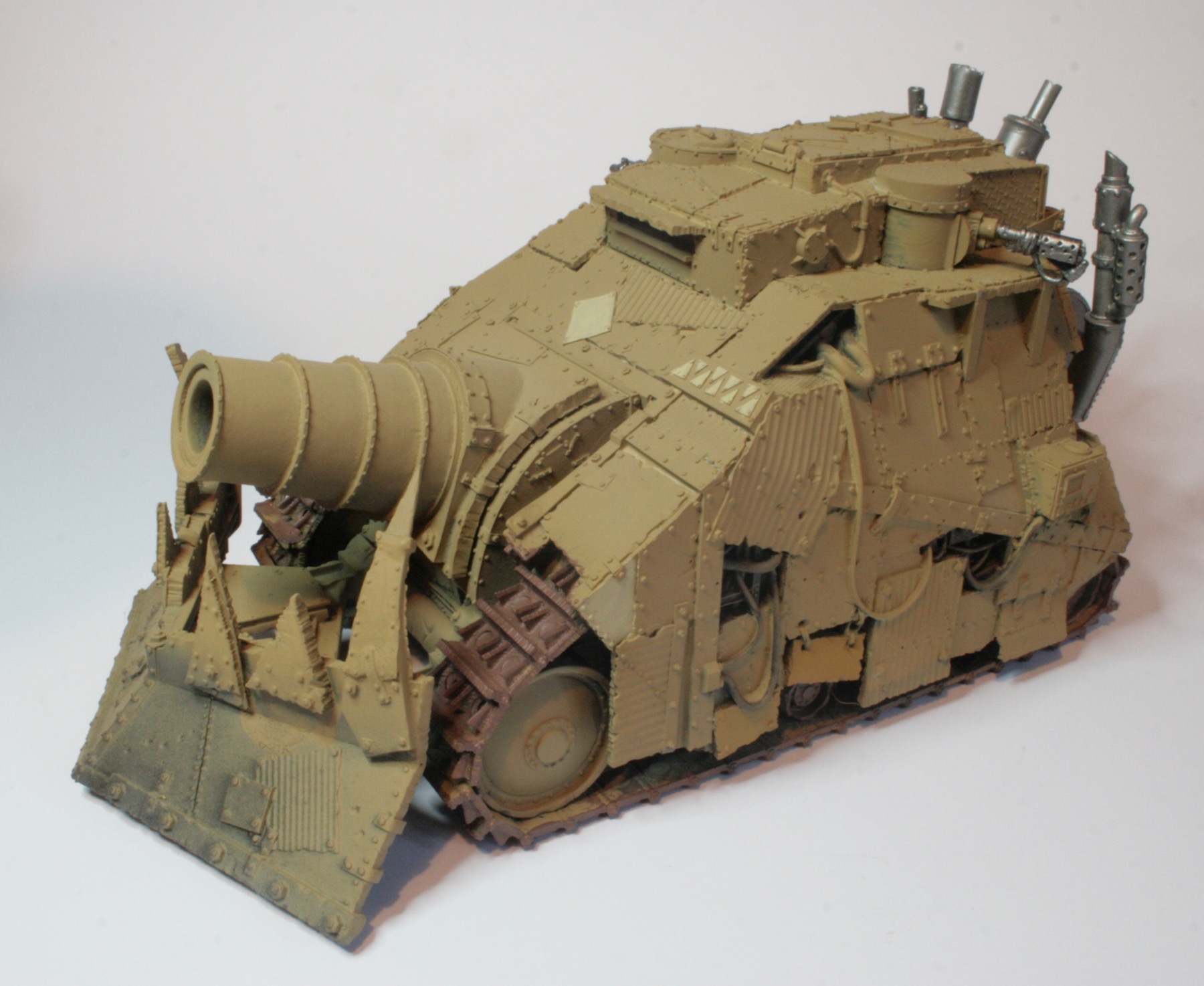
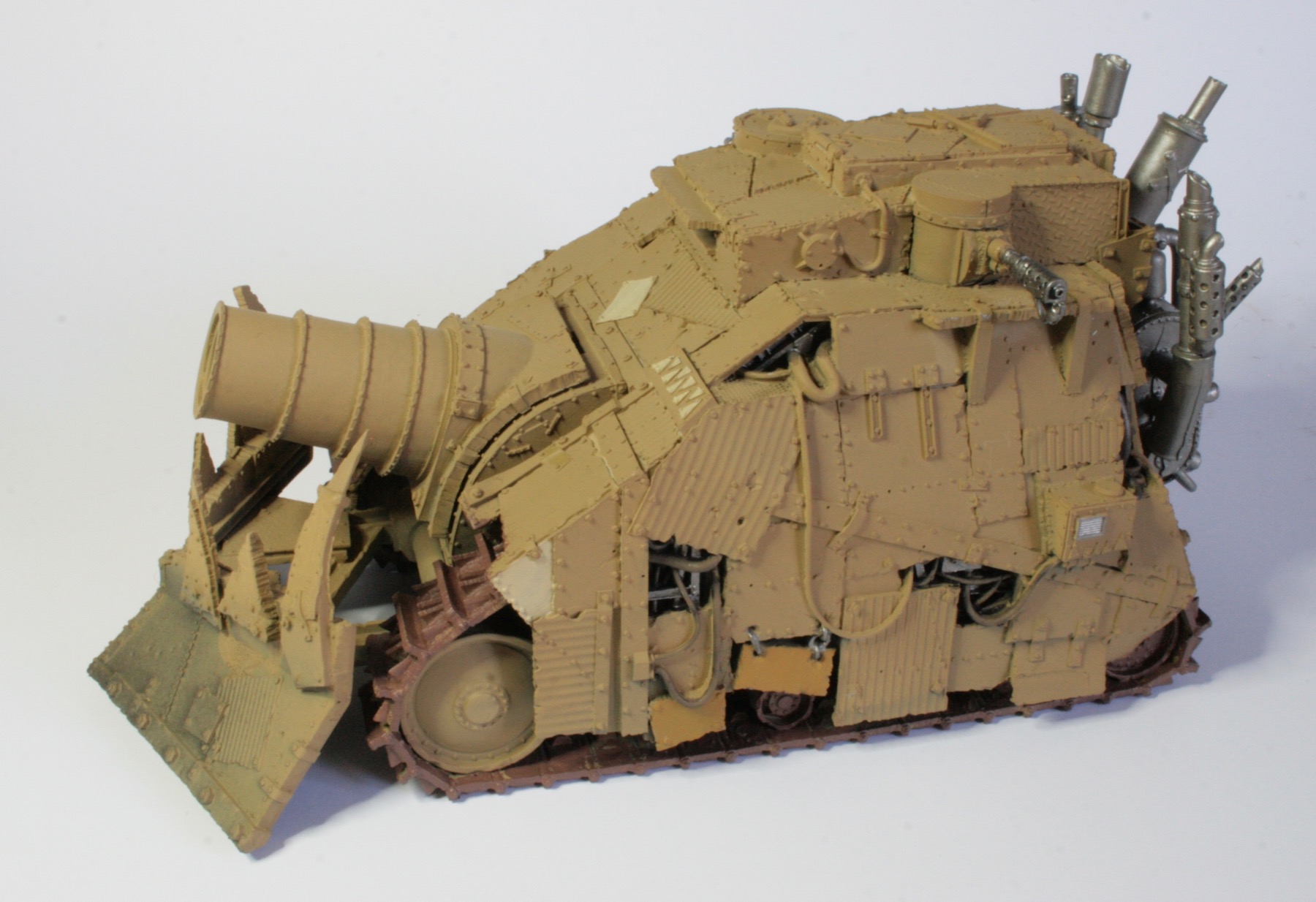
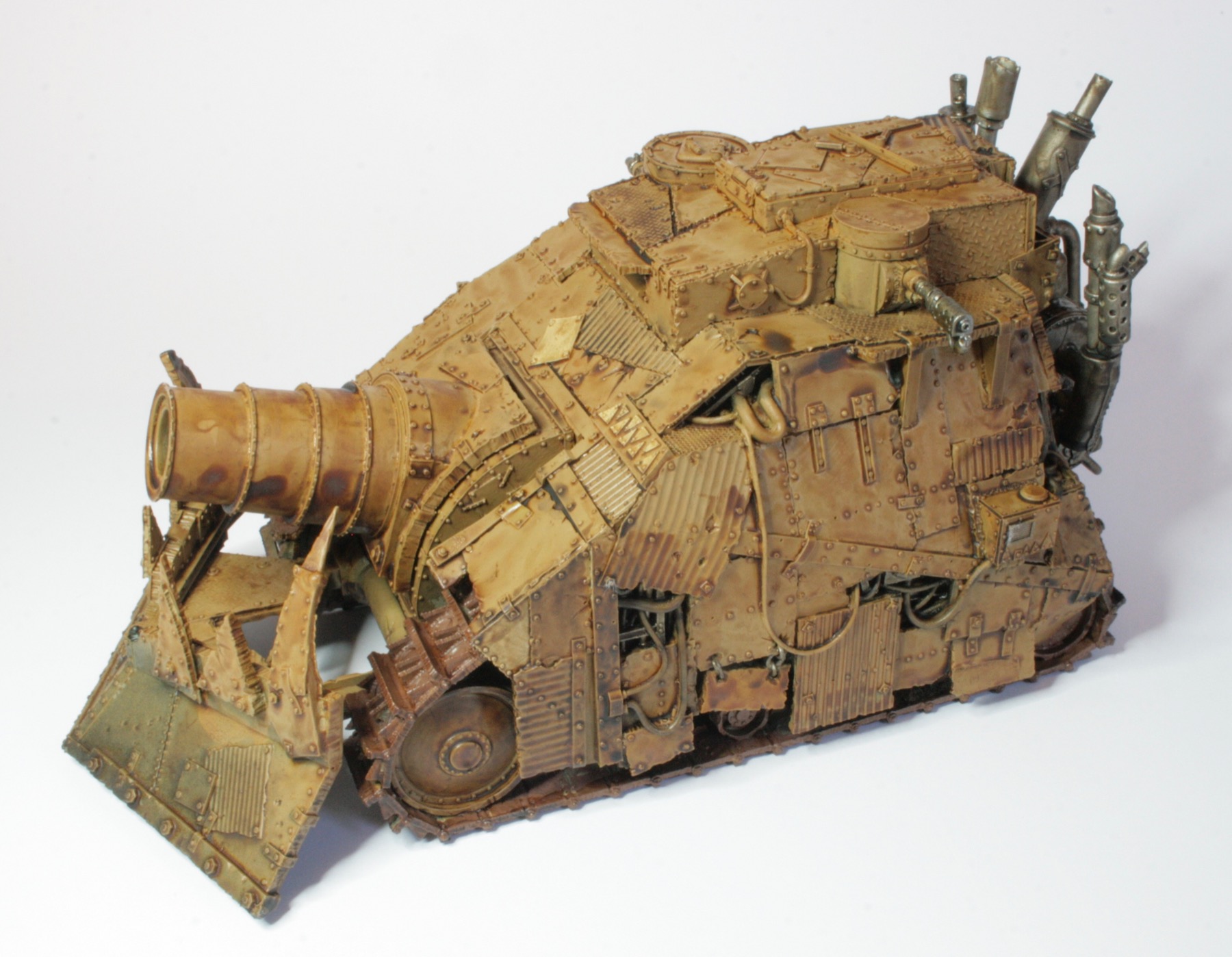
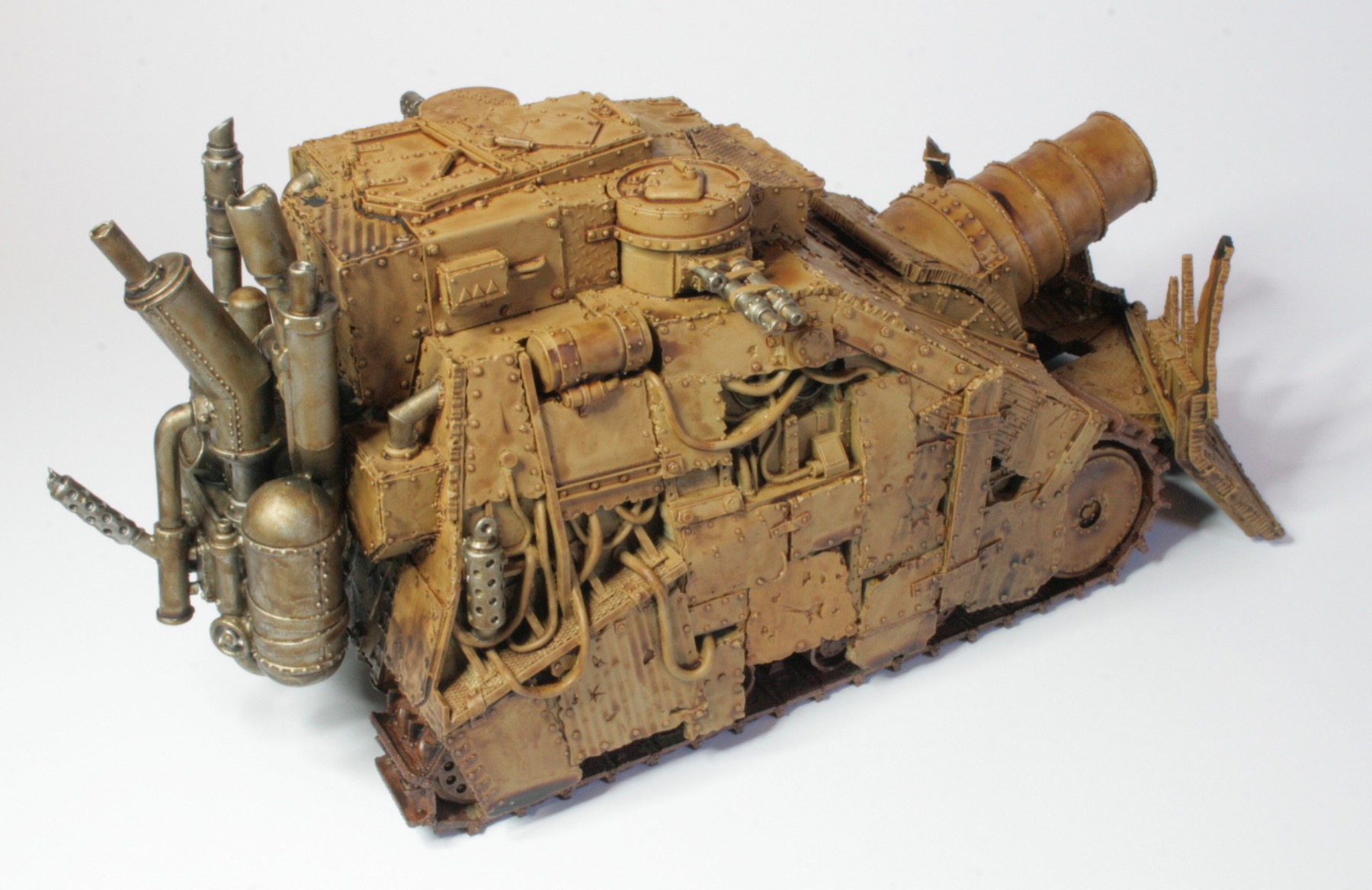
Well I made the leap and have ordered the tank from Empress Miniatures. This is the photograph of the model on their website.

Mark IX Beast

Now just waiting for it to arrive.

Undercoating the Citroen Civilian 4,500kg Truck with Canopy

I have been reflecting and looking at some of the models on my workbench and making progress on them.

I have the Bolt Action Citroen Civilian 4,500kg Truck with Canopy. Citroen made many of these trucks in the 1930s and 1940s.

Citroen Civilian 4,500kg Truck with Canopy

The pack contains a resin and metal kit, this is a nice clean casting.

Having constructed the model kit, I then gave the model an undercoat. I undercoated the underside with black paint and then gave the model an overall white undercoat.

I like how the white undercoat brings out the detail in the model. I also gave the canopy a white undercoat.

I then noticed something…

There was a huge piece of resin sticking out the side, where the mould was filled with resin. I will need to clean that off before I start painting.

The next stage is to start painting the model.

See the workbench feature on the Citroen Civilian 4,500kg Truck with Canopy.

Constructing the Citroen Civilian 4,500kg Truck with Canopy

I have been reflecting and looking at some of the models on my workbench and making progress on them.

In addition to the Bolt Action Citroen Civilian 1000kg Dropside Truck I also bought a slightly bigger truck, the Citroen Civilian 4,500kg Truck with Canopy.

Citroen made many of these trucks in the 1930s and 1940s.

Citroen Civilian 4,500kg Truck with Canopy

The pack contains a resin and metal kit, this is a nice clean casting.

Citroen Civilian 4,500kg Truck with Canopy

The rear wheels were quite easy to secure to the rear of the truck. There is an axel and two sets of wheels.

The front axel, I really had no idea how this was secured and the photographs on the Warlord Games site didn’t help that much. So I first stuck the front wheels to the front axel and then checked how the wheels would fit on the underside.

I was then able to secure the front axel to the underside of the truck, getting it to sit flat was challenging. I also stuck the front bumper on as well.

The next stage is to give the model an undercoat.

See the workbench feature on the Citroen Civilian 4,500kg Truck with Canopy.

More work on the Rukkatrukk Squigbuggy

The Rukkatrukk Squigbuggy is a type of Ork attack vehicle. The first Rukkatrukk Squigbuggies were invented by enterprising Snakebites in order to feed Speed Freeks on the move. Mobile pens full of edible squigs, the vehicles kept pace with the warband’s Warbikers, buggies and Trukks while their grinning crews hawked their wares at the tops of their lungs.
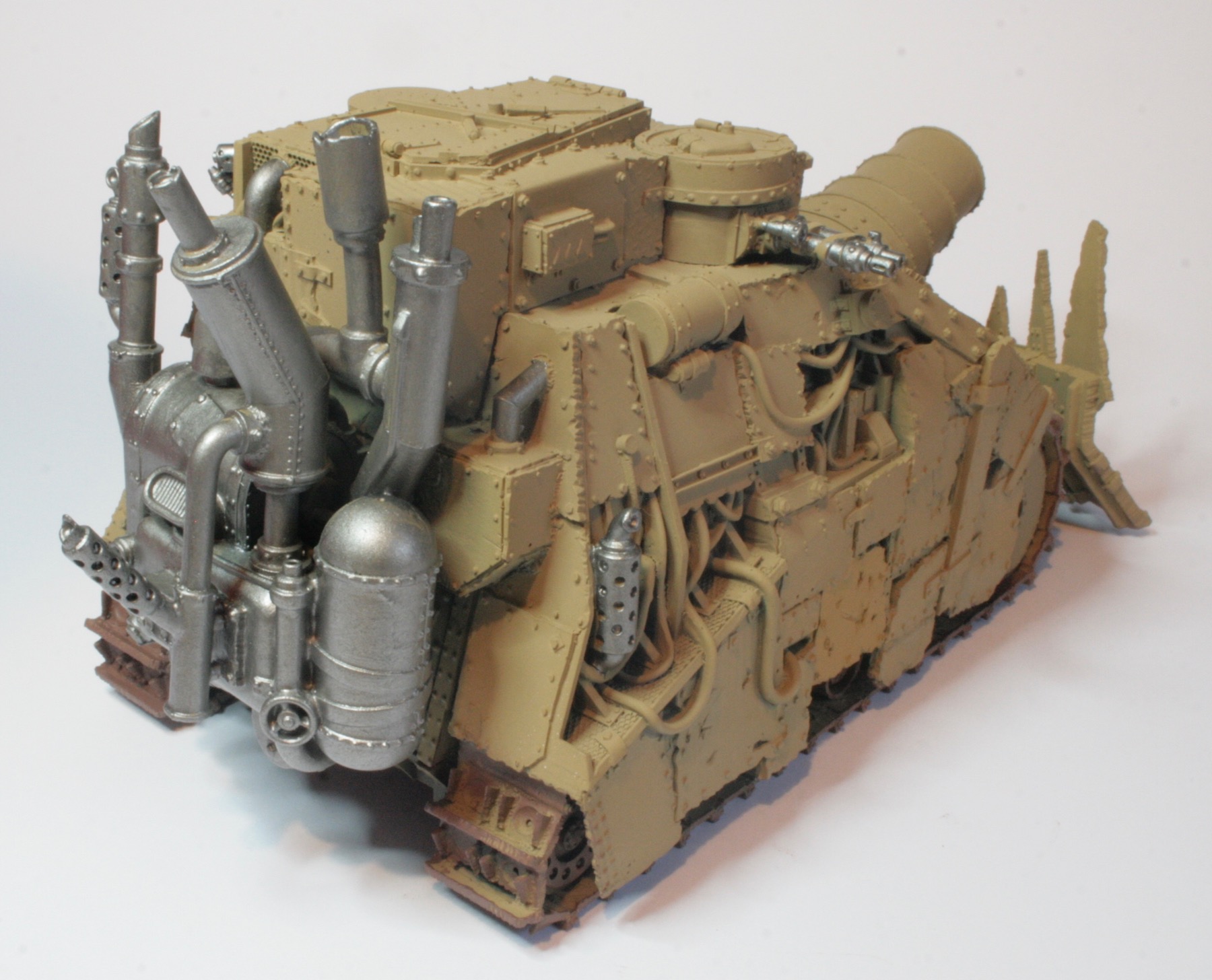
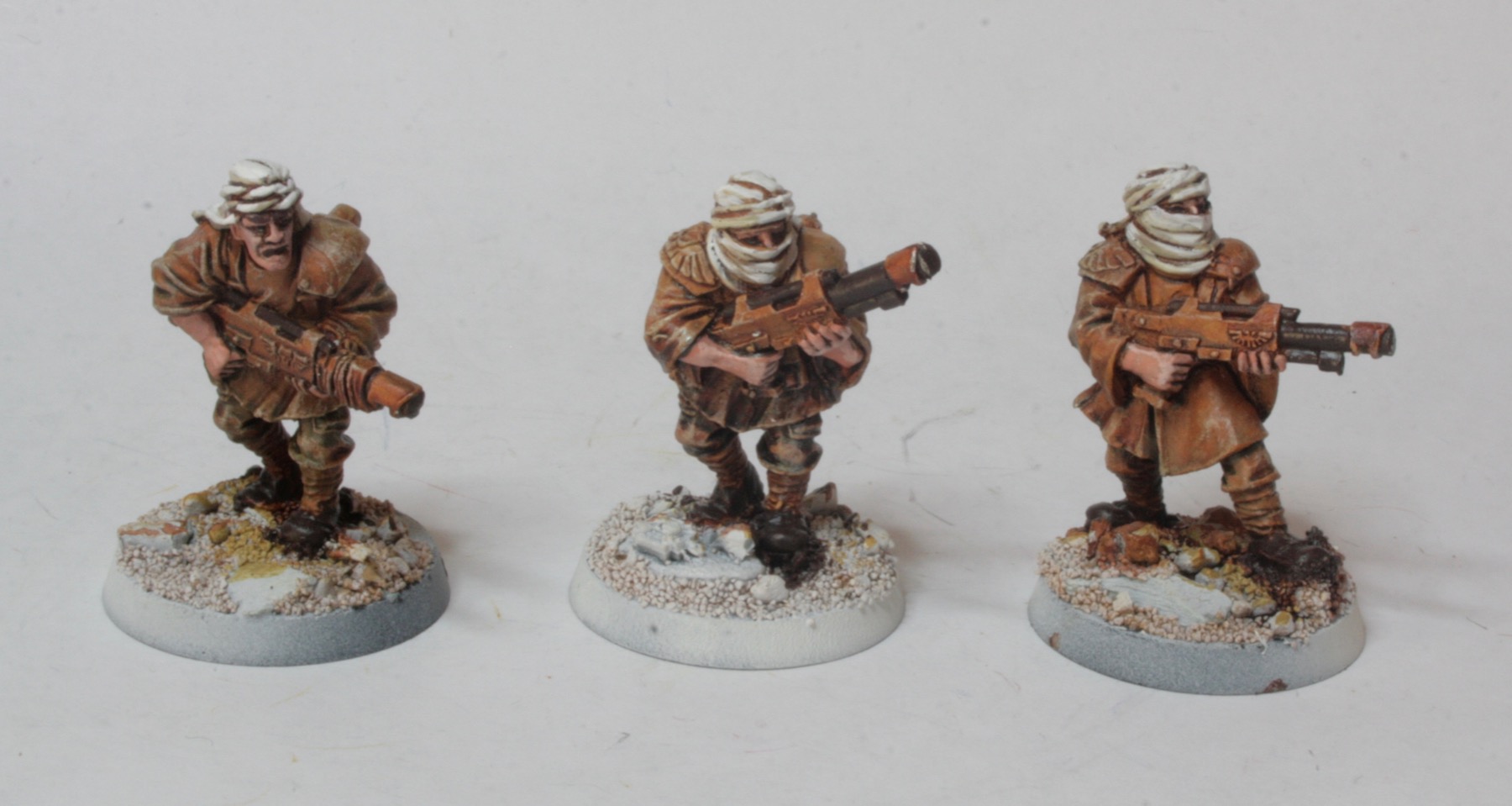
Having started building the model, I finished putting it together. Unlike earlier GW models there is less room for variations on the model, so you are quite constrained on how the model is put together.

Ork Rukkatrukk Squigbuggy

The model though does go together quite easily, but there are a fair number of parts.

Ork Rukkatrukk Squigbuggy

The instructions are very clear and easy to follow.

Ork Rukkatrukk Squigbuggy

I didn’t glue in the driver, as I will paint him separately, as I will also do with the grots and other Ork crew.

I gave the underneath of the model a black undercoat followed by a white undercoat. However the white had made the underneath somewhat dusty…

I gave the underneath of the model a black undercoat followed by a white undercoat.

The white undercoat brings out a lot of the detail on the model.

You can see I added the cab rollbar for undercoating, but I didn’t glue it into position.

See the full workbench feature on the Ork Rukkatrukk Squigbuggy.

Undercoating the Morris CS9 Armoured Car

The Morris CS9/Light Armoured Car was a British armoured car used by the British Army in the World War II. The vehicle was based on a Morris Commercial C9 4×2 15-cwt truck chassis. On this chassis a rivetted hull was mounted with an open-topped two-man turret. The armament consisted of either Boys anti-tank rifle and Bren light machine gun or Vickers machine gun. The vehicle carried a No. 19 radio set.

The prototype was tested in 1936. A further 99 cars were ordered and were delivered in 1938. Thirty-eight of these cars were used by the 12th Royal Lancers in the Battle of France, where all of them were destroyed or abandoned. Another 30 served with the 11th Hussars in the North African Campaign. It was found that when fitted with desert tyres the vehicle had good performance on soft sand. However, its armour and armament were insufficient. The vehicle was retired halfway through the North African Campaign.

Morris CS9/Light Armoured Car

This is the finished version of the Bolt Action model, as seen on the Warlord Games website.

The pack contains a resin and metal kit. The hull and turret are resin, the wheels, guns and axels are whitemetal.

Having glued the axels and wheels to the main hull, I glued the weapons to the turret. I also managed to stick the headlamps into place, this was much harder than it looks and it took a couple of attempts.

Morris CS9 Armoured Car

Morris CS9 Armoured Car

I gave the underneath of the model a black undercoat followed by a white undercoat.

Morris CS9 Armoured Car

Morris CS9 Armoured Car

Morris CS9 Armoured Car

The next stage will be the base coat. I will be trying to replicate this paint scheme which shows a camouflage disruptive pattern.

Morris CS9/Light Armoured Car

See the full workbench feature on the Bolt Action Morris CS9 Armoured Car.

I also have a Flames of War blister of a 15mm Morris CS9 as well.

Inquisitorial Reinforcements

A few days ago I mentioned I had the (relatively) new Achilles Ridgerunner as a vehicular reinforcement for my Daemonhunters forces.

As well as my other Daemonhunters Inquisitorial Stormtroopers which are based on the Cadian Kasrkin I have also decided to add a unit based on the Tallarn or I may just use them as inducted Imperial Guard.

I have a blister and boxed set of Tallarn Imperial Guard troopers. I checked an old box of miniatures I had and realised I also had unopened blisters of the Tallarn Lascannon and Tallarn Autocannon.

This is how they looked from the (original) marketing material with the other heavy weapons in the range.

Tallarn Heavy Weapons

You can tell from the blisters how old they are as they have the letter E on them to reflect the prices of that time.

My favourite of the two models is the lascannon.

It reminds me of the British world war two six pounder.

I am thinking do I start painting these, or do I try and finish the other Tallarn models I have on the workbench.

Inquisitorial Achilles Ridgerunner

One of my more recent models is the Genestealer Cults Achilles Ridgerunner.

Achilles Ridgerunner

The Achilles Ridgerunner is an Imperial light exploratory vehicle often used to scout out new ore seams by mining guild prospectors and newly discovered terrain on Frontier Worlds by geological surveyors.

Because of its speed, range and sheer durability, the Achilles Ridgerunner also has proven to be very popular for use with the outriders and scouts of the Genestealer Cults.

Achilles Ridgerunners range into deadly frontier environments, their pilots scanning for promising resource deposits and communicating their location back to base. Though well equipped to engage enemy scouts and outriders, the Achilles Ridgerunner’s true qualities lie in its ability to rove ahead of the cult’s main forces, scouting out potential ambush sites and routes of ingress into the foe’s territory.

I really do like this model, and as it is an Imperial light exploratory vehicle, I decided that I could use this to support my Daemonhunters force of Inquisitorial Stormtroopers, some of whom are Cadian Kasrkin and some are Tallarn Imperial Guard.

It comes in an A5 sized box with two sprues.

Darth Vader

Something I have been thinking about getting for a while now was the Fantasy Flight Games Star Wars Legion boxed core set. So I was well pleased to get it for Christmas.

There are thirty-three easily assembled figures in the boxed set including Darth Vader.

Once a heroic Jedi Knight, Darth Vader was seduced by the dark side of the Force, became a Sith Lord, and led the Empire’s eradication of the Jedi Order. He remained in service of the Emperor for decades, enforcing his Master’s will and seeking to crush the fledgling Rebel Alliance. But there was still good in him…

Darth Vader has three components, his body, arm and light sabre and his head with a cape.

The model goes together very easily.

Due the nature of the plastic used for the model the light sabre is a little bendy and doesn’t sit straight. I am wondering if I should replace it with some plastic (or even metal) rod.

I used superglue to stick the model together and to it’s base.

FFI (Forces Françaises de l’Intérieur) Char B1

The French Char B1 is one of my favourite tanks, probably as a result of making that Matchbox plastic kit of the Char B1 and the Renault FT17 when I was young. 

So it was probably a no brainer to get one of these for my French partisan band.

The Char B1 was a specialised break-through vehicle, originally conceived as a self-propelled gun with a 75 mm howitzer in the hull; later a 47 mm gun in a turret was added, to allow it to function also as a Char de Bataille, a “battle tank” fighting enemy armour, equipping the armoured divisions of the Infantry Arm.

Among the most powerfully armed and armoured tanks of its day, the type was very effective in direct confrontations with German armour in 1940 during the Battle of France, but slow speed and high fuel consumption made it ill-adapted to the war of movement then being fought. After the defeat of France, captured Char B1 (bis) would be used by Germany, with some rebuilt as flamethrowers, Munitionspanzer, or mechanised artillery.

What I had discovered in my research about the FFI (Forces Françaises de l’Intérieur) was that they had re-captured many of the German Char B1s and used them against the Germans. 

B1-bis FFI Vercors of 13rd Dragons - La Rochelle, May 1945

The model is a plastic kit and comes in a nice box complete with decals and instructions.

Bolt Action Char B1 bis

There are two sprues in the box.

The kit does go together relatively easily.

I had a few issues when putting the frontal weapon into place and where the top hull joins the bottom hull.

There are quite a few options when it comes to putting it together, if you want an original vanilla French Char B1, a captured German version or, as I am doing a liberated version for use in 1944 and 1945.

See the full workbench feature on the Bolt Action FFI Char B1.

Starting the Rukkatrukk Squigbuggy

The Rukkatrukk Squigbuggy is a type of Ork attack vehicle. The first Rukkatrukk Squigbuggies were invented by enterprising Snakebites in order to feed Speed Freeks on the move. Mobile pens full of edible squigs, the vehicles kept pace with the warband’s Warbikers, buggies and Trukks while their grinning crews hawked their wares at the tops of their lungs.

As with most models these days, the kit comes in an A4 sized box.

Rukkatrukk Squigbuggy Box

The entire model comes on a single sprue.

The model goes together quite easily. The instructions are very clear and easy to follow.

However unlike earlier GW models there is less room for variations on the model, so you are quite constrained on how the model is put together.

This means that what you see on the box is what you are going to get. The squigs for example are moulded into the truck, so if you wanted to use the truck as a basis for a different kind of Ork vehicle then you will need to do some serious conversion work to make that work. A lot of the “weaponry” is integrated into the body parts, so you can’t easily omit them from the construction process.