Constructing the Flames of War Cromwell ARV

These are the resin and metal pieces of the Cromwell ARV.

I stuck the wading gear and hull MG to the hull and the front and rear trackguards to the tracks.

The tracks were then glued to the hull.

The model went together very easily and I am impressed with the detail on the model. Next stage will be the white undercoat.

See the workbench feature on the Cromwell ARV.

A glass of wine perhaps?

As well as the new Italian Monastery, another piece of new scenery for Flames of War will also be released on the 30th July and that is some Italian vineyards.

Fancy a glass of wine anyone?

Of course these vineyards would work equally well in France, though Normandy was more likely to contain apple orchards, other areas of France which the Allies fought through did contain vineyards. They look like they are made out of solid resin and I am not sure how effective they will look, as most vineyards are not as solid as these appear.

For example have a look at this real Italian vineyard.

As you can see yes there are lines of vines, but they are not very solid. I am thinking that using wire and foliage might result in a better looking vineyard than the resin models.

What do you think?

Photo source.

Grot Tank III

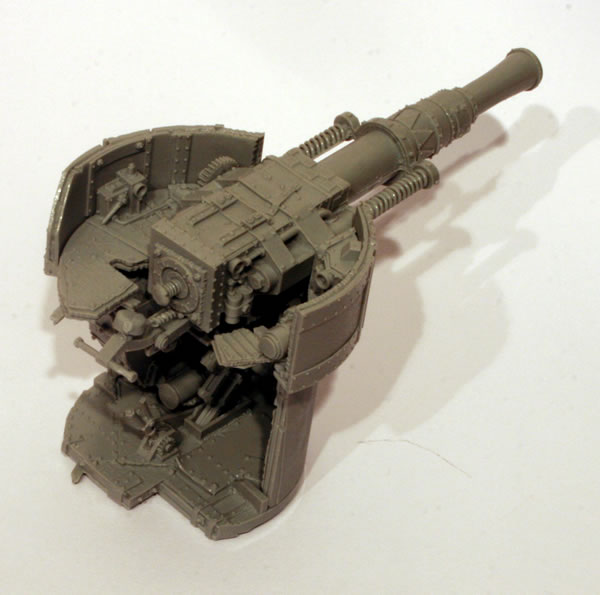
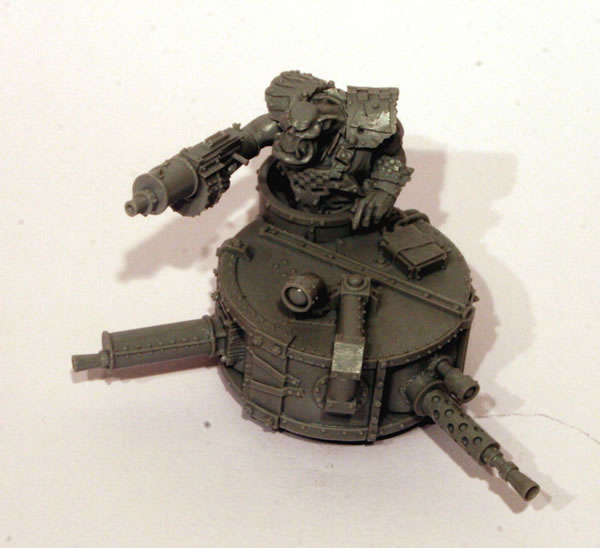
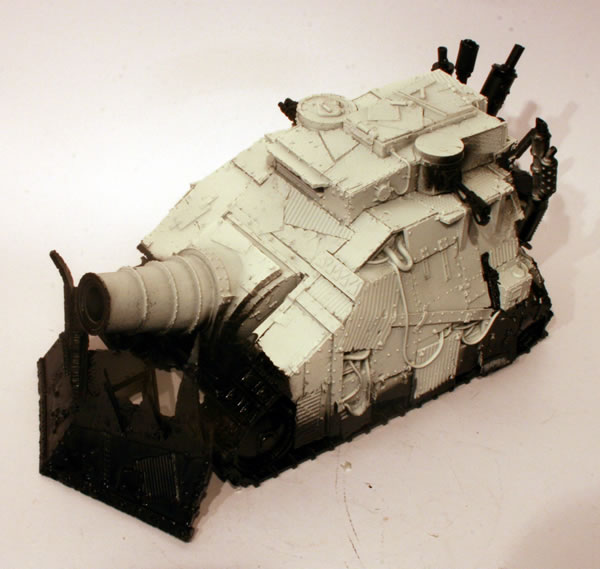
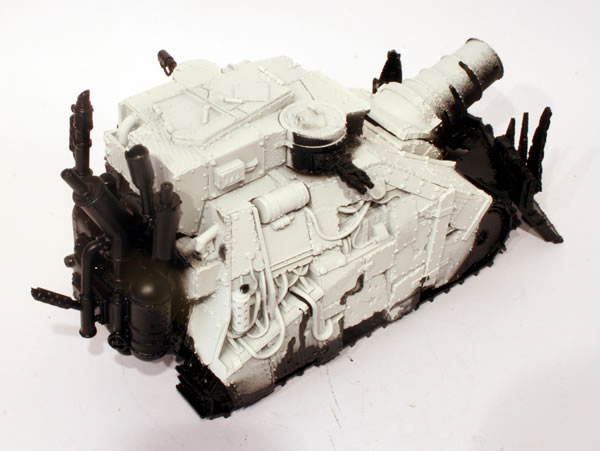
The lunatic product of the deranged imaginations of grot riggers and scavs that have spent far too long basking in the insane genius of the Big Meks, Grots Tanks are diminutive armoured vehicles made to imitate the far larger Ork Wagons and Tanks.

The set contains four different variant chassis, tracks, exhausts and turrets as well as four fantastic Grot Tank Kommandaz and 5 different, incredibly shooty, weapon options.

I picked up a set of Grot Tanks on a recent visit to Warhammer World. After washing the resin, I then looked at the four main bodies and tracks deciding which was going to go with which.

This combination, probably combine my least favourite pieces of the entire set and as a result I put them altogether in one tank. If I was to get a second set, I would probably use this for conversion using parts from the Ork plastic kits. The hull for me is too “tall” whilst the tracks aren’t that bad, they are my least favourite fo the four as they look rather lightweight. I really don’t like the turret which is too Dalek like for me.

One of the problems you can have with Forge World models is that the resin is more brittle than plastic. The sprue lugs are also much “bigger” so as a result is possible to damage the model. As you can see from this close-up of the track, I did manage to snarl up the track.

I don’t think it will show too much, but shows you do need to be careful.

The workbench feature on the Grot Tanks is broken down into four separate features, one for each of the Grot Tanks.

Grot Tank I
Grot Tank II
Grot Tank III
Grot Tank IV

Forged in Battle 15mm French

I was recommended these Forged in Battle miniatures at a gaming shop in Birmingham. They look well casted and a similar size to Flames of War infantry.

I bought the mortar team and the rifle platoon.

Will be getting some Flames of War plastic bases for them too.

Flames of War French Reinforcements

On the 23rd July, my French Blitzkreig forces will be able to get some reinforcements with some new releases for them for Flames of War.

The FRX05 All-Terrain Towed 105mm Artillery Battery.

The FRX06 Self-propelled 75mm Anti-aircraft Platoon look like relics from World War One. Old lorries with 75mm AA guns on board, just the thing to attempt to shoot down the odd stuka or three.

The final release for the French is the FR201 Lorraine 38L Armoured Carrier.


Used as a supply carrier, many were later used by the Germans and converted in self propelled artillery.

Flames of War Churchill Platoon

Another new release from Flames of War is this boxed Churchill Platoon set.

Though designed for Cassino, it should also be suitable for the Normandy campaign, though I did think it might be handy for a game based on the Dieppe raid in 1942.

I awakened to a stab of early morning sunlight searing my eyelids. My batman, Corporal Mino, peered through the tent flap. “Sir wake up! Admiral Mountbatten has ordered you to attend a debriefing in London two hours from now.”

I sat up groggily. Christ, I was a mess. I was still wearing my battledress, filthy, streaked in grime and dried blood.

“They said you were the only officer of the whole brigade who came back from the beaches. You’re all that’s left.”

Captain Denis Whitaker, Royal Hamilton Light Infantry

August 19th 1942 was a date that many Canadians would never forget. On that day, three thousand Canadian infantry troops (out of an initial total of five thousand) were killed, wounded or taken prisoner on the beaches of Dieppe on the French coast. The Royal Navy lost boats and personnel, the RAF and RCAF had one hundred and eight planes shot down with sixty pilots lost. The Allies had raided a heavily fortified port and had paid the price, a heavy price.

In 1942, Aldof Hitler and his armed forces held most of Europe and was probing deep into Russia. Stalin called on his allies to open a second front.

The allies knew that if they were to liberate France than they would need a port, logistics is what wins wars, not necessarily better weapons The Dieppe raid was conceived as a precursor to a larger landing in France at some later date.

Many lessons were learnt on that day, but just under two years later on the 6th June 1944, the allies landed on the beaches of Normandy, D-Day was the beginning of the end of the Nazi occupation of Europe. D-Day saw the use of “funnies”, tanks specially designed to overcome beach obstacles, mulberry harbours and a wide range of other new equipment.

The Churchill Platoon set is out on the 30th July.

Russian Land Tank

Sometimes what happens in the real world is more weird than what you make up for science fiction.

Take this Russian tank design from 1917 for example, this is a 1/35th scale model of the tank.

The drive assembly consisted of two 240 hp Maybach engines, one for each big wheel. The wheels themselves (designed by Zhukovskiy) had a T-shaped metal mid-section. A wooden overlay was then fastened to the shelf of the T-beam. The drive itself was very simple. Each engine drove an automobile wheels, who was in it’s turn pressed down (by means of a railway carriage spring) until it touched the wooden overlay of the big wheel, and by counterrotating, the automobile wheel transferred the energy from the engine to the big running wheel. (In case of over-heating, the driving wheels disengaged and protected the engine from seizing.) It was thought that the Nepotir should be able to reach a top speed of some 17 km/h – which was pretty impressive compared to other WW1 AFV:s.

The hull of the vehicle would have one top-mounted centrally placed turret, equipped with MG:s and/or light cannons, giving the Lebedenko a total height of some 12 meters. In addition to this, at the outer flanks of the hull, small MG sponsons was to be placed. There was also a small weapons turret placed underneath the belly of the beast.

The construction progressed pretty quick and at the end of July 1915, the Nepotir was ready for it’s first trials. Because of it’s weight and size, it was designed to be transported in sub-assemblies, to be assembled again before action at the front (like it was later envisioned for the huge German K-Wagen). This procedure was followed, and the sub-assemblies were transported to the testing ground, some 60 km from Moscow. At the re-assembly it was found out that the weight of the machine exceeded calculations with some 50%, due to the use of thicker metal. In August the test began in front of a high commission. It started well. The vehicle moved well over some firm ground, crashed a tree, but then went into a soft patch, where the small double wheel got stuck in a ditch. Soon it was obvious that the engines were to small, as they were unable to free the rear double wheel.

After this fiasco, two of the designers, Mikulin and Stechkin, worked on equipping the vehicle with more powerful engines, but this plan was never fulfilled. The military had decided against the project. It was simply too expensive, it had thus far cost some 250.000 roubles. Also the vehicle (and then primarily it’s wheels) was deemed to be too vulnerable to artillery fire, which probably was quite true. (And by this time both France and Britain were near to completing new types of all-terrain armoured fighting vehicles, running on caterpillar tracks.)

The Lebedenko stood there, bogged down, for the rest of the war, but was finally scrapped in 1923.

This is certainly something that would sit very well in a Victorian Science Fiction scenario. Also if you play alternative world war one scenarios then this would of course work well too, well it was designed for that war.