Engines on the Kill Bursta

Forge World’s big Ork tank mounts a huge gun ready to take on any Imperial BaneBlade or even Titan. The Kill Bursta mounts a huge-bore Kannon capable of destroying bunkers and siegeworks with ease.

The last time I looked at the model I had given the model a double undercoat of white and black and then using a thinned Chaos Black I touched up the black basecoat. I also black undercoated certain parts of the engine.

The first thing I did was something different and sprayed the upper surfaces of the model with Citadel Spray Zandri Dust. Using a brush I painted the tracks with Gorthor Brown.

I painted the rear engine with Leadbelcher. I also painted the small turret weapons with Leadbelcher as well.
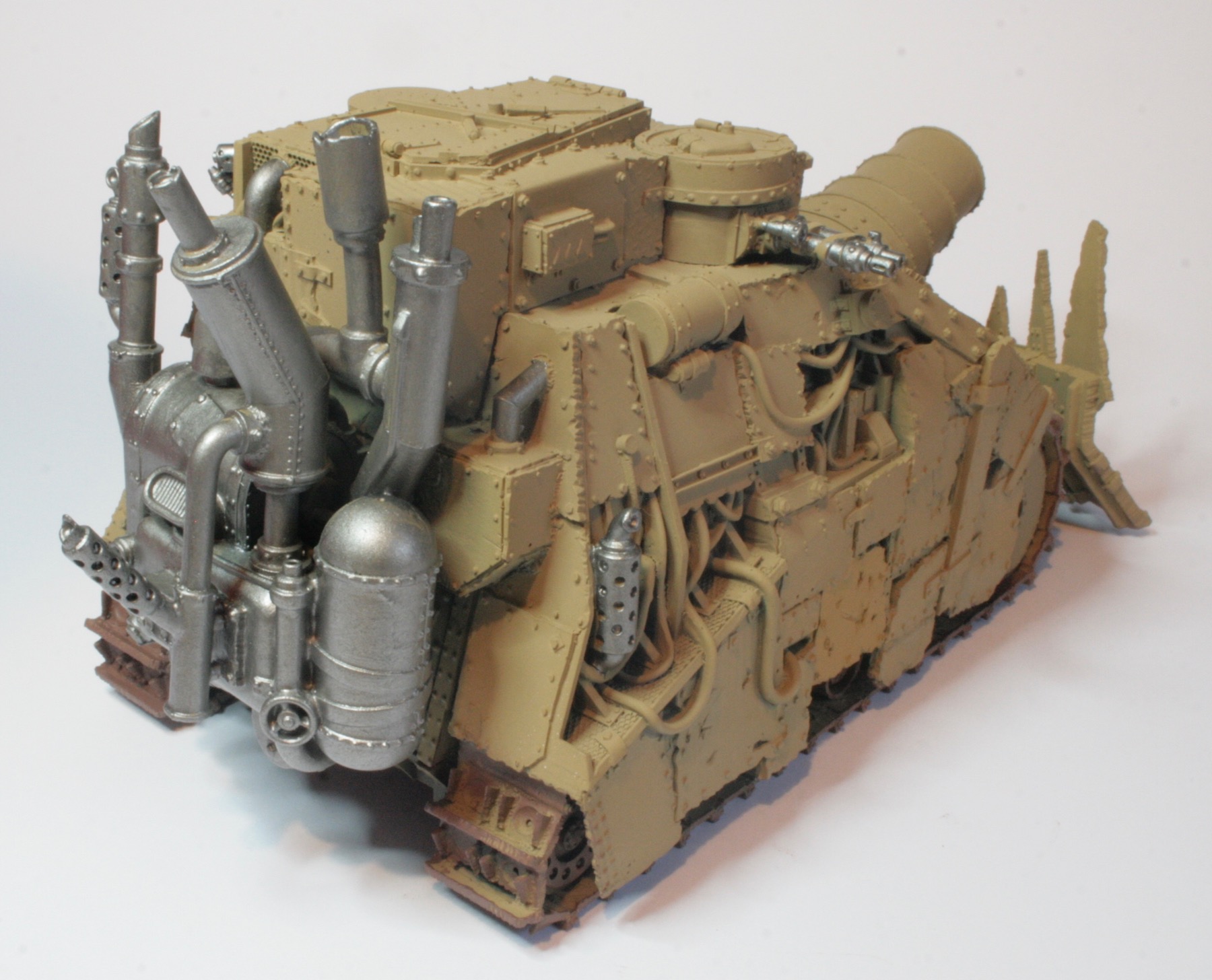
This covered the basecoat rather well, and the black undercut added shadow.

I also started painting some of the panels with other colours, notably Balor Brown and Ushabti Bone.
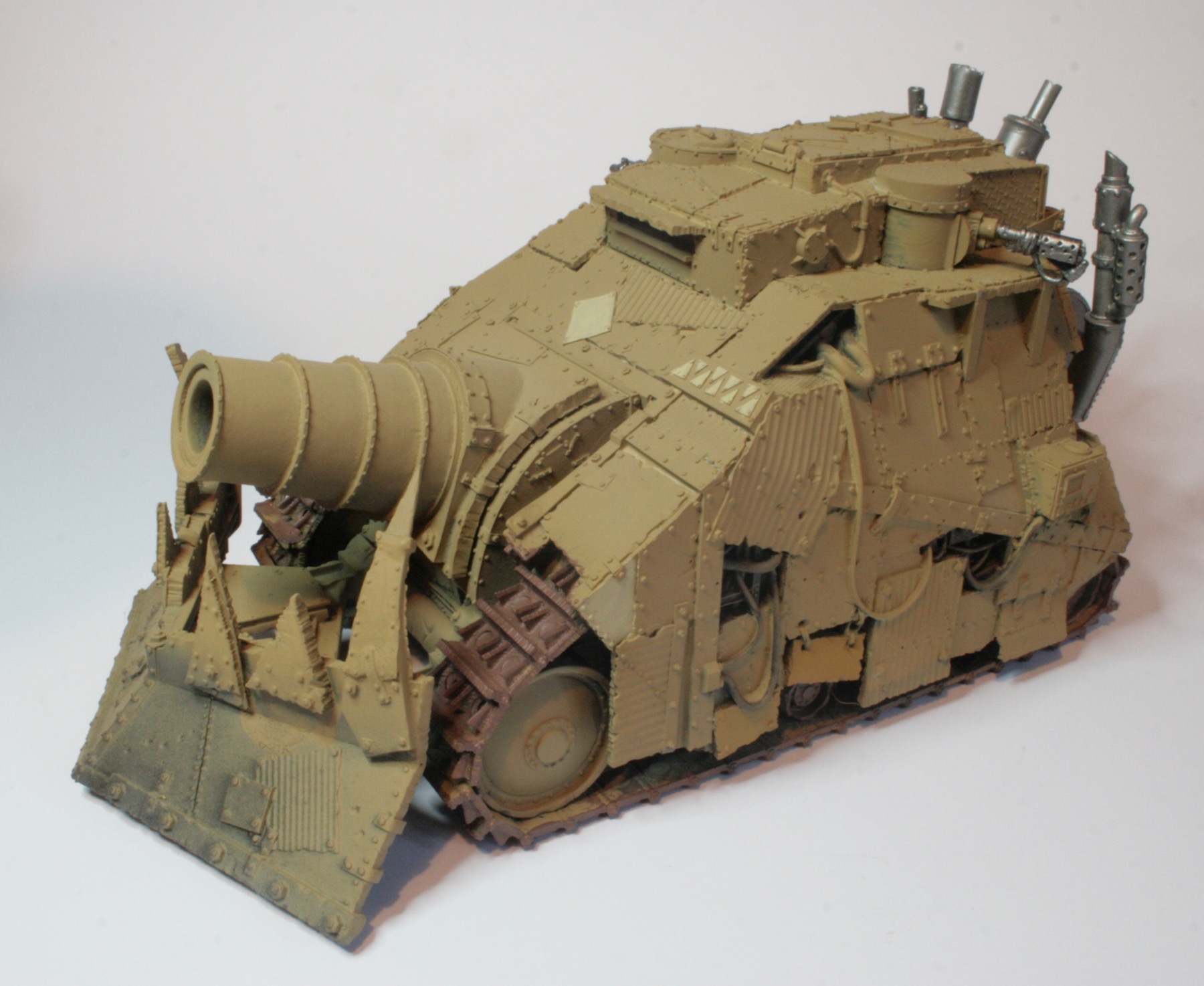
See how I constructed and undercoated the beast on the workbench feature on the Kill Bursta.

FW-190

This FW-190 was on display at RAF Cosford.

The Focke-Wulf Fw 190 was a single-seat single-engine multi-role fighter-bomber, capable of carrying a larger bomb load than its counterpart the Messerschmitt Bf109.

Entering Luftwaffe service in August 1941, the Fw 190 proved superior in many respects to the Royal Air Force’s main frontline fighter, the Spitfire V. It took the introduction of the much improved Spitfire IX in July 1942 for the RAF to gain an aircraft of equal capability.

One of the more unusual roles for the Fw 190 was as part of the twin-aircraft drone combination, code-named mistletoe or Mistel. A single engine fighter was mounted on top of a twin engine bomber, and on lining up with the target the fighter detached itself, leaving the bomber, packed with explosives, to impact the target.

Cosford’s Fw 190 is a unique survivor of a Mistel combination. Surrendered in Denmark in May 1945, the Fw 190 was part of a combination with a Junkers Ju 88, and assigned to a unit which trained Mistel crews. Flown to Germany as a twin combination, the Fw 190 was then split from its Ju 88 in order to be ferried to the UK for examination. The Ju 88 half never reached the UK, and it is assumed it was scrapped.

The Royal Air Force Museum Cosford, located in Cosford in Shropshire, is a museum dedicated to the history of aviation and the Royal Air Force in particular. The museum is part of the Royal Air Force Museum, a non-departmental public body sponsored by the Ministry of Defence and a registered charity.

Inquisitorial Stormtroopers – Tallarn

I have some Daemonhunters Inquisitorial Stormtroopers which are based on the Cadian Kasrkin I decided many years ago to add a unit based on the Tallarn or I may just use them as inducted Imperial Guard.

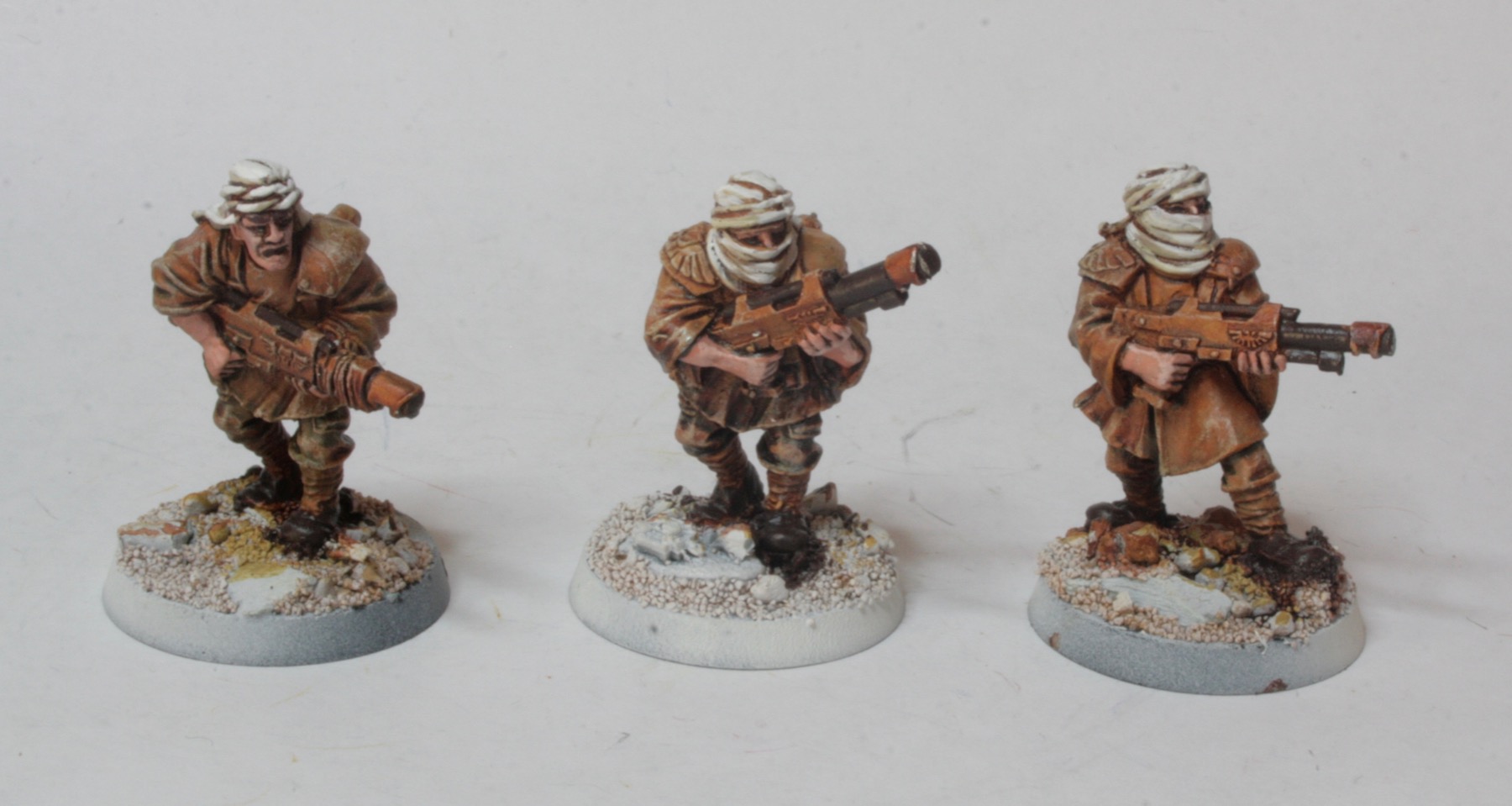
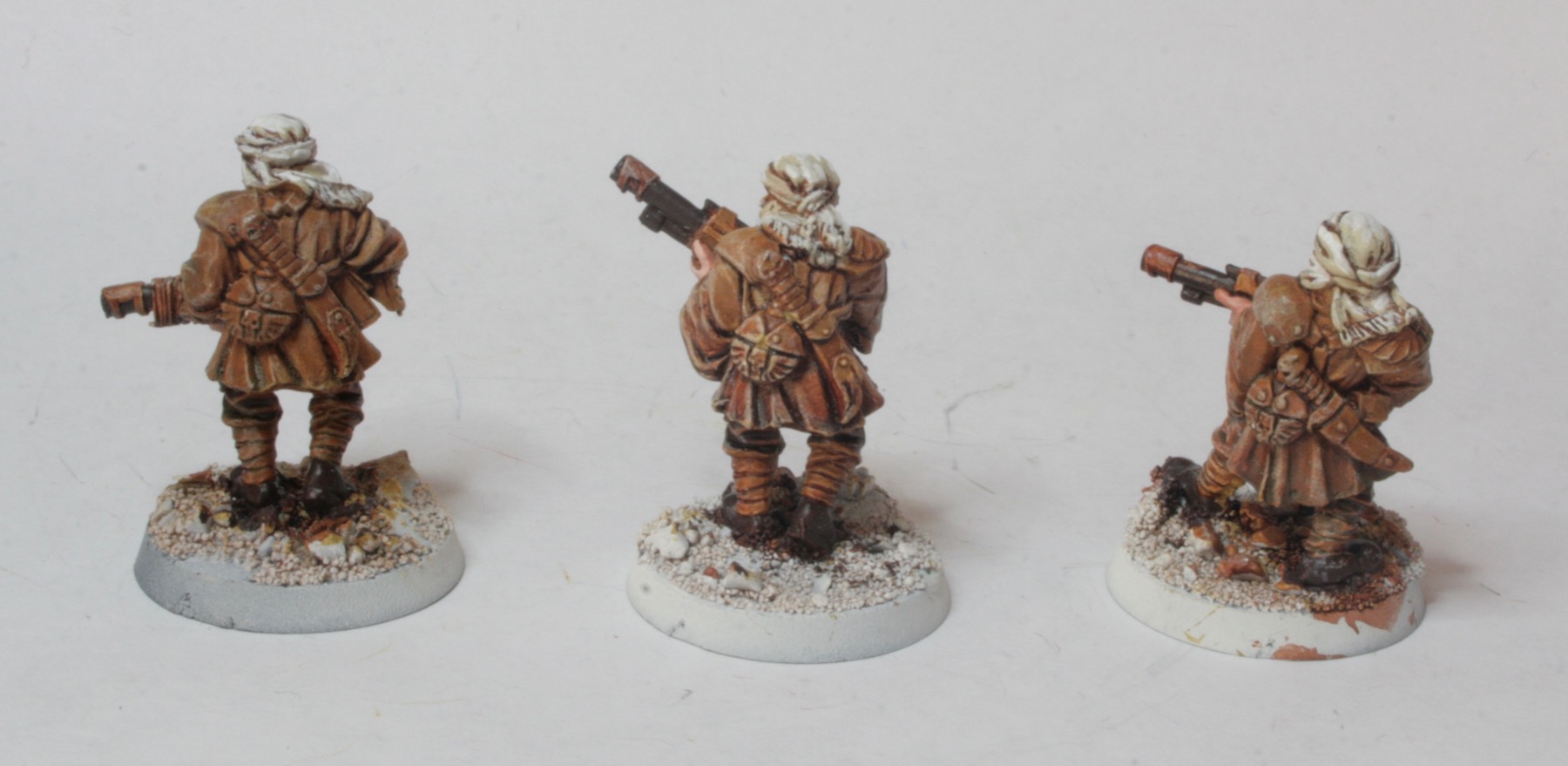
Having found some Tallarn Heavy Weapons blisters in a box, I dug around to see if I could find my other Tallarn models to finish them off. I did manged to find the boxed set, from which I had based and undercoated the models. I then later found the three models from the blister pack.

What did surprise me slightly was I had done some more work on them, but never got around to photographing them for the blog or website. As a result I had forgotten how much progress I had made with them.

I had done the flesh and drybrushed them. I had drybrushed the three models with Snakebite Leather and Bleached Bone. Unlike highlighting and glazes and the suchlike, drybrushing does not give as neat as a finish as those methods. However I quite like the dusty look for these desert based models and these are going to be gaming models, not Golden Demon entries!

I quite like them, but they could do with a little more work to finish them off. They are quite dusty looking, so I might give them a light wash of Serpahim Sepia to tone down that look and add a little more shadow. Back in the day when I painted these I had used an ink wash mix (as Citadel Shades weren’t around).

Certainly means I can look at the boxed set and get them finished, I am thinking I might use a Contrast paint on them to get them done faster…

Check out the workbench feature on the Inquisitorial Stormtroopers (Tallarn Blister).

Basecoating the Grot Mega Tank

I picked up the Grot Mega Tank at GamesDay 2010. It was available in limited numbers, but I was lucky enough to pick one up, before they sold out. I really do like this model alongside the Grot Tanks.

Hammered together out of junk, spare Mekboy know-wotz and unbridled Grot enthusiasm, the Grot Mega Tank adds even more firepower to the battlefield madness that has come to be known as a Grotzkrieg, terrifying Imperial Tacticians, Eldar Farseers and Chaos Warlords alike.

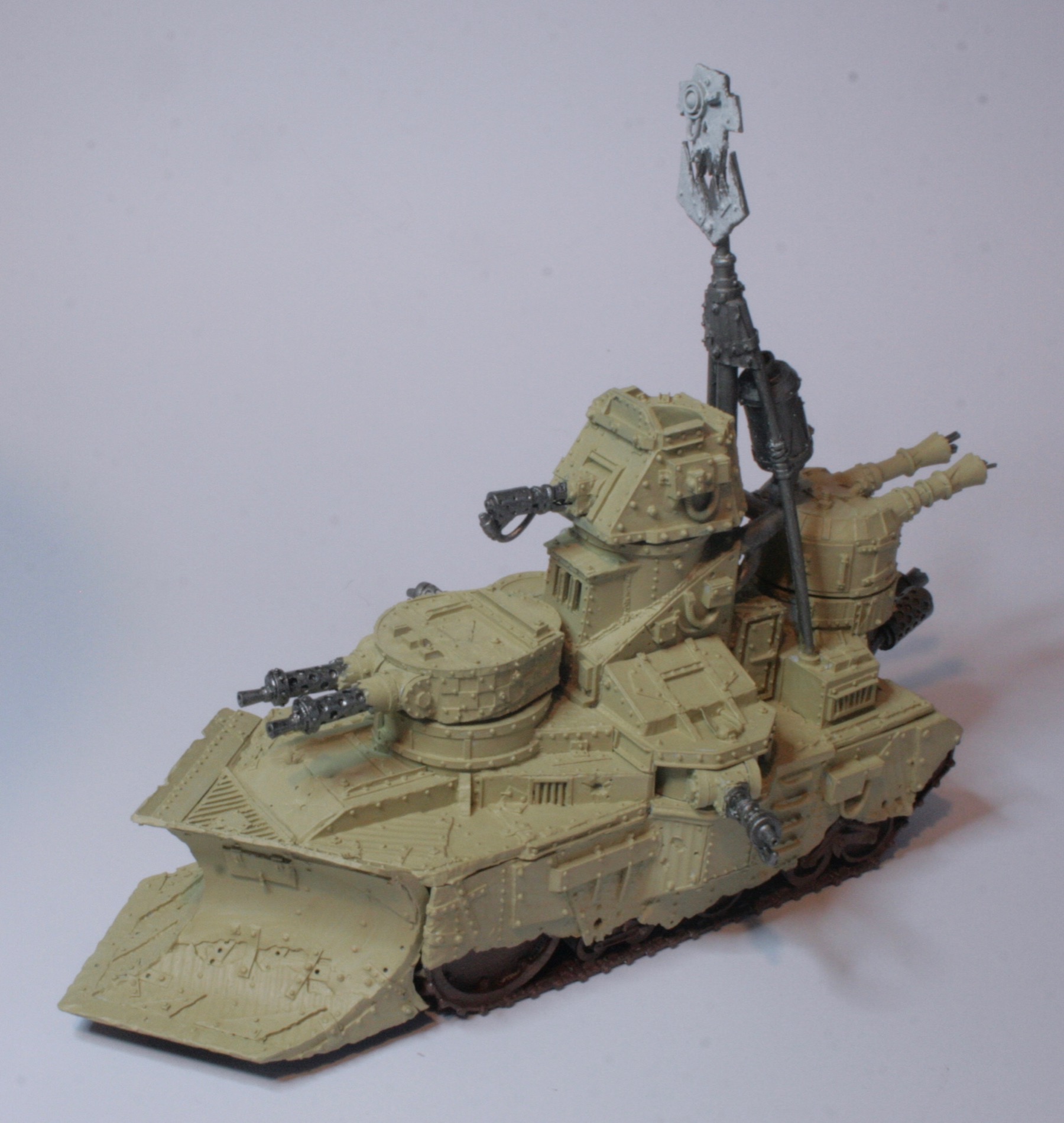
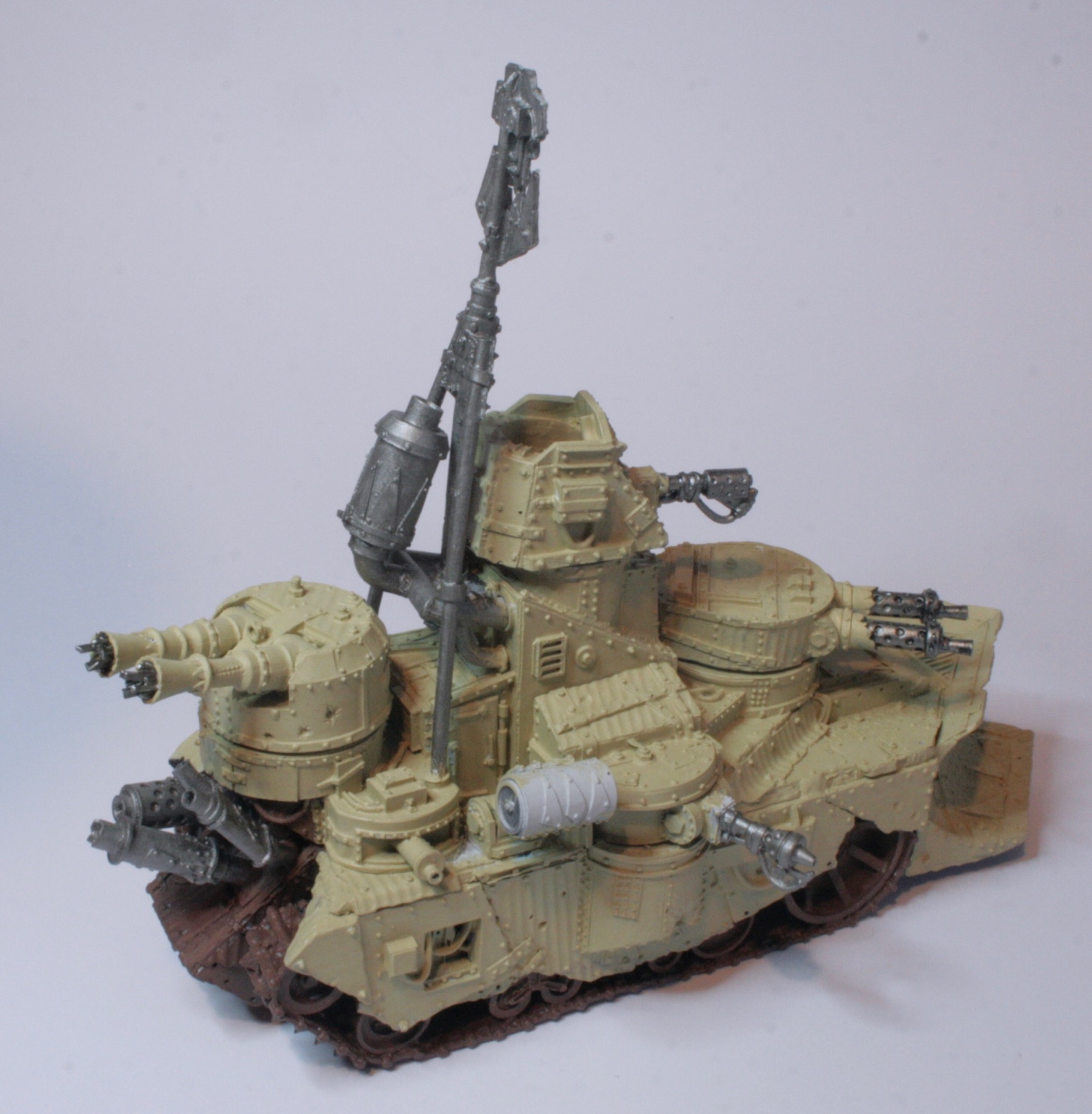
The model is very ship like with battleship style turrets and a prow shaped bow. It is a very ramshackle vehicle and looks like (as it should) if the grots have just thrown it together from parts lying around the battlefield and stuff stolen from a Mek workshop.

So after letting this model languish too long in a box, I got it out again to see if I could finish painting it. Having re-undercoated the model and starting the basecoat I finished off the hull with Ushabti Bone.

I painted the turret weapons with Leadbelcher. I also painted the main mast and funnel with Leadbelcher as well.


I had painted the tracks and the rear engine deck with Gorthor Brown. I painted the rear exhausts with Leadbelcher.

I still have some work to do on tidying up the basecoat, the depth charge and other gaps on the model.

I also need to find the deck Krew and get them undercoated and painted.

See the Grot Mega Tank Workbench.

Mechanicum Ordinatus Aktaeus

The Aktaeus is the most recognisable of the Ordinatus Minoris created and operated by the Mechanicum, a super-heavy transport designed to carve a path through the stony heart of a world to deliver its cargo of warriors to the centre of the battlefield. Known to the armies of the Emperor as the Imperial Mole, this vehicle is employed primarily as a siege engine capable of rendering even the most formidable fortifications pointless by burrowing beneath them.

M46 Patton

M46 General Patton

The M46 Patton was an American medium tank designed to replace the M26 Pershing and M4 Sherman. It was one of the U.S Army’s principal medium tanks of the early Cold War, with models in service from 1949 until the mid-1950s.

Reading the Hot War books from Harry Turtledove has inspired me to think about gaming some scenarios from the books. British Comets and Centurions versus Russians T34-85 and T54 Soviet tanks with American M26 Pershing and M48 Patton tanks. In the book there are also Sherman manned by (West) German forces.

Grot Krew

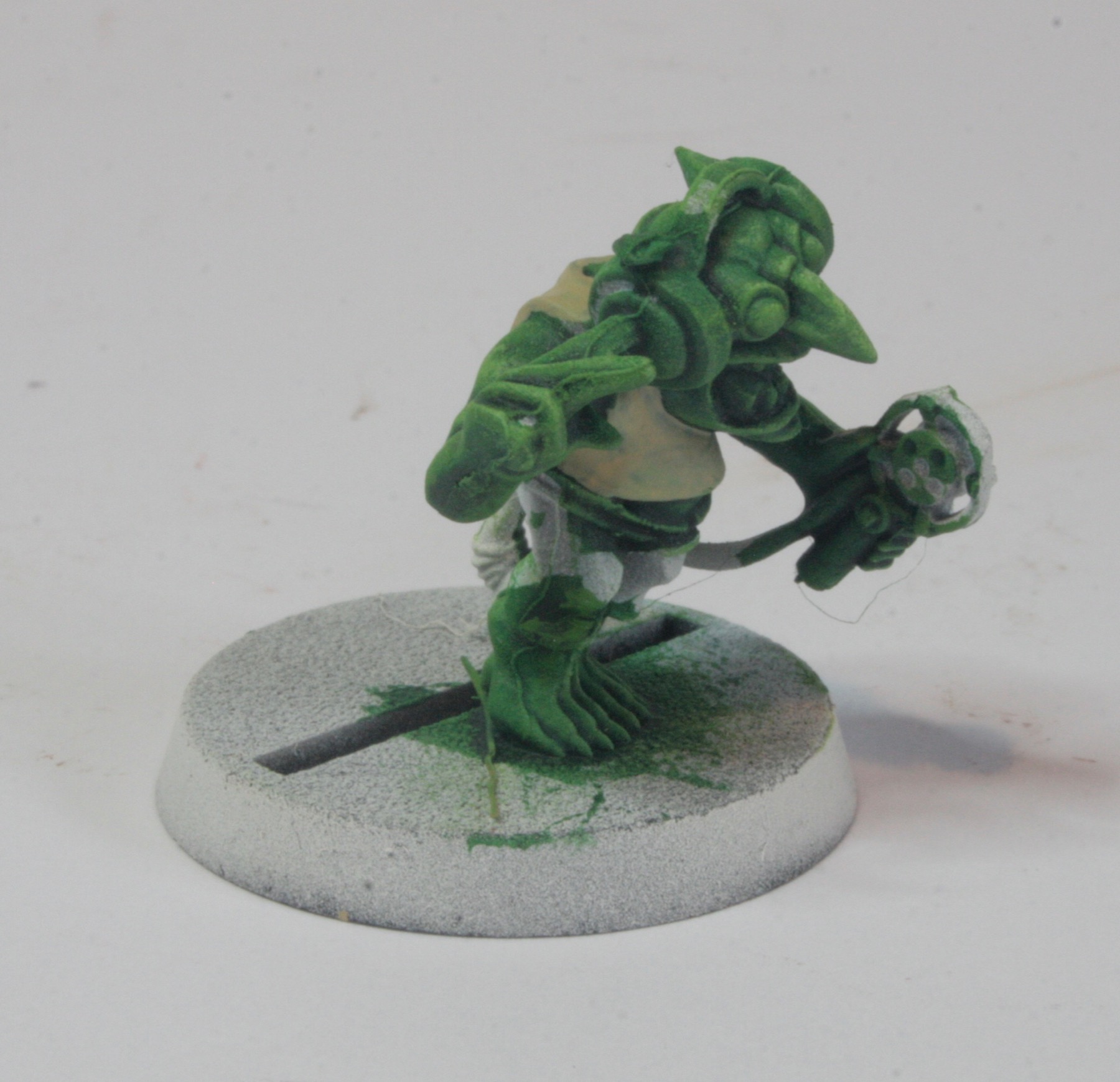
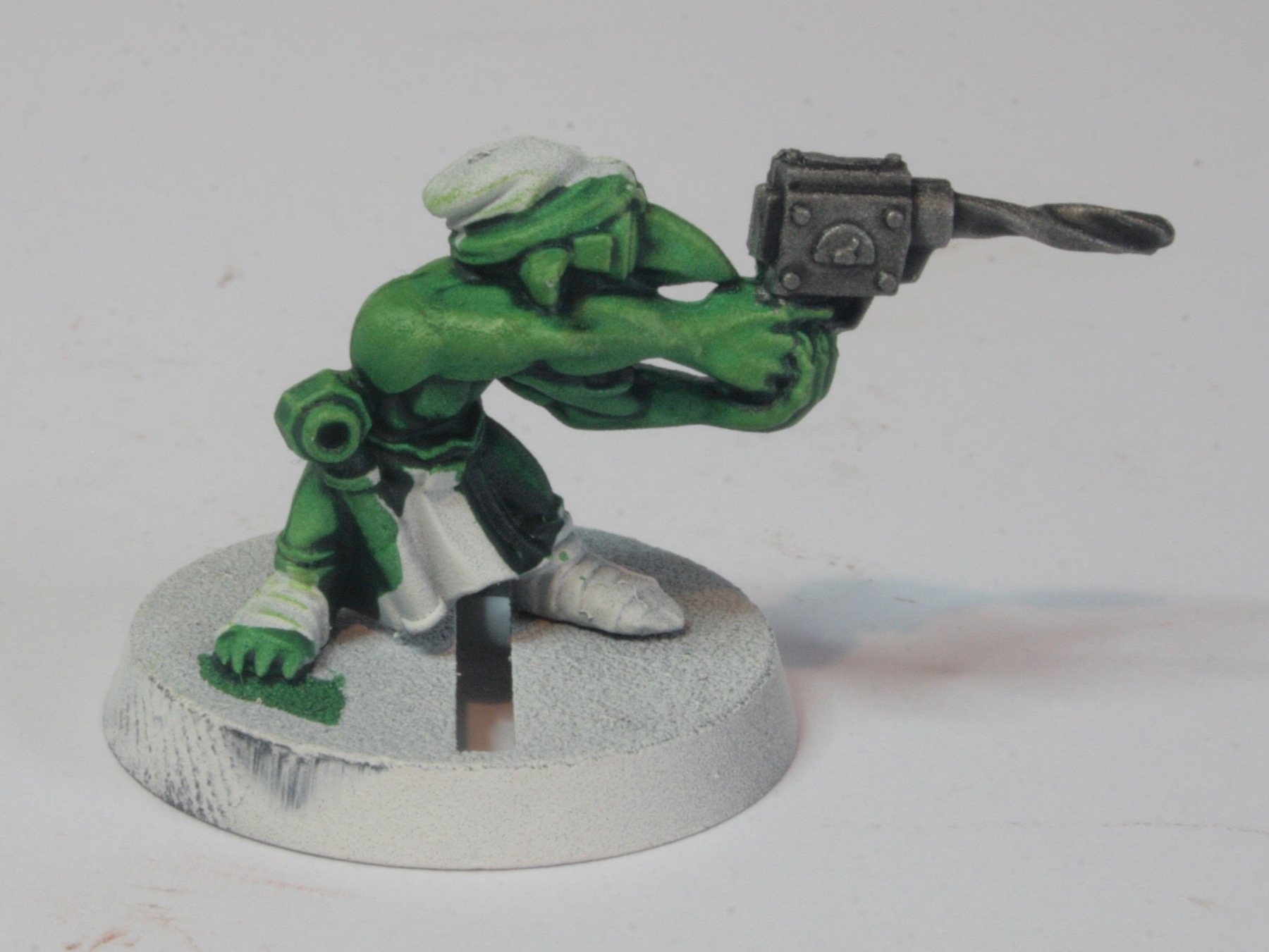
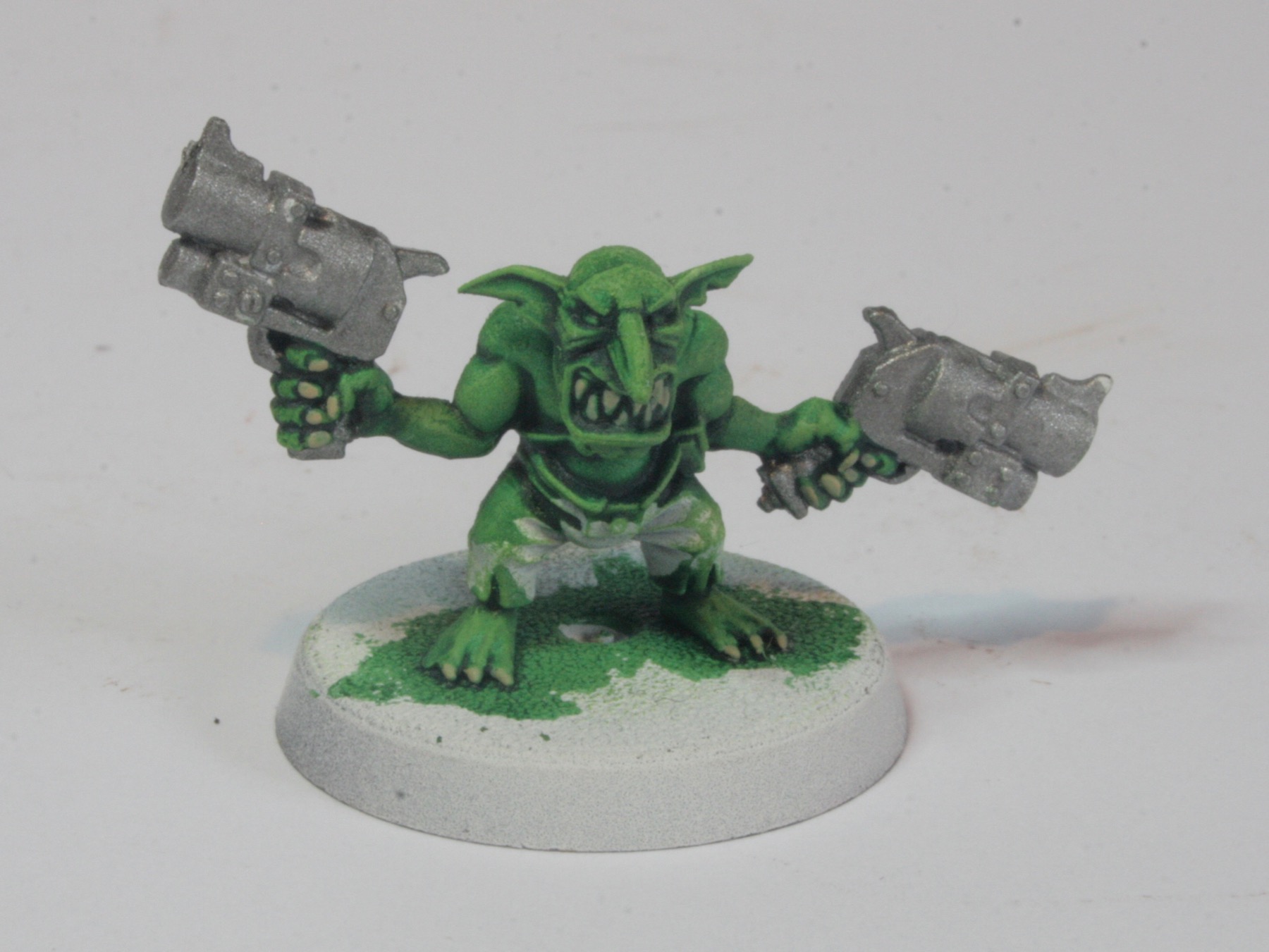
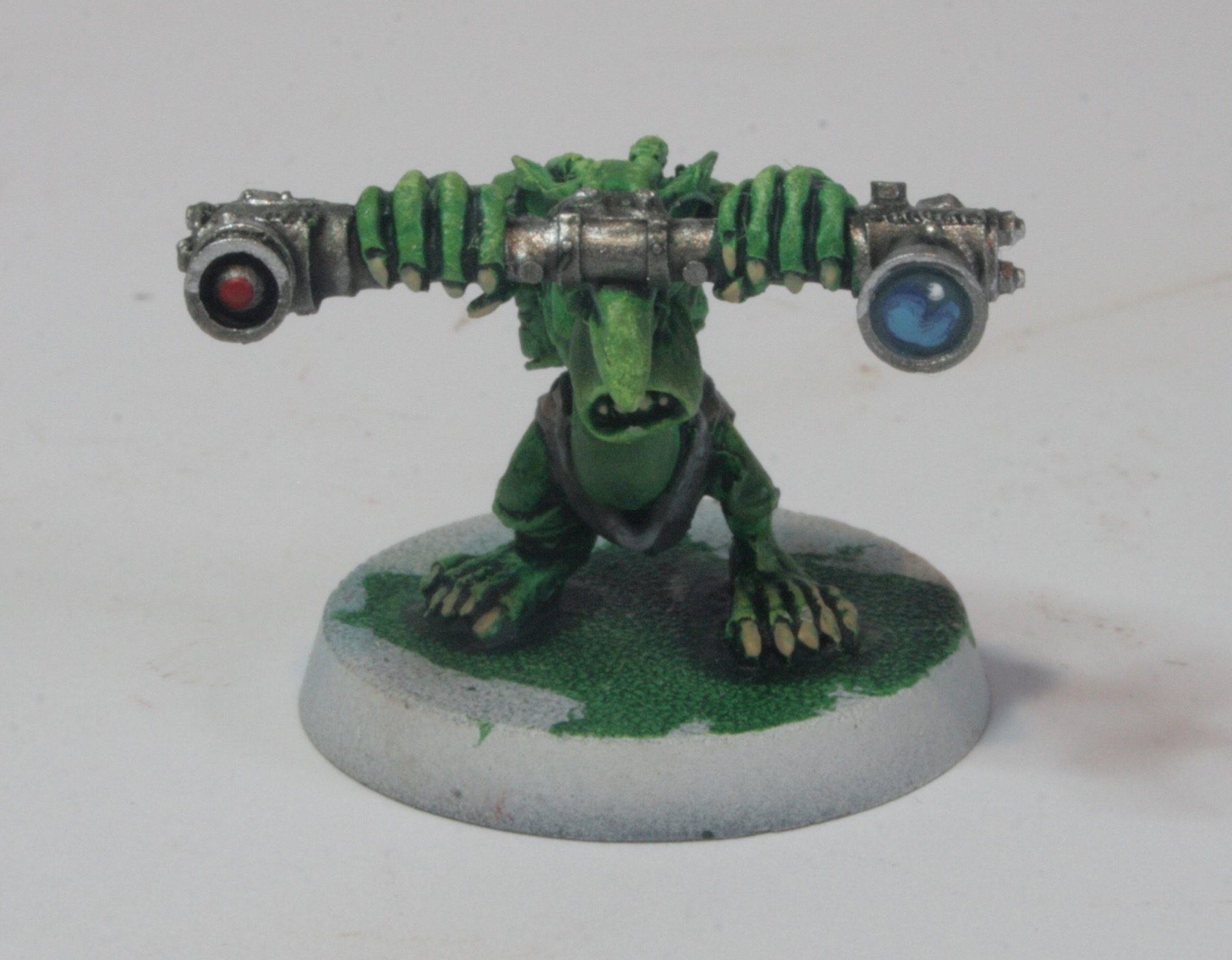
Across my Ork Big Gunz, heavy vehicles, even my Stompa, I have a variety of Grot Krew that need painting.

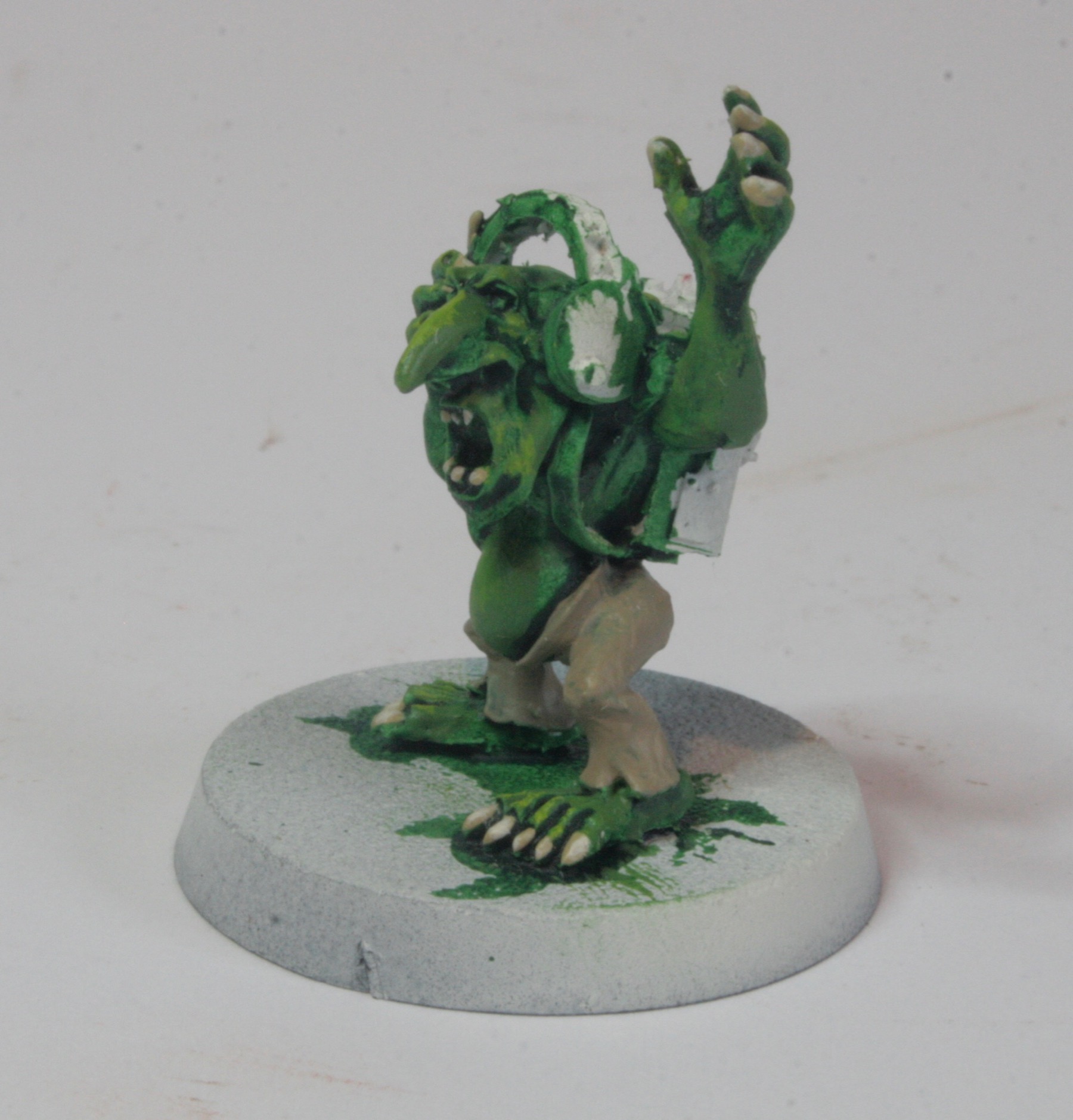
This is a Grot Gunner from the Forge World Kill Kannon.

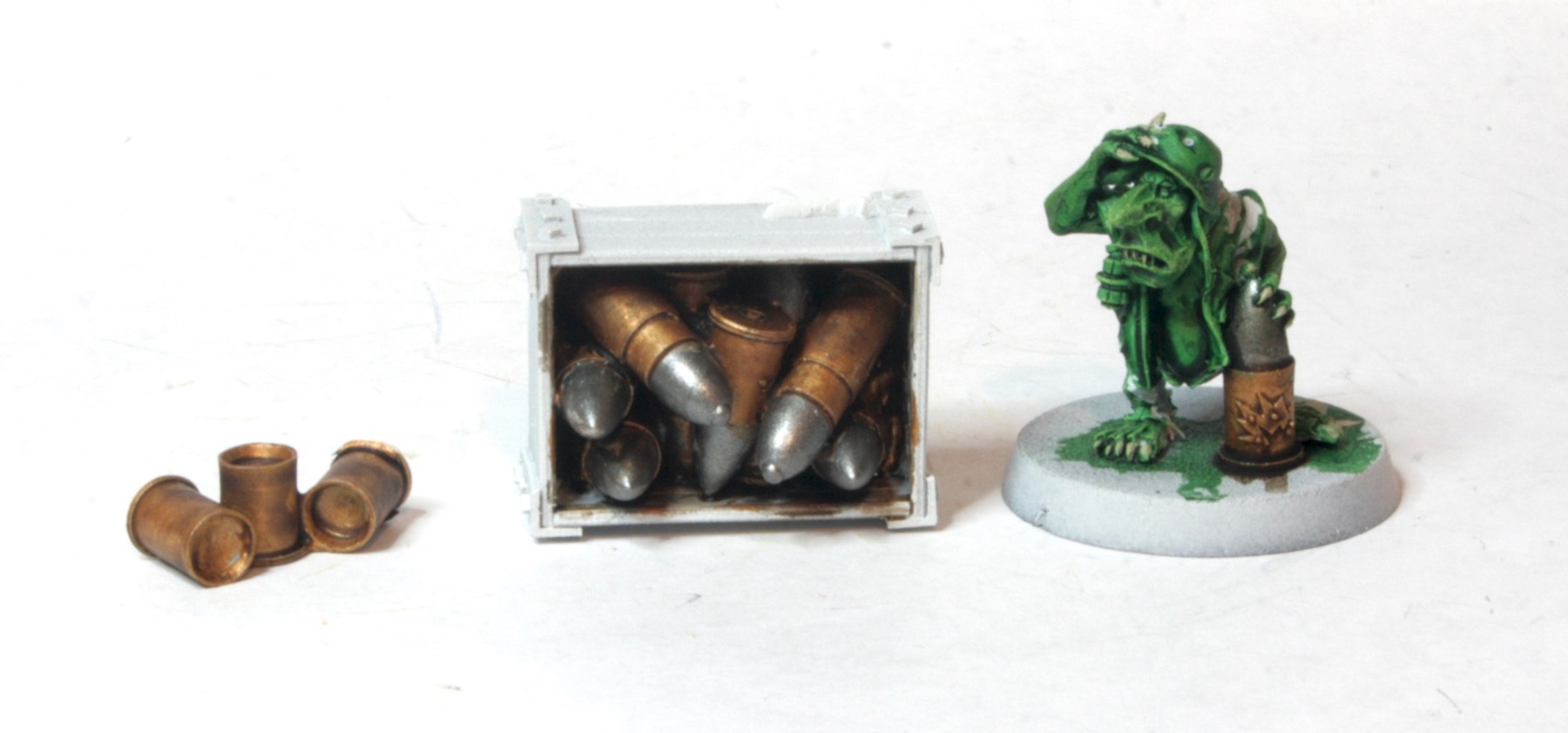
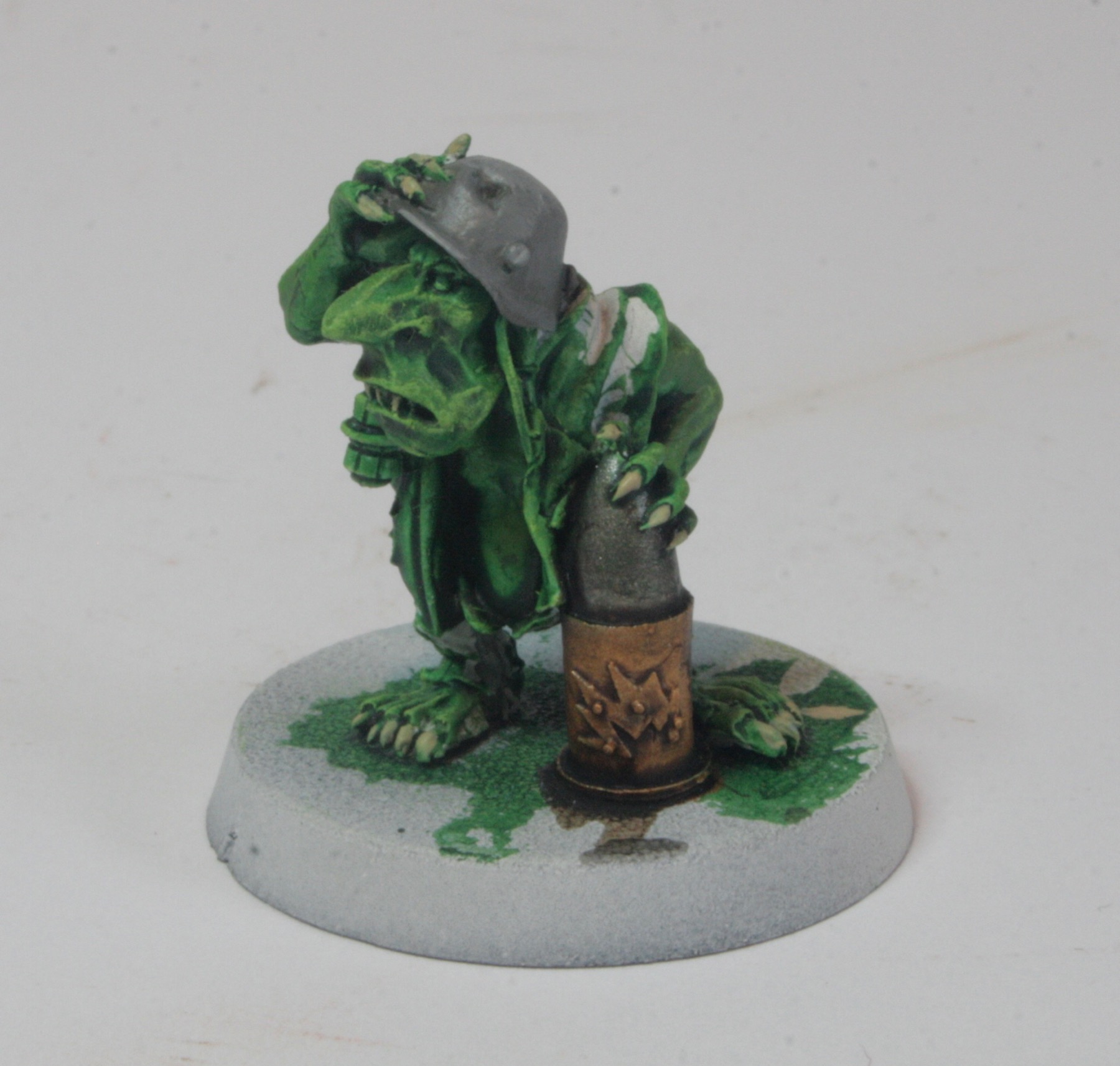
This is another Grot Gunner from the Forge World Kill Kannon. I gave the shell casings on the model a base coat of Skullcrusher Brass, before giving them a wash of Agrax Earthshade. The shells themselves were painted with Leadbelcher.

I used a variety of greys to paint the Grot’s helmet.

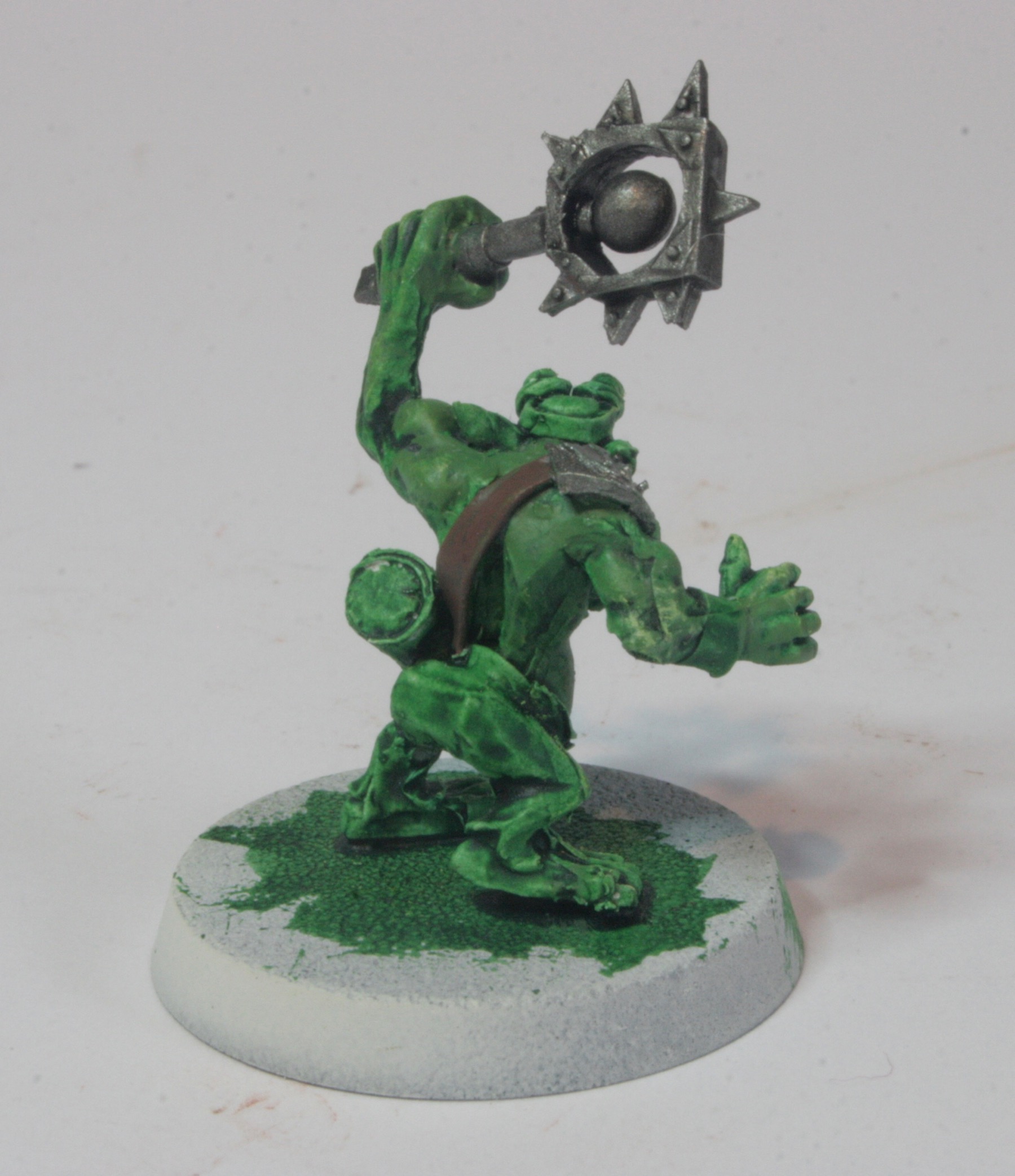
On this Grot from the Big Zzappa, I painted this shoulder belt and this should armour.

This Grot is from the Stompa plastic kit. Another one with a radio and a microphone.

This plastic Grot with a screwdriver is from the Sompa as well. I used Nuln Oil Shade on the drill. Just realised that’s a socket wrench in his belt, will need to paint that using Leadbelcher again.

I added some highlights to the Grots using Warboss Green. I then used Citadel Dry paint, Niblet Green to add highlights. I then did further highlights using Hexos Palesun. I painted his nails and teeth with Ushabti Bone. I painted his two pistols with Leadbelcher.

For the Kill Kannon observer, I painted a lens effect on the observing tool. I painted the entire lens with Thunderhawk Blue and then used Lothern Blue for the reflection before finally adding a drop of white at the top. On the other side of the device I used a drop of Mephiston Red.

I also used a range of greys to paint his trousers.

Still some work to do on these.

Imperial Knights at Warhammer World

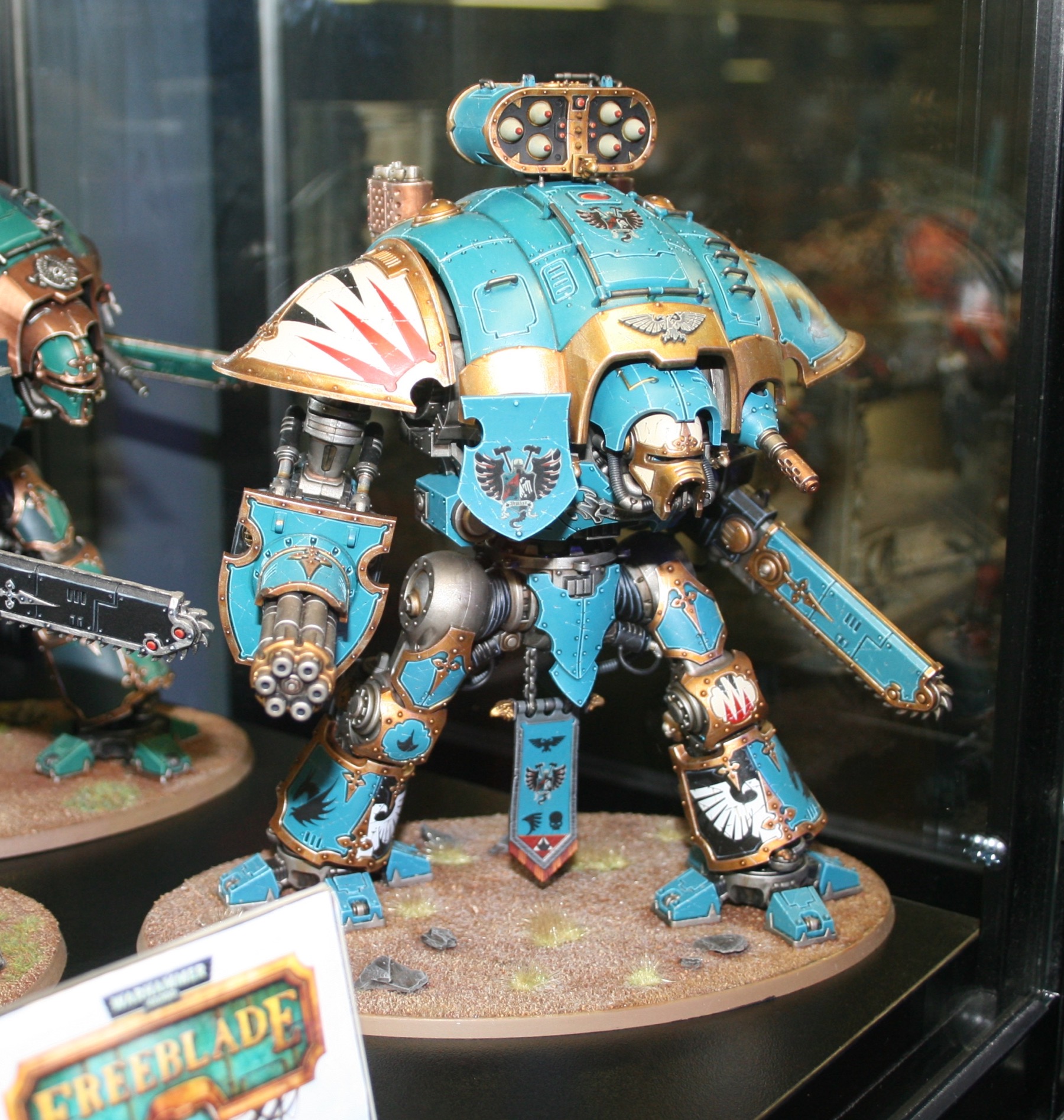
Designed to smash apart enemies at close range, very few enemies can withstand the initial assault of the Imperial Knight Gallant. The ground shakes as the Knight Gallant stomps forward, closing in on their prey – with deceptive speed this hulking robotic form is within range, and unleashes the fury of both reaper chainsword and thunderstrike gauntlet. A Knight Gallant will slam into enemy lines like a tidal wave, and come out of the other side unscathed.

An Imperial Knight Gallant.

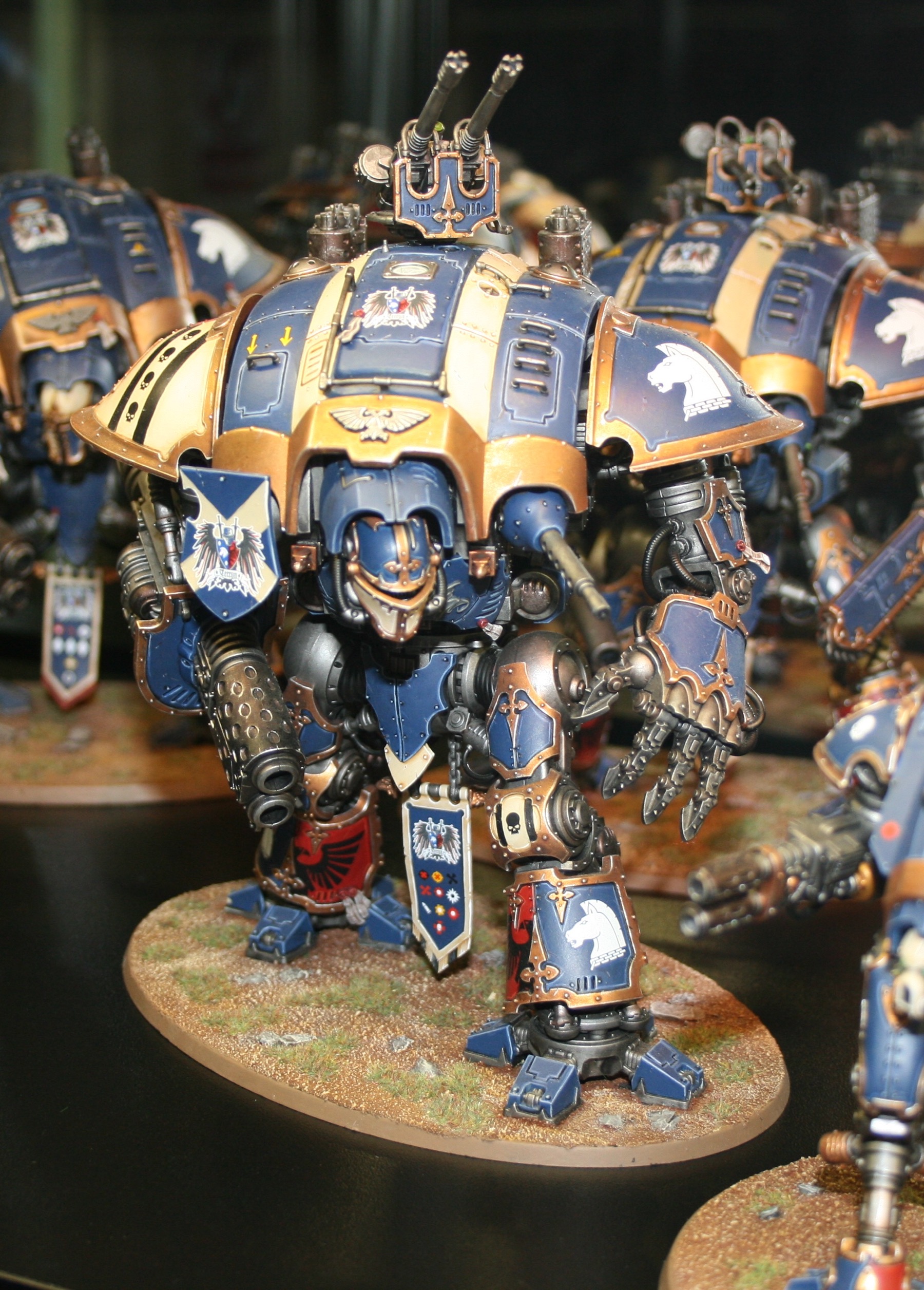
An Imperial Knight Crusader at Warhammer World in a striking dark blue scheme.

Carrying more firepower than a tank squadron, the Imperial Knight Crusader strides into battle with the confidence two main guns will give you. Capable of smashing holes in even the hardiest defence line, the Knight Crusader offers support to its close-range brethren, standing further back and unleashing scathing torrents of firepower to obliterate threats and terrify the enemy.

T-55

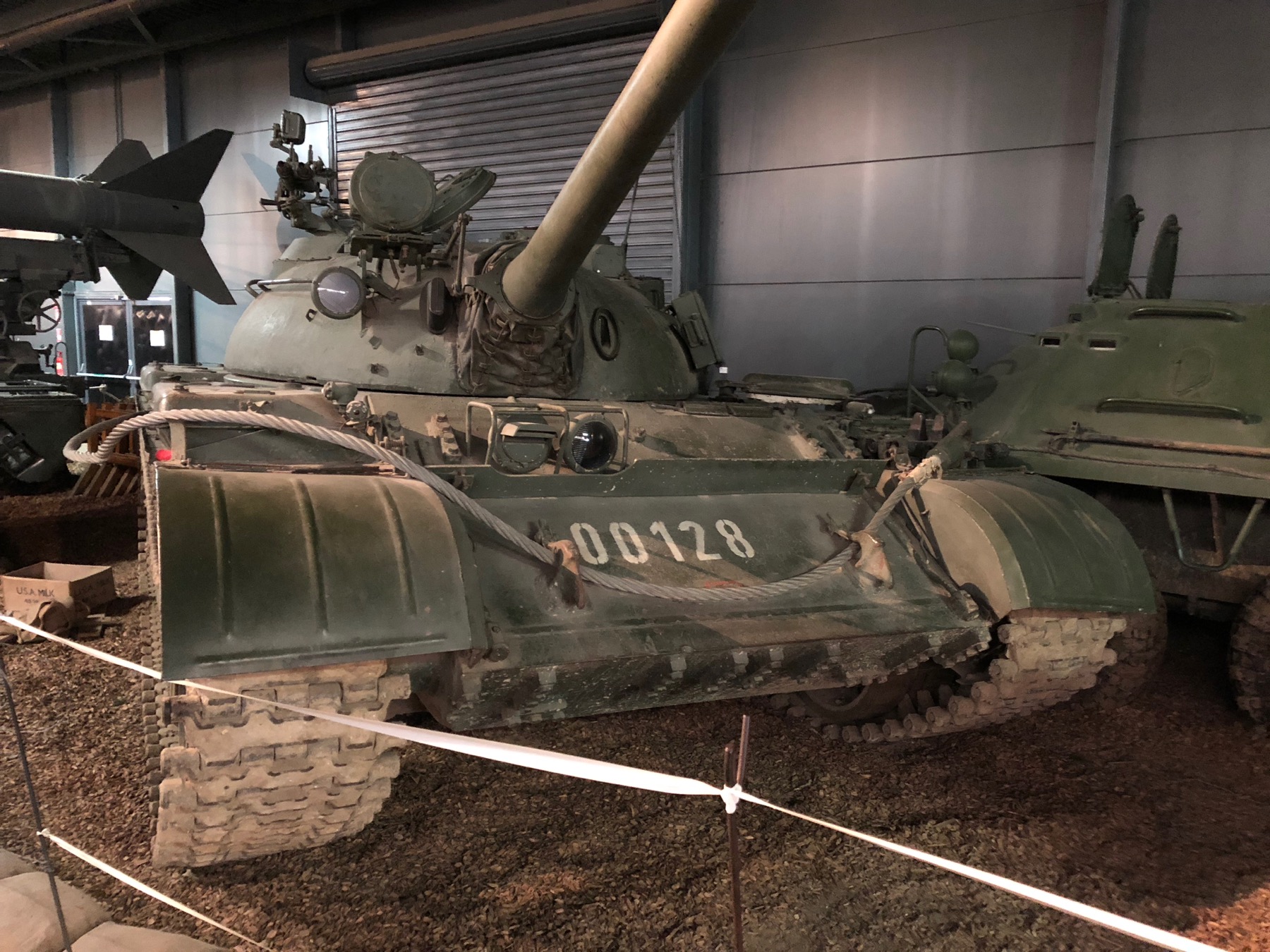
Former East German T55 on display at Duxford.

Russian cold-war period main battle tank, crew of 4, powered by 12-cylinder diesel engine, armed with 100mm gun and one machine gun.

The T-54 and T-55 tanks are a series of Soviet main battle tanks introduced in the years following the Second World War. The T-54/55 series eventually became the most-produced tank in military history. Estimated production numbers for the series range from 86,000 to 100,000.

Many are still in service today.