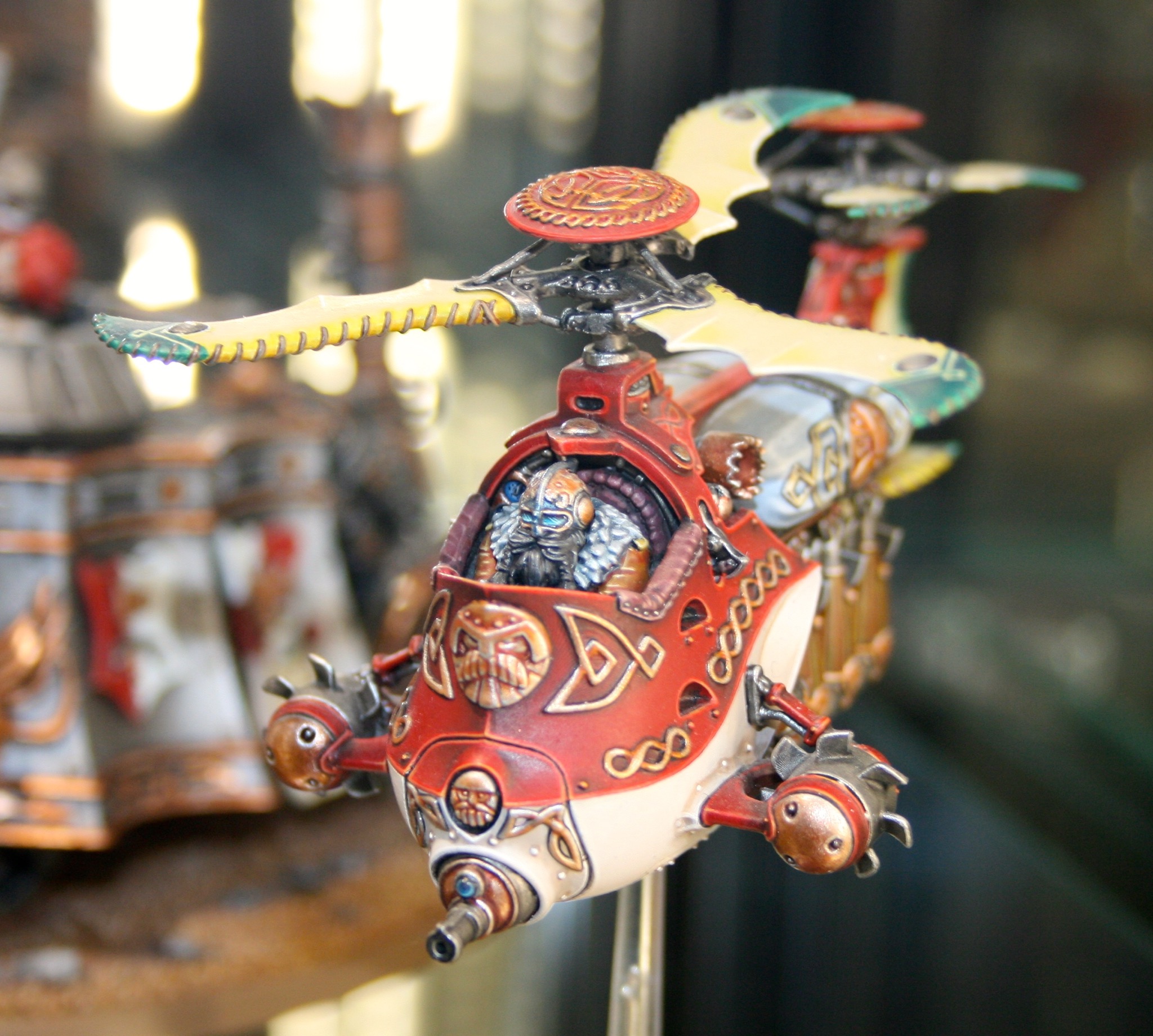
Dwarf Gyrocopter

Gyrocopters are revolutionary flying machines that provides the armies of the Dwarfs with dedicated aerial support or as a form of fast reconnaissance.

This model was on display at Warhammer World.

These warmachines use a revolutionary rotor-blade steam engine that allows it to take off into the air and land vertically or even hover on the spot, becoming the first technological marvel to achieve the ability of flight. The first Gyrocopter was invented and then improved upon by Dwarf Engineers, and due to its rarity only a trusted member of the Engineers Guild is allowed to maintain and operate one.

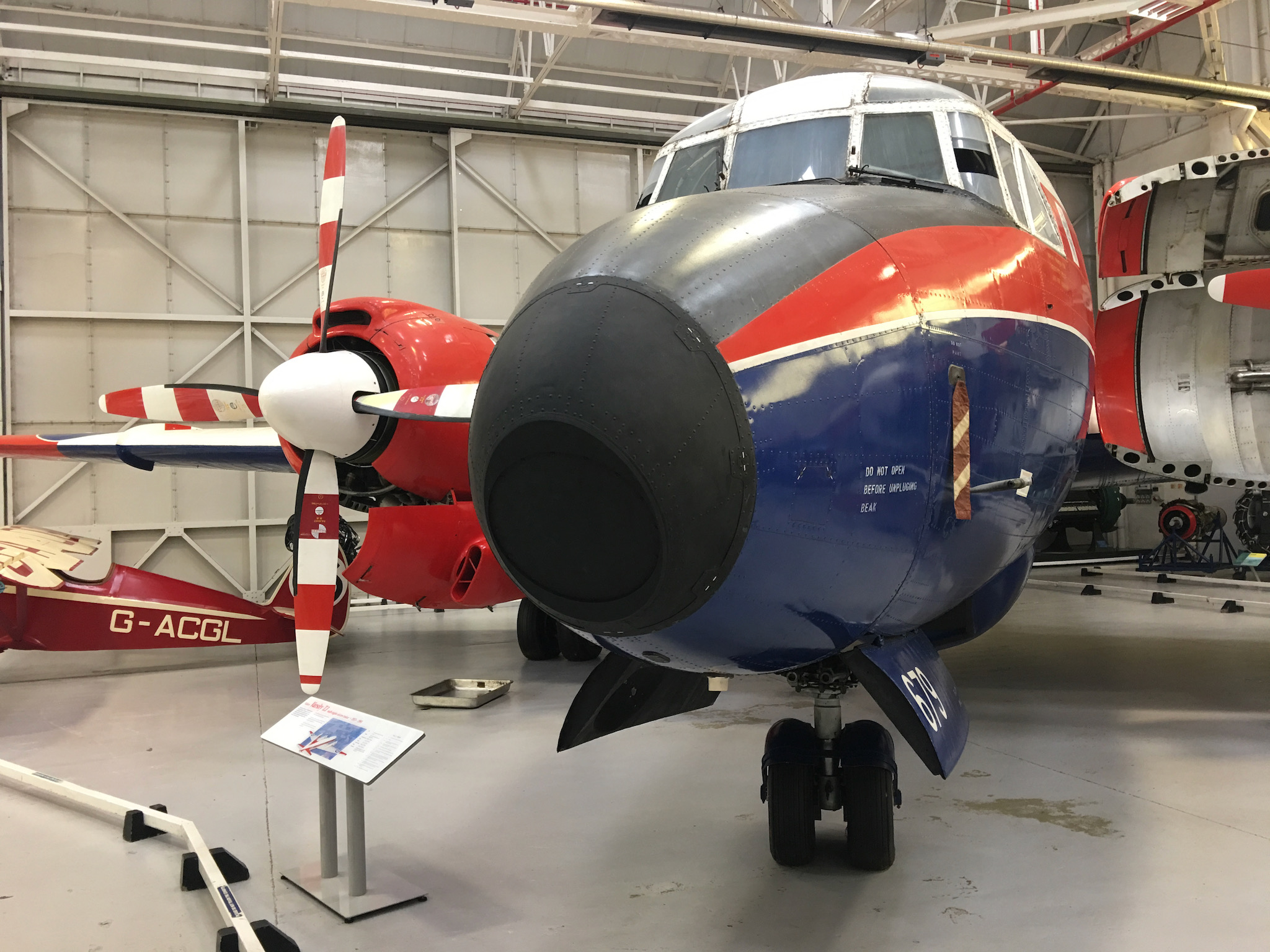
Vickers Varsity T Mk I

The Varsity was a versatile twin piston-engined aircraft brought into RAF service in 1951 for crew training as a replacement for the Wellington T10. This Vickers Varsity T Mk I was on display at RAF Cosford.

The aircraft had been designed three years earlier in response to an Air Ministry specification and had been put into production once proving trials and operational tests had been completed. To adapt the successful Valetta design for a general purpose crew trainer, the Varsity was given a nose-wheel undercarriage and an under fuselage pannier bomb-aimer’s station. The Museum also has an example of the Valetta which is awaiting major restoration.

The most outstanding quality of the Varsity was that it could provide excellent training for pilots, flight engineers, radio operators, navigators and bomb aimers simultaneously. The latter were seated in a very large ventral gondola which contained bomb aiming equipment and a small quantity of training bombs.

The prototype Varsity T MkI made its maiden flight on 17 July 1949. The RAF took its first deliveries in October 1951 which went to No.201 Squadron, Advanced Flying School at Swinderby, Lincolnshire. Production of the Varsity T MkI for the RAF ceased on 28 February 1954 after a total of 163 had been built.

WL679 was built by Vickers Armstrong at Bournemouth and released from their factory on 25 September 1953. This was the last Varsity to fly with Royal Air Force Insignia, but in the very distinctive livery of the Royal Aircraft Establishment. It landed at RAF Cosford on 27 July 1992 and signalled the end of an era spanning over 43 years.

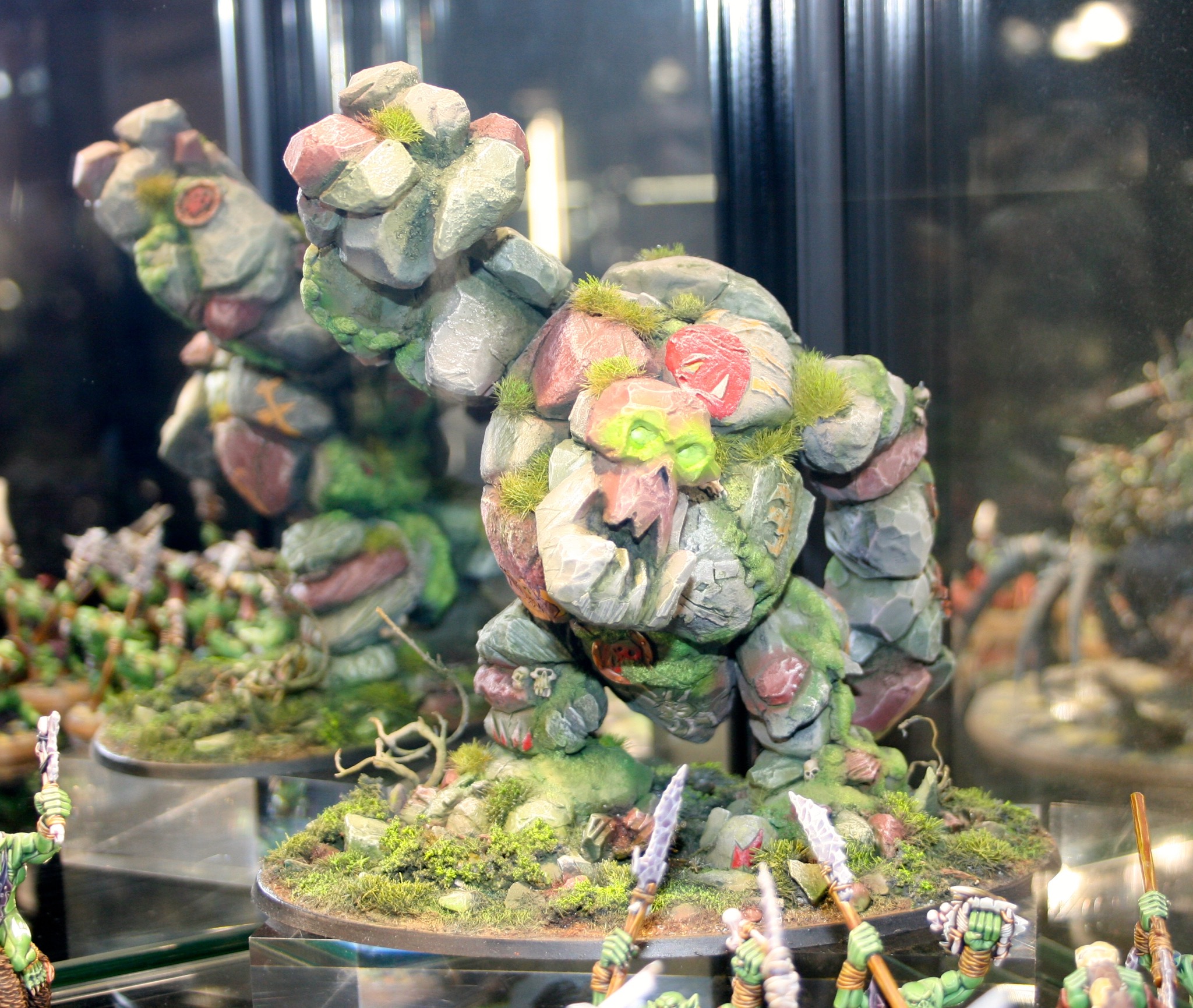
Orc Rogue Idol at Warhammer World

This is a Forge World Orc Rogue Idol at Warhammer World. When I first saw this model, I wasn’t too sure, but the more I look at it, the more I liked it.

When greenskin tribes gather for war, foetid effigies depicting the Orc gods Gork and Mork will be constructed. Using rock, dung, old battle trophies and other detritus, these ‘statues’ are intended to bring the favour of Mork (or possibly Gork) to the Orcs and Goblins mustering in their shadow. Some are no more than a heap of stones or no larger than a chapel door, but when a Waaagh! is brewing they can grow to immense proportions, and become so infused with the greenskins’ lust for battle that they are roused into life and will lumber forth to crush and bludgeon the enemy.

If a Waaagh! is subsequently defeated, or the concentration of greenskin magic dissipates, the idol will lapse back into immobility. However, when a Storm of Magic rages across the Warhammer world these gigantic devotions to the greenskin gods may rise up again as a Rogue Idol, mindlessly attacking all in their way until the storm blows its course.

I really like the modelling that has been done and the use of scenic materials to make it really look like it is just stones that are drawn together by magic.

I did think that it could be a good model for a Feral Ork army for WH40K.
Comper Swift

This Comper Swift was on display at RAF Cosford.

The Comper C.L.A.7 Swift is a British 1930s single-seat sporting aircraft produced by Comper Aircraft Company Ltd of Hooton Park, Cheshire.

In 1923 Flying Officer Nicholas Comper formed the ‘Cranwell Light Aeroplane Club’ (CLAC) for apprentices at RAF Cranwell. The CLAC built three successful light aircraft, all designed and flown by Comper with the majority of the construction work being carried out by the apprentices.

Having gained this experience Comper left the RAF to set up the Comper Aircraft Company. Their first product was the Comper Swift which was produced from 1929 until 1934.

The Swift was available in either red or blue and became one of the most popular racing aircraft of the 1930s. This example, G-ACGL, was built in 1933 and registered to Alex Henshaw of Mablethorpe.

Henshaw won several trophies in this aircraft. The most notable success was the Siddeley Trophy at the 1933 Kings Cup, only a year after he had gained his pilot’s license. He went on to become one of Britain’s foremost competition pilots and record breakers and served as a test pilot flying Spitfires and Lancasters during the Second World War.

Hawker Hunter F.6A

The Hawker Hunter is a transonic British jet-powered fighter aircraft that was developed by Hawker Aircraft for the Royal Air Force (RAF) during the late 1940s and early 1950s. It was designed to take advantage of the newly developed Rolls-Royce Avon turbojet engine and the swept wing, and was the first jet-powered aircraft produced by Hawker to be procured by the RAF.

Hawker Hunter F.6A

This Hunter is on display at Duxford and is on loan from the United States Air Force.

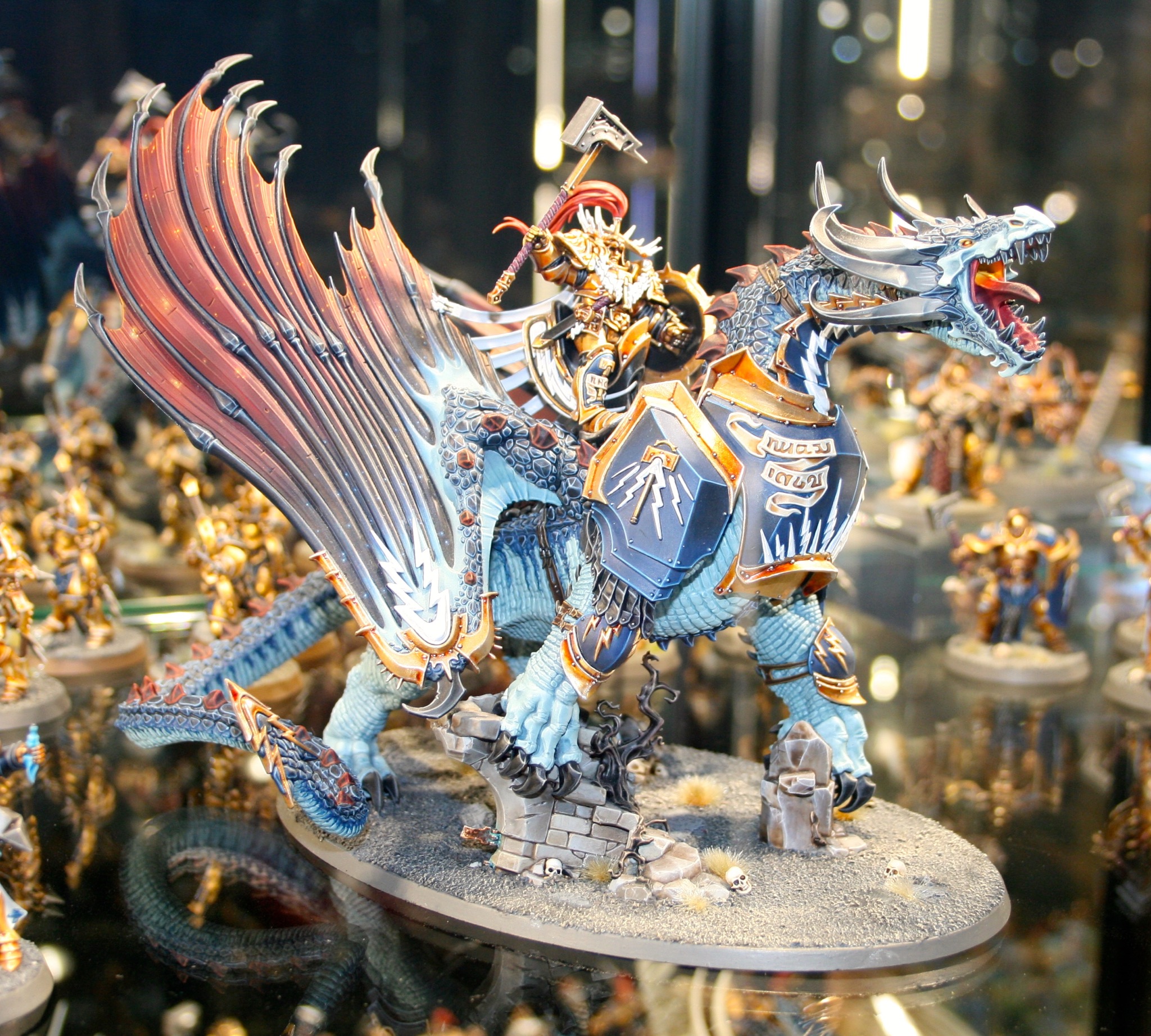
Lord-Celestant on Stardrake at Warhammer World

Lord-Celestant on Stardrake at Warhammer World.

Even amongst the gloried ranks of the Stormcast Eternals and the star-born hierarchy of the Children of Dracothion, only the mightiest and noblest are chosen to lead an Extremis Chamber. So infused with celestial power are the Lord-Celestant and Stardrake that they radiate azure energies. The power of the stars themselves is theirs to command…


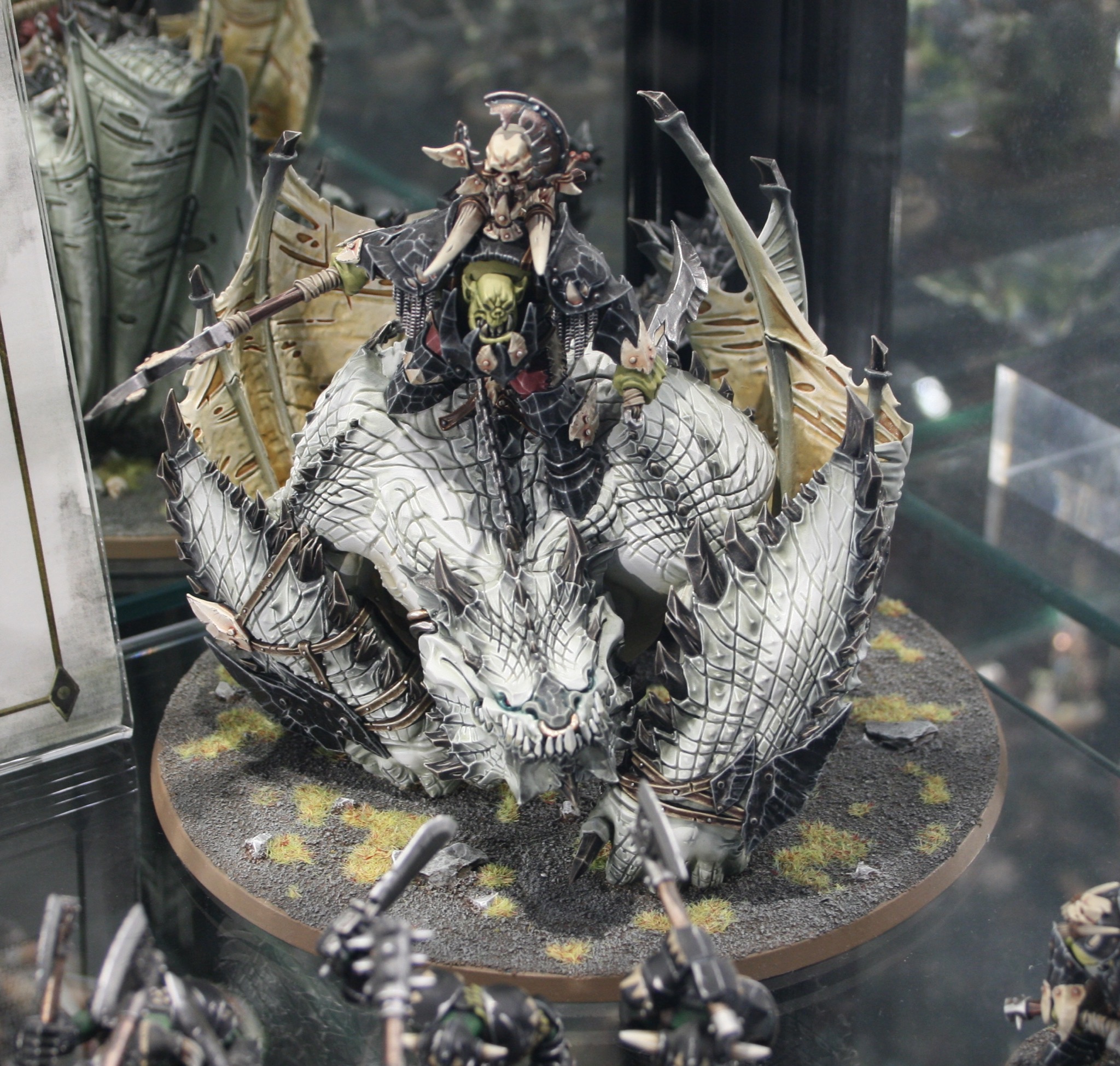
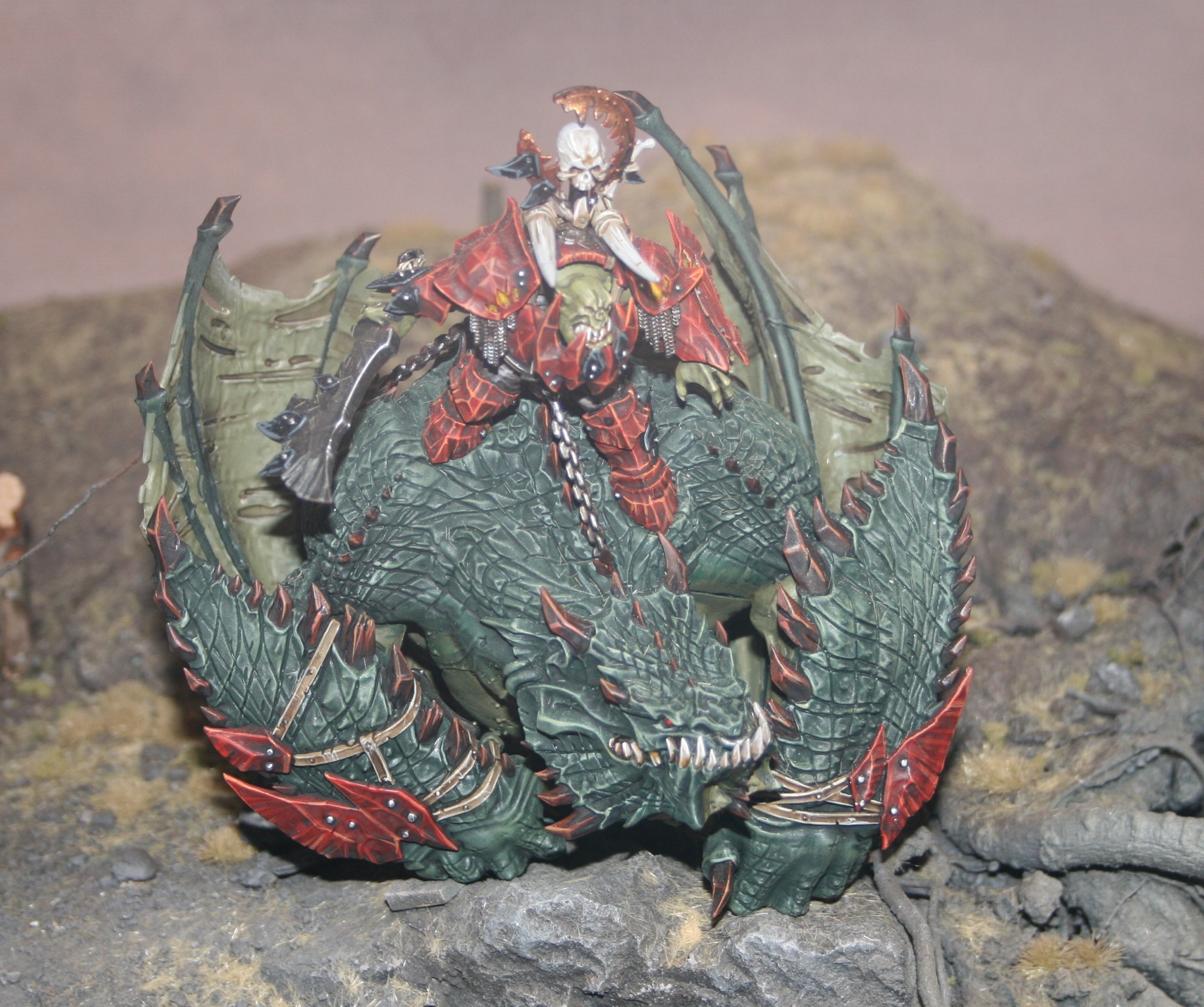
Orruk Megaboss on Maw-krusha at Warhammer World

These two Megaboss on Maw-krusha models were on display at Warhammer World.

Orruk Megabosses are pretty killy – it’s how they become as huge as they do, all that stompin’ causes them to grow and grow and grow until the power of the Waaagh! flows through them. But for some Megabosses, this isn’t enough! These particularly angry orruks seek out and subdue enormous Maw-krushas (often by yelling really, really loudly at them) – ill-tempered and powerful creatures who enjoy smashing stuff up almost as much as the orruks themselves. 

This uneasy pairing never really gets along especially well, and the Megaboss needs to constantly remind his Maw-krusha who’s in charge with the liberal application of an iron boot to the back of the head. 

Despite this, almost nothing on the battlefield can withstand their noisy rampage, and the immense number of kills they rack up inspires nearby orruks to fight ever harder.

When this came out I did think it would be a great model for my Feral Ork army. However as most things, it is still an idea and nowhere near getting anywhere close to the workbench. I would have to buy the model in the first place and there is already too many things on my workbench and on my wish list. I will still think about it though.


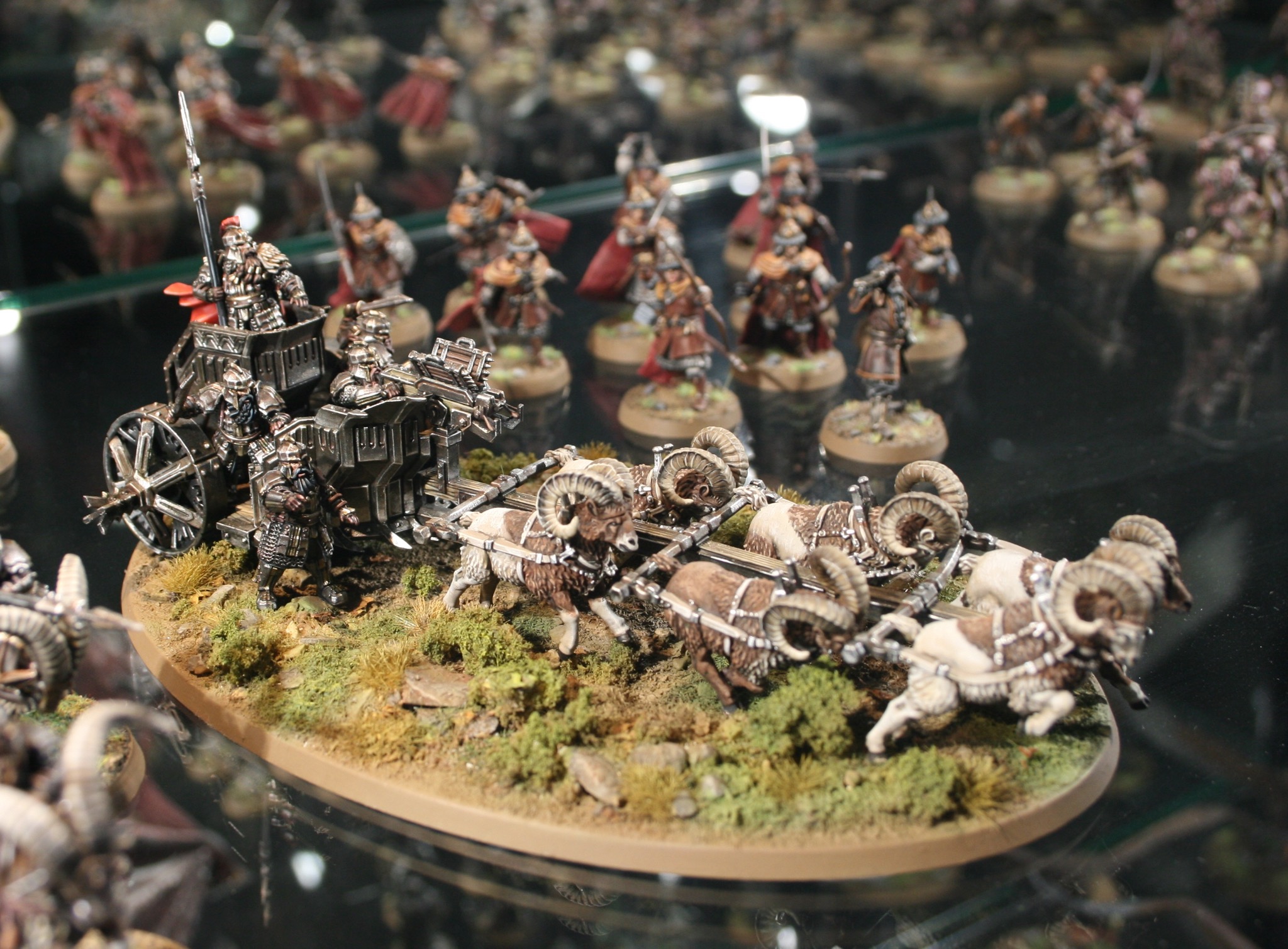
Forge World Iron Hills Chariot

This Forge World Iron Hills Chariot was on display at Warhammer World.

The vanguard of Dain’s army, these Chariots run ahead of the Dwarves of the Iron Hills taking out any enemy scouts who dare to oppose them. Pulled by six goats at a time and with razor-sharp scythes attached to its wheels, anyone that is unfortunate enough to get in the way of a charging Chariot will end up considerably shorter!