Flames of War French Hotchkiss H-39

Despite having been designed from 1933 as a rather slow but well-armoured light infantry support tank, the type was initially rejected by the French Infantry because it proved difficult to steer while driving cross-country, instead being adopted in 1936 by the French Cavalry. From 1938 an improved version was produced with a stronger engine, the Char léger modèle 1935 H modifié 39, that from 1940 was also fitted with a longer, more powerful 37 mm gun.

Having made up the hulls, the next stage was to sort the turrets out.  The metal components were fitted to the turret.

Flames of War French Hotchkiss H-39

Flames of War French Hotchkiss H-39

Flames of War French Hotchkiss H-39

Flames of War French Hotchkiss H-39

See the workbench feature on the Flames of War French Hotchkiss H-39.

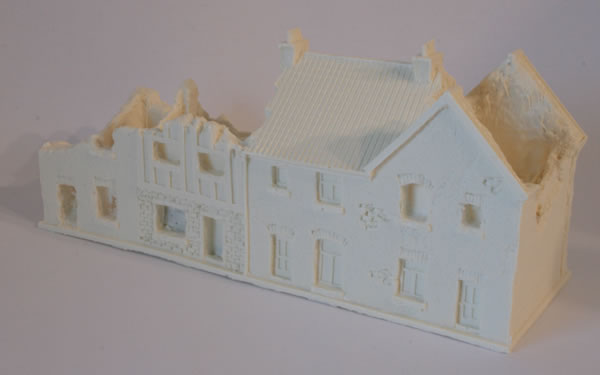
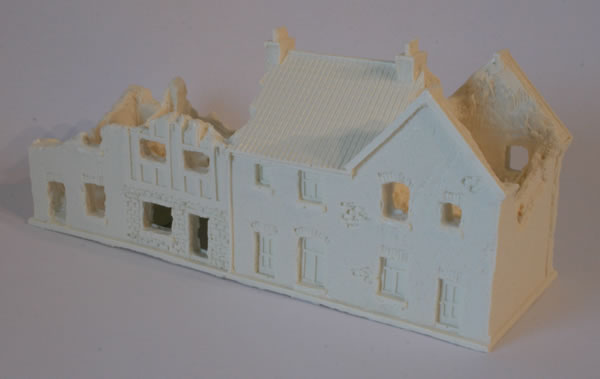
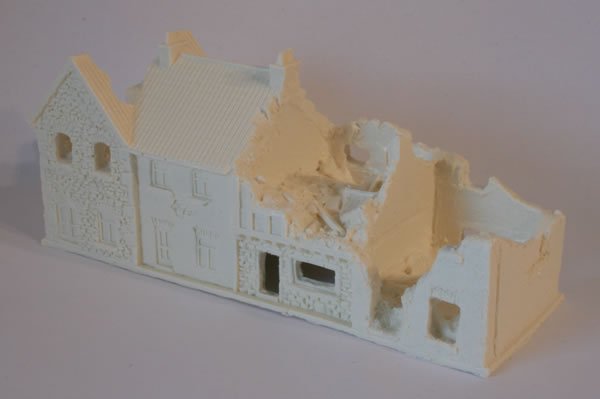
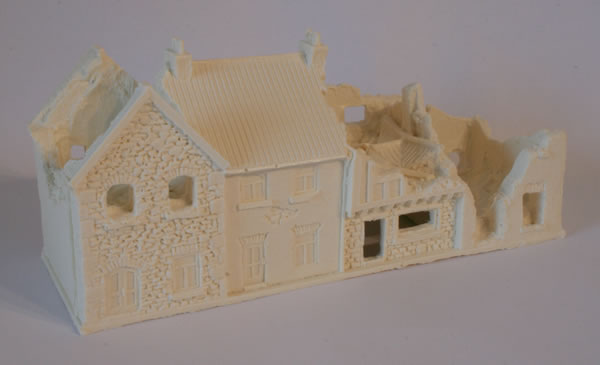
15mm Ruined Houses

One of my Christmas presents was a couple of ruins from Total Battle Miniatures.

I got the ruined row of three houses and the ruined row of four houses.

What you get , if you go for the unpainted version is a nice resin casting.

The first stage was to wash the resin to remove the mould lubricant and then clean the flash from the casting, especially the windows and the doors.

Flames of War Jagdpanther

The Jagdpanther was a tank destroyer built by Nazi Germany during World War II based on the chassis of the Panther tank. It entered service late in the war and saw service on the Eastern and Western fronts. Many military historians consider the Jagdpanther to be one of the best tank destroyers of the war due to the combination of the very powerful 8.8 cm KwK 43 cannon and the characteristically excellent armor and suspension of the Panther chassis.

The kit consists of a resin hull and metal components such as tracks and track guards. I took the metal tracks and glued them to the hull. They were a good fit and certainly add weight to the model.

The tracks were glued to the hull.

What I think is the radio was glued to the rear of the upper part of the hull.

The remaining metal components were then fitted to the tank.

Alongisde my Total Battle Miniatures ruins.

See the workbench feature on the  Jagdpanther.

Flames of War Street Barricades

Within the Flames of War Street Barricades box you get two identical street sections, one overturned Opel Blitz and one pile of barricade, both designed to fill the gaps in the street sections. All are made from resin.

The first thing I did after washing the resin models to remove any remaining mould lubribicant was give the model a white undercoat.

These are the two different “fillers” for the gaps in the street barricades.

They could be used on their own as barricades or scenery without needing to use the full barricades.

Lots of nice detail in the models.

I think the truck works well.

Good underside detail too.

Barricade with the truck in situ.

There are a couple of painting guides also available.

See the workbench feature on the Street Barricades.

Flames of War French Hotchkiss H-39

Despite having been designed from 1933 as a rather slow but well-armoured light infantry support tank, the type was initially rejected by the French Infantry because it proved difficult to steer while driving cross-country, instead being adopted in 1936 by the French Cavalry. From 1938 an improved version was produced with a stronger engine, the Char léger modèle 1935 H modifié 39, that from 1940 was also fitted with a longer, more powerful 37 mm gun.

In order to fix the tracks to the hulls, I scored the hull sides and the tracks.

Flames of War French Hotchkiss H-39

Flames of War French Hotchkiss H-39

The tracks were then glued to the sides of the hull.

Flames of War French Hotchkiss H-39

Flames of War French Hotchkiss H-39

As you might guess from the page title, I have decided to make these up as the H-39 model. Battlefront are very good in marking the rear decks with H35 and H39 so you know which is which. They fit very easily onto the resin hulls. Here are the three hulls.

Flames of War French Hotchkiss H-39

Flames of War French Hotchkiss H-39

Flames of War French Hotchkiss H-39

Flames of War French Hotchkiss H-39

See the workbench feature on the Flames of War French Hotchkiss H-39.
Flames of War Jagdpanther

The Jagdpanther was a tank destroyer built by Nazi Germany during World War II based on the chassis of the Panther tank. It entered service late in the war and saw service on the Eastern and Western fronts. Many military historians consider the Jagdpanther to be one of the best tank destroyers of the war due to the combination of the very powerful 8.8 cm KwK 43 cannon and the characteristically excellent armor and suspension of the Panther chassis.

Managed to get one cheap in a Hobbycraft sale.

The kit consists of the resin building, a resin hull and metal components such as tracks and track guards.

The main part of the model is the resin hull, which is well detailed.

See the workbench feature on the  Jagdpanther.

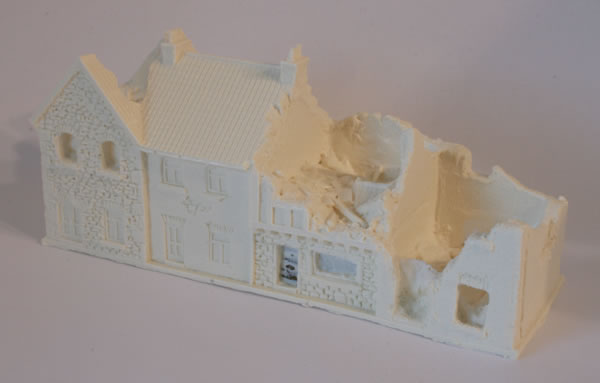
The kit also contains a resin ruined building.

You can see how I am painting the ruined building on this page.

Forged in Battle 15mm French Mortar Team

I was recommended these Forged in Battle miniatures at a gaming shop in Birmingham. They look well casted and a similar size to Flames of War infantry.

The mortar crew were given a basecoat of Green Brown (879) whilst the mortar itself was given a basecoat of Gunship Green (895).

See the workbench feature on the Forged in Battle 15mm French Mortar Team.

Painting the Flames of War Char B1 bis

After deciding to create an Early War Flames of War French force I went and got the French Early War Paint Set.

After purchasing the set and getting out some French Infantry to paint I was disappointed to find that the box set didn’t contain Green Brown (879)for the uniforms or Olive Grey (888) for the helmets. I had a pot of Green Brown, but no Olive Grey. So I left painting the infantry until I placed an order for some Flames of War miniatures and ordered a pot of Olive Grey paint.

So you can imagine my frustration when after that arrived and I sat down to give my Char B1 tanks a basecoat of Tan Yellow (912) the standard basecoat for French tanks was also not in the box. There was an assumption that you would have other box sets… I didn’t… so I needed to get another pot of paint in order to paint my models… I bought the box set so that I would have all the paints I needed, in the end I think it may have been easier to just buy the paints separately.

Once the Tan Yellow (912) arrived I gave the three Char B1s a basecoat.

Painting the Flames of War Char B1 bis

Painting the Flames of War Char B1 bis

Painting the Flames of War Char B1 bis

The turrets were stuck to a wooden stick to make them easier to paint.

Painting the Flames of War Char B1 bis

See the workbench feature on the French Char B1 bis.

More Sherman Tracking

Having repainted my Shermans with Warpaint British Armour. The next stage was the detailing, including the tracks and the stowage. I also started to paint the tracks using German Grey (995).

The underside of the Sherman.

I do need to start thinking about markings.

See the full workbench feature on the resin Shermans from Open Fire.

Gunfighters and Outlaws

I was lucky enough to get for one Christmas a few years back two packs of Foundry Old West Outlaws. I am in the process of painting the models using a variety of colours.

I am in the main using Vallejo paints that I bought for my Flames of War miniatures alongside some Citadel paints too.

Have a look at my Old West miniatures Gallery and Old West Workbench.