Crimean War

Crimean War Soldiers
A new era for me.

Looking at using the Waterloo rules from Warhammer Historical for this period, but the idea is small skirmishes rather than big battles.

I bought three blister packs, the models are from the Great War Miniatures Crimean War range.

British Command in Forage Caps

Great War Miniatures Crimean War range

British Infantry Centre Company Advancing in Forage Caps

Great War Miniatures Crimean War range

British Infantry Centre Company Firing in Forage Caps

Great War Miniatures Crimean War range

I am thinking that I might also use them for some Victorian Science Fiction scenarios set in Victorian England, something I have written about on my website before, looking at gaming in the world of The Difference Engine.

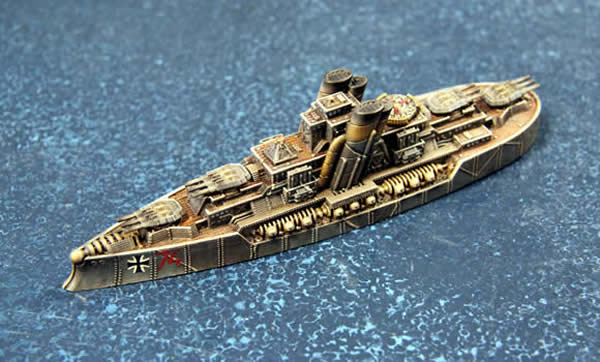
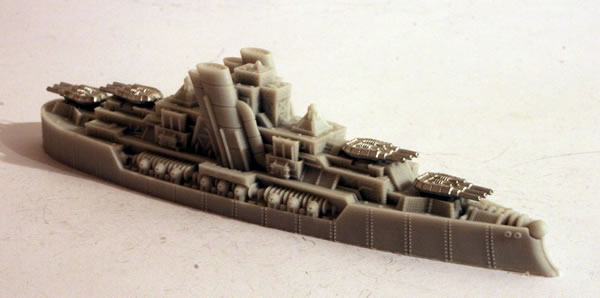
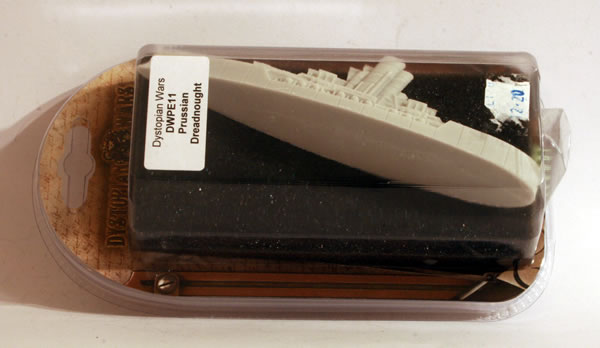
Dystopian Wars – Prussian Empire Blucher Class Dreadnought

The Dystopian Wars is a miniatures games from Spartan Games.

The Prussian Empire Blucher Class Dreadnought is a powerful vessel in the Prussian Empire navy. This is how it looks from the marketing material.

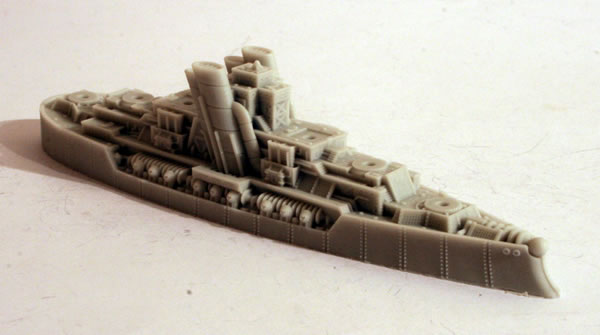
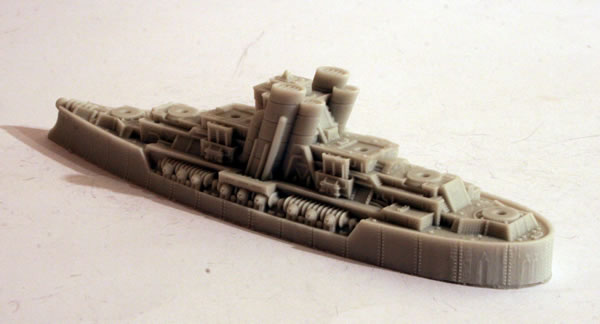
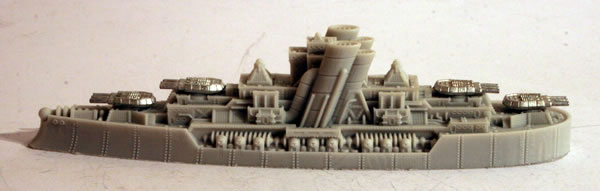
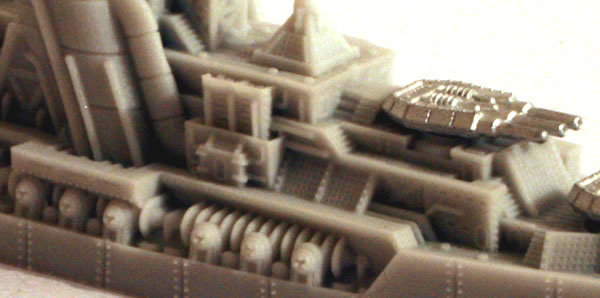
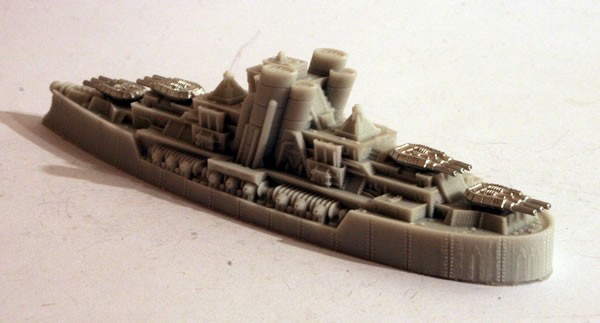
This is a very clean casting and the computer aided design certainly shows in the detail of the model.

I gave the model a wash in soapy water in order to remove any release agent remaining on the model.

I then glued the metal turrets to the model.

Dystopian Wars – Prussian Empire Blucher Class Dreadnought

The Dystopian Wars is a miniatures games from Spartan Games.

Gebhard Leberecht von Blucher was a famous Prussian Generalfeldmarschall (Field Marshall) who was known for his rather direct military tactics. ‘On it like Blucher‘ is a term synonymous in the Prussian military for taking the fight to the enemy. The designers behind this Dreadnought certainly took this to heart. FOUR powerful Primary turrets rain death on enemy targets and row after row of Tesla Coils rip into enemy vessels.

This is how it looks from the marketing material.

The model itself comes in a quite a large blister pack.

I really do like the concept of and background to the Dystopian Wars and I really must get around to painting the models I have bought.

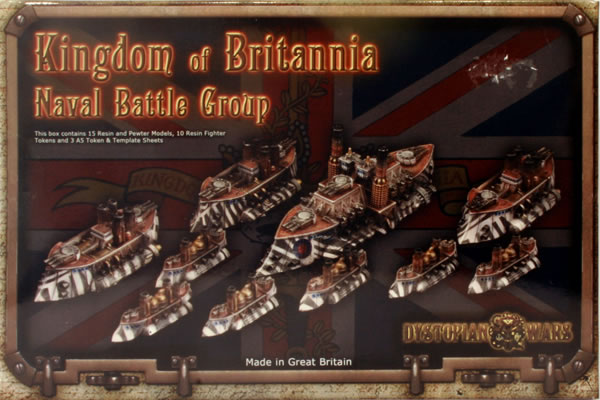
Dystopian Wars – Kingdom of Britannia Naval Battle Group

The Dystopian Wars is a miniatures games from Spartan Games. I have discussed my thoughts on this game in an earlier blog post.

Having decided that the Prussian Air Fortress was a definite purchase, I realised that I would also need an opponent and looking at the boxed sets, I decided to go with the Kingdom of Britannia Naval Battle Group.

Kingdom of Britannia Naval Battle Group

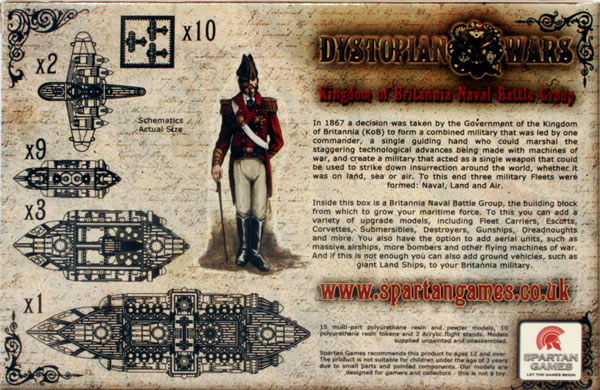
In the box you get:

Kingdom of Britannia Naval Battle Group

1 x Battleship
3 x Cruisers
9 x Frigates
2 x Bombers
10 x Resin Flying Tokens
2 x Acrylic Flight Stands
4 x A5 Token Sheets
Laminated Statistic Cards

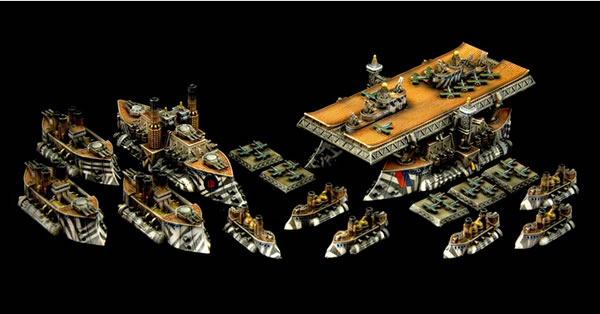
This is how it looks from the marketing material, though this image includes the aircraft carrier which is not included in the Battle Group.

Kingdom of Britannia Naval Battle Group

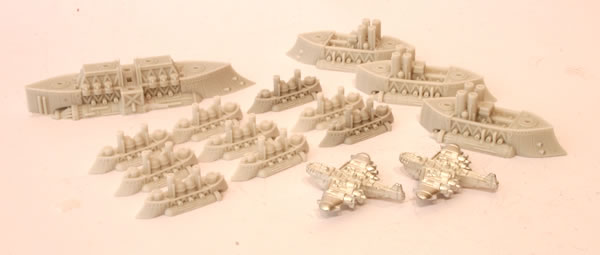
This is the resin you get in the box along with the metal bombers.

Kingdom of Britannia Naval Battle Group

They are very clean castings.

Dystopian Wars – Prussian Empire Sky Fortress

The Dystopian Wars is a miniatures games from Spartan Games. I have discussed my thoughts on this game in an earlier blog post.

The Prussian Carrier – or Sky Fortress – is a terror to behold, especially when searchlights catch it floating above a town or city, ready to launch its Aeroplanes against targets below. This Sky Fortress has plenty of offensive capability, and is more than able to soften up enemy defences with bursts of Tesla energy and clusters of bombs dropped from high in the clouds.

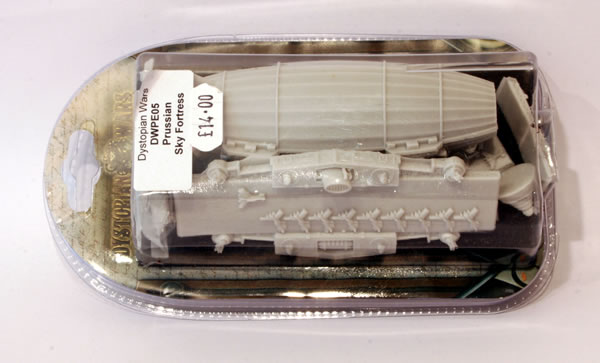
The model comes in a quite a large blister pack.

It looks like a very clean casting.

Dystopian Wars

I don’t know about you, but occasionally I find a game that I think just makes me go “woah!” and I just have to have it.

I remember playing Talisman (1st Edition) for the first time and thinking what an amazing boardgame. I had before playing Talisman only played boardgames like Monopoly, and Talisman was so very different. That was nearly thirty years ago…

Since then other games that have had a similar impact include Car Wars, Twilight 2000 and Space 1889. I really enjoyed playing Car Wars and spent many hours designing vehicles and playing it back in the 1980s. I loved the concept behind Twilight 2000 and though I never really got a chance to play it for a lengthy campaign, I did enjoy reading articles and scenarios for it. Space 1889 was one of those ideas that I hadn’t really considered before and was my first introduction to Victorian Science Fiction (well the First Men in the Moon aside). Since then I have really enjoyed VSF and steampunk, I really liked the Difference Engine and even wrote an article on wargaming in the world of the Difference Engine.

So a few months back when I was a gaming shop in Birmingham and noticed the Dystopian Wars, I was like a moth to a candle! This was one of those games that I just had to have and would have to play.

Imagine a world similar to our own, but subtly different. Now imagine the year is 1870 and the Industrial Revolution occurred decades earlier than in our own world. Technology is far advanced, and in many cases, unrecognisable, which has led to the development of fantastic naval vessels, hulking land ships and terror from the skies in the form of airships and war balloons.

Looking at the models, unfortunately the rules had sold out, there was one model that caught my eye and that was the model I had to have and would set me down the path of the Dystopian Wars. It was the Prussian Sky Fortress.


Having decided that this was a definite purchase, I realised that I would also need an opponent and looking at the boxed sets, I decided to go with the Kingdom of Britannia.

A few weeks later I managed to get hold of the rulebook and was very impressed with the content and production values.

So time to get painting.

Madame Vastra

Did you enjoy the reptilian Madame Vastra character in the recent episode of Doctor Who, A Good Man Goes to War?

She was the Silurian in the Victorian era, who in the Doctor’s hour of need helps him solve the mystery of River Pond, as she owed him a debt. She was living in disguise in London with her friend and maid, Jenny.

Well it appears that there may be a spin-off series with Madame Vastra and her adventures in Victorian London.

When?

Who knows, as Steven Moffat probably doesn’t have the time to write it.

Russian Land Tank

Sometimes what happens in the real world is more weird than what you make up for science fiction.

Take this Russian tank design from 1917 for example, this is a 1/35th scale model of the tank.

The drive assembly consisted of two 240 hp Maybach engines, one for each big wheel. The wheels themselves (designed by Zhukovskiy) had a T-shaped metal mid-section. A wooden overlay was then fastened to the shelf of the T-beam. The drive itself was very simple. Each engine drove an automobile wheels, who was in it’s turn pressed down (by means of a railway carriage spring) until it touched the wooden overlay of the big wheel, and by counterrotating, the automobile wheel transferred the energy from the engine to the big running wheel. (In case of over-heating, the driving wheels disengaged and protected the engine from seizing.) It was thought that the Nepotir should be able to reach a top speed of some 17 km/h – which was pretty impressive compared to other WW1 AFV:s.

The hull of the vehicle would have one top-mounted centrally placed turret, equipped with MG:s and/or light cannons, giving the Lebedenko a total height of some 12 meters. In addition to this, at the outer flanks of the hull, small MG sponsons was to be placed. There was also a small weapons turret placed underneath the belly of the beast.

The construction progressed pretty quick and at the end of July 1915, the Nepotir was ready for it’s first trials. Because of it’s weight and size, it was designed to be transported in sub-assemblies, to be assembled again before action at the front (like it was later envisioned for the huge German K-Wagen). This procedure was followed, and the sub-assemblies were transported to the testing ground, some 60 km from Moscow. At the re-assembly it was found out that the weight of the machine exceeded calculations with some 50%, due to the use of thicker metal. In August the test began in front of a high commission. It started well. The vehicle moved well over some firm ground, crashed a tree, but then went into a soft patch, where the small double wheel got stuck in a ditch. Soon it was obvious that the engines were to small, as they were unable to free the rear double wheel.

After this fiasco, two of the designers, Mikulin and Stechkin, worked on equipping the vehicle with more powerful engines, but this plan was never fulfilled. The military had decided against the project. It was simply too expensive, it had thus far cost some 250.000 roubles. Also the vehicle (and then primarily it’s wheels) was deemed to be too vulnerable to artillery fire, which probably was quite true. (And by this time both France and Britain were near to completing new types of all-terrain armoured fighting vehicles, running on caterpillar tracks.)

The Lebedenko stood there, bogged down, for the rest of the war, but was finally scrapped in 1923.

This is certainly something that would sit very well in a Victorian Science Fiction scenario. Also if you play alternative world war one scenarios then this would of course work well too, well it was designed for that war.