The Rhino, or more formally, the Mars Pattern Rhino, is an Imperial armoured personnel carrier (APC) that is widely used throughout the galaxy by many different factions, though it is a mainstay vehicle of the Adeptus Astartes. It has provided safe transportation since the days of the Great Crusade, transporting its cargo of Space Marines swiftly and safely to the forefront of battle. Robust and versatile, and able to resist the most hostile of environments, the Rhino has become the basic troop transport for Space Marine squads.
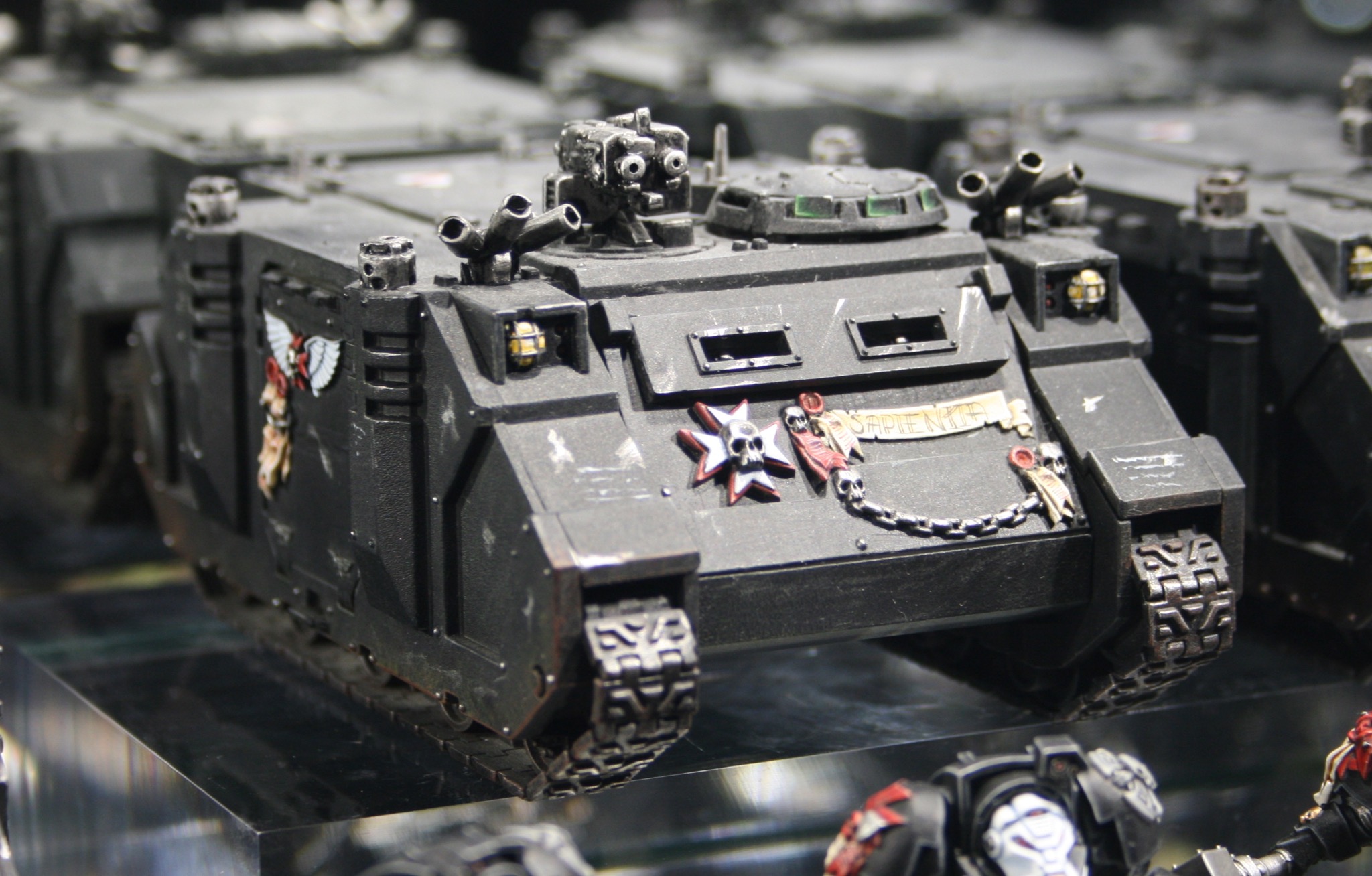
This Black Templars Predator was at Warhammer World.
This photograph was taken at Warhamer World in January 2020, another view of the same tank from Games Day 2005.
Black Templars Predator
The Predator, is the most common main battle tank employed by the Space Marines of the Imperium of Man and the Traitor Legions of the Chaos Space Marines. It is a more heavily armed and armoured version of the Rhino armoured personnel carrier.
At the Imperial War Museum Duxford is a McDonnell Douglas Phantom FGR.2.
Initially, the FGR.2 was used in the ground attack and reconnaissance role, primarily with RAF Germany. The superiority of the Phantom over the English Electric Lightning in terms of both range and weapon load, combined with the successful introduction of the SEPECAT Jaguar, meant that, during the mid-1970s, most of the ground attack Phantoms in Germany were redeployed to the UK to replace air defence Lightning squadrons.
Also at Duxford, in the American Air Museum exhibition, there is ZE359 is a former United States Navy F-4J from 1968 until it was converted to a F-4J(UK) for service with the Royal Air Force from 1984.
Flown to Duxford on retirement and restores to original United States Navy markings of VF-74 as 155529.
I got this Warlord Games Bolt Action Mark IV (male) British WWI tank model for Christmas.
It consists of mainly resin parts with some metal components.
I have a 15mm Home Guard Mark IV Male, but as I am in the process of building a Bolt Action 28mm Home Guard force, I did want to add some armour to them with a Mark IV Male World War One tank put into service, even if it was merely as a mobile pillbox.
I mentioned this idea in an article I wrote on a French themed Operation Sealion, Otaire de Vigneur.
To add a bit of diversity to my games, I also have one of Minifigs’ World War One British tanks, for use by a Home Guard unit (stolen from a local museum no doubt).
Now when I wrote that article and bought the miniature it was only an assumption and what I thought would be a nice idea, and probably had no basis in truth….
Well just shows a little historical research never hurt anyone, as the Bovington Tank Museum has on display a Mark IV Male tank that was used just in this way. It was used in World War One and then presented to the Navy. When war broke out in September 1939, the Tank Mark IV (Male) number 2324 was refurbished for Home Guard duties; according to the Bovington Tank Museum website.
Our exhibit, a male tank, was presented to the Royal Navy’s Gunnery School, HMS Excellent after the war to commemorate their help training Tank Corps gunners and it was temporarily refurbished for Home Guard duties in 1940. (Believed to have been achieved by removed parts from another tank possibly on Southsea Common.)
This photograph is from HMS Excellent in 1940.
Mark IV at HMS Excellent
One thing clear from this photograph is the disruptive camouflage they have used on the tank.
Another view of the Mark IV at speed.
So though I thought my idea was probably if Operation Sealion had happened, I didn’t think and didn’t realise that it had in fact happened despite the fact that the Germans hadn’t invaded.
So as I also have the Royal Navy Section this gives me an excuse to use this model.
So onto building the model.
The first step will be to give the resin parts a wash in soapy water and clean up the metal components.
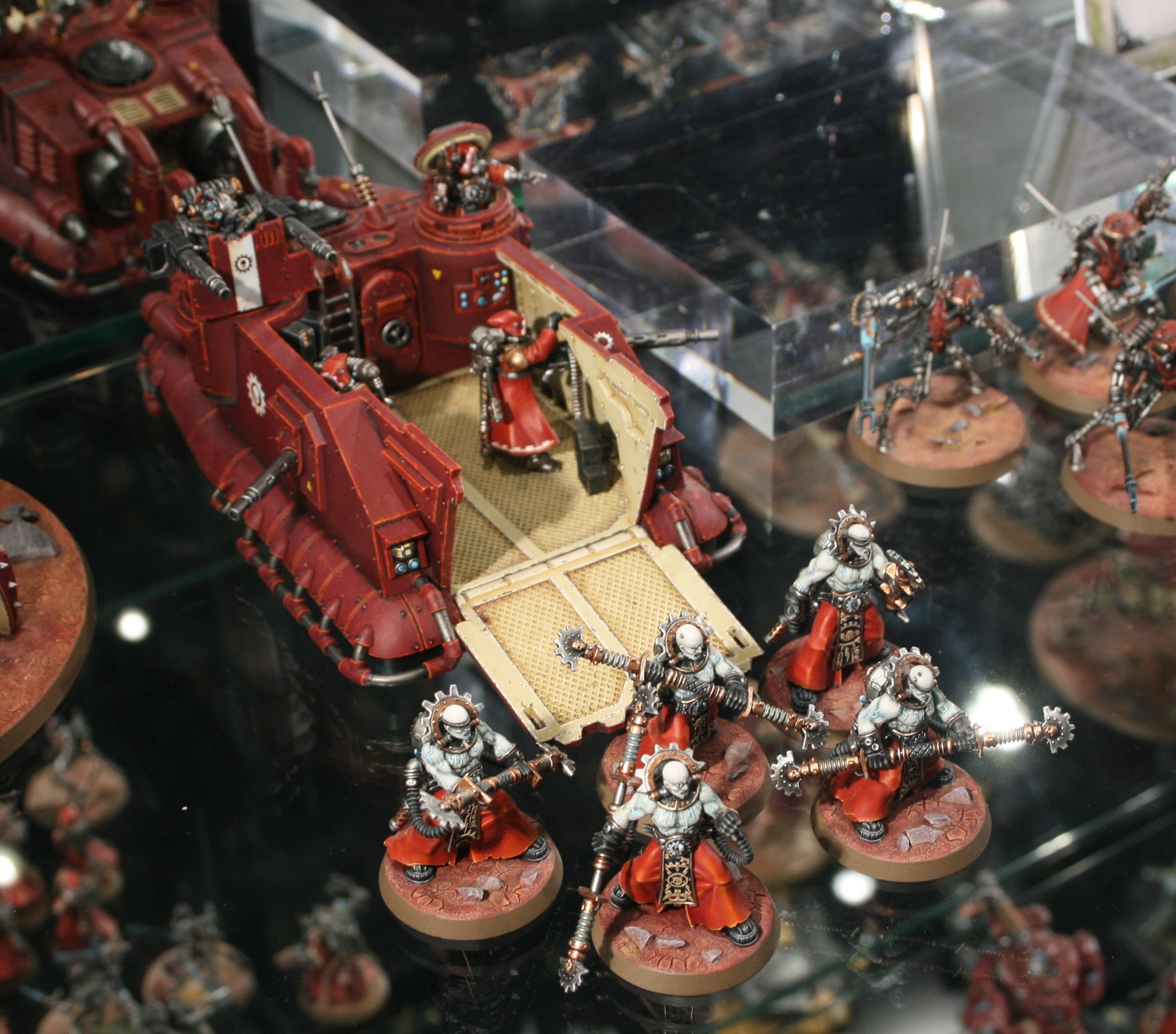
This is an Adeptus Mechanicus Skorpius Dunerider from Warhammer World.
The Skorpius Dunerider serves as a Skitarii transport vessel enabling the loyal servants of the Machine God to engage or pursue the enemy with ever greater speed and efficiency. As the Skitarii disembark to bring the fury of the Omnissiah to their enemies, the Dunerider’s twin cognis heavy stubbers offer a high rate of covering fire.
Within its open cargo hold, the gunners tasked with firing the vehicle’s flanking pair of cognis heavy stubbers stand at their stations with hands on triggers. A turret-mounted pair of cognis heavy stubbers rises is mounted on a rear cupola, its Servitor gunner protected from return fire by an armoured shield mounted between the barrels.
This Salamanders Primaris Repulsor was on display at Warhammer World when I visited there in January 2020.
The Repulsor is an Imperial anti-gravitic main battle tank intended to provide armoured support for the Primaris Space Marines of many different Chapters.
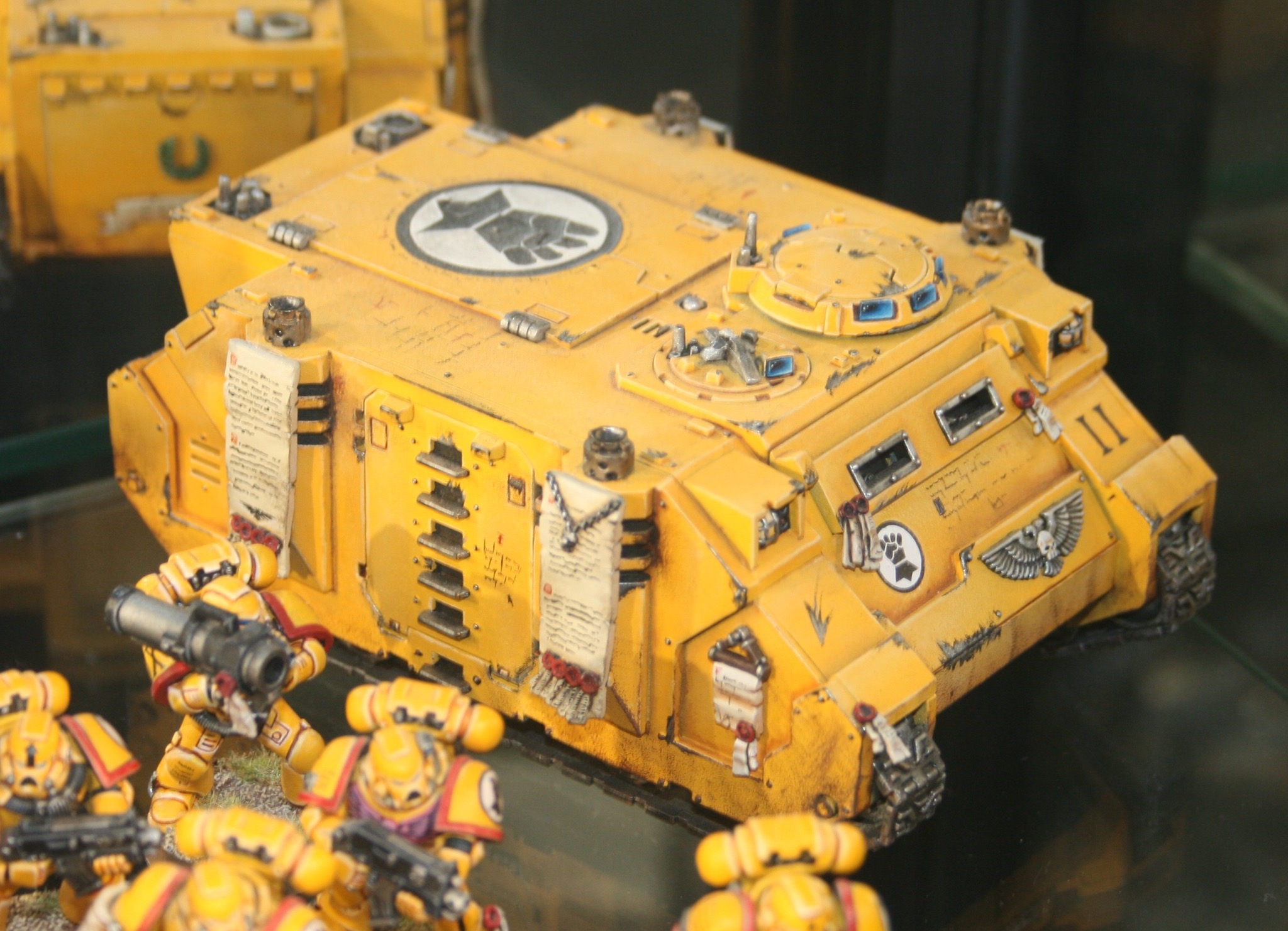
Imperial Fists Rhino on display at Warhammer World.
The Rhino, or more formally, the Mars Pattern Rhino, is an Imperial armoured personnel carrier (APC) that is widely used throughout the galaxy by many different factions, though it is a mainstay vehicle of the Adeptus Astartes.
The TSR-2 was a cancelled Cold War strike and reconnaissance aircraft developed by the British Aircraft Corporation (BAC) for the Royal Air Force in the late 1950s and early 1960s.
This is one of the three prototypes, XR220, at RAF Cosford.
The TSR-2 was designed to penetrate a well-defended forward battle area at low altitudes and very high speeds, and then attack high-value targets in the rear with nuclear or conventional weapons.
Although never developed beyond the prototype stage, the British Aircraft Corporation TSR2 was one of the most exciting and controversial British combat aircraft designs of the 1960s.
The cancellation of the project is a subject of great debate to this day.
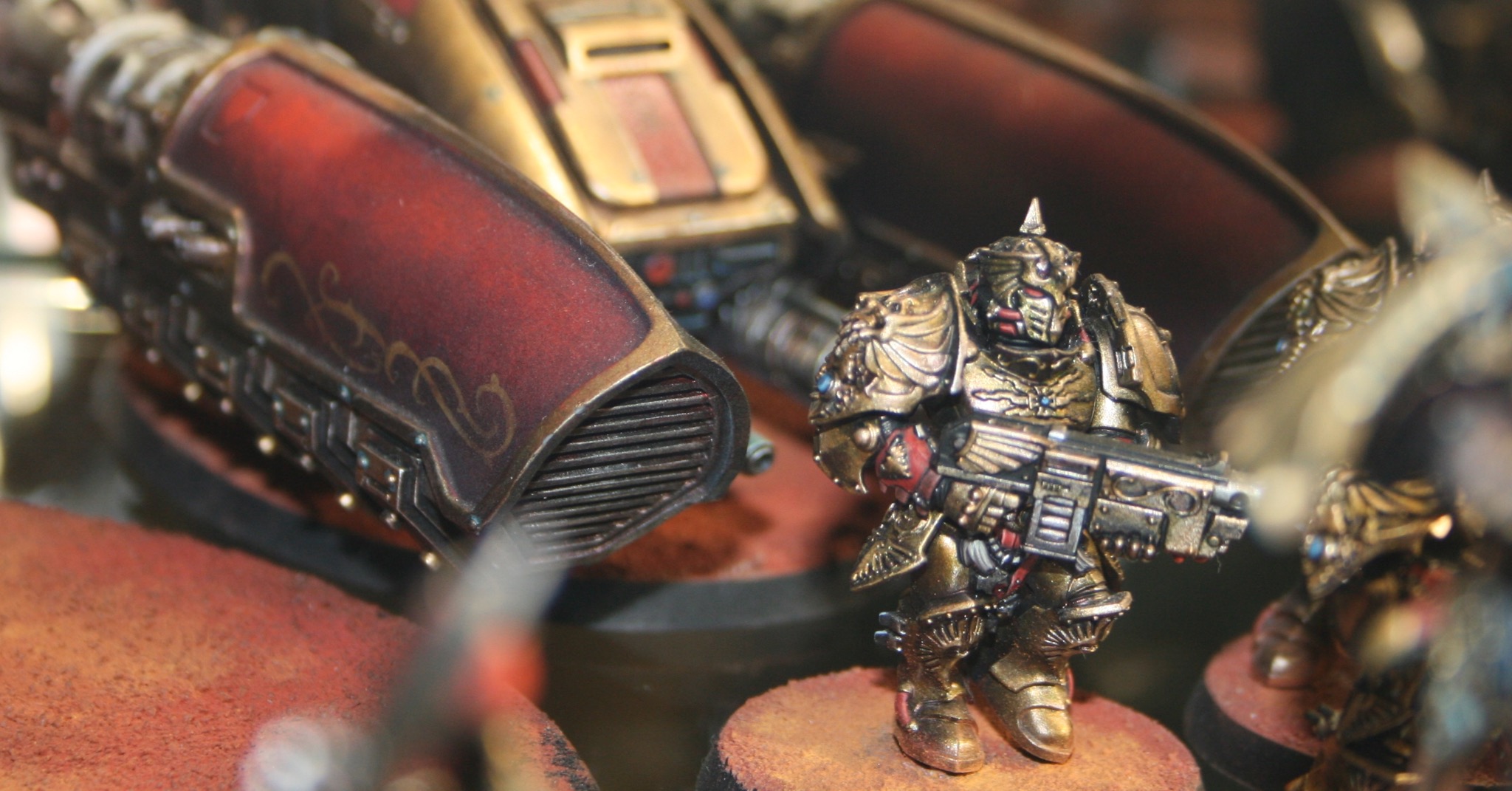
This Legio Custodes Caladius Grav-Tank Annihilator was part of the displays at Warhammer World.
Based upon the technology of the Coronus Grav-carrier, the smaller Caladius grav-tank is designed to utilise the firepower afforded by the heaviest elements of the Legio Custodes’ arsenal on a highly mobile, protected platform. Given the fusion of advanced systems and weapons, the Caladius is perhaps the most powerful battleline armoured unit of its size in the Imperium’s forces, utilising technologies and materials derived not only from the Dark Age of Technology, but from developments made as a result of the Great Crusade’s two centuries of warfare.
A particularly powerful variant was the ‘Caladius-Annihilator’ which featured an enhanced capacitor-fed Arachnus blaze cannon potent that is enough to pose a threat even to super-heavy armour.
Legio Custodes Sagittarum Guard at Warhammer World.
Though less common within the ranks of the Legio Custodes than their peers, those warriors who comprise the Sagittarum Guard Sodalities nevertheless fulfil a number of vital roles within the Legio’s order of battle. Their art of war, in contrast to the rest of the Custodian Guard, is focussed on the slaying of the foe primarily at distance and upon the devastating application of firepower on the battlefield.