Space Marine Razorback

If you have looked at my Grey Knights and Daemonhunters pages on the site, you will realise that I was attempting to paint a Grey Knights force which goes beyond the listings in the DaemonHunters Codex. What I was trying to do is to create a Grey Knights force (using the Space Marine Codex) and then using a DaemonHunters force as allies. Though this got stalled (as projects do) and many of the models were stored away.

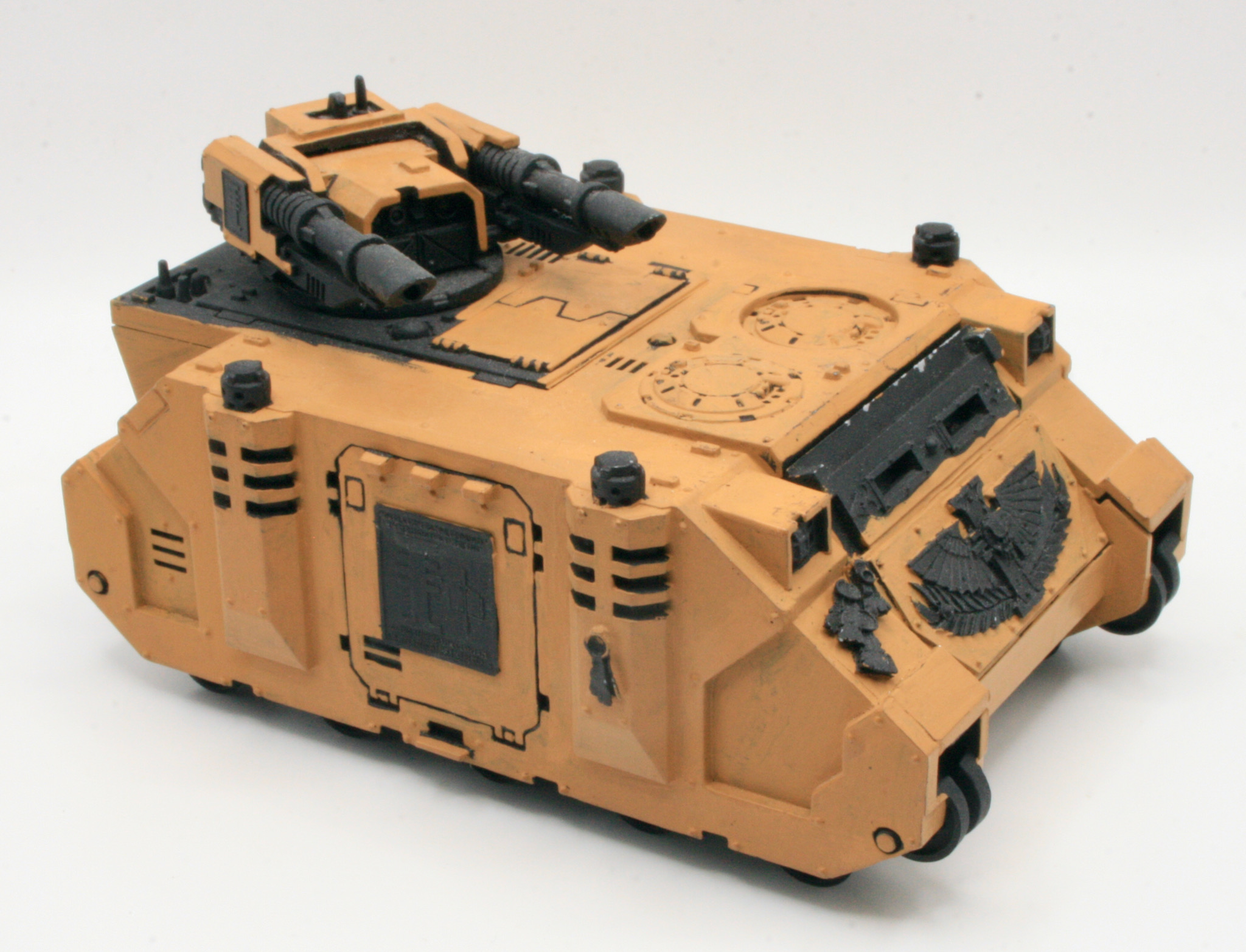
One model I got was a Forgeworld Razorback the one with the much bigger turret, which I much prefer over the plastic kit version that you could get in the shops back then.

I actually started this model back in 2006, I recently retrieved it from storage and decided that I would try and finish painting it. I realised I had made quite significant progress.
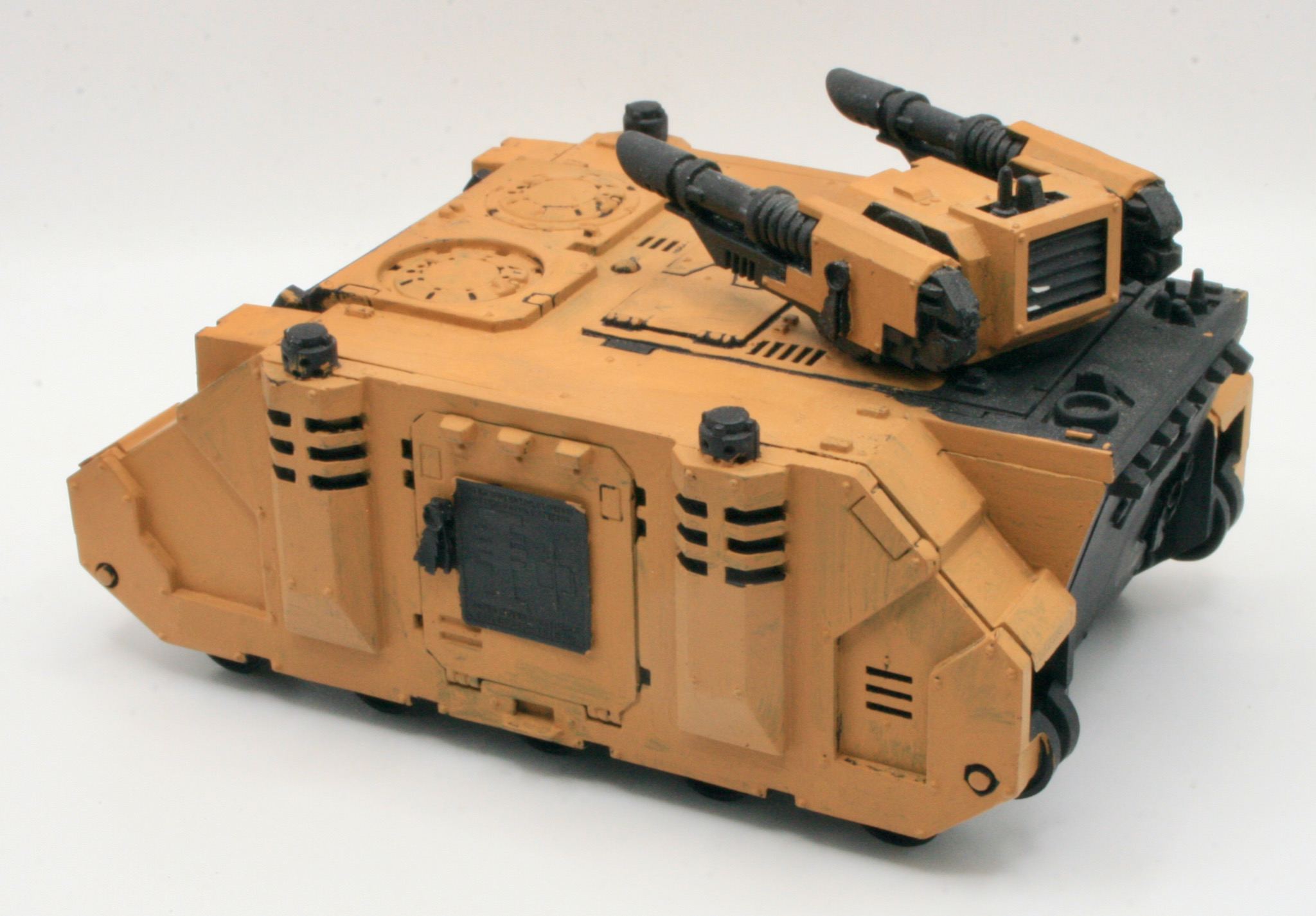
Though as you can see the basecoat wasn’t covering the black undercoat very well.

I was using Tausept Ochre as the base coat, however having liked the paint scheme I was using on my Deimos-pattern Rhino, I decided that I would paint the Razorback in the same scheme.

It does have a fair amount of Inquisitorial and Grey Knights iconography on the model, but I have decided to leave it on.

The first thing I did was spray the underneath of the model with Citadel Zandri Dust.
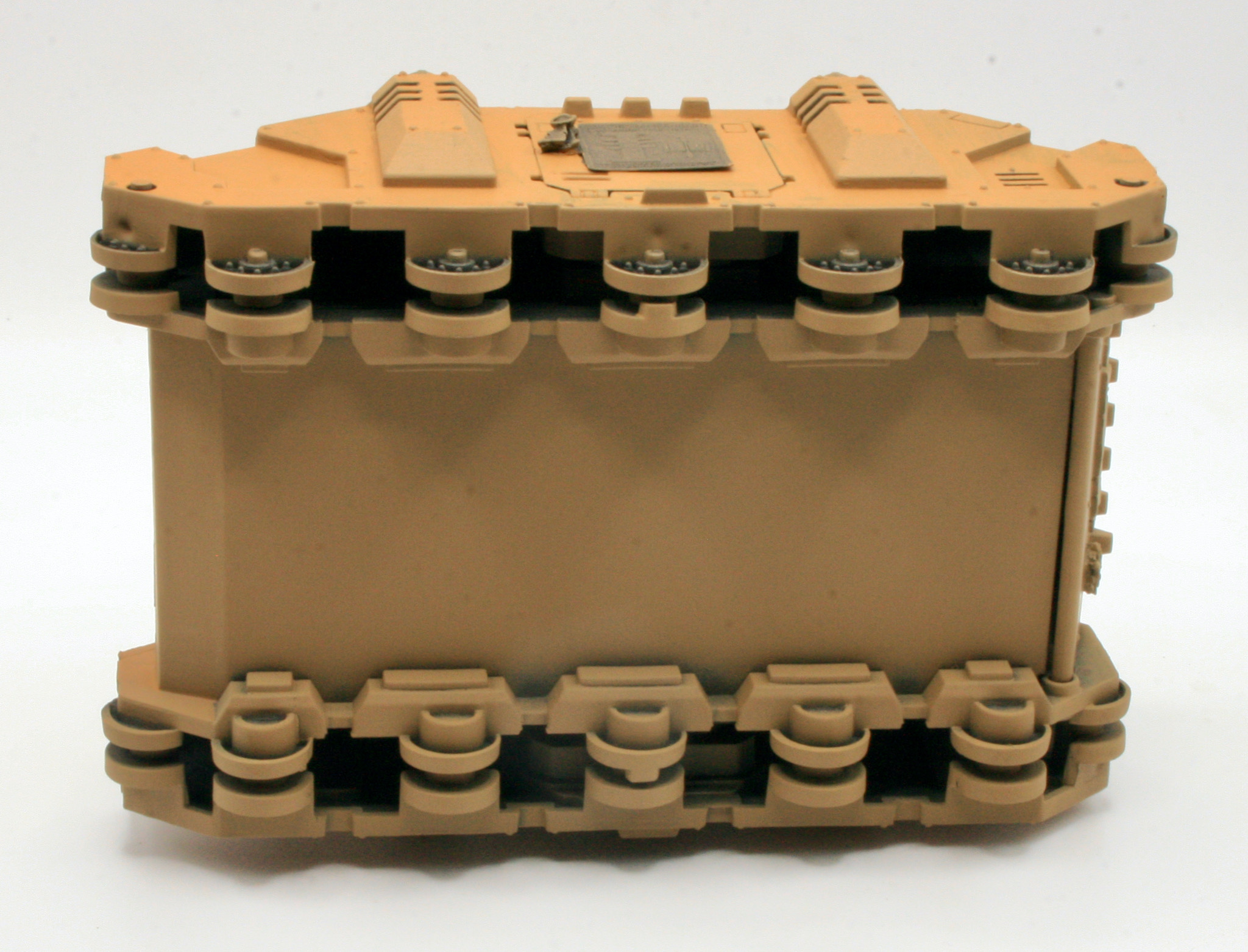
The next stage will be the yellow basecoat.

Daimler Ferret Scout Car MKII

The Ferret armoured car, also commonly called the Ferret scout car, is a British armoured fighting vehicle designed and built for reconnaissance purposes. The Ferret was produced between 1952 and 1971 by the UK company Daimler. It was widely adopted by regiments in the British Army, as well as the RAF Regiment and Commonwealth countries.

This example at the RAF London museum was restored at RAF Northolt using parts from several vehicles.

The Ferret was used in most parts of world, proving to be particularly popular as it was very easy to maintain in combat conditions. The RAF first used the armoured car in the Radfan area of Aden near Yemen during operations in the 1960s. Later the Ferret was used by the RAF Regiment to protect Harrier sites.

There were a few Ferret MkII Scout Cars at the Bovington Tank Museum.

There was a Ferret MkII Scout Car in a white UN paint scheme on display at the Imperial War Museum in London.

Sagitaur ATV

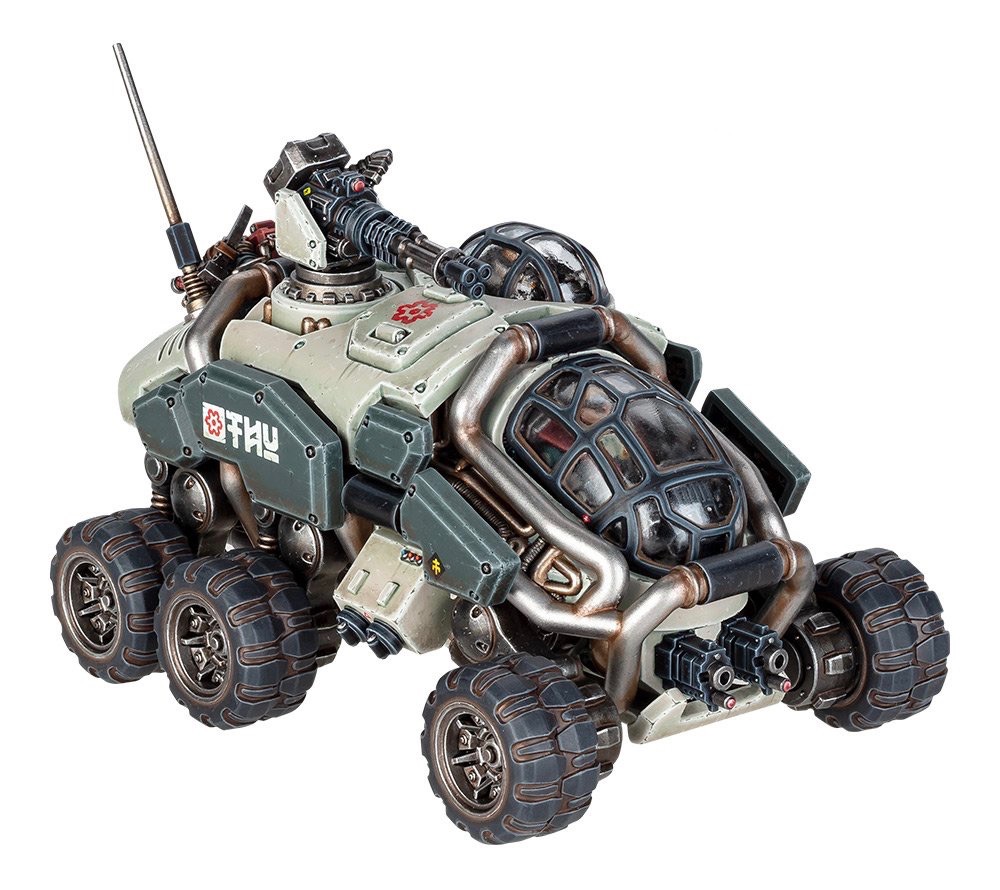
Well looked what was revealed today over on the Warhammer Community site, a new vehicle for the Squats, sorry The Leagues of Votann.

Designed for surveying inhospitable alien terrain, the Sagitaur is a rapid-response ATV suited to scouting operations and lightning-fast armoured offensives alongside Hernkyn Pioneers. Its armoured carapace is durable enough to shrug off everything from rockslides to plasma blasts, making it an ideal spearhead for any League-sponsored colonisation effort.

I really like this vehicle, it certainly has character and looks the part. It certainly has a very hard SF feel to the design, I can even see it being used for other games, as well as Warhammer 40K.

We’ve also been told that the Sagitaur isn’t the only vehicle in the Leagues of Votann’s garage. I wonder what else is in that garage?

RAF Bomb Disposal Ford Zephyr

The Ford Zephyr is an executive car manufactured by Ford of Britain from 1950 until 1972. Unlike most Ford Zephyr cars in the Royal Air Force motor pool, 25-AM-44 (which is on display at RAF London) was not used as a staff car.  Instead, the RAF’s explosive ordnance disposal unit bought it in 1966 to transport bomb squads. This RAF Bomb Disposal Ford Zephyr had its fenders painted red and “RAF Bomb Disposal” printed on the hood. 

More shading

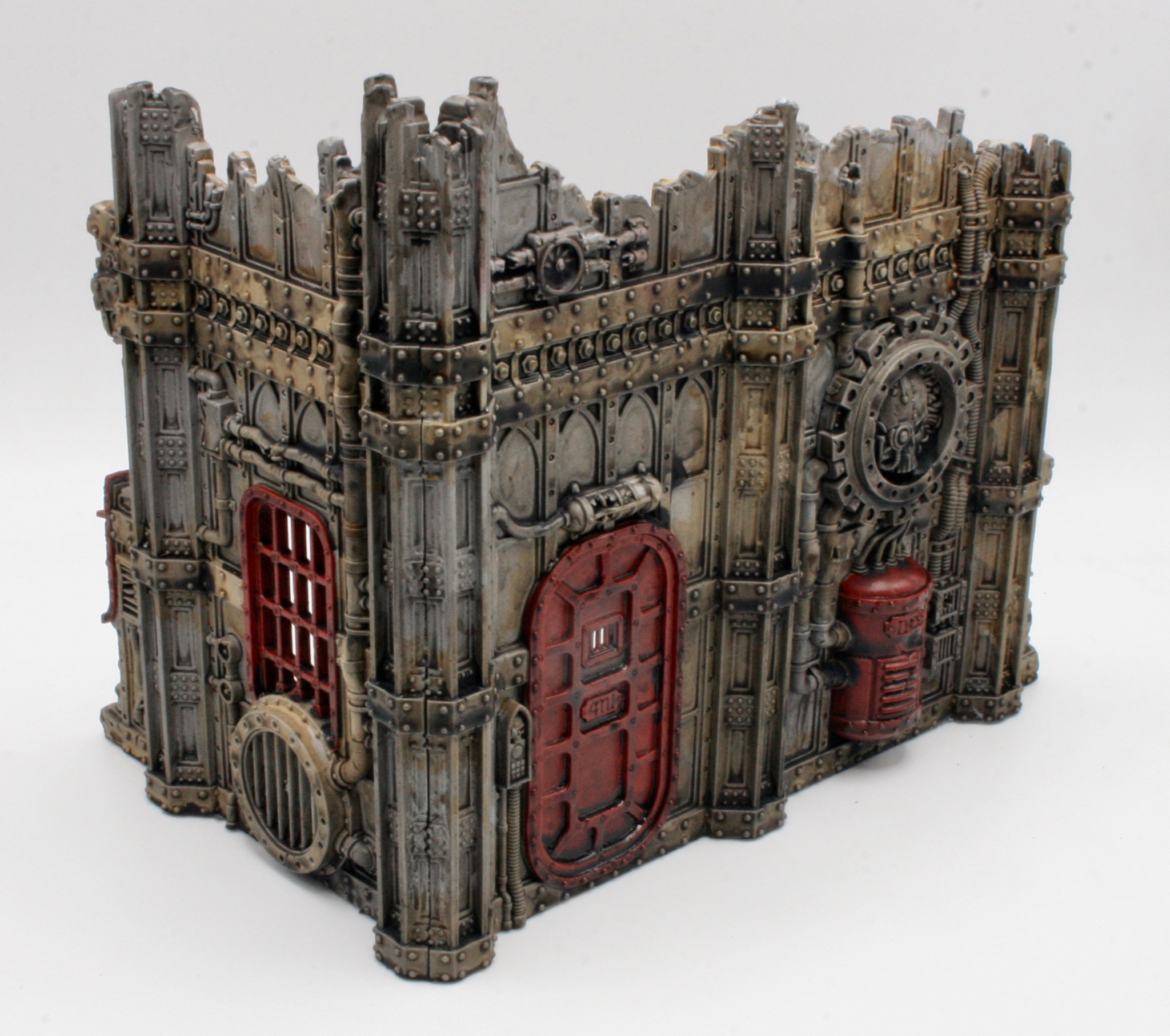
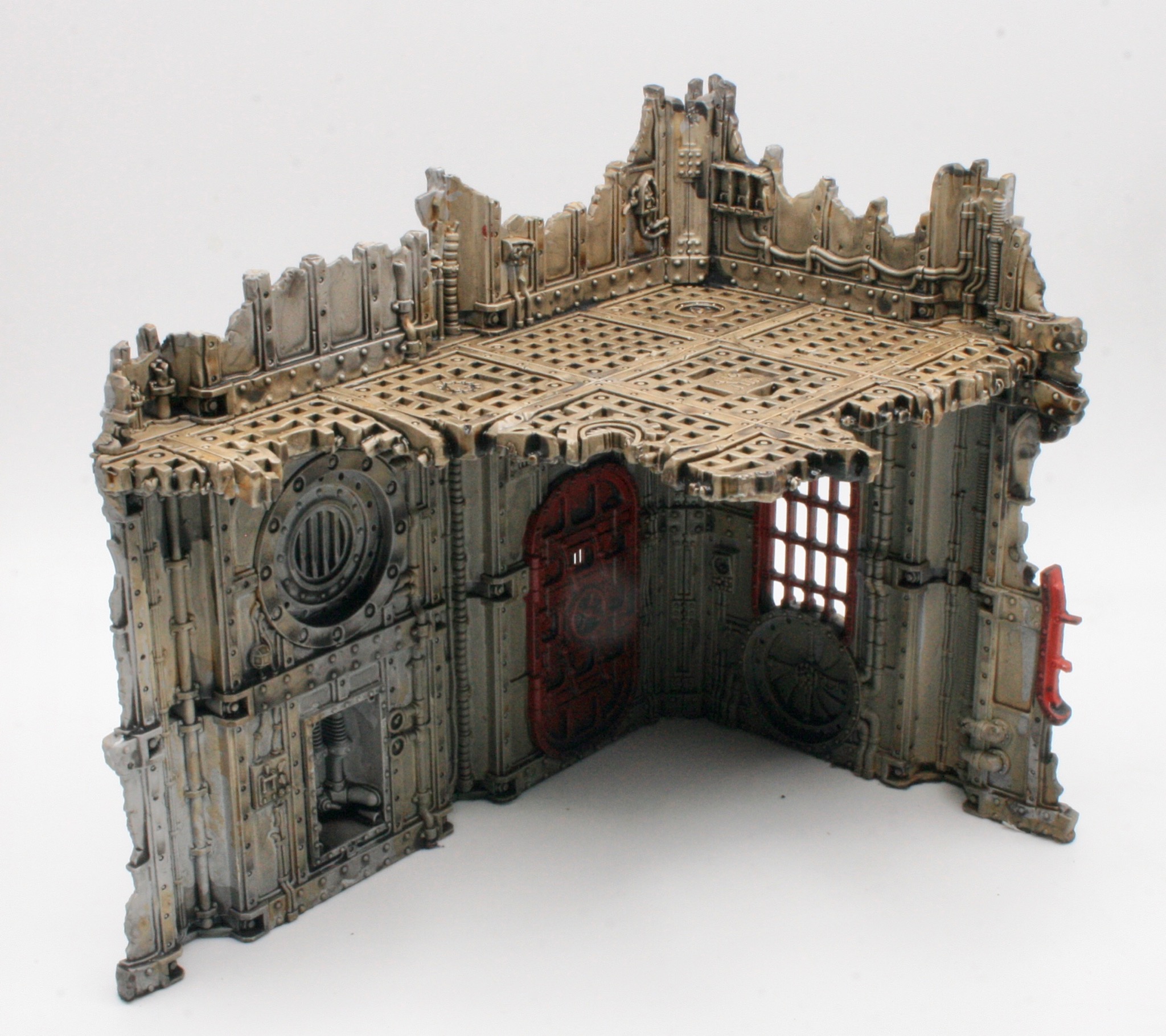
I got a couple of Ruined Factorum sprues that came with Warhammer 40000 Imperium 34. The ruins are from the The Battlezone: Manufactorum – Sub-cloister and Storage Fane kit. One I decided I was going to paint in the same manner as the first Ruined Factorum, for the second I chose to follow the (white and red) paint scheme as outlined in Warhammer 40000 Imperium.

Having constructed the models I gave them a white undercoat. I sprayed the model a few more times with the Corax White spray. I then, following the instructions painted the doors and window frames with Mephiston Red base paint. The next step was to wash the models with Nuln Oil Shade.

I hadn’t quite got the look I was hoping for, so I decided to do some more shading, using Agrax Earthshade Shade and Seraphim Sepia Shade.

I think the floor looks a lot better as well.

This was much better and, much more the effect I was trying to achieve.

Avro Vulcan B2

The Avro Vulcan is a jet-powered tailless delta wing high-altitude strategic bomber, which was operated by the Royal Air Force (RAF) from 1956 until 1984.

The Vulcan was the second of the Royal Air Force’s ‘V bombers’ and like the Valiant and Victor provided part of Great Britain’s nuclear deterrent force for fifteen years. The prototype B1 first flew on 30 August 1952; four years later work began on an improved B2 design. The B2 made it possible to carry the Blue Steel nuclear stand-off bomb.

By 1966 Soviet missile defences had become so effective that Vulcans switched from high- to low-level penetration. In 1970, following their withdrawal from the nuclear deterrent, Vulcans switched to the conventional bomber role in support of NATO forces in Europe. The Vulcan’s range could be greatly increased by in-flight refuelling which was used to such good effect in the long-range attacks on the Falkland Islands from Ascension Island in 1982. The last Vulcans retired from operational service in 1984.

XL318 is on display at RAF London.

XJ824 is on display at Duxford.

XM598 is on display at RAF Cosford.

Affixing the tracks

Have been working on my Horus Heresy Deimos Pattern Rhino. I put the Rhino model together and then gave it a white undercoat. I also sprayed the underneath of the model with Citadel Zandri Dust before I painted the the whole model yellow using a Daemonic Yellow spray from Army Painter. I then picked out some details, the exhausts and bolters using Leadbelcher. The stage after that was to wash the model using some Shade paint. The model was then drybrushed.

I had painted the tracks on the sprue. These were removed from the sprue and using superglue I attached the tracks to the Rhino.

You have to be careful when attaching these, as they are specific to each side of the Rhino, but they do attach to the Rhino quite easily.

I touched up the tracks using Gorthor Brown and Leadbelcher.

Heinkel He 162A-2

Heinkel He 162

The Heinkel He 162 Volksjäger or “People’s Fighter” was a German single-engine, jet-powered fighter aircraft fielded by the Luftwaffe in World War Two.

The Heinkel He 162 was one of Germany’s last ditch attempts to win back the control of the skies with a cheap jet fighter capable of being flown by almost anyone. Like all the other weapons it came too late to have any effect on the outcome of the war. Developed under the Emergency Fighter Program, it was designed and built quickly and made primarily of wood as metals were in very short supply and prioritised for other aircraft.

Drybrushing of the Deimos Pattern Rhino

Have been working on my Horus Heresy Deimos Pattern Rhino. I put the Rhino model together and then gave it a white undercoat. I also sprayed the underneath of the model with Citadel Zandri Dust, then I  painted the whole model yellow using a Daemonic Yellow spray from Army Painter. I then picked out some details, the exhausts and bolters using Leadbelcher. The stage after that was to wash the model using some Shade paint.

For the next stage I used some Citadel Layer Yriel Yellow. I took a large brush and gave the model, what I would call, a heavy drybrush. I put paint on the brush, and then used some kitchen towel to remove most of the paint, and then using a stippling process added paint to the model.

The plan was that this would take the flat surfaces of the model back to the base colour.

I then gave the model a light drybrush of Citadel Layer Dorn Yellow.

I had thought about doing some edge highlighting, but I realised that I didn’t really have the skill to do this.

I was quite pleased with how the model was looking.

Disassembled

The Focke-Wulf Fw 190 was a single-seat single-engine multi-role fighter-bomber, capable of carrying a larger bomb load than its counterpart the Messerschmitt Bf109. Entering Luftwaffe service in August 1941, the Fw 190 proved superior in many respects to the Royal Air Force’s main frontline fighter, the Spitfire V. It took the introduction of the much improved Spitfire IX in July 1942 for the RAF to gain an aircraft of equal capability.

At RAF London there is a two-seat Focke-Wulf Fw 190, which here is being disassembled.

The Fw 190 is to be sent to Germany and will be on long-term loan with the Militärhistorisches Museum der Bundeswehr in Berlin-Gatow.

FW-190 at RAF Cosford.