Photographing in the sun

Having finished painting my Typhon Heavy Siege Tank I took some photographs of the model on my desert terrain.

My desert terrain is too big for my lightbox, so I took it outside into the sun.

It was very bright and sunny, so much so, there were some really harsh and hard shadows. 

In order to diffuse the harsh light, I would have used some kind of photographic reflector, but I don’t have one. What I did use was a large piece of white card.

This helps to reflect the sunlight back and reduced the depth and harshness of the shadows.

I am thinking about getting though a bigger lightbox for taking more photographs of dioramas and scenic settings.

National Cold War Exhibition at RAF Cosford

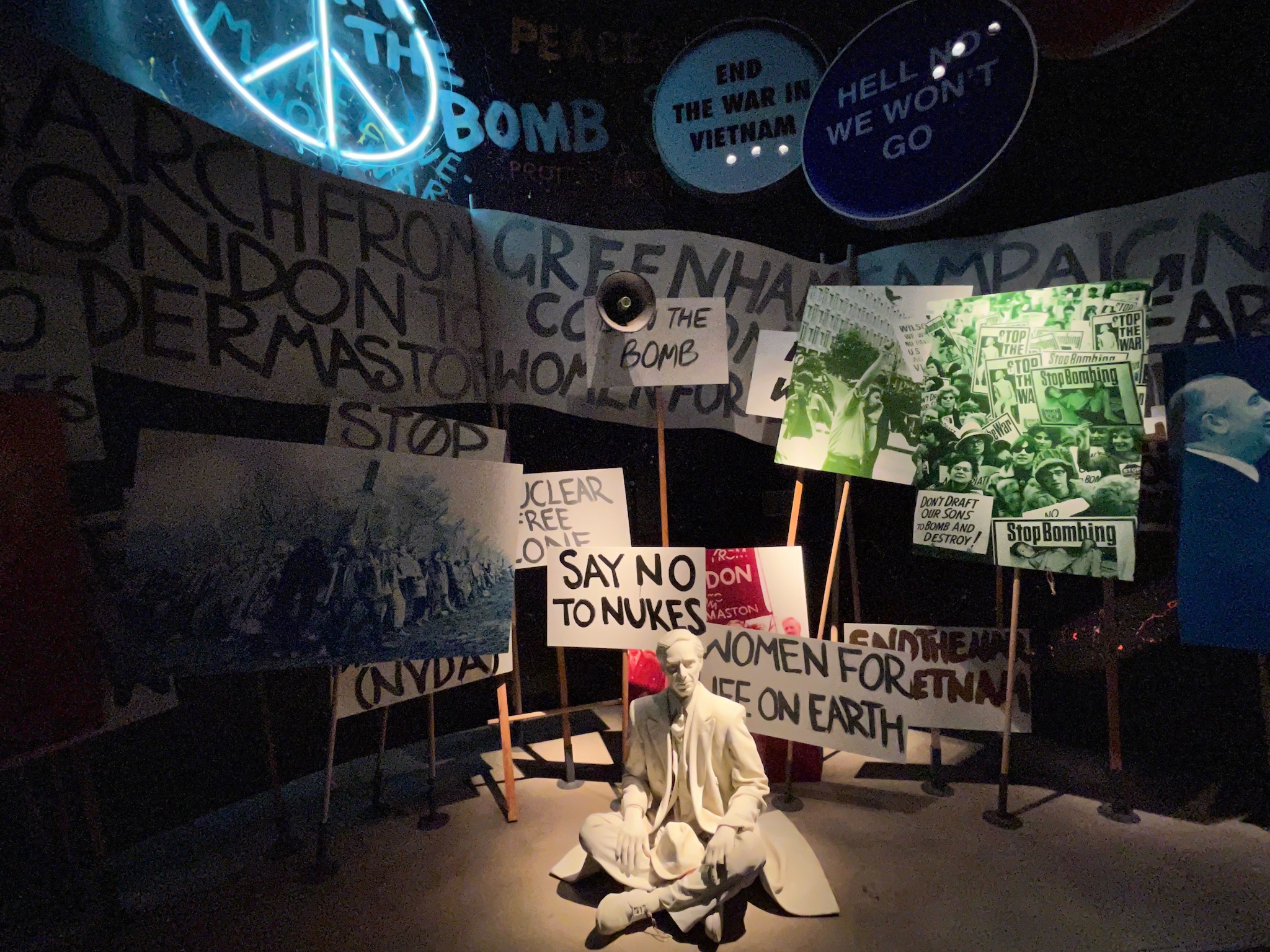
Some photographs from the National Cold War Exhibition at RAF Cosford.

By employing the atomic bomb for the first time against Japan, humanity demonstrated its newfound capability to annihilate itself completely. Winston Churchill remarked, following the conclusion of World War II, that an “Iron Curtain” had descended upon Europe.

Following more than five years of intense warfare in Europe, the Middle East, and the Far East, there ensued a period of over 40 years during which the East and West found themselves on opposite sides of an ideological chasm, with the terrifying specter of nuclear devastation keeping them apart. This era became known as “The Cold War.”

During the early years of the Cold War, the responsibility for Britain’s nuclear deterrent rested with the Royal Air Force, utilizing the “V Force” and “Thor” missiles. Eventually, this deterrent was transferred to the submarines of the Royal Navy. The National Cold War Exhibition explores the ideologies of both sides, delves into the social history of the era, showcases the technological advancements born out of the East-West competition, and examines the eventual dissolution of the Warsaw Pact, which has shaped the world we inhabit today.

Consequently, the Cold War narrative extends far beyond aviation alone. This national exhibition strives to enlighten and educate present and future generations about the immense threat that jeopardised global peace and security during this pivotal period of the 20th century.


Thunderbolt on the Flightdeck

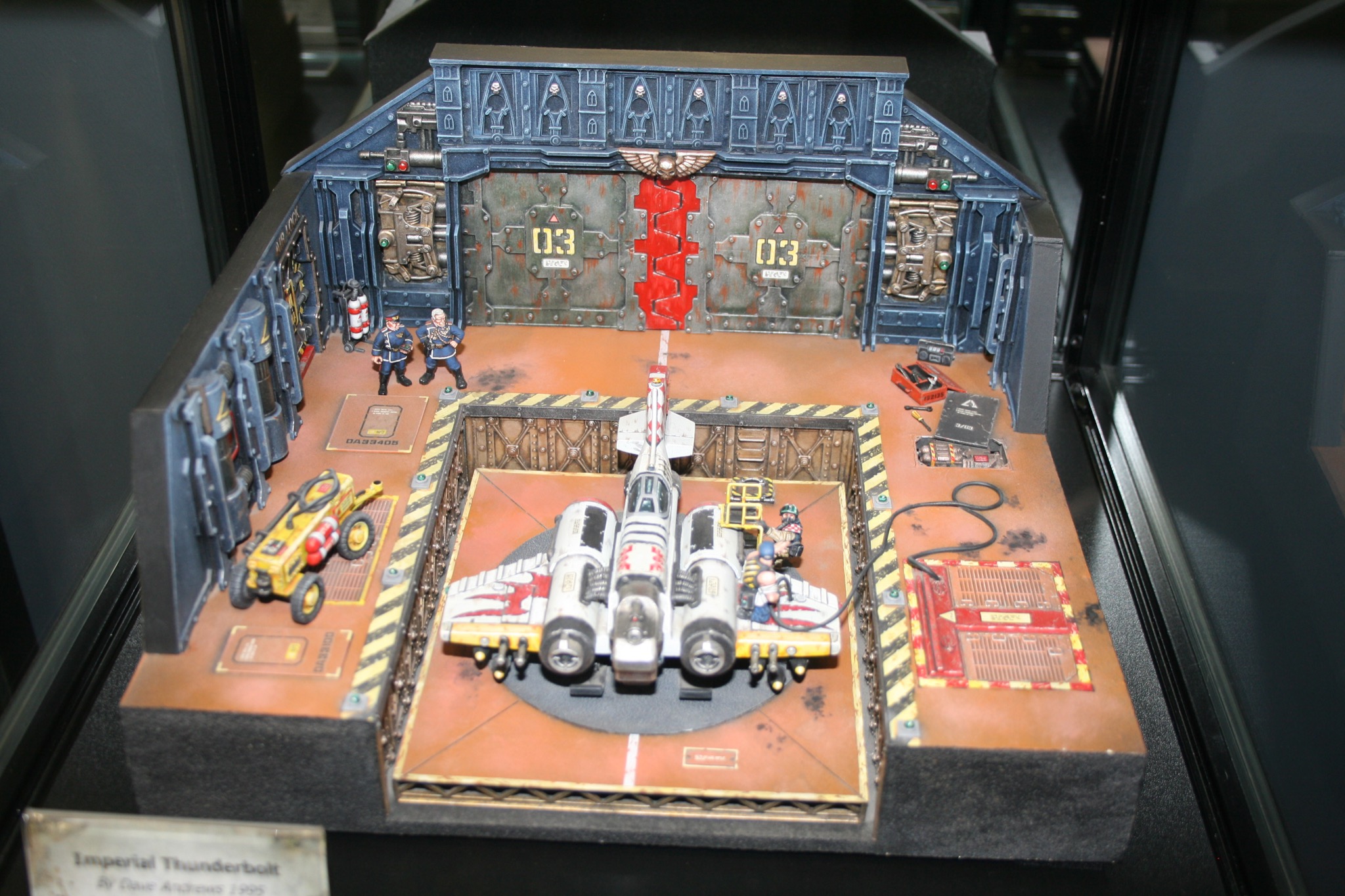
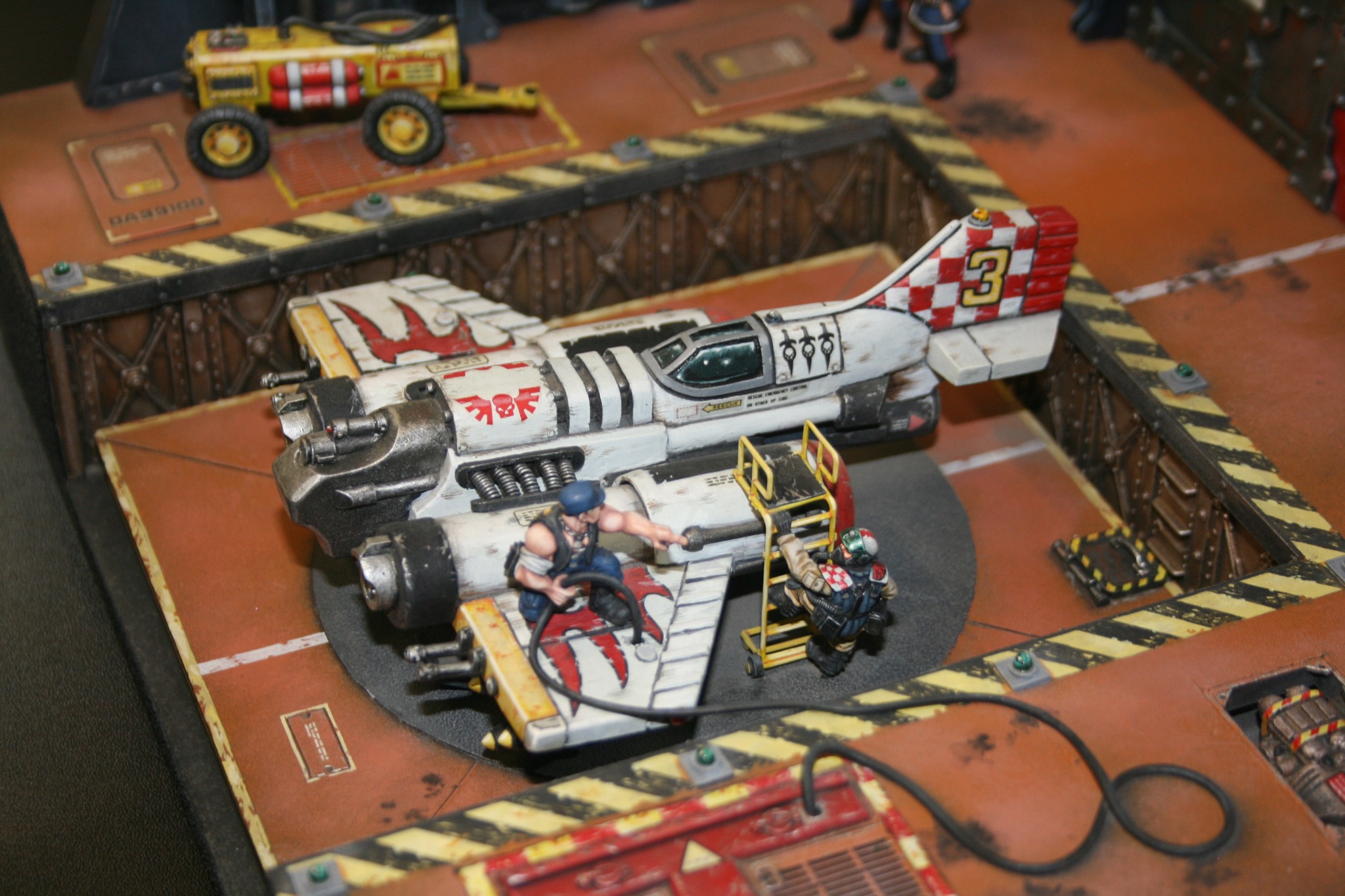
This diorama shows a flight crew preparing an Imperial Navy Thunderbolt fighter for battle.

The amazing Dave Andrews made this fantastic diorama for the Open category Golden Demon and it won Gold.

This was before the time of the Forge World Thunderbolt and even before Forge World!

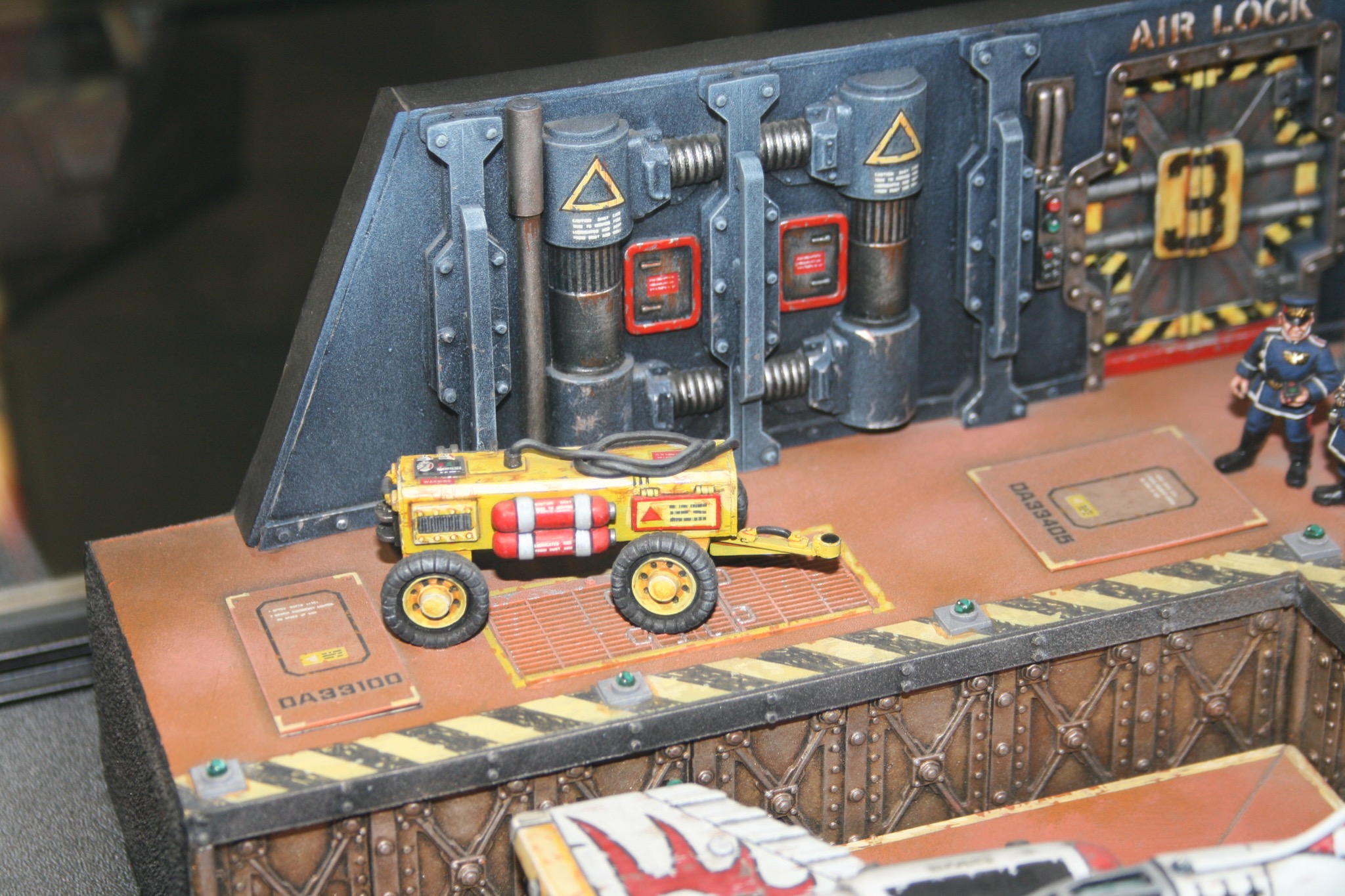
It was full of lovely details such as this mobile generator.

The model Thunderbolt was based on the Epic miniature.

Very clever and simple idea which works really well.

Photographed at Warhammer World. More photographs of the flightdeck here and here.

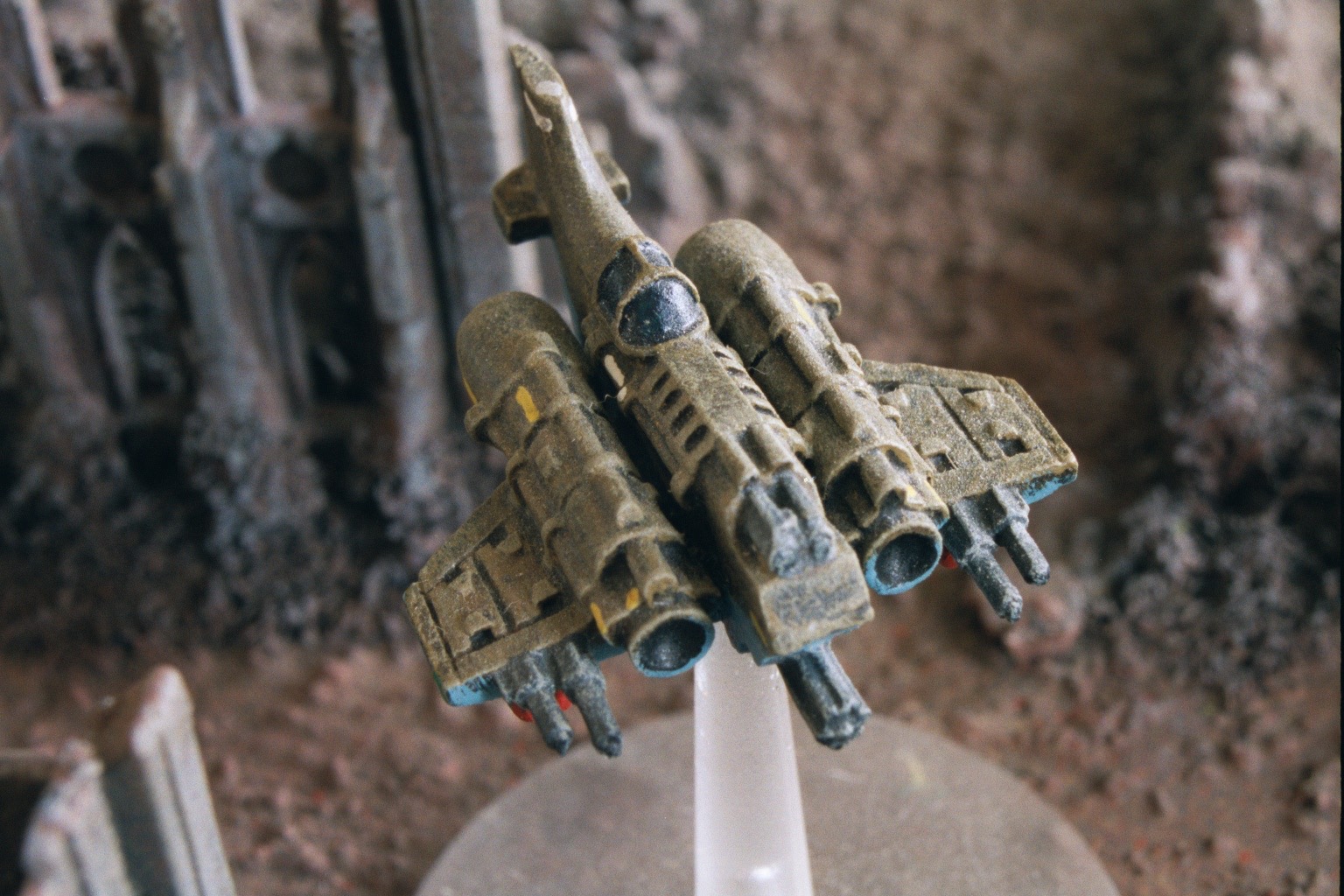
Thunderbolt Fighter Miniatures Gallery.

Centurion Mark 3 Tank

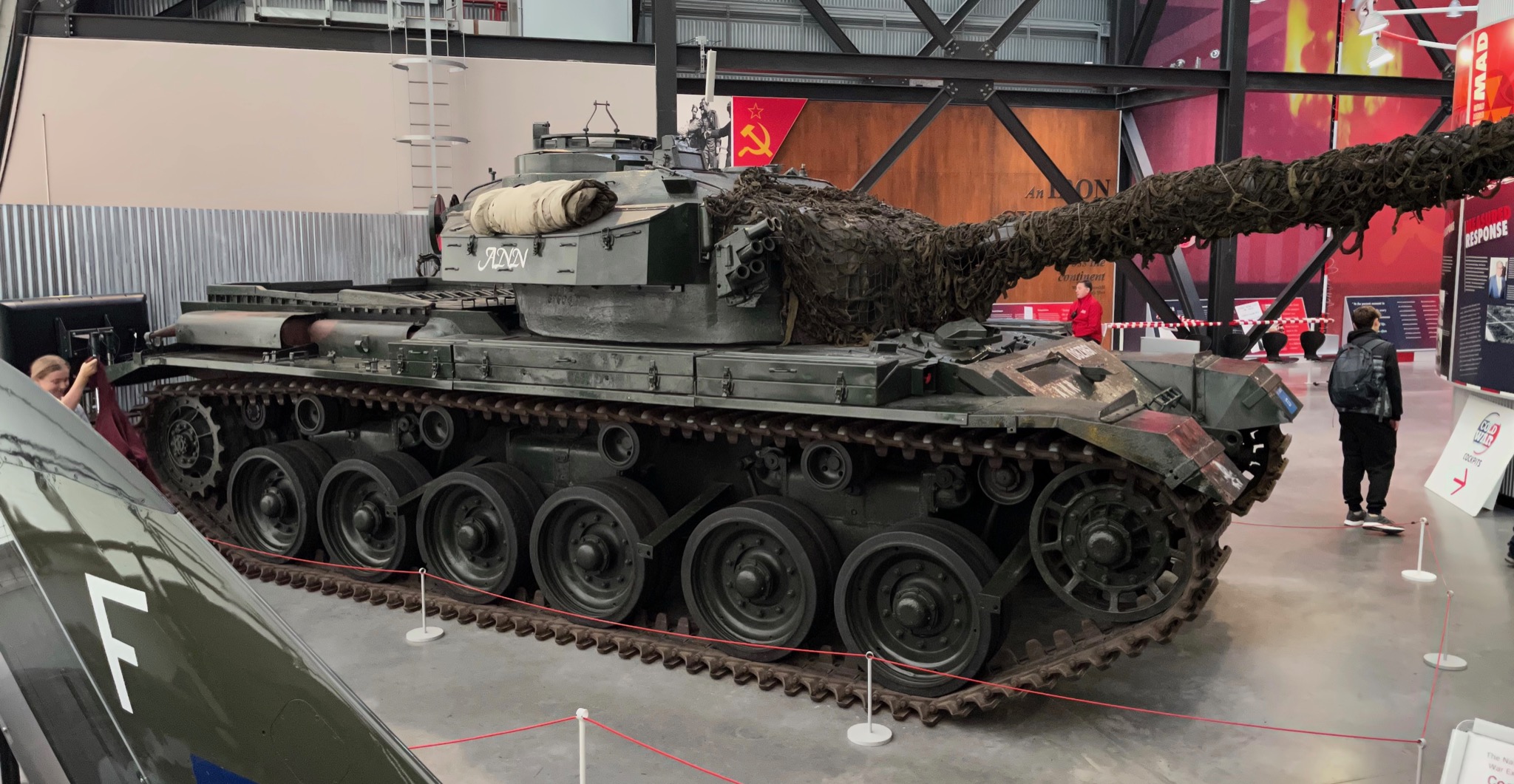
This Centurion Mark 3 Tank was on display at RAF Cosford.

The Centurion tank was one of the most successful post-war tank designs. It was introduced in 1945, just too late to see combat in the Second World War. However, it went on to serve in a number of conflicts, including the Korean War, the Vietnam War, and the Arab-Israeli wars.

The Centurion was a well-balanced tank with a good mix of armament, armour, and mobility. It was armed with a 105mm rifled gun, which was capable of firing both high-explosive and armour-piercing rounds. The Centurion’s armour was also very effective, and it was able to withstand the fire of most enemy tanks. The tank was also highly mobile, and it was able to keep up with the latest advances in tank warfare.

The Centurion’s success was due to a number of factors. First, it was a very well-designed tank. The designers took into account the lessons learned from the Second World War, and they incorporated a number of features that made the Centurion a formidable fighting machine. Second, the Centurion was well-maintained and well-equipped. The British Army took great care of its Centurion tanks, and they were always ready for action. Third, the Centurion was used by a number of different countries. This gave the tank a wide range of experience, and it helped to identify and correct any weaknesses in the design.

The Centurion tank was a major success, and it played a significant role in a number of conflicts. It was a well-designed, well-maintained, and well-equipped tank that was able to withstand the fire of most enemy tanks. The Centurion’s success is a testament to the British Army’s engineering prowess and its ability to learn from the lessons of the past.

More photographs of the RAF Cosford Centurion Tank.

Photographs of the Centurion Tank Mk 3 at Duxford.

Photographs of the Centurion Mk I at Bovington.

Team Yankee Centurion Mk 5 Miniatures Gallery

Centurion Mk 5 Workbench


Typhon Heavy Siege Tank in the desert

My latest model for my Imperial Fists Horus Heresy force is the Typhon Heavy Siege Tank. Here is the virtually finished model in the desert.

I still need to add some transfers, and then I will do some further weathering.

I plan to use some weathering powders I got from Forge World many years ago.

I am not too happy with the engine area, so might look at that part of the model again.

The whole process started with constructing the model, I then finished putting it together. The next stage was a white undercoat. I then gave the model a partial base coat of Army Painter Desert Yellow. I then gave the model a base coat of Army Painter Daemonic Yellow. I painted the bolter and the exhausts using Citadel Leadbelcher. It was then onto shading the model and then shading it some more. I also painted the tracks. The Typhon was then drybrushed. I glued in the Dreadhammer Siege Cannon and added the frontal armour and after painting the sponson weapons, these were added to the Typhon, as were the tracks.

See the workbench feature on the Typhon Heavy Siege Tank.

Deimos Pattern Rhino in the desert

The Rhino is the most widely used armoured personnel carrier in the Imperium. Based on ancient STC technology, the fundamental design is robust, reliable, and easy to maintain, with an adaptive power plant that can run off a wide variety of fuels.

This is my Deimos Pattern Rhino in the desert.

Rhino getting in the way of the Typhon Heavy Siege Tank.

My other Deimos Pattern Rhino (note the two cupola bolters).

See the workbench feature on the first Deimos Pattern Rhino.

See the workbench feature on the second Deimos Pattern Rhino.

Matilda II

This Matilda II was on display at the Tank Museum at Bovington.

Matilda II

The Infantry Tank Mark II, better known as the Matilda, was a British infantry tank that served in World War II. It had a crew of four, was powered by two Leyland 6-cylinder diesel engines, and was armed with a 2-pounder gun and a machine gun.

Matilda II

The Matilda was designed in 1936 as a gun-armed counterpart to the first British infantry tank, the machine gun-armed A11 Infantry Tank Mark I. The Mark I was also known as the Matilda, and the larger A12 was initially known as the Matilda II, Matilda senior, or Waltzing Matilda. The Mark I was abandoned in 1940, and from then on the A12 was almost always known simply as “the Matilda.”

Matilda II

The Matilda was an excellent infantry support tank, thanks to its heavy armor. It was impervious to most German anti-tank guns at the time, and it could withstand heavy fire from enemy tanks. However, the Matilda was slow, with a top speed of only 14 mph. It was also not very well-armed, and its main gun, the 2-pounder, was effective against other tanks, but it had limited anti-personnel capabilities.

Despite its limitations, the Matilda was a valuable asset to the British Army during World War II. It was a reliable and well-liked tank by its crews, and it played a significant role in the North Africa Campaign. It was eventually replaced in front-line service by the lighter and less costly Infantry Tank Mk III Valentine beginning in late 1941, but the Matilda continued to serve in other roles until the end of the war.

Matilda II

Overall, the Matilda was a versatile and effective tank that served the British Army well during World War II. Its heavy armor made it a formidable opponent on the battlefield, and its reliability and popularity with its crews made it a valuable asset to the British war effort.

A Matilda II infantry tank is at the Imperial War Museum North in Manchester.

Hawker Siddeley Kestrel F(GA).1 at RAF Cosford

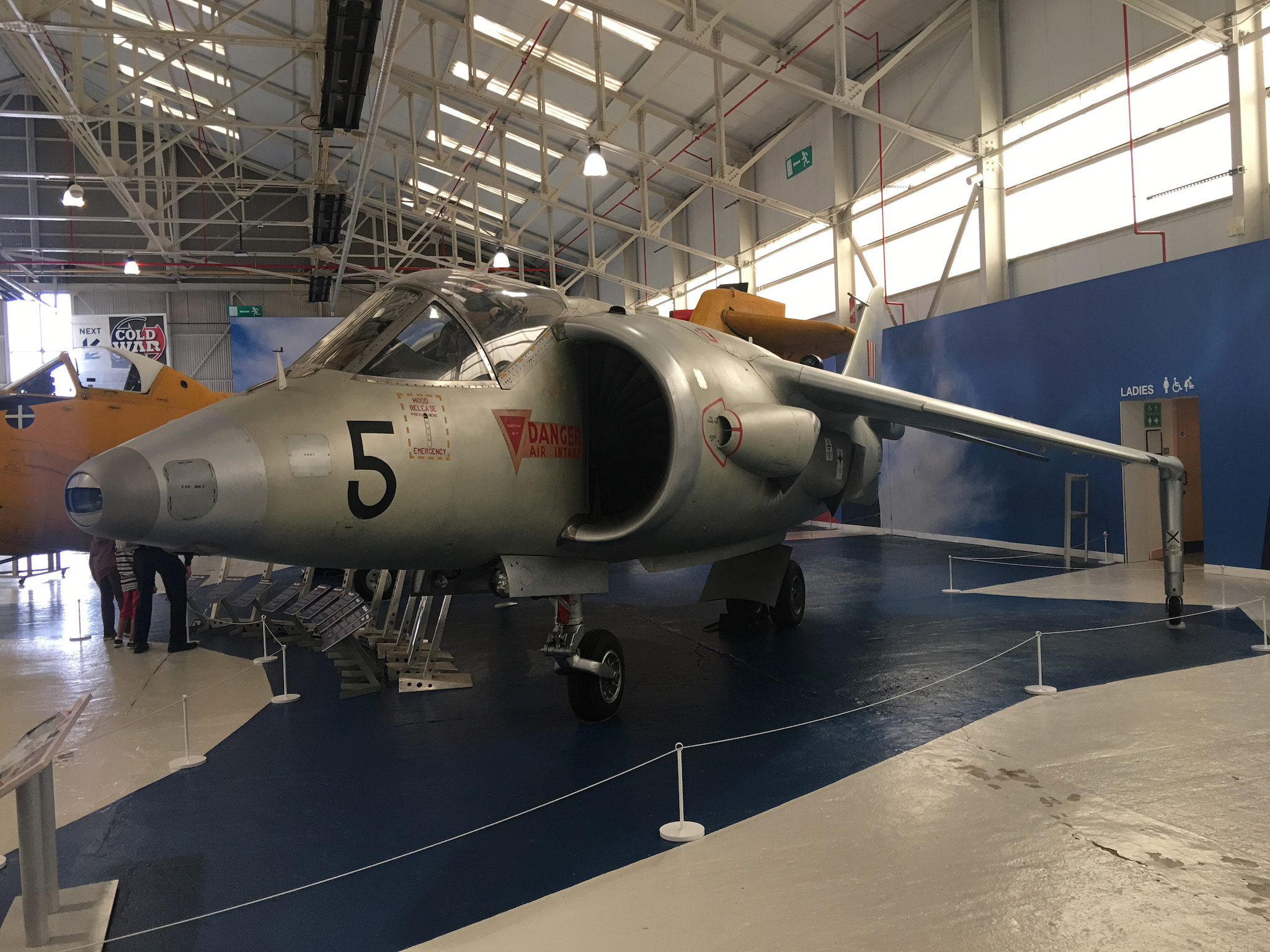
The Hawker Siddeley Kestrel FGA.1 along with the Hawker P.1127 are the experimental and development aircraft that led to the Hawker Siddeley Harrier, the first vertical and/or short take-off and landing (V/STOL) jet fighter-bomber.

The Hawker Siddeley Kestrel F(GA).1 was on display at RAF Cosford.

Development began in 1957, taking advantage of the Bristol Engine Company’s choice to invest in the creation of the Pegasus vectored-thrust engine. Testing began in July 1960 and by the end of the year the aircraft had achieved both vertical take-off and horizontal flight. The test program also explored the possibility of use upon aircraft carriers, landing on HMS Ark Royal in 1963. The first three aircraft crashed during testing, one at the 1963 Paris Air Show.

Improvements to future development aircraft, such as swept wings and more powerful Pegasus engines, led to the development of the Kestrel. The Kestrel was evaluated by the Tri-partite Evaluation Squadron, made up of military pilots from the United Kingdom, the United States, and West Germany. Later flights were conducted by the U.S. military and NASA.

Another view of the Hawker Siddeley Kestrel F(GA).1 from an earlier visit to RAF Cosford.

Hawker Siddeley Kestrel F(GA).1


Tracking the Typhon

My latest model for my Imperial Fists Horus Heresy force is the Typhon Heavy Siege Tank.

The Typhon Heavy Siege Tank was released as a plastic kit for The Horus Heresy. I’ve always liked the Forge World resin model and so was pleased to get one of the new plastic kits for my Imperial Fists force.

Having started constructing the model, I finished putting it together. The next stage was a white undercoat. I then gave the model a partial base coat of Army Painter Desert Yellow. I then gave the model a base coat of Army Painter Daemonic Yellow. I painted the bolter and the exhausts using Citadel Leadbelcher. It was then onto shading the model and then shading it some more. I also painted the tracks. The Typhon was then drybrushed. I glued in the Dreadhammer Siege Cannon and added the frontal armour and after painting the sponson weapons, these were added to the Typhon.

The next stage was to add the tracks to the Typhon. I had painted the tracks on the sprue. These were removed from the sprue and using superglue I attached the tracks to the Typhon.

Unlike the Rhino tracks, the tracks for the left and right hand sides are identical. As the Typhon is longer than the Proteus Land Raider, there are four extra track sections that need to be added.

There were a couple of places where I found it challenging to affix them.

I am not too happy with the engine area, so might look at that part of the model again.

See the workbench feature on the Typhon Heavy Siege Tank.