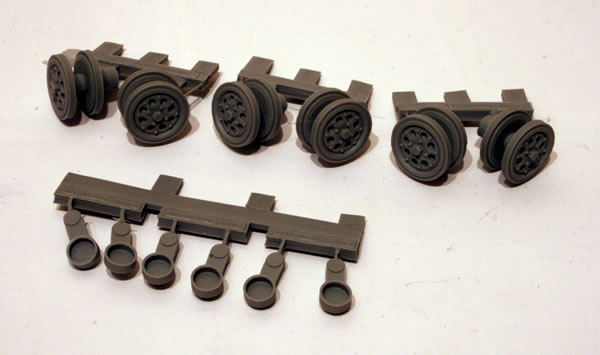
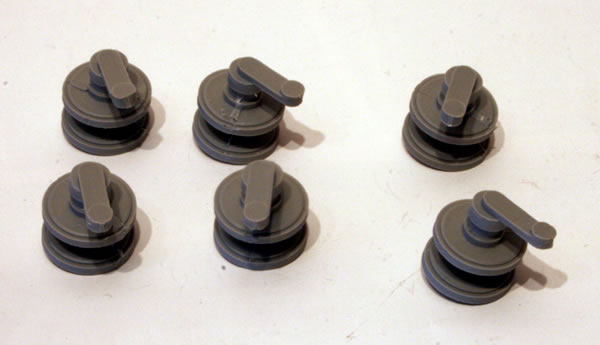
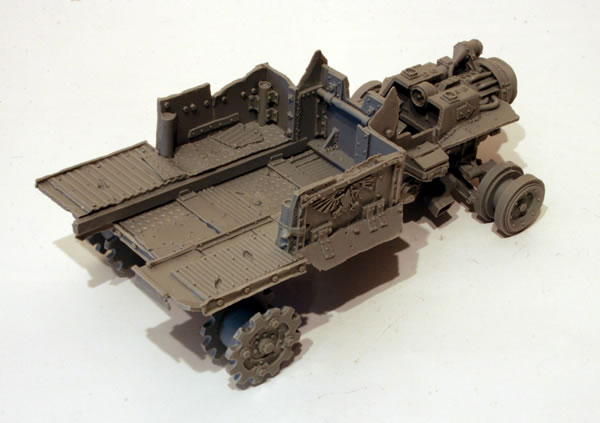
Ork Big Trakk Rear Wheels

I really like this model, which combined with Trukks and Halftrakks gives the Orks a variety of vehicles that you would expect to find in their force.

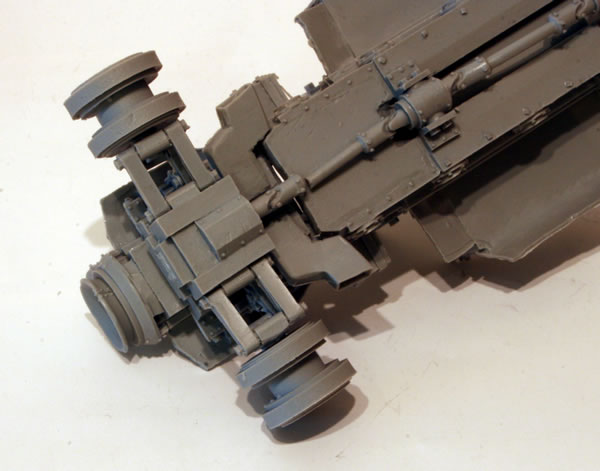
I ensured that the rear driving wheels were glued together.

The driving wheels are then fixed to the rear axle.

The workbench feature on the Big Trakk may help anyone else putting one of these kits together.

Gallery of photographs of the Big Trakk.

Ork Big Trakk

This is not a simple kit, and it is furtherly complicated by a lack of instructions. Hopefully this workbench feature will help anyone else putting one of these wonderful and well detailed models together.

According to a commenter, “There are instructions available now. Just give Forgeworld a call and they will send it to you.”

When the Forge World models are cast, the mould is given a spray (I guess) of some kind of lubricant to allow the cast model to be released from the mould easily. However the lubricant also acts as a barrier to paint, so as happened with previous models I (and others) have painted is that the paint flecks off.

Washing the pieces of the kit in water with a drop of washing up liquid should remove the lubricant. Avoid using hot water as this could warp the resin (a useful tip if you need to bend warped resin back to its original shape).

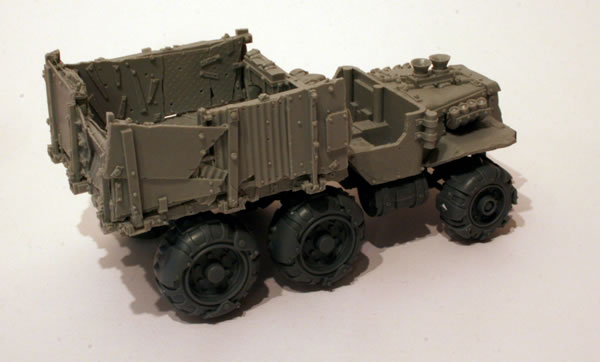
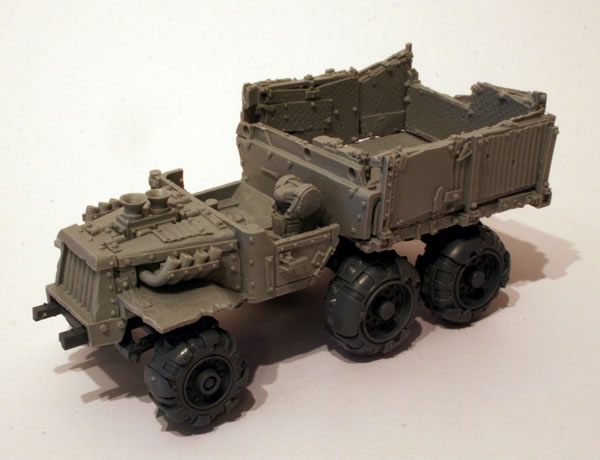
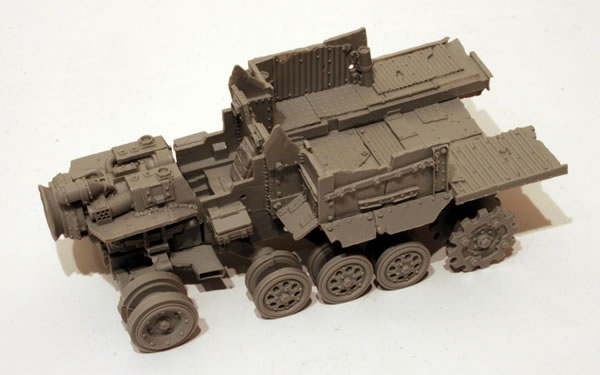
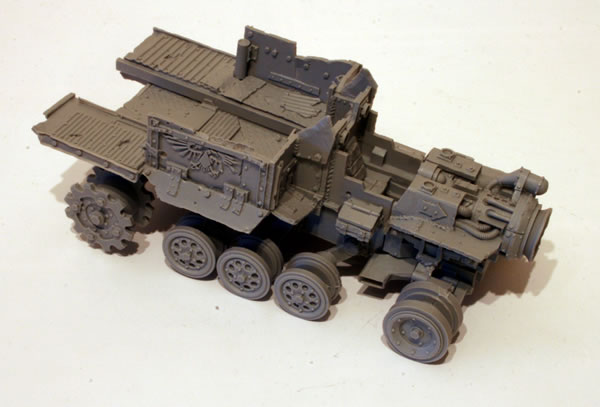
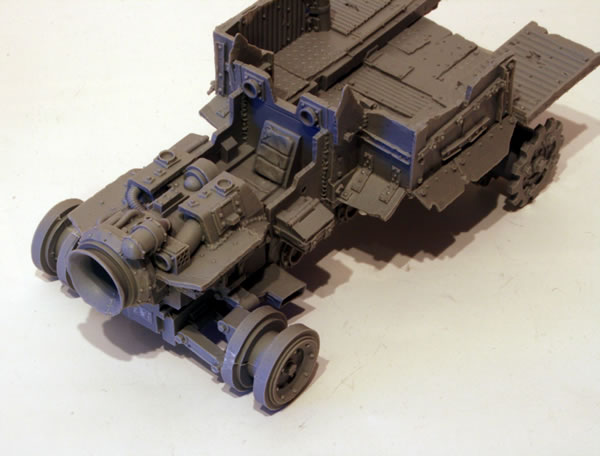
The first stage was fixing the suspension to the main body of the vehicle.

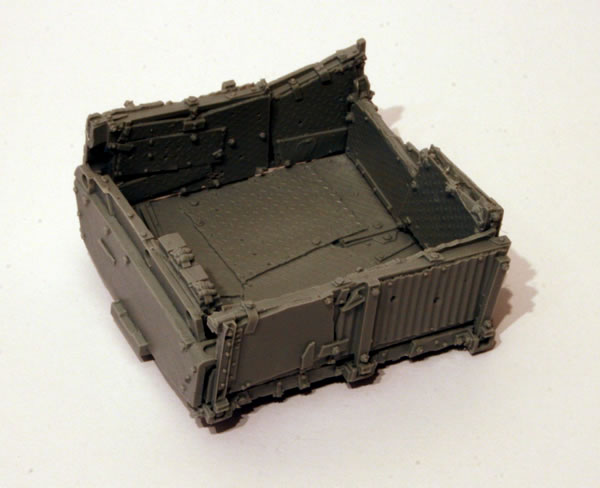
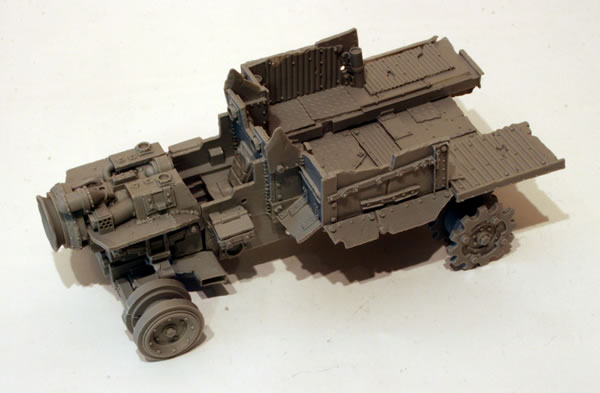
The left side was added the main flatbed of the superstructure.

The driving axle was fixed to the driving shaft, this was then attached to the suspension.

Hopefully my workbench feature will help anyone else putting one of these kits together.

Gallery of photographs of the Big Trakk.

Ork Skorcha

An Ork Skorcha and Wartrakk advanced over the red desert flats.

You can see how I converted and painted my Ork Skorcha. I was quite pleased with it when I had finished it, though since then I think I might need to take it back onto the workbench and do some more weathering. If I was to go through the process again I would distress the extra armour plates I added and give the model a more weathered and tired paint job.

Starting the Ork Big Trakk

Ork Big Trakk

Originally this was to be a conversion of the Ork Trukk kit, however in the end it was decided to make it a full resin kit.

Ork Big Trakk

I really like this model, which combined with Trukks and Halftrakks gives the Orks a variety of vehicles that you would expect to find in their force.

Main issue is that it comes with no instructions and it isn’t the easiest kit to put together.

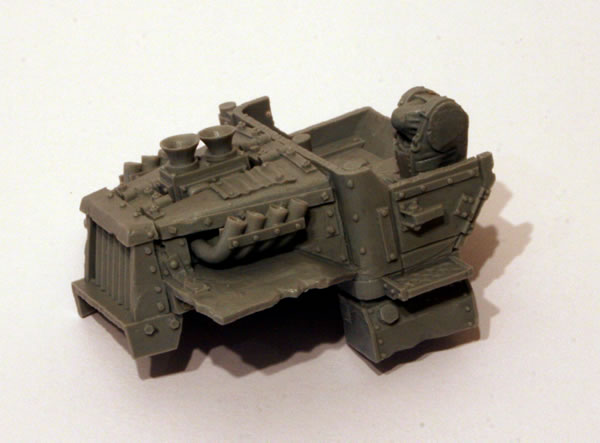
So this is what you get in the box, quite a bit of resin.

Ork Big Trakk

This is not a simple kit, and it is furtherly complicated by a lack of instructions. Hopefully my workbench feature will help anyone else putting one of these wonderful and well detailed models together.

Gallery of photographs of the Big Trakk.

Chipped Imperial Navy Valkyrie

This Imperial Navy Valkyrie was an entry in the GamesDay 2009 UK Golden Demon awards.

A Valkyrie which was entered into the 2009 Golden Demon awards.

Another view.

A Valkyrie which was entered into the 2009 Golden Demon awards.

I do like the modelling and the markings. However I am less sure about the weathering. Don’t get me wrong, I do like it, but not sure how realistic it is. This chipping is used quite extensively by people who paint Games Workshop models, including the ‘Eavy Metal team. However if you look at these pictures of combat helicopters you can see that there isn’t really any chipping.

Most times paint will be worn away on surfaces that the crew and passengers use to get on and off the aircraft. So the chipping on the footplates by the canopy would be likely.

It is unlikely that such chipping would happen near the nose, unless those panels were coming off on a regular basis.

So though I like the effect, think it works, I am less sure how realistic it is? Then again how realistic can models be for Warhammer 40K and should we care?

See more photographs of the Imperial Navy Valkyrie.

The War That Came Early: West and East

One of my Christmas presents was the next in the alternate World War Two series, by Harry Turtledove in which the war starts early, The War That Came Early: West and East.

westandeast

In 1938, two men held history in their hands. One was Adolf Hitler. The other was British prime minister Neville Chamberlain, who, determined to avoid war at any cost, came to be known as “the great appeaser.” But Harry Turtledove, the unrivaled master of alternate history, has launched a gripping saga that springboards from a different fateful act: What if Chamberlain had stood up to Hitler? What would the Nazis’ next move have been? And how would the war—which Hitler had always regretted waiting eleven months to start—have unfolded and changed our world?

Here, Turtledove takes us across a panorama of conflict fueled by ideology and demagoguery. Nations are pitted against nations, alliances are forged between old enemies, ordinary men and women are hurled into extraordinary life-and-death situations. In Japanese-controlled Singapore, an American marine falls in love with a Russian dance hall hostess, while around him are heard the first explosions of Chinese guerilla resistance. On the frontlines of war-ravaged rural France, a weary soldier perfects the art of using an enormous anti-tank gun as a sniper’s tool—while from Germany a killer is sent to hunt him down. And in the icy North Atlantic, a U-boat bearing an experimental device wreaks havoc on British shipping, setting the stage for a Nazi ground invasion of Denmark.

From an American woman trapped in Germany who receives safe passage from Hitler himself to a Jewish family steeped in German culture and facing the hatred rising around them, from Japanese soldiers on the remote edge of Siberia to American volunteers in Spain, West and East is the story of a world held hostage by tyrants—Stalin, Hitler, Sanjuro—each holding on to power through lies and terror even in the face of treacherous plots from within.

As armies clash, and as the brave, foolish, and true believers choose sides, new weapons are added to already deadly arsenals and new strategies are plotted to break a growing stalemate. But one question looms over the conflict from West to East: What will it take to bring America into this war?

I did buy and read the first book in this new alternate history series, Hitler’s War. Though I liked the premise, the book was well written; I did not enjoy it as much as other Turtledove novels. I think the main reasons was that there was no satisfying ending, always an issue with a series of books, and a usual trait of Turtledove a wealth of characters that can at times get confusing.

Now we have the Early War period for Flames of War, there are plenty of miniatures that could be used to recreate battles from both books. You could quite easily create a 1938 era Czechoslovakian army to fight an Early War German force. Likewise there are plenty of French and British tanks too.

I have read the first couple of chapters of this book and I am really quite enjoying it. I think having read the Blitzkrieg Flames of War sourcebook I am more intrigued by this era and the story in the book.

Adding the main weaponry

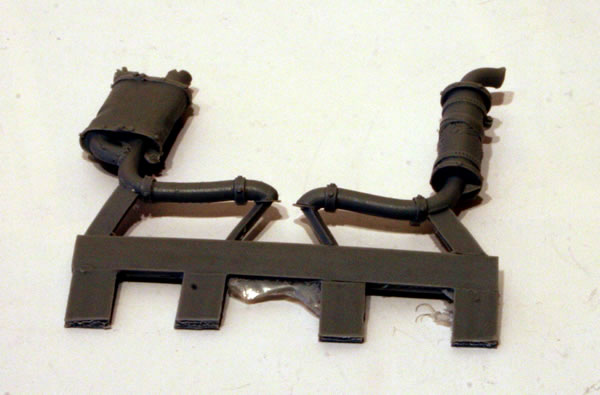
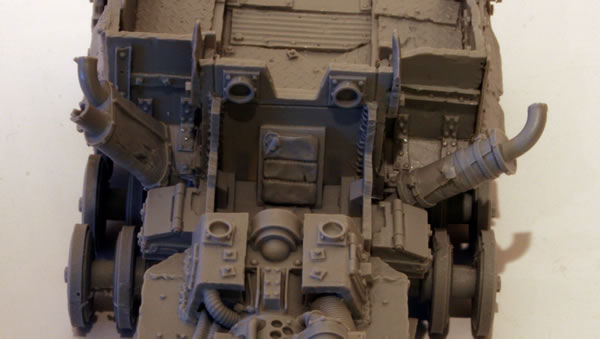
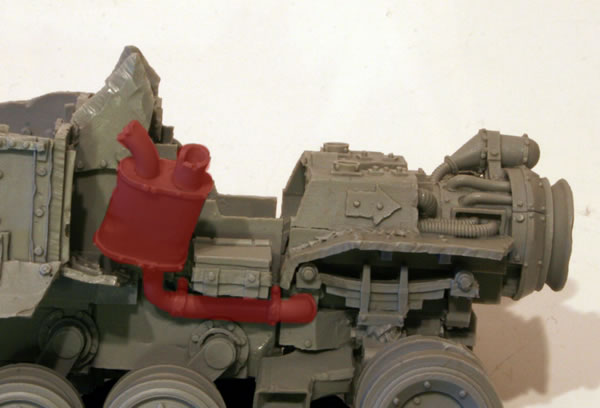
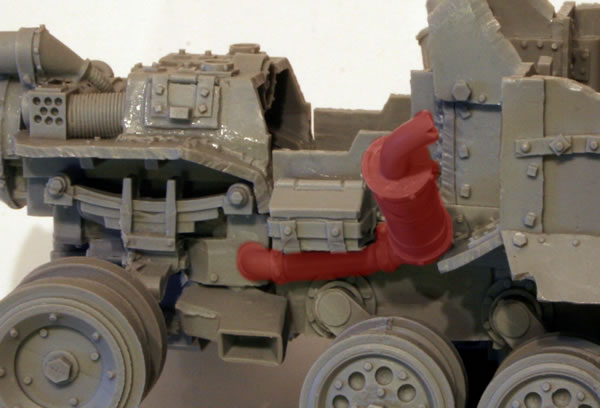
So after getting all the parts together the next stage was finishing the model off. Sticking the arms on, the frontal armour and the exhausts.

As you can see from this rear view, there is a lot of detail on this model.

I aim to bring out this detail using a combination of washes and drybrushing.

My converted KilKannon, it used the plastic KilKannon from the Battlewagon upgrade sprue.

I did consider having the guns pointing at the same target, but in the end decided to have them slightly off kilter.

See the full workbench feature on my Ork Mega Dread.