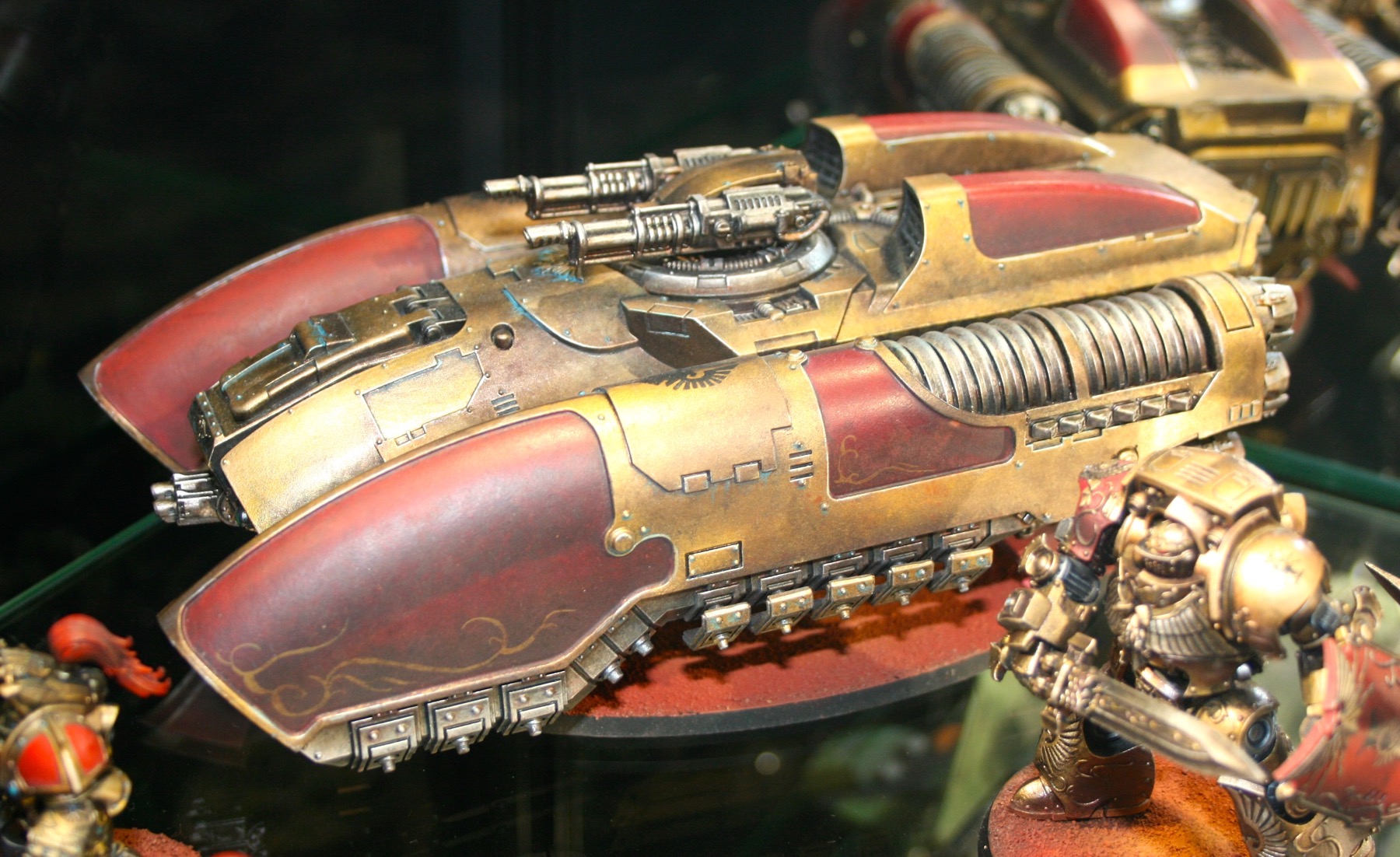
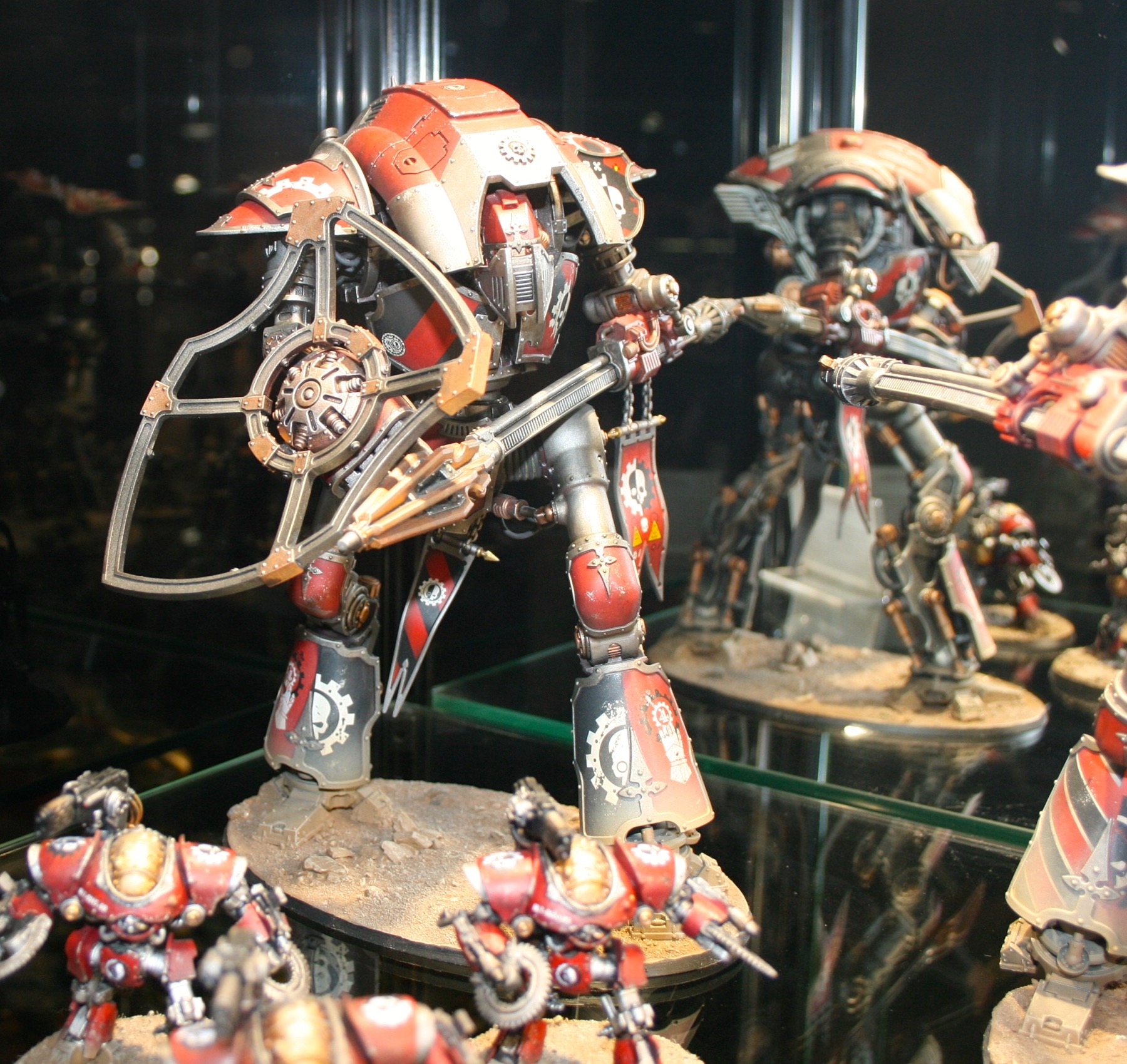
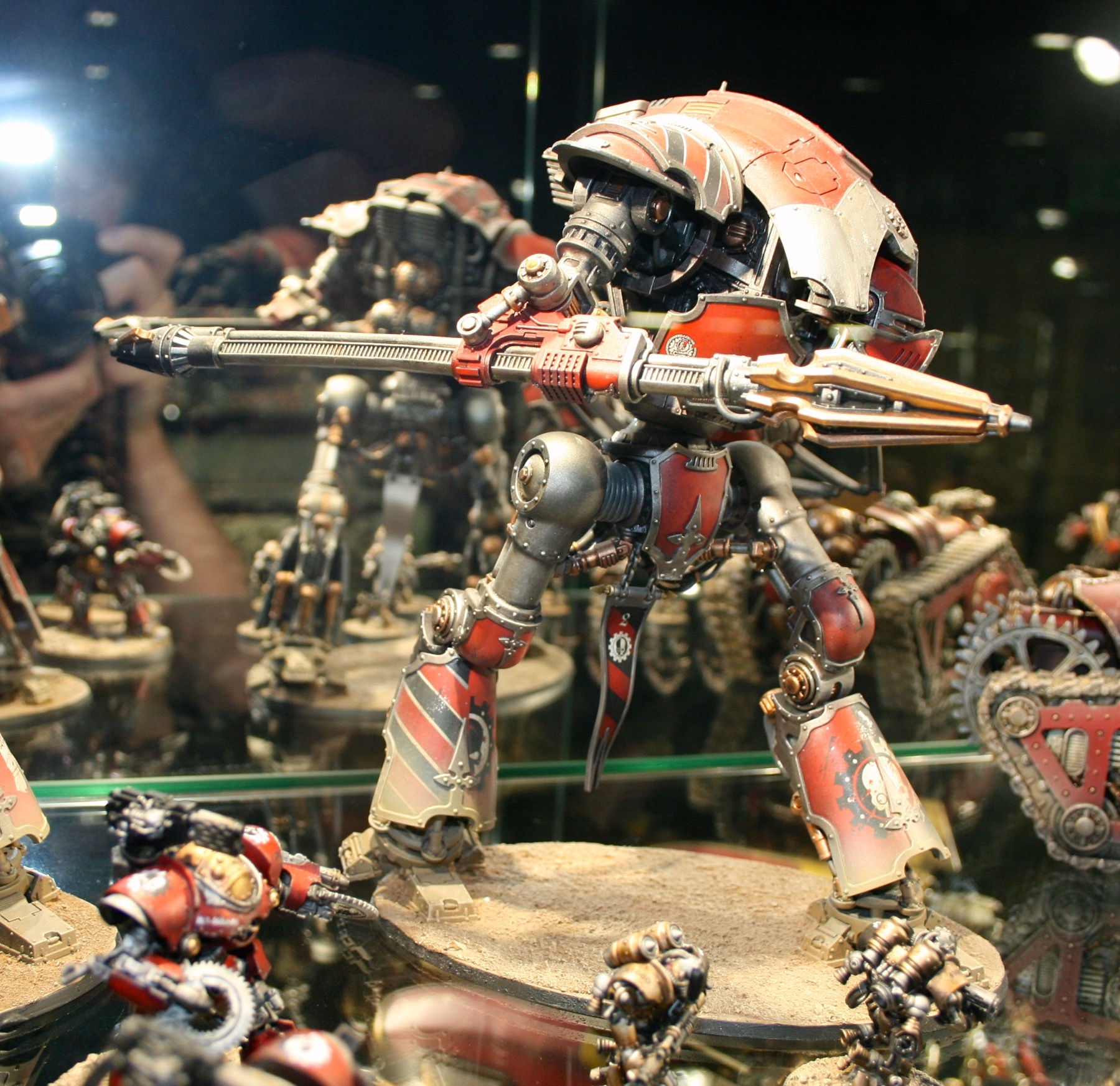
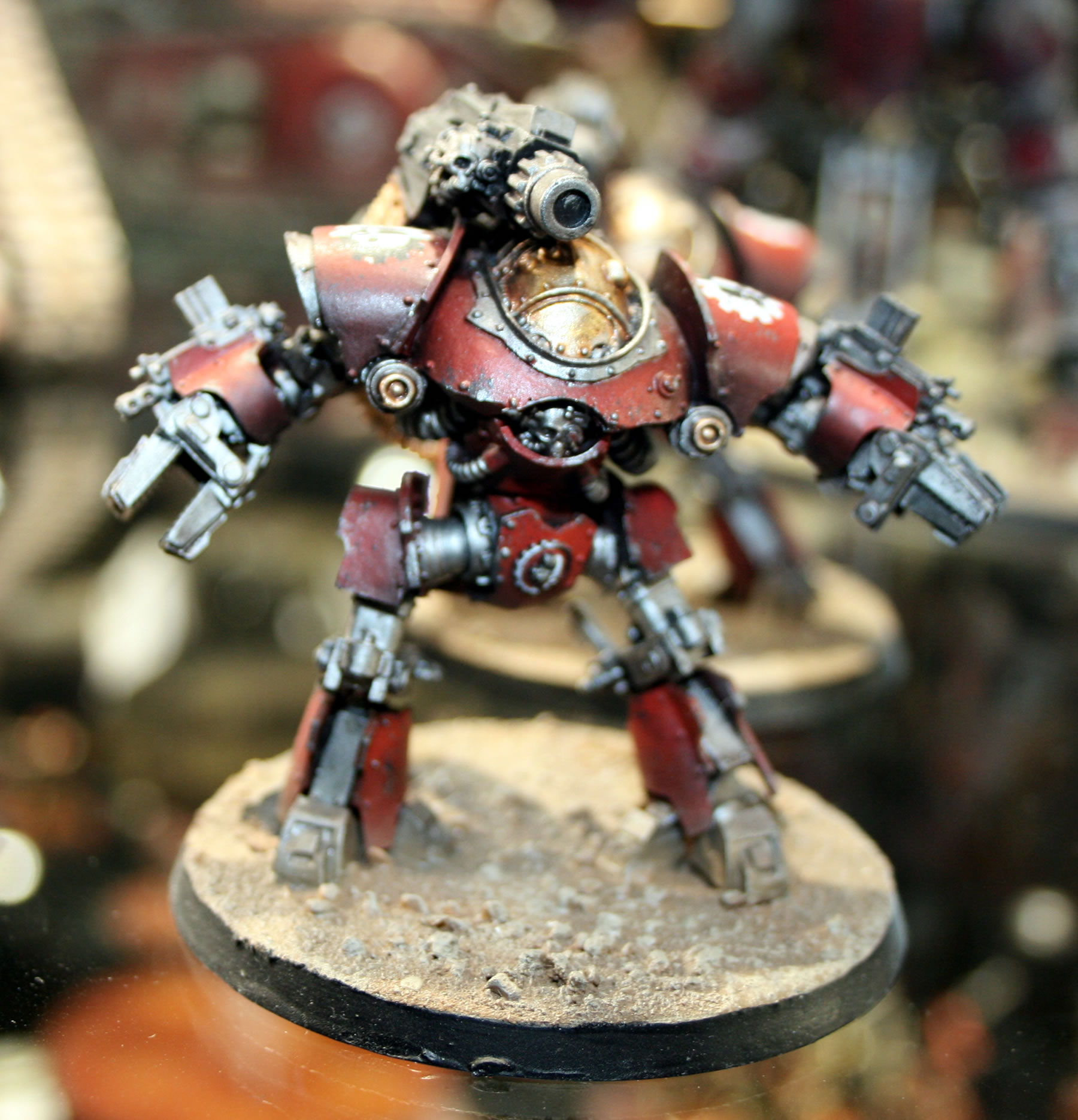
Steampunk Heavy Artillery

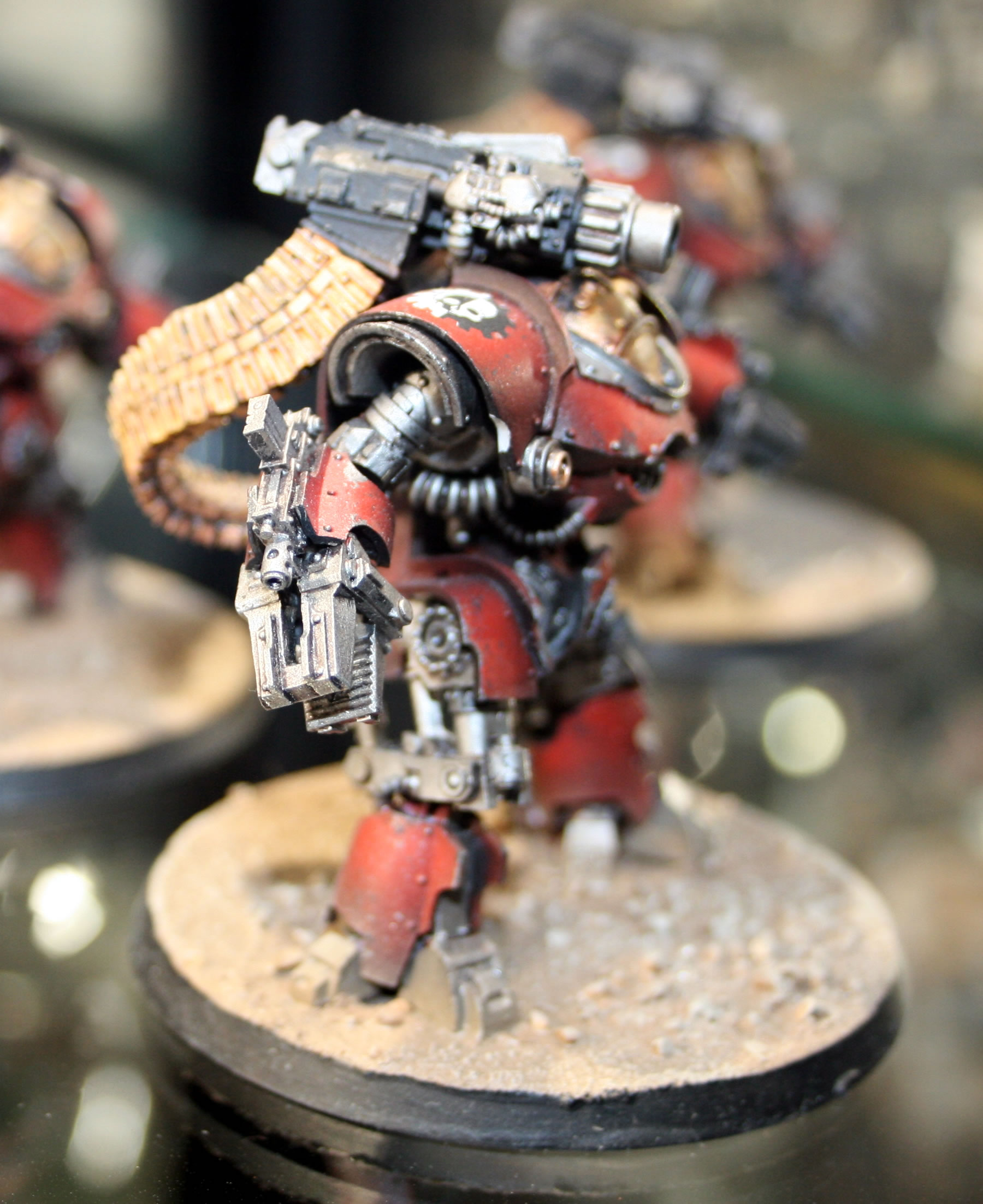
I was browsing the Forge World web store when I found the Mechanicum Krios Battle Tank.

Mechanicum Krios Battle Tank

The more I looked at it, the more I thought that this would make a wonderful steampunk or Victorian Science Fiction heavy artillery piece. You could quite easily imagine a British artillery crew preparing to fire this on the surface of Mars. You would need to replace the Mechnicum crew and the icon on the back of the tank, but not a huge amount of work.

Only downside, it is £81.

Centurion Mk I

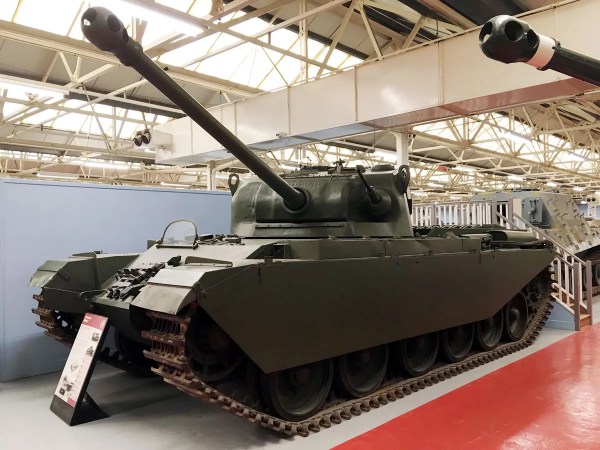
One tank that did interest me at Bovington was the Centurion Mk I.
Centurion Mk I

The Centurion was the primary British main battle tank of the post-Second World War period. Introduced in 1945, it is widely considered to be one of the most successful post-war tank designs, remaining in production into the 1960s, and seeing combat in the front lines into the 1980s.

Development of the Centurion began in 1943 with manufacture beginning in January 1945. Six prototypes arrived in Belgium less than a month after the war in Europe ended in May 1945, so too late to see action.

Of course in any alternative history scenario where the war continued after May 1945 in Europe, the Centurion Mk I would have seen action. Likewise in a another alternative history scenario where either Stalin decided to press West after defeating Nazi Germany to take over Western Europe, or the Western Allies decided to “liberate” Eastern Europe from the yoke of Stalin’s communist oppression, again the Centurion Mk I would have seen action.

I remember when Battlefront put up the details about their 15mm Australian Mk5 Centurion for Vietnam. I wrote the following thought:

My first thought when I saw the Centurion Mk5 was how close was it to the early versions, could I get away with using it for my Late War British forces in say a 1946 scenario? Only a handful of Mk1s were made when in November 1945 the Mk2 started coming off the production lines. The Mk3 did not enter production until 1948, so for a 1946 scenario, it would be the Mk2. The main difference between the Mk5 and the Mk2 would the main weapon, with the Mk5 having the L7 105mm gun, whilst the 1945 version had the QF 20 pdr. Though it would appear from the Battlefront site that the Australian Army Centurions were armed with the QF 20 pdr.

Simon in a comment in response, said:

Nice thought, but too many differences. For a start, different turret shape: no bustle, smaller, different-shaped stowage bins. No long-range fuel tank on the back, completely different engine deck. The ANZAC Mk V had a 105mm gun, the 20pdr had no fume-extractor and no muzzle-brake. These are just off the top of my head! However, if it’s a what-if scenario, who cares?

You can now get a 15mm Centurion MkI from Butlers’ Printed Models.

15mm Centurion MkI

Ah the wonders of 3D printing.

The Centurion actually first first entered combat with the British Army in the Korean War in 1950, in support of the UN forces.

Legio Custodes Coronus Grav-carrier

This beautifully painted Legio Custodes Coronus Grav-carrier was on display at Warhammer World.

Legio Custodes Coronus Grav-carrier

Armed with twin-linked Lastrum bolt cannon and Arachnus blaze cannon, the Coronus Grav-carrier is perhaps one of the most recognised vehicles used exclusively by the Legio Custodes. This heavily protected transport skimmer provides them with a degree of speed and agility unmatched by the grinding armour of others who fight in the name of the Emperor, allowing the Legio Custodes to deploy rapidly into a range of terrain whilst reducing the risk of being pinned down by enemy forces.

Principally used as a transport, the strikingly-designed Legio Custodes Coronus Grav-carrier served as the technological basis for the Pallas and Caladius grav-craft. While its primary function is transporting a unit of warriors into battle, its armaments – hull-mounted Lastrum bolt cannon and turret-mounted Arachnus blaze cannon – ensure that it is more than capable of mounting appropriately aggressive defenses.

V-1 flying bomb

This V-1 flying bomb was hanging from the ceiling of the Imperial War Museum in London.

V-1 flying bomb

The history of this particular V1 is not known but it was acquired by the Museum in 1946, and retains its original wartime paintwork.

The V-1 was the first of the so-called “Vengeance weapons” series (V-weapons or Vergeltungswaffen) deployed for the terror bombing of London. It was developed at Peenemünde Army Research Center in 1939 by the Nazi German Luftwaffe at the beginning of the Second World War.

V1 Flying Bomb
V1 FLYING BOMB (C 4431) A cut-away and annotated drawing of the Fiesler Fi 103 flying bomb, (also known as FZG 76 or V1 weapon). Copyright: © IWM. Original Source

The Wehrmacht first launched the V-1 to target London on 13 June 1944, one week after (and prompted by) the successful Allied landings in Europe.

Cerastus Knight-Lancer

These Cerastus Knight-Lancers were on display at Warhammer World.

Cerastus Knight-Lancer

There is a certain Eldar quality to these Imperial Knights, light footed and all that. Even the weaponry appears to be Eldar like.

The Cerastus Knight-Lancer is a first strike weapon, attuned to rapid assault tactics and lethal outflanking charges against a foe. It is justly renowned for its speed and its power, as well as for the temperamental and restive nature of the machine-spirits which dwell as anima within its colossal frame.

Cerastus Knight-Lancer

Because of this reputation, the most impetuous and glory-hungry of the Knight Households are driven to bond with these war machines, their own souls a match for the fury caged within their mounts. The greatest of these pairings will go on to create martial legends among their lineage, while for those whose temper cannot fully master that of their Knight-engine or whose own lust for glory might see valour outweigh caution on the battlefield, their triumphs are likely to blaze brightly, if briefly, in the chronicles of their Households.

Ferret MkII Scout Car

This Ferret MkII Scout Car in a white UN paint scheme was on display at the Imperial War Museum in London.

Ferret MkII Scout Car

British post-WW2 4×4 armoured reconnaissance vehicle, crew of 2, powered by Rolls-Royce B60 6-cylinder petrol engine, armed with one machine gun. It was based in Cyprus.

Ferret MkII Scout Car

The Ferret armoured car, also commonly called the Ferret scout car, is a British armoured fighting vehicle designed and built for reconnaissance purposes. The Ferret was produced between 1952 and 1971 by the UK company Daimler. It was widely adopted by regiments in the British Army, as well as the RAF Regiment and Commonwealth countries.

Massive Stormbird

I have just uploaded (and updated) a new version of my GamesDay 2009 Gallery, which has been offline for a few years. Moving to a new host has meant I am reviewing existing content, creating revised pages and uploading higher resolution images. Going through the images I was reminded of this interpretation of the Stormbird that was at GamesDay 2009, well before Forge World released their version. It is much bigger than the resin model.

The Stormbird Gunship is an armoured versatile craft that combines the role of dropship, armoured transport and strike craft.

Stormbird Gunship

This model was based on this pencil drawing from White Dwarf.

This was a lovely scratch-built model, with nice little details, such as these Assault Marines dropping from the ship.

Stormbird Gunship

Nicely painted as well.

Stormbird Gunship

Stormbird Gunship


T-34-85 Soviet Medium Tank

The T-34-85 was a Soviet WW2 medium tank, crew of 5, powered by 12-cylinder diesel engine, armed with 85mm gun and two machine guns.

T-34/85 Soviet Medium Tank

It went not be used well beyond the second world war in major conflicts across the world, and I still in service today.

The T-34, a Soviet medium tank, had a profound and lasting effect on the field of tank design. At its introduction in 1940, the T-34 possessed an unprecedented combination of firepower, mobility, protection and ruggedness. Its 76.2 mm (3 in) high-velocity tank gun provided a substantial increase in firepower over any of its contemporaries while its well-sloped armour was difficult to penetrate by most contemporary anti-tank weapons.

A project to develop a new tank following the introduction of improved German Panzer IVs with the high-velocity 75 mm gun, was started by the Soviet Union. The T-43 was  designed to have improved armour, better suspension and a bigger gun. However it was decided that manufacturing a new tank would cause a significant slow-down in production so it was cancelled.

However the T-43 turret was then modified to fit the T-34 and was armed with a new 85mm gun. The T-34-85 was a compromise between those in the Soviet Union who wanted to build as many 76mm armed T34s and those who wanted to build the new T-43 tank.

T-34-85 Soviet Medium Tank

The T-34-85 gave the Red Army a tank with better armour and mobility than the German Panzer IV tank and StuG III assault gun. While it could not match the armour or weapons of the heavier Panther and Tiger tanks, its improved firepower made it much more effective than earlier models.

The development of the T-34-85 led directly to the T-54 and T-55 series of tanks, which in turn evolved into the later T-62, T-72, and T-90 that form the armoured core of many modern armies.

This T-34-85 was on display at the Imperial War Museum in Duxford, and they even put Tank Riders on the back.

T-34/85 Soviet Medium Tank

Reading the Hot War books from Harry Turtledove has inspired me to think about gaming some scenarios from the books. British Comets and Centurions versus T34-85 and T54 Soviet tanks, along with American M26 Pershing and M48 Patton tanks. In the book there are also Sherman tanks manned by (West) German forces.

Mechanicum Castellax Battle-Automata

Mechanicum Castellax Battle-Automata
Mechanicum Castellax Battle-Automata on display at Warhammer World

The Thanatar-Calix class Siege-automata is a potent war machine and a wonder of the Mechanicum’s craft. Combining arcane and secret technologies, it carries a twin-linked mauler bolt cannon alongside a rare solex pattern heavy lascannon, whose beams of coherent light can reach far across a battlefield to lethal effect. The Thanatar-Calix’s most destructive armament though is the graviton ram, a weapon whose origins are lost in the Dark Age of Technology. The ram’s crushing waves of gravitational force can pulverise infantry and vehicles alike, and it can be utterly devastating at both range and close quarters.

Mechanicum Castellax Battle-Automata
Mechanicum Castellax Battle-Automata on display at Warhammer World

The Thanatar frame, designed as a heavy weapons platform, is well armoured and further protected by atomantic shield generators, making it nearly impervious to all but the heaviest of weapons fire. Whilst it is slow to advance, the Thanatar-Calix’s durability allows it to close steadily on its target, moving ever nearer until its formidable weaponry can be brought into range.

Carro Veloce L3/33

The Carro Veloce 33 or L3/33 was a tankette originally built in 1933 and used by the Italian Army before and during World War II. It was based on the imported British Carden Loyd tankette.

This Carro Veloce L3/33 was on display at the Bovington Tank Museum.

Carro Veloce L3/33

This is the flamethrower variant, which was captured in North Africa. It carried 500 litres of flame fuel in a special trailer (which you can see behind the tankette). The flame fuel was delivered by a pump, driven off the gearbox, which gave it a flaming range of about 35 metres. However crews were warned not to use the flamethrower when travelling at full speed (26mph) as they might set themselves alight.

There is no evidence that they were used in battle One of the things I find seeing these kinds of armoured vehicle in the “flesh” is how small they are. I am surprised anyone can sit in that let alone two  crew. It must be really cramped and having the flamer fuel pumped through the centre of the tankette, wouldn’t be surprised by the reluctance of these being used.