V1 and Launcher Ramp

The V-1 was the first of the so-called “Vengeance weapons” series  deployed for the terror bombing of London. It was developed at Peenemünde Army Research Center in 1939 by the Luftwaffe. Because of its limited range, the thousands of V-1 missiles launched into England were fired from launch facilities along the French (Pas-de-Calais) and Dutch coasts. The Wehrmacht first launched the V-1s against London on 13 June 1944, one week after (and prompted by) the successful Allied landings in France.

This V1 flying bomb and ramp was on display at The Imperial War Museum at Duxford.

V1

The V1 flying bomb was powered by an Argus 109-014 pulse-jet engine, carried a warhead of approximately 850kg, and was guided to its target by an autopilot. The maximum range was typically 149 miles, with a maximum speed of 400mph.

Although some V1s were air-launched, most were catapulted from specially constructed ramps.

V1 Ramp

I’ve always thought that either a Dutch or French Resistance or UK Commando raid on a V1 base to stop them launching would make for an interesting game. Why send in ground troops when a bombing raid would work just as well? Then I was thinking about adding in the complication of a chemical or biological armed V1 that would need to be taken care of on the ground. There were some real raids on V1 bases as part of Operation Crossbow., which was the code name in World War II for Anglo-American operations against the German long range reprisal weapons (V-weapons) programme. In 1965 a film Operation Crossbow, based on these raids, was released.

Battlefront released a 15mm version in their Hit the Beach Boxed set.

For 20mm gamers there is a 1/72nd model kit of the V1 and launch ramp available.

If you are playing Bolt Action, then Charlie Foxtrot Models do a MDF kit of the ramp for 28mm gamers, but you probably need to buy the Tamiya 1/48th scale plastic kit for the V1 itself. That kit does come with a trolley as well.

V1

There was a V1 at the Imperial War Museum in London.

Imperial Guard Parade

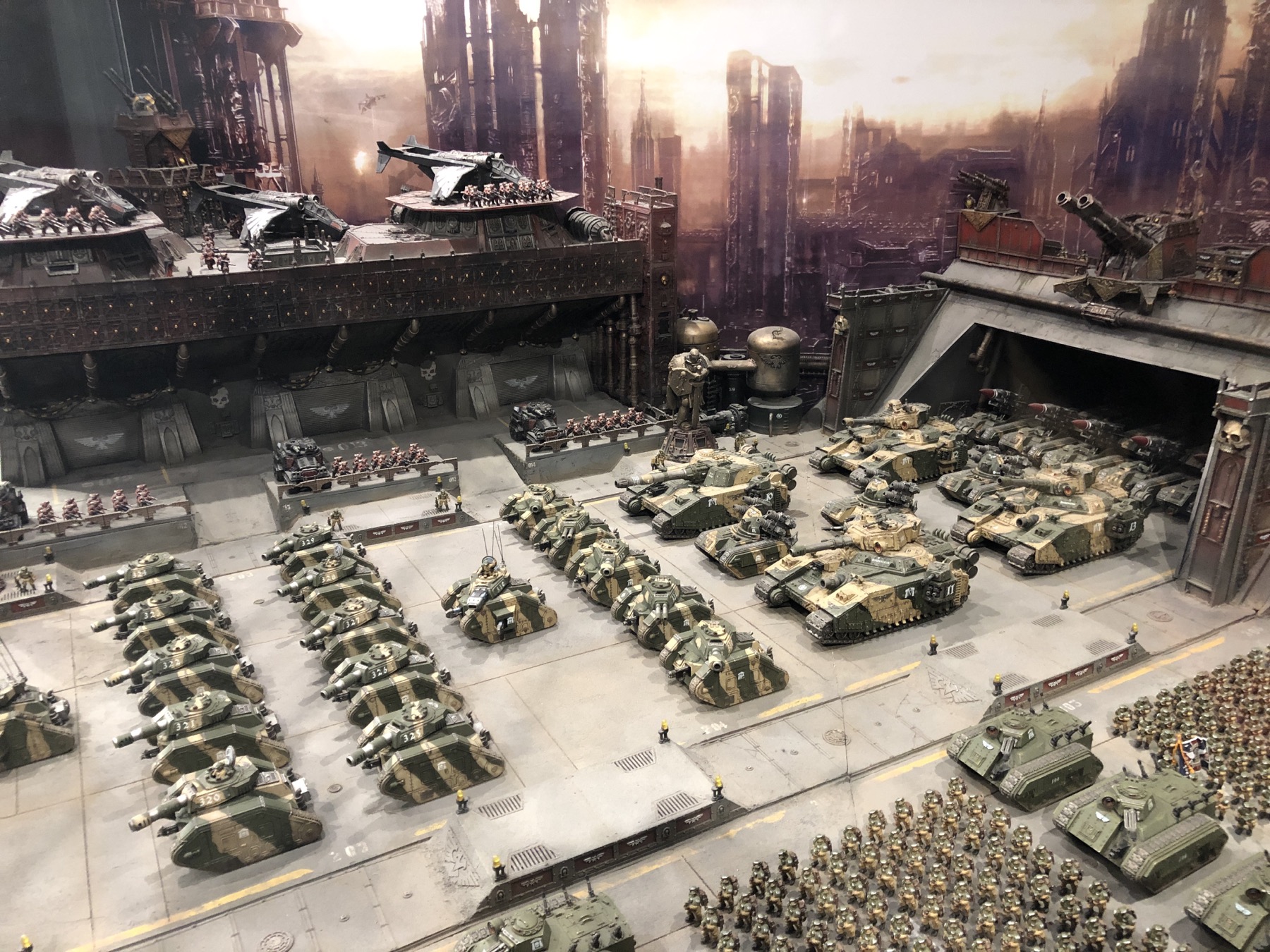
This incredible Imperial Guard Parade was on display at Warhammer World. You can see Leman Russ tanks in front and coming up behind are super heavy tanks like the Baneblade and the Shadowsword.

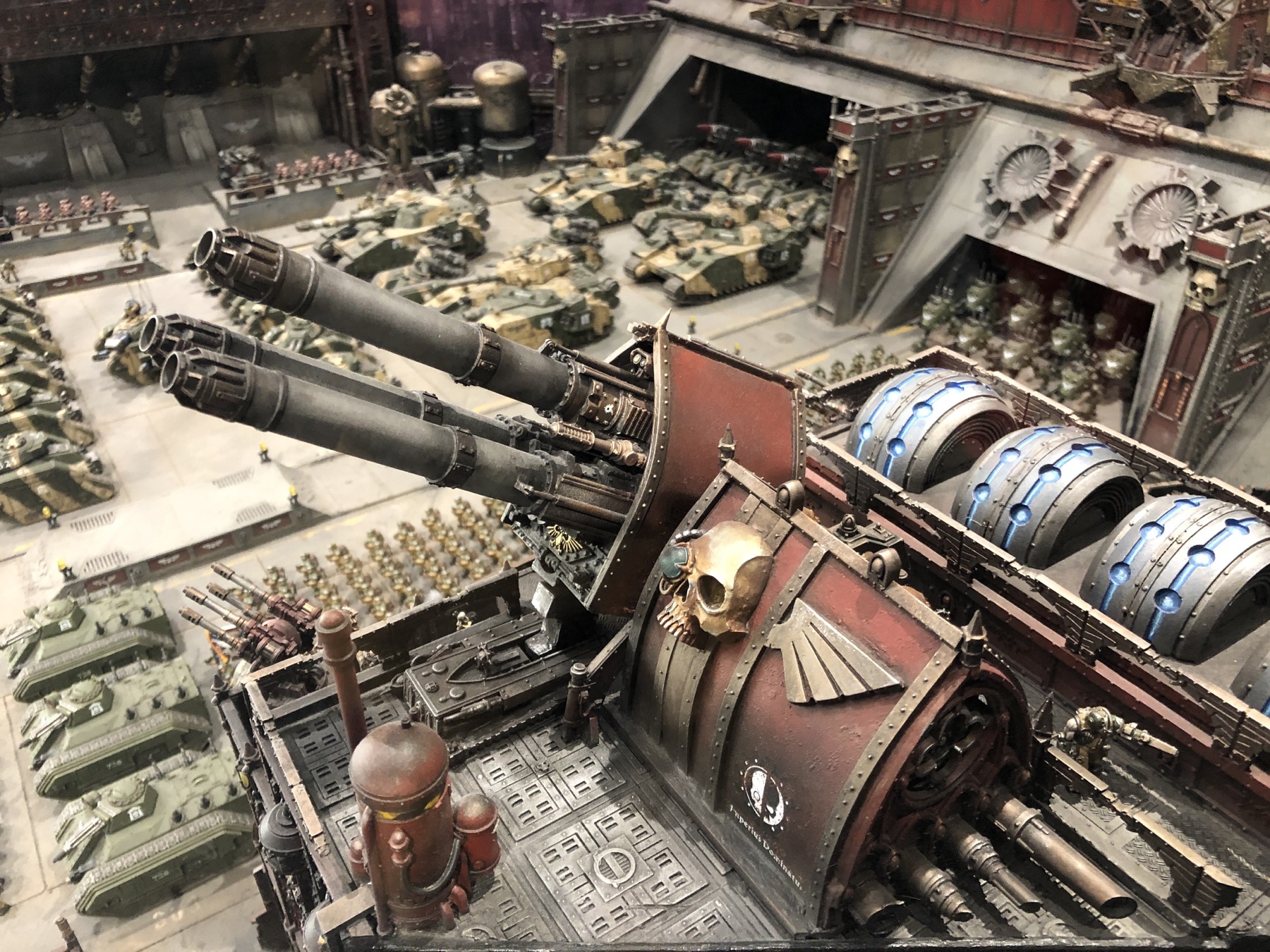
Defending the parade were these huge defence guns.

In the display there were also Valkyrie flyers, Sentinel walkers, infantry and Chimera APCs as well.

See more photographs of the parade.

Space Marine Flyers

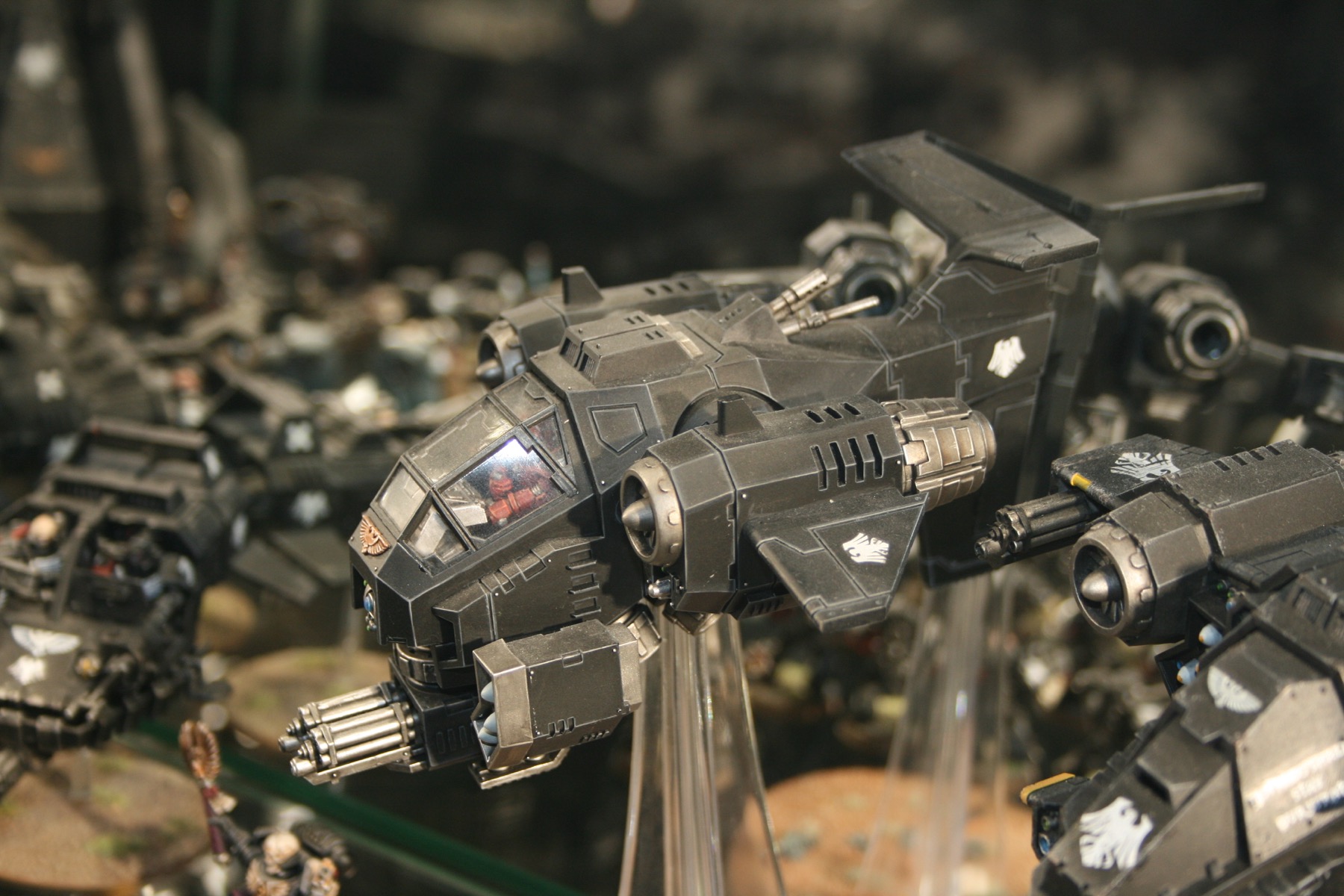
This Stormtalon Gunship was on display at Warhammer World.

Stormtalon Gunship

The Stormtalon Gunship serves the armies of the Adeptus Astartes as both an interceptor and ground-attack craft. It is fast enough to engage all but the swiftest of enemies, and sufficiently well-armed to reduce the chosen foe to a mangle of twisted wreckage and ruined flesh. The tide of many a battle has turned with the thunderbolt descent of a Stormtalon Gunship from the war-torn skies.

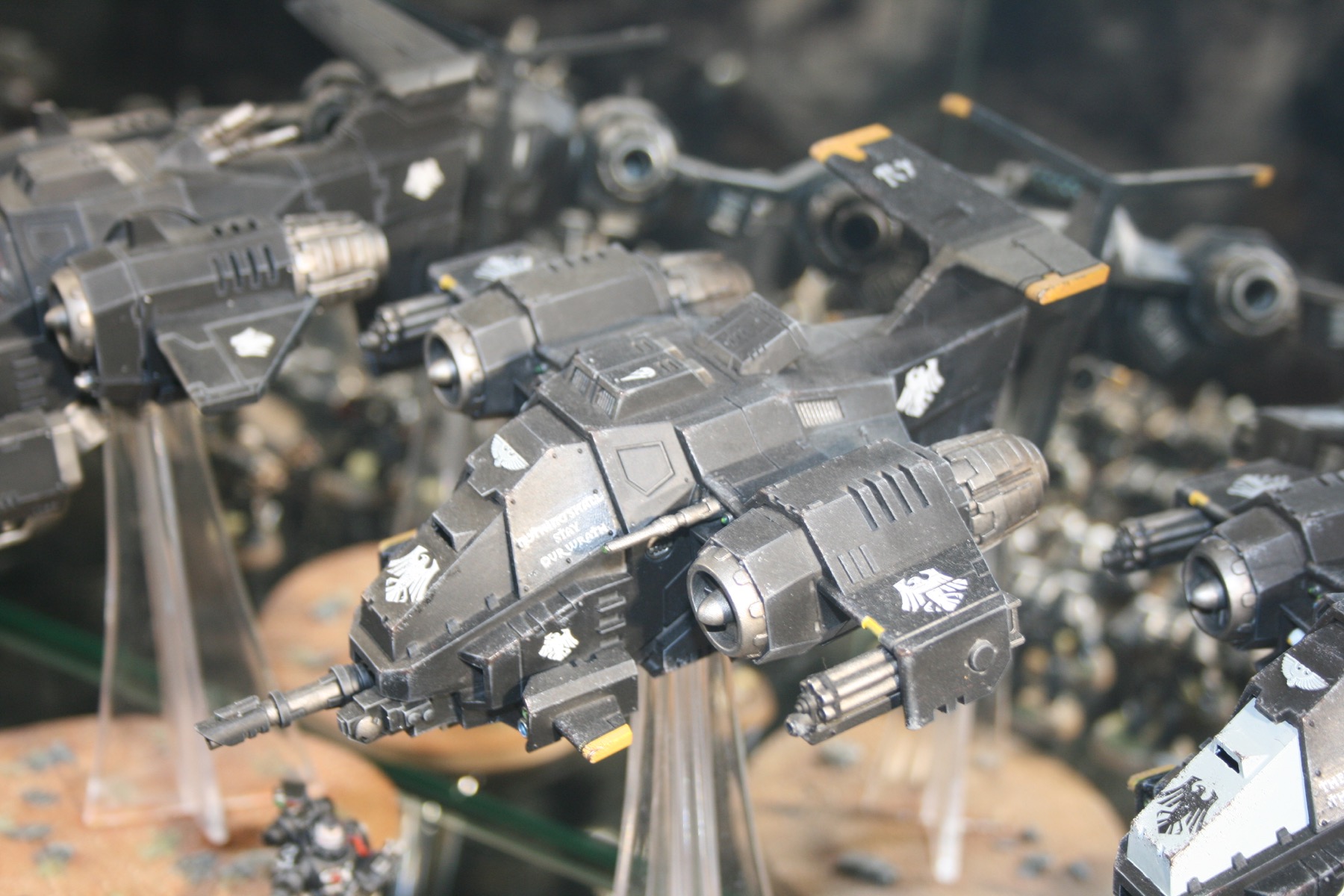
There was also a Stormhawk Interceptor at Warhammer World.

An awesome sight, descending at incredible velocities from orbiting warships to engage and annihilate enemy craft, Stormhawk Interceptors are a stunning hymn to aerial superiority that the Space Marines sing with gusto. The frontal armour and huge firepower makes them excellent dogfighters, hurtling through the clouds to execute target after target in a blazing display of incendiary defiance. Often seen in Vehemence Attack Patterns, Stormhawk squadrons and their golden haloes of flares discharged to gently dissuade incoming fire are a signal that whatever planet the skies are over, they belong to the Emperor.


Guy Armoured Car

This Guy Armoured Car was at Bovington.

Guy Armoured Car

The Guy Armoured Car was a British armoured car produced in limited numbers during Second World War. The car saw limited action during the Battle of France.

The manufacturer had insufficient capacity for production of the armoured car alongside their artillery tractors, so the design and construction techniques were passed to Rootes and used as a basis for the Humber Armoured Car.

Six cars were sent to France with the British Expeditionary Force (BEF), but were lost when France fell to the Germans. Four cars, two each with the 12th Lancers and 2nd Northamptonshire Yeomanry, had their guns removed and additional seats fitted in 1940 for use in the Coats Mission to evacuate King George VI, Queen Elizabeth, Princess Elizabeth and Princess Margaret in the event of German invasion.

The Coats Mission was a special British army unit established in 1940 for the purpose of evacuating the Royal family in the event of a German invasion of Britain during the Second World War.

I have been thinking about creating a game based on the Coats Mission with an assault by German Paratroopers in an attempt to capture the Royal Family.

That’s not just big, that’s mega!

In my blog post about what next for Aeronautica Imperialis I said

could we see a huge Ork bomber or transport aircraft?

I didn’t think we would see one, well we now have a new huge Ork aircraft for Aeronautica Imperialis.

Ork Mega Bommer

The Ork Air Waaagh! Mega Bommer is a 61 piece resin kit (from Forge World) that is the biggest model (so far) for the game.

If you thought the Eavy Bommers were big enough, you don’t deserve to call yourself an Ork. Obsessed Mekboys constantly compete to create the biggest and shootiest aircraft around. The Mega Bommer is the extreme end of that line of thinking. 

In addition to its sheer size, the Mega Bommer is a wonderfully unsubtle design – all wings and bombs and guns and jets. Not only is it exceptionally hard to take down, loaded to the rafters with dakka (including a full flak cannon battery every bit as deadly as the ground-based version), but it also carries the final word in indiscriminate destruction – the mega bomb itself. 

I quite like this model and I have put it on my wish list.

Rogue Trader Space Ork Raiders

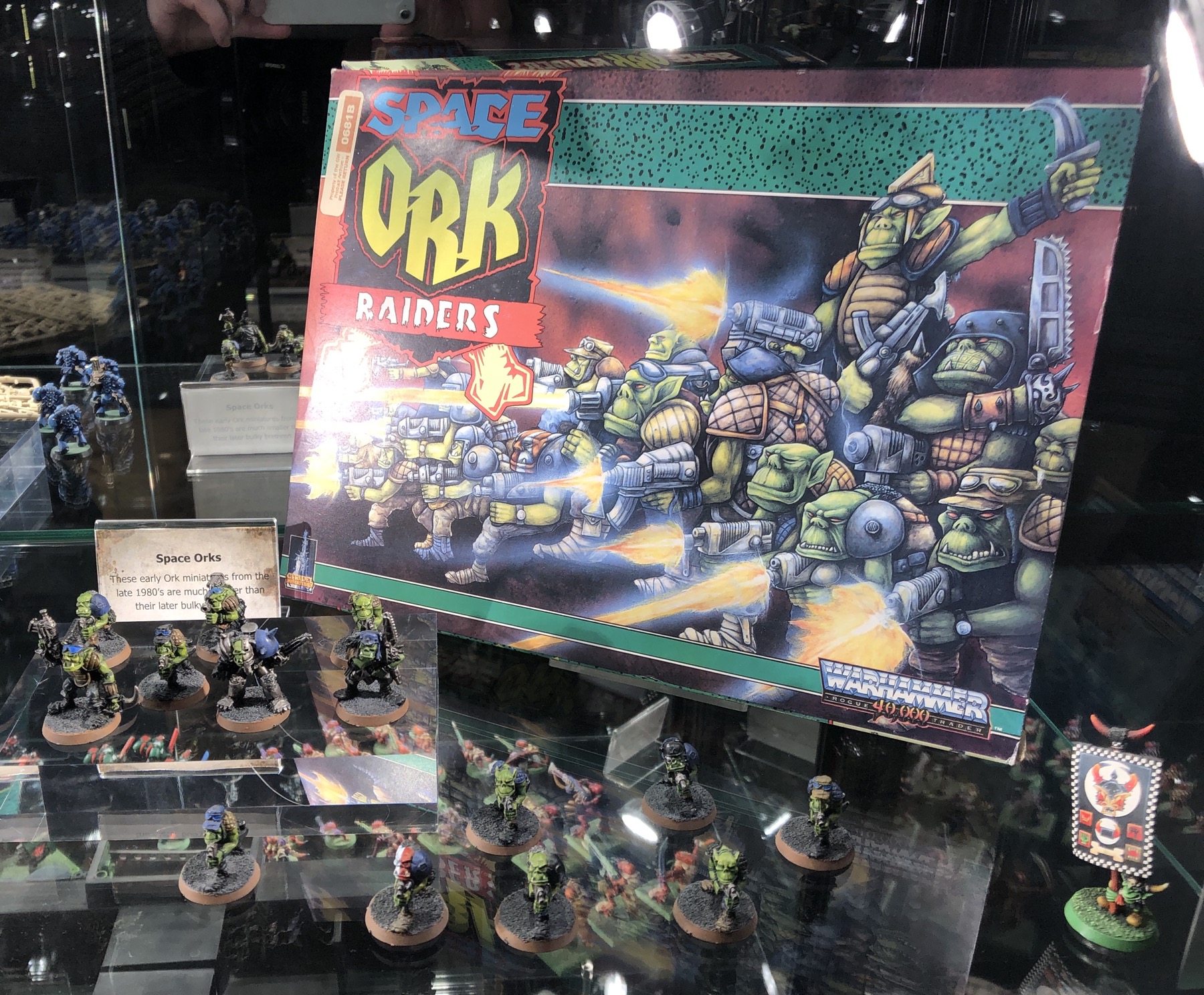
One of the nice things about Warhammer World is that they don’t ignore what has been before. Here is an original box of Space Ork Raiders from the Rogue Trader era in the late 1980s.

Space Ork Raiders

These Orks were metal castings and are smaller than their later bulky bigger  Orks that came later. Though they had similar poses the castings were all different. I really like the artwork on the box, which is somewhat abstract but it works for me.

I did have this boxed set and this is one of them.

Not entirely sure where all the other Orks went…

I might see if I can find them, or even try and find a box on eBay.

The box was useful as well, as there was an expanded polystyrene tray in the box that the metal miniatures came in, but this meant that it was also useful for carrying the painted miniatures in, to games and for storage. As a result my box became somewhat tatty.


Unboxing Mordheim

Mordheim Box Cover

When the Mordheim boxed set was released I didn’t buy it. I was never a completist that went and  bought every boxed set that Games Workshop released. I bought things I liked and things I would actually paint and game with.

There were various reasons I didn’t buy Mordheim, it was partly the focus of the game, a fantasy skirmish. This was something that I did enjoy as a concept, Flintloque (even though Napoleonic in setting) was very much a fantasy skirmish game. So there had to be more to Mordheim then just the core concept. The background didn’t really appeal, a destroyed town to fight over.

The game is set in the Empire city of Mordheim 500 years before the present day in the Warhammer Fantasy time line (pre Age of Sigmar). The game is set during a time of chaos and civil war in the Empire after a comet struck the city of Mordheim destroying it and scattering a material called wyrdstone throughout the ruins. Mercenary warbands from all over the Warhammer world battle with one another for the wyrdstone.

I also didn’t think much of the hybrid scenery either, part plastic and part cardboard. I was a fan of cardboard buildings, I really liked Blood on the Streets. I quite like plastic building kits as well. However the hybrid mix that was available in the boxed set didn’t really rock my boat.

So after glancing at the set at the time, I left it on the shelf.

Here we are twenty odd years later and I did however quite enjoy this retro unboxing of a shrink-wrapped copy of Mordheim.

What I did like was some of the models in the box. It actually got me thinking once more about fantasy skirmish games….

FMA IA 58 Pucará

The FMA IA 58 Pucará is an Argentine ground-attack and counter-insurgency (COIN) aircraft manufactured by the Fábrica Militar de Aviones. It is a low-wing twin-turboprop all-metal monoplane with retractable landing gear, capable of operating from unprepared strips when operationally required. The type saw action during the Falklands War and the Sri Lankan Civil War. After the Argentine surrender, eleven Pucarás (four of them in flying condition) were captured by British forces. Six were taken back to the United Kingdom. This is one of those six at RAF Cosford.

FMA IA 58 Pucará

Legion Astartes Sicaran Venator

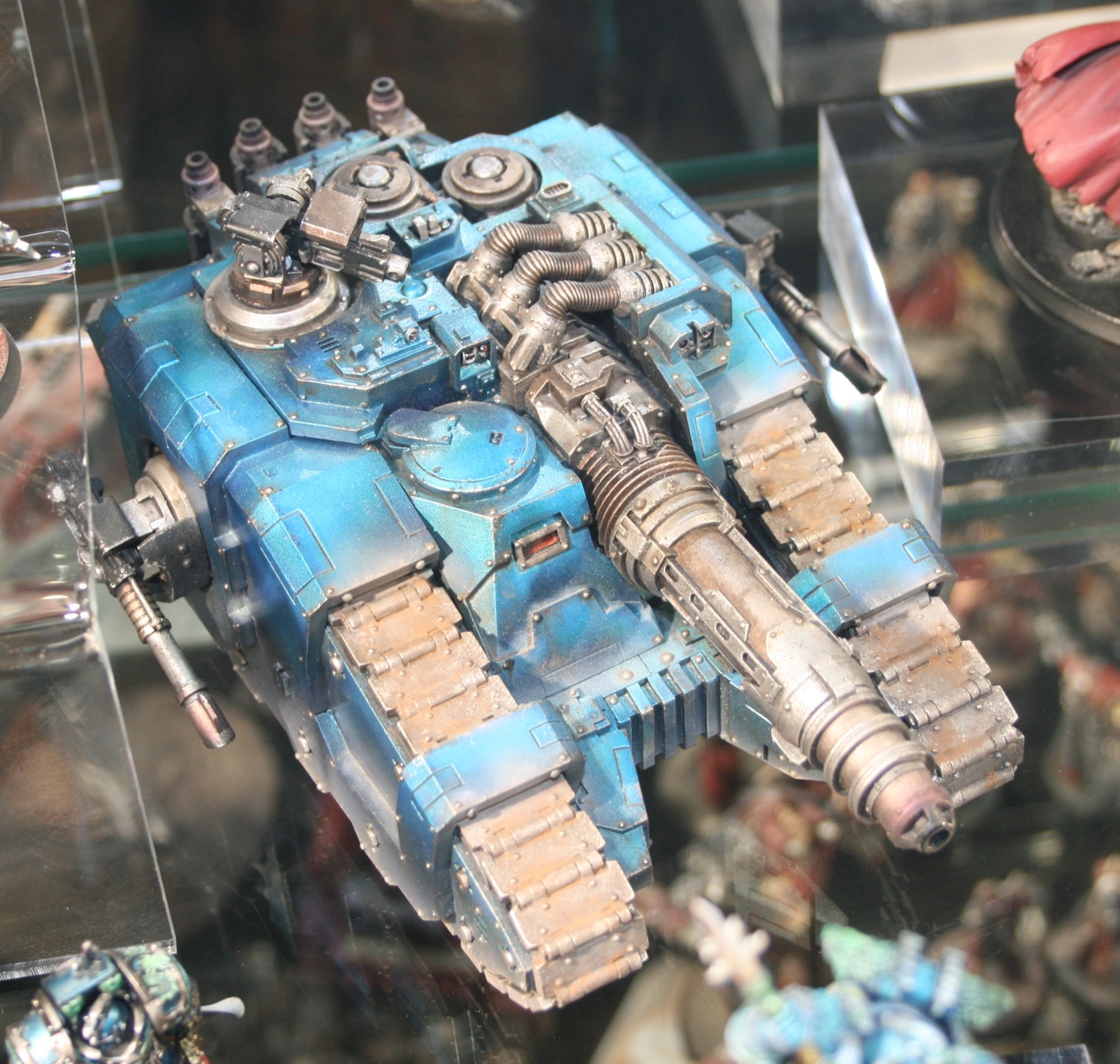
This Legion Astartes Sicaran Venator was on display at Warhammer World.

Legion Astartes Sicaran Venator

A variant of the Sicaran battle tank introduced towards the end of the Great Crusade, the Sicaran Venator is a purpose-built tank destroyer. It mounts the fearsome neutron laser system and the atomantic arc-reactors required to power it. The neutron laser is a formidable anti-armour weapon, and is capable of penetrating any known armour. The combination of mobility, protection and firepower being highly valued by the Space Marine Legions.


M53/59 Praga

The M53/59 Praga is a Czechoslovak self-propelled anti-aircraft gun developed in the late 1950s. It consists of a heavily modified Praga Praga V3S six-wheel drive truck chassis, armed with a twin 30 mm AA autocannon mounted on the rear for which the vehicle typically carries 900 rounds of ammunition, each gun being gravity fed from distinctive 50 round magazines. The vehicle has an armoured cabin.