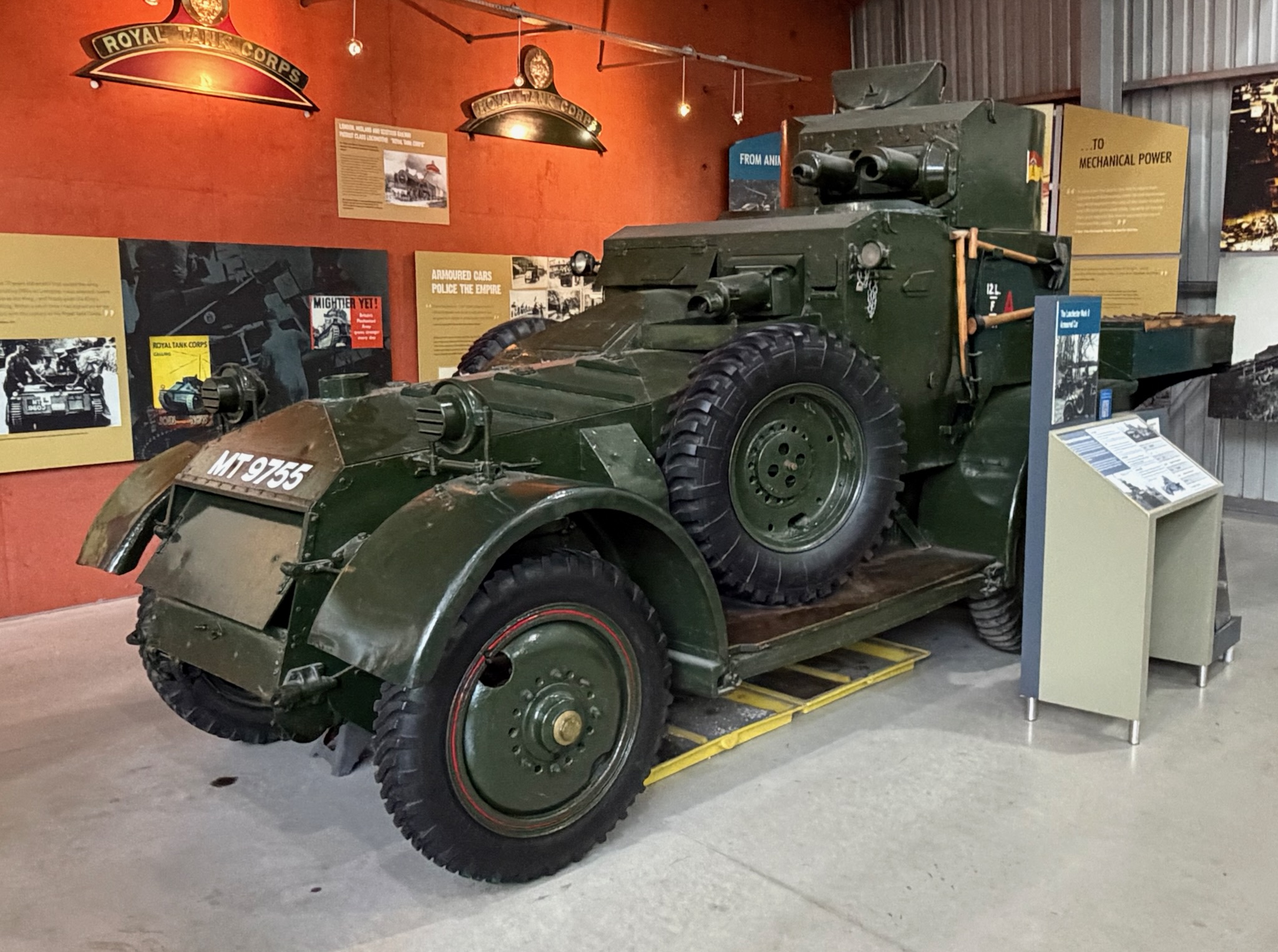
Lanchester Armoured Car

The Lanchester armoured car was a British armoured car built on the chassis of the Lanchester “Sporting Forty”, it saw wide service with the Royal Naval Air Service and British Army during the First World War. The Lanchester was the second most numerous World War I armoured car in British service after the Rolls-Royce armoured car.

Six-wheeled armoured cars were seen as having a better cross-country performance than four-wheelers. In pursuit of quality the War Office ignored offers from various commercial vehicle firms and, since Rolls-Royce was not interested, turned its attention to Lanchester, a famous rival. The Lanchester Company had supplied four-wheeled armoured cars to the Admiralty in 1915 but this six-wheeled chassis was a major departure for them. It was equipped with the standard Lanchester six-cylinder engine and used the War Department patent rear axle system.

Taking advantage of the long chassis, the armoured hull and turret were enormous and contained three machine-guns. Yet the Lanchesters were much too big for reconnaissance duties, being almost impossible to turn around in narrow roads. For this reason a rear steering position was provided and the cars had detachable tracks which fitted over the rear wheels to assist them over rough country. They were also extremely expensive and the War Office was soon looking for something cheaper.
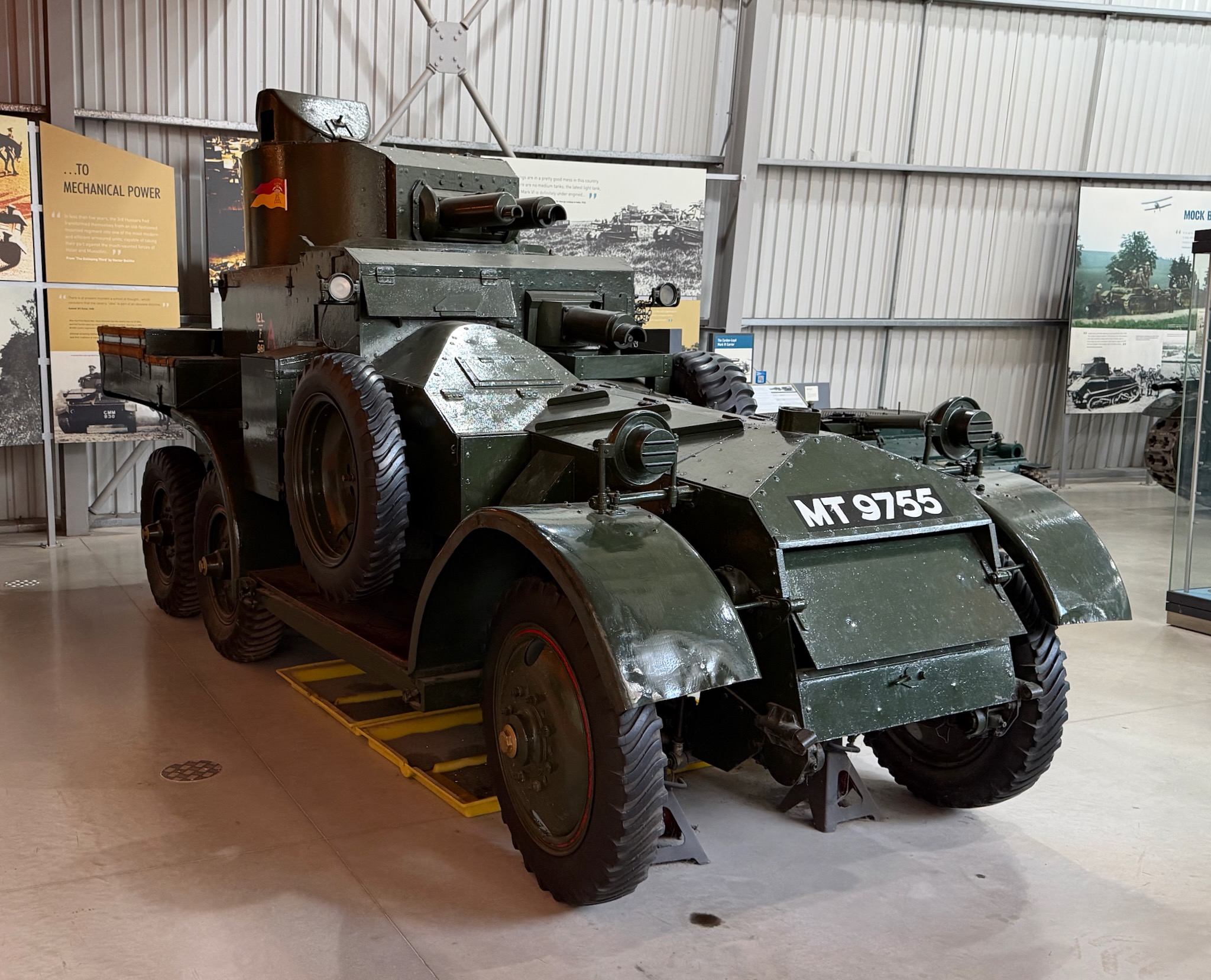
Thirty-nine armoured Lanchesters were built, starting in 1928, and they were issued to the newly mechanised cavalry regiments. They spent most of their time in Britain although in 1935 the 12th Lancers took some cars out to the Saarland and a few were tested in the Middle East. The cars were used for training in the early years of the war and one was converted into a secure VIP transport for use in London. 

This got me thinking about possible uses for the Lanchester armoured car in A Very British Civil War scenarios, but also in an Operation Sealion scenario where German paratroopers attempt to kidnap Winston Churchill who is being moved in a convoy including the Lanchester armoured car which was converted into a secure VIP transport for use in London.

Though not initially earmarked for the Coats Mission, you can imagine that such armoured cars would be an useful addition to the plans for the mission.

The Coats Mission was a special British army unit established in England in 1940 for the purpose of evacuating King George VI, Queen Elizabeth, and their immediate family, in the event of a German invasion of Britain during the Second World War. The Coats Mission was  equipped with two Daimler armoured cars and four Guy armoured cars. In addition, the four Rolls-Royce armoured cars based at the Royal Mews would be attached to the troop in the event of an evacuation.

A few were still operating in Malaya in 1941 with the Argyll & Sutherland Highlanders; these ultimately fell into Japanese hands.

Photographs of the Lanchester Armoured Car from previous visits in 2016 and 2023.

Guy Armoured Car

This Guy Armoured Car was on display at the Tank Museum.

Guy Armoured Car

The Guy Armoured Car was a British armoured car produced in limited numbers during Second World War. The car saw limited action during the Battle of France.

Guy Armoured Car

The manufacturer, Guy Motors, did not have enough capacity to produce the armored car alongside their artillery tractors, so they passed the design and construction techniques to Rootes, who used them to create the Humber Armored Car.

Six Guy Armored Cars were sent to France with the British Expeditionary Force (BEF), but they were lost when France fell to the Germans.

Four cars, two each with the 12th Lancers and 2nd Northamptonshire Yeomanry, had their guns removed and additional seats fitted in 1940 for use in the Coats Mission to evacuate the Royal family in the event of a German invasion of Britain during the Second World War.

The Coats Mission was a special British army unit established in 1940 for the purpose of evacuating King George VI, Queen Elizabeth, and their immediate family in the event of a German invasion of Britain during the Second World War. It was led by Major James Coats, MC, Coldstream Guards, later Lieutenant-Colonel Sir James Coats, Bt.

The force consisted of:

    • A special company of the Coldstream Guards. There were five officers and 124 Guardsmen based at Bushey Hall Golf Club. Every officer and Guardsman was personally interviewed by Major Coats before being assigned to the company.
    • A troop of the 2nd Northamptonshire Yeomanry based at Windsor Castle commanded by Lieutenant Michael Tomkin. They were equipped with four Guy Armoured Cars. Their role was to evacuate Princess Elizabeth and Princess Margaret.
    • A Royal Army Service Corps section of 12 men with four Leyland Tiger buses based at Bushey Hall Golf Club. Their role was to transport the Coldstream Guards company.
    • Military Police from the Provost Company of the 1st London Division for escort and traffic control, commanded by Captain Sir Malcolm Campbell, MBE.

The Coats Mission was never called upon to carry out its mission, as the German invasion of Britain never materialized. However, the unit’s existence was a sign of the British government’s determination to protect the Royal Family, even in the face of the most dire circumstances.

The Coats Mission is a fascinating example of the lengths that the British government was willing to go to in order to protect its monarchy. It is also a reminder of the importance of contingency planning, even in the face of unlikely events.

I have been thinking about creating a game based on the Coats Mission with an assault by German Paratroopers in an attempt to capture the Royal Family.

Another photograph of the Guy Armoured Car.

Guy Armoured Car

This Guy Armoured Car was at Bovington.

Guy Armoured Car

The Guy Armoured Car was a British armoured car produced in limited numbers during Second World War. The car saw limited action during the Battle of France.

The manufacturer had insufficient capacity for production of the armoured car alongside their artillery tractors, so the design and construction techniques were passed to Rootes and used as a basis for the Humber Armoured Car.

Six cars were sent to France with the British Expeditionary Force (BEF), but were lost when France fell to the Germans. Four cars, two each with the 12th Lancers and 2nd Northamptonshire Yeomanry, had their guns removed and additional seats fitted in 1940 for use in the Coats Mission to evacuate King George VI, Queen Elizabeth, Princess Elizabeth and Princess Margaret in the event of German invasion.

The Coats Mission was a special British army unit established in 1940 for the purpose of evacuating the Royal family in the event of a German invasion of Britain during the Second World War.

I have been thinking about creating a game based on the Coats Mission with an assault by German Paratroopers in an attempt to capture the Royal Family.