Constructing the Thermic Plasma Conduits

I picked up a copy of Warhammer Imperium Issue 37 which comes with some Thermic Plasma Conduits.

This kit is no longer available from Games Workshop and you get one sprue which allows you to build a series of conduits.

The kit goes together quite easily. I made mine into three large conduits.

The next stage will be a white undercoat.

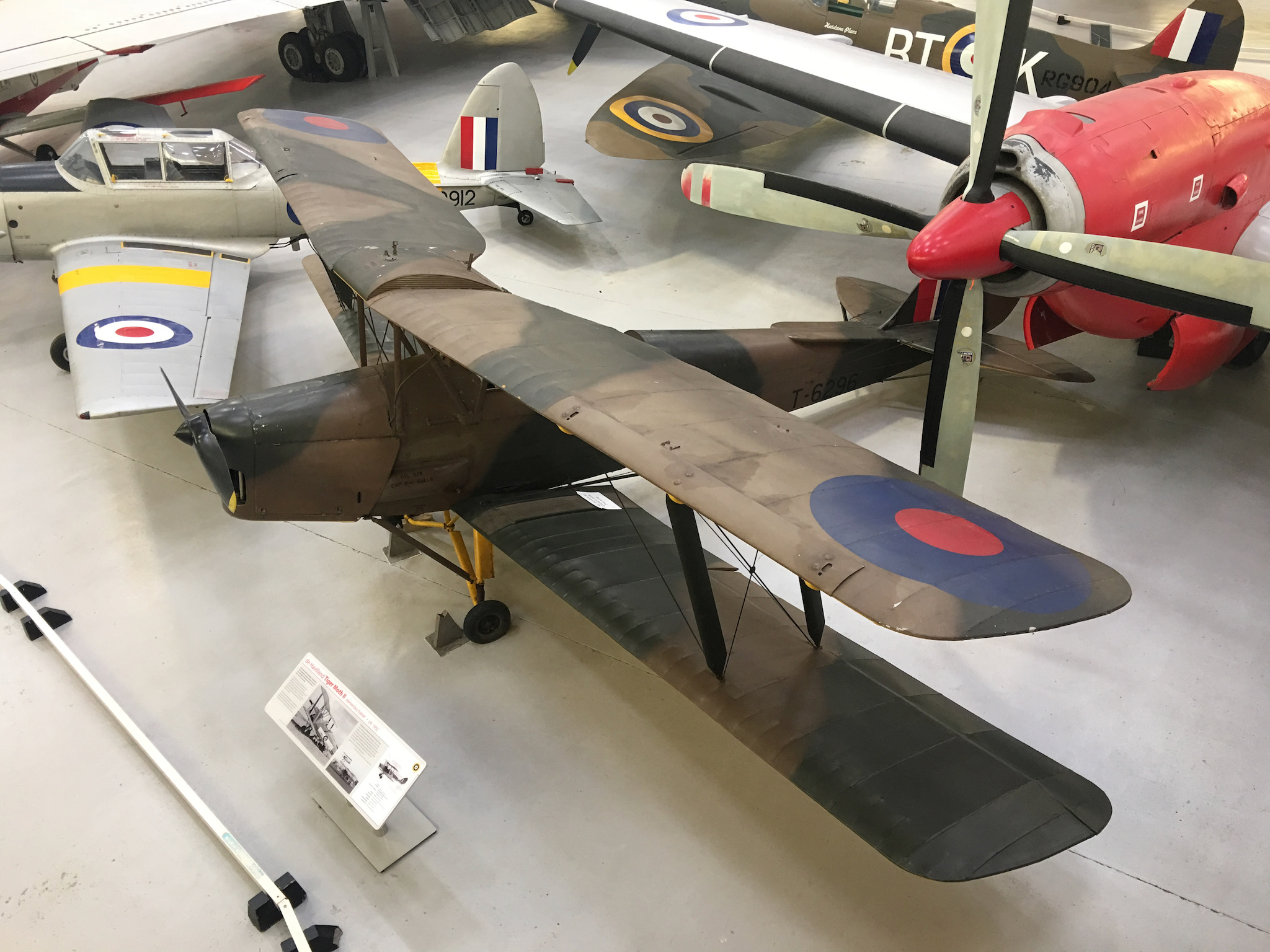
de Havilland Tiger Moth

The de Havilland DH.82 Tiger Moth is a 1930s British biplane designed and built by the de Havilland Aircraft Company. It was operated by the Royal Air Force (RAF) and other operators as a primary trainer aircraft.

de Havilland Tiger Moth

In addition to the type’s principal use for initial training, the Second World War had RAF Tiger Moths operating in other capacities, including maritime surveillance and defensive anti-invasion preparations; some aircraft were even outfitted to function as armed light bombers.

Thermic Plasma Conduits


I picked up a copy of Warhammer Imperium Issue 37 which comes with some Thermic Plasma Conduits.

This kit is no longer available from Games Workshop and I did quite like the idea of these and using them with the ruined factorum models that I also got from earlier issues of Warhammer Imperium.

You get one large sprue which splits into two smaller sprues, and allows you to build a series of conduits.

The finished model looks quite effective.

Bristol Beaufighter

The Bristol Type 156 Beaufighter is a British multi-role aircraft developed during the Second World War by the Bristol Aeroplane Company. The prototype flew on 17 July 1939 and the first production Beaufighters were delivered to RAF Fighter Command squadrons in the April 1940. 

It was originally conceived as a heavy fighter variant of the Bristol Beaufort torpedo bomber. The Beaufighter proved to be an effective night fighter, which came into service with the Royal Air Force during the Battle of Britain, its large size allowing it to carry heavy armament and early airborne interception radar without major performance penalties.

The Beaufighter strike fighter, with its formidable fire power, operated with distinction in North West Europe before gaining a considerable reputation in the Mediterranean and Far East. Operated by both the British and Australian air forces in the Far East it quickly became known to the Japanese as the ‘Whispering Death’.

Later the Beaufighter was introduced into Coastal Command as a strike fighter. Its original formidable gun armament was retained but rockets and torpedoes were added giving it even greater firepower.

A total of 5562 Beaufighters were produced and the last one was delivered in September 1945. Fifty-two operational Royal Air Force squadrons had been equipped with the type.

After its withdrawal from front-line service many Beaufighters were converted to target tug duties and in fact the last flight of the type in Royal Air Force service was made by a TT10 on 17 May 1960.

Undercoating the converted ruins.

Having picked up the Ruined Factorum sprue that came with Warhammer 40000 Imperium 31 a couple of weeks back, I set myself a reminder, to purchase issue 34 for the second sprue .

The ruins are from the The Battlezone: Manufactorum – Sub-cloister and Storage Fane kit which did cost £37.50 at Games Workshop and contains two similar sprues. So at £8.99 you would be making a saving of £9.76. However you can’t buy the kit anymore anyhow.

This time, as before, you get two more corner ruins, all coming on a single sprue.  I did manage to pick up a second magazine and decided that I would convert them. It was a relatively simple conversion swapping over the corners. With the larger sides I needed to cut them down.

Having converted and constructed the models, so I now have two different (yet similar) ruins.

I gave them a white undercoat.

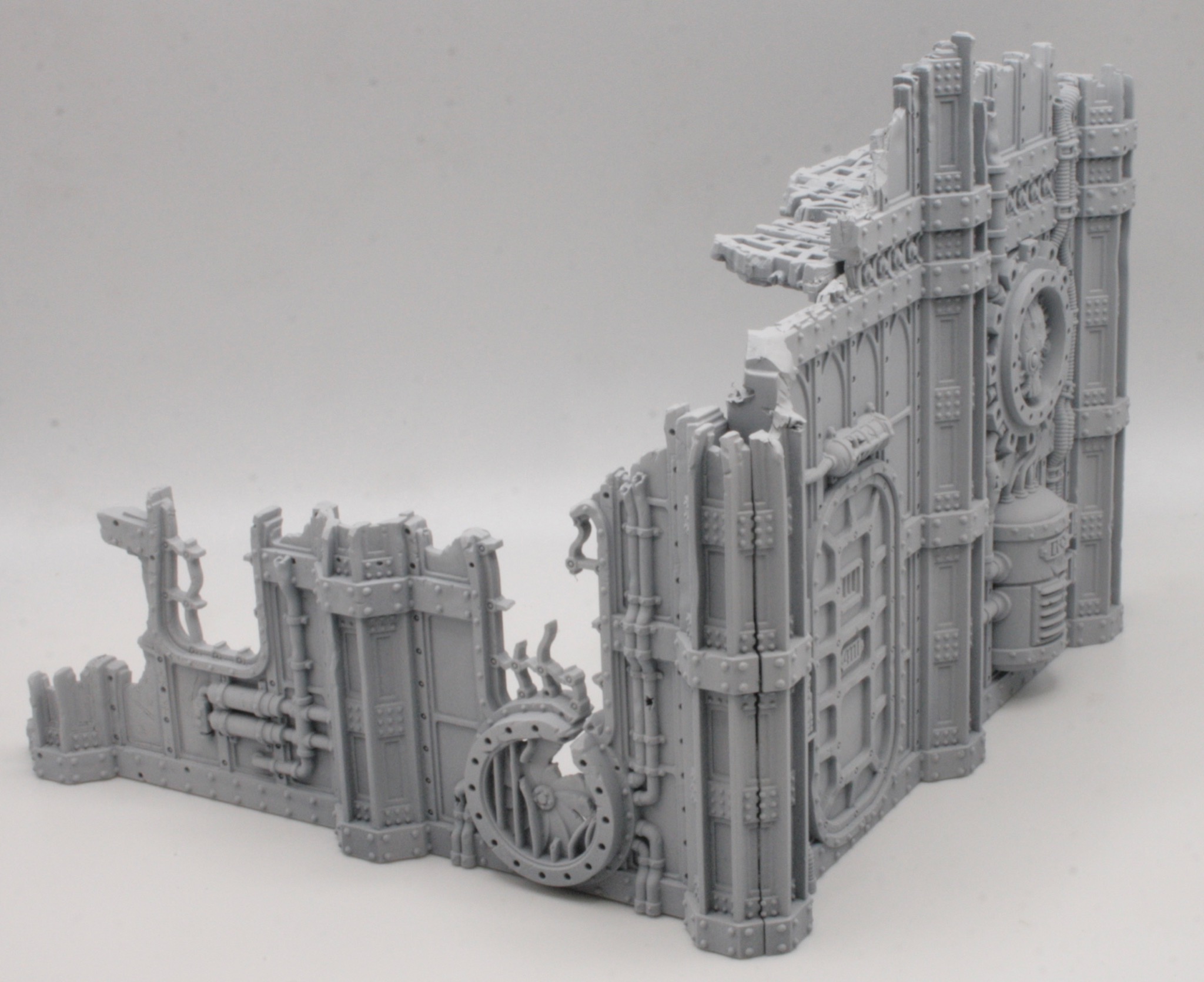
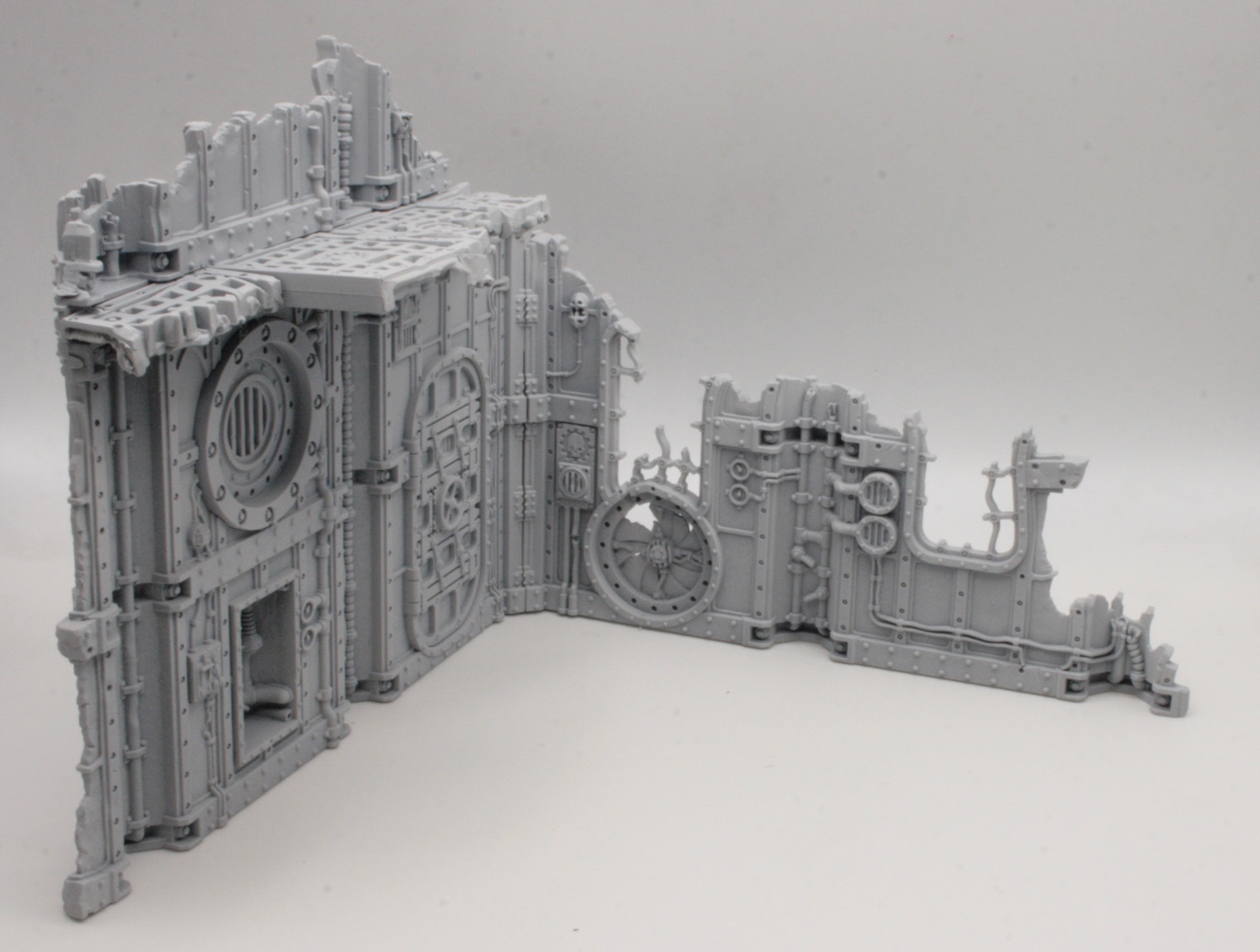
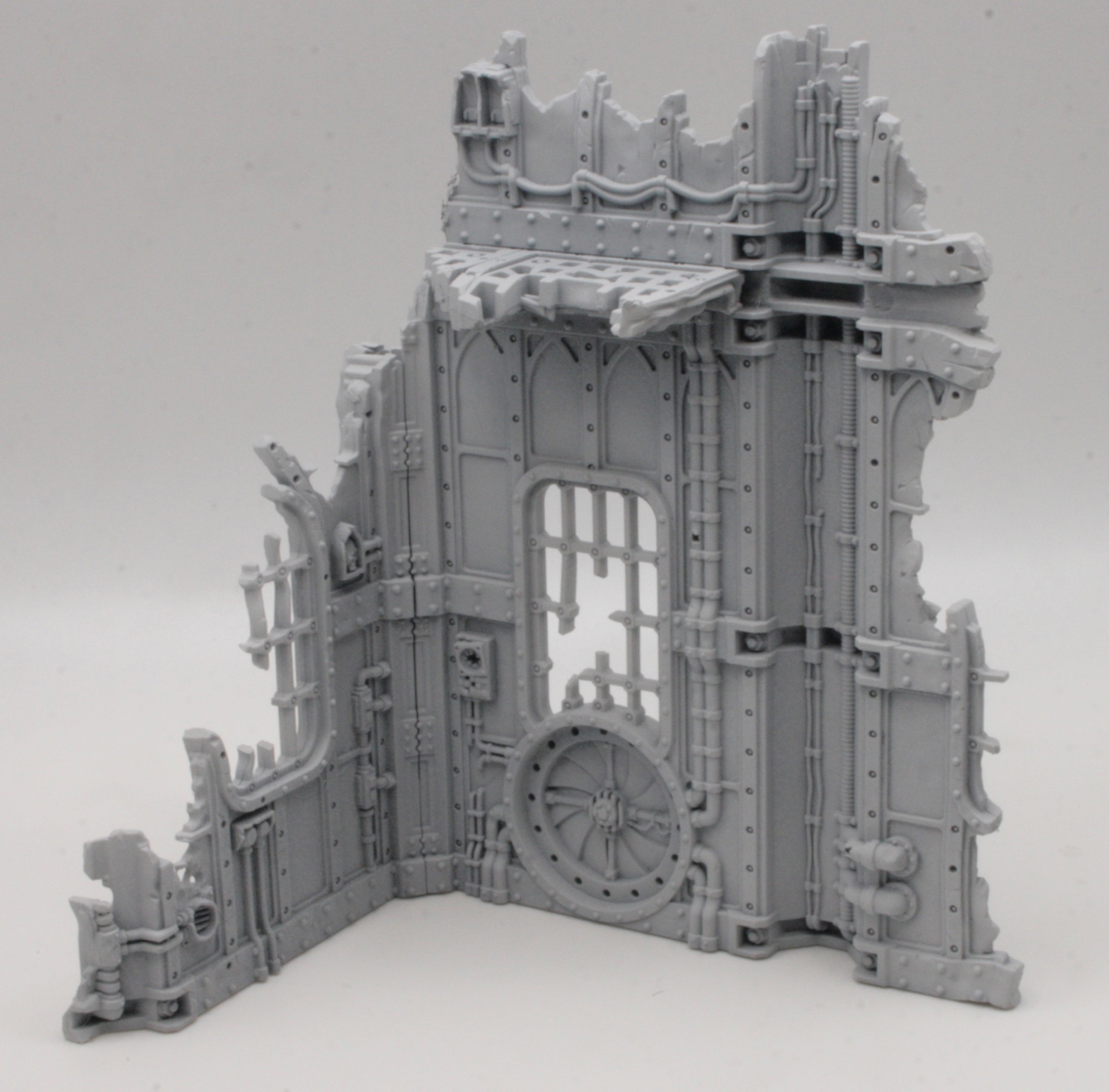
You can see what I did by comparing the photo above with the photo of the unconverted ruin.

This is the other converted ruin.

You can see what I did by comparing the photo above with the photo of the unconverted ruin.

I am intending to follow the same painting process I used on the original ruins.

Sopwith Snipe

The Sopwith 7F.1 Snipe was a British single-seat biplane fighter of the Royal Air Force (RAF). It was designed and built by the Sopwith Aviation Company during the First World War, and came into squadron service a few weeks before the end of the conflict, in late 1918.

The Snipe was not a fast aircraft by the standards of its time, but its excellent climb and manoeuvrability made it a good match for contemporary German fighters.

It was selected as the standard postwar single-seat RAF fighter and the last examples were not retired until 1926.

Undercoating some more of the Ruined Factorum

I got a couple of Ruined Factorum sprues that came with Warhammer 40000 Imperium 34. The ruins are from the The Battlezone: Manufactorum – Sub-cloister and Storage Fane kit which did cost £37.50 at Games Workshop and contains two similar sprues. So at £8.99 you would be making a saving of £9.76. However you can’t buy the kit anymore anyhow.

There are going to be further releases of these ruin sprues in later issues of Warhammer 40000 Imperium.

Having constructed the models I gave them a white undercoat.

The model has two pieces, a larger ruined building and a smaller ruined corner.


This is the larger corner ruin.

I bought another sprue. One I am going to paint in the same manner as the first Ruined Factorum I got, the second I am intending to follow the (white and red) paint scheme as outlined in Warhammer 40000 Imperium.


Gloster Gladiator

The Gloster Gladiator is a British-built biplane fighter. It was used by the Royal Air Force (RAF) and the Fleet Air Arm (FAA) (as the Sea Gladiator variant) and was exported to a number of other air forces during the late 1930s.

N5628 – Gladiator II forward fuselage is on static display at the Royal Air Force Museum in London.

It is displayed in an unrestored condition.

Bristol Bulldog MkIIA

The Bristol Bulldog is a British Royal Air Force single-seat biplane fighter designed during the 1920s by the Bristol Aeroplane Company. 

More than 400 Bulldogs were were built at Bristols’ Filton factory for the RAF and overseas customers, and it was one of the most famous aircraft used by the RAF during the inter-war period.

G-ABBB – Bulldog IIA on static display at the Royal Air Force Museum London in London. This aircraft was the civilian demonstrator and is painted as K2227. It was severely damaged in a crash in 1964 at the Farnborough Airshow and repaired in the late 1990s.

Washing the Bolt Action Home Guard Mark IV Tank

I am in the process of building a Bolt Action 28mm Home Guard force, I did want to add some armour to them with a Mark IV Male World War One tank put into service, even if it was merely as a mobile pillbox.

The Bovington Tank Museum has on display a Mark IV Male tank that was used just in this way. It was used in World War One and then presented to the Navy. When war broke out in September 1939, the Tank Mark IV (Male) number 2324 was refurbished for Home Guard duties.

Having constructed and undercoated the Mark IV Tank the next stage was a base coat of Army Green Spray from the Army Painter range. I then used a Humbrol Tank Grey 67 spray for the dark colour camouflage pattern. For the tracks I used Citadel Gorthor Brown.

I then gave the model a wash using Citadel Seraphim Sepia Shade.

I did one side at a time to try and stop the shade pooling too much.

I am aiming to use some more shades across various parts of the model.