Valentine Tank

This Valentine Tank was on display at the Bovington Tank Museum.
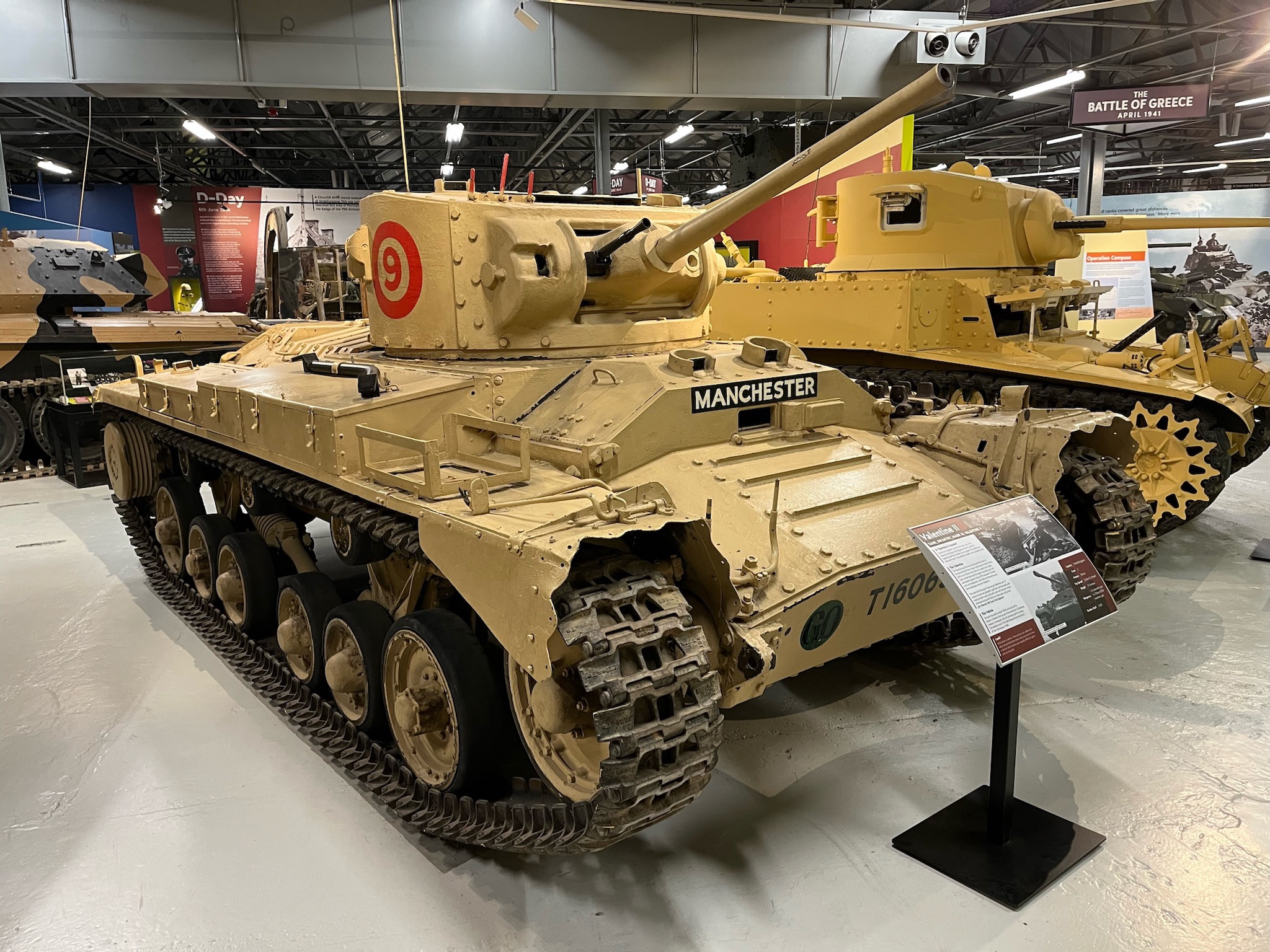
The Valentine tank was an infantry tank produced in the United Kingdom during World War II. More than 8,000 of the type were produced in eleven marks, plus various specialised variants, accounting for approximately a quarter of wartime British tank production. The many variants included riveted and welded construction, petrol and diesel engines and a progressive increase in armament. It was supplied in large numbers to the USSR and built under licence in Canada. It was used extensively by the British in the North African campaign. Developed by Vickers, it proved to be both strong and reliable.
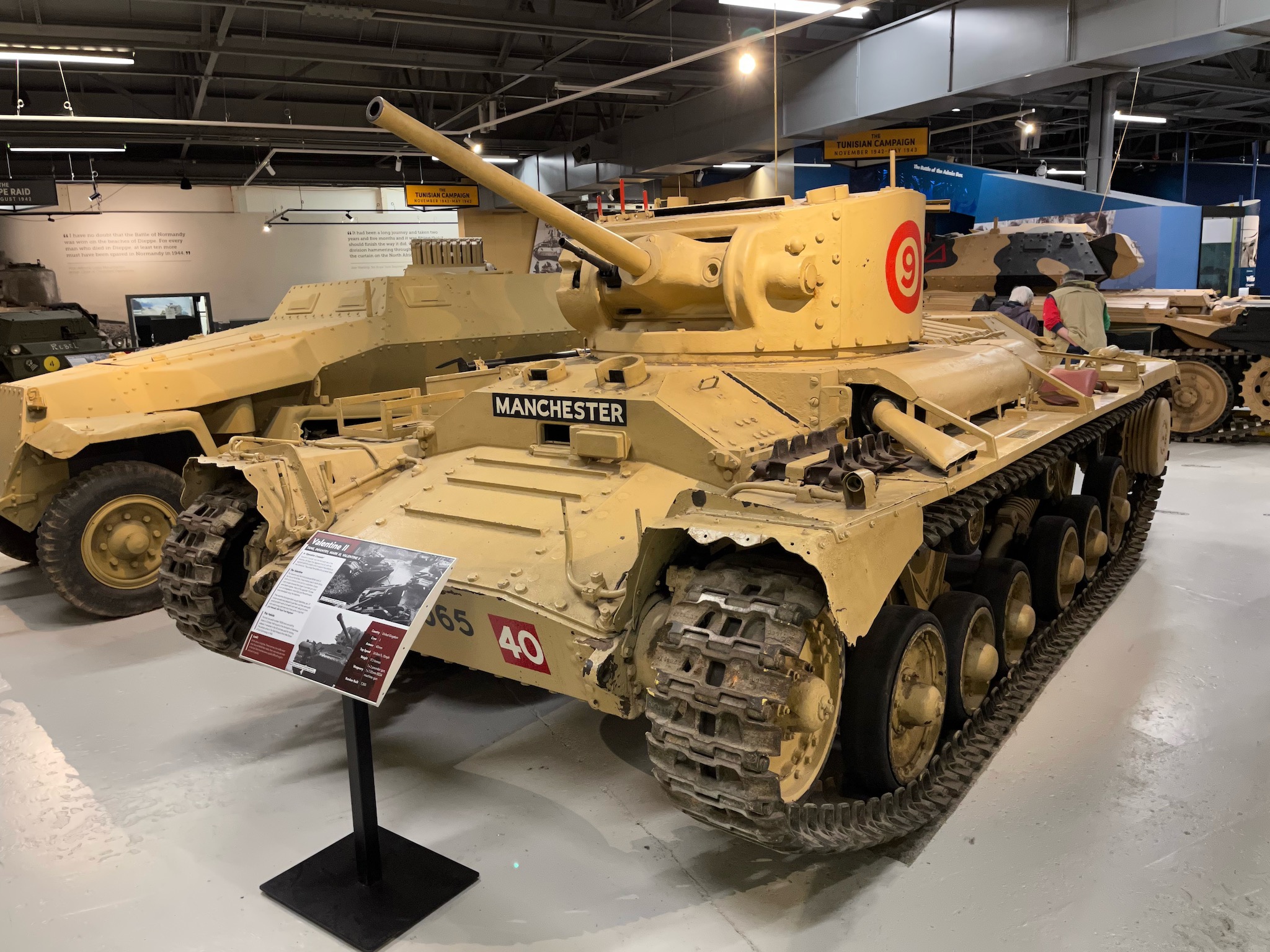
The Valentine first entered service with the British Army in December 1941, with the 8th Royal Tank Regiment in Operation Crusader. It quickly earned a reputation as a reliable and well-protected vehicle. The Valentine’s armor was particularly effective against German anti-tank guns, and it was also equipped with a powerful 75mm gun that could penetrate the armor of most German tanks.
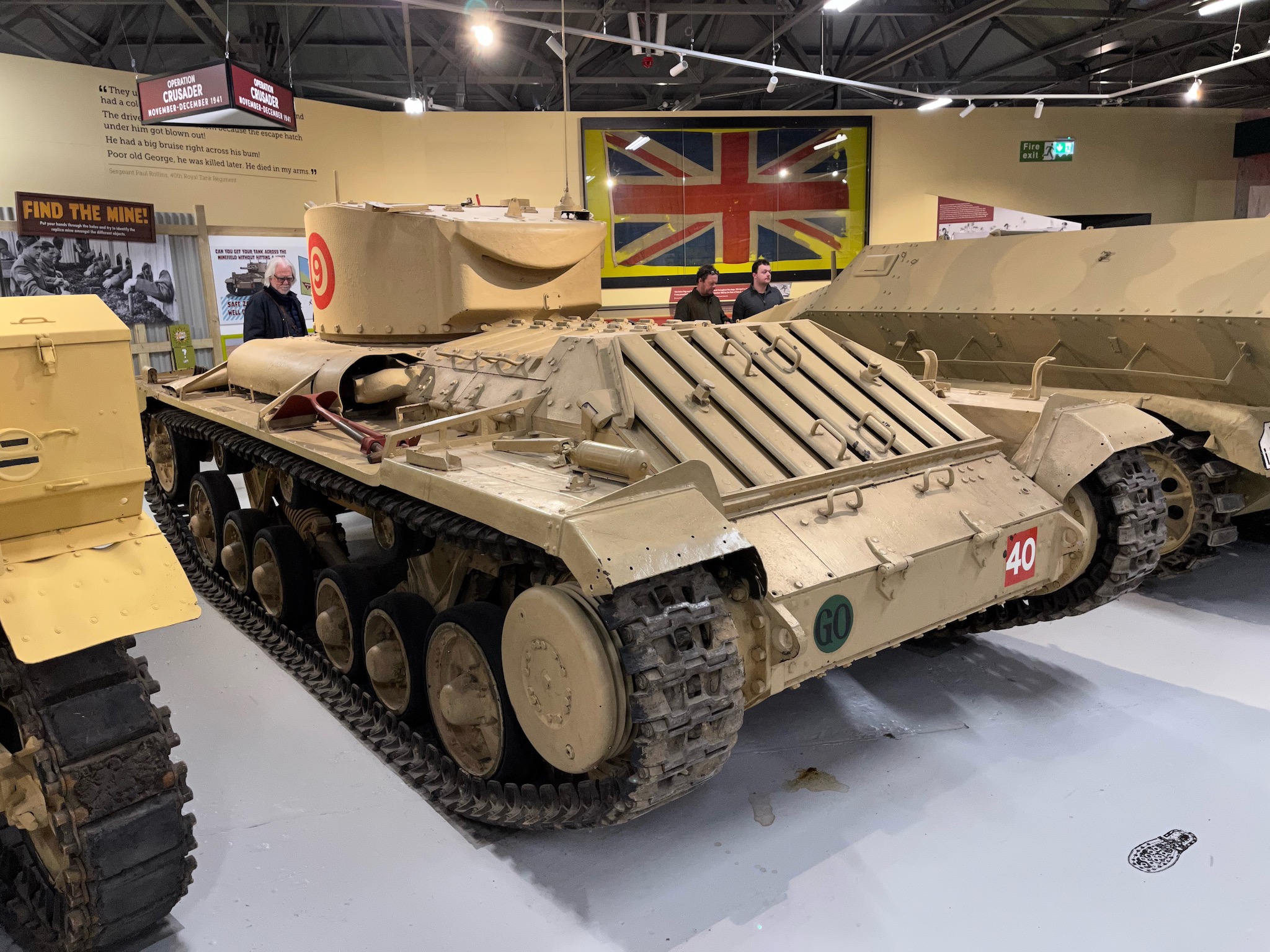
Valentine

The Valentine was used extensively in the North African campaign, where it proved to be a valuable asset to the British forces. It was also used in other theaters of war, including the Western Desert, Italy, and the Far East.
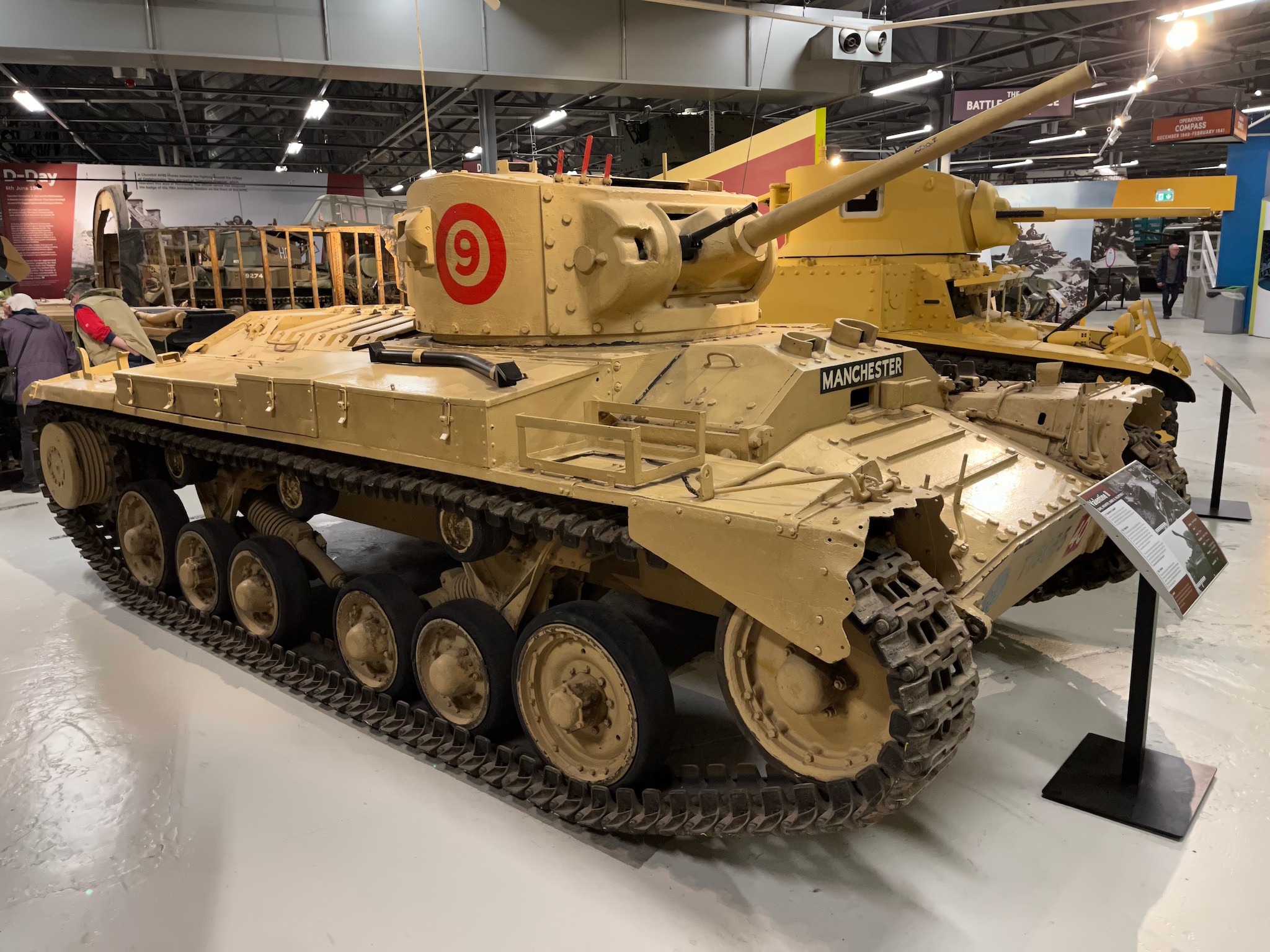
The Valentine was not without its flaws. It was relatively slow, and its armor was not as thick as some of the German tanks. However, its reliability and firepower made it a valuable asset to the British Army.

After the war, the Valentine was phased out of British service. However, it remained in service with other armies for many years. The Soviet Union, for example, continued to use Valentines until the early 1950s.

The Valentine tank was a significant contribution to the British war effort. It was a reliable and well-protected vehicle that was used extensively in all theaters of war. The Valentine’s legacy can still be seen today, as many examples of the tank are preserved in museums around the world.

Valentine Infantry Tank Mk III at the Imperial War Museum Duxford.

Adeptus Titanicus Warlord Battle Titan

This Adeptus Titanicus scale Warlord Battle Titan was in the displays at Warhammer World.

Warlord Battle Titans bestride the battlefields of the Imperium, their thunderous tread heralding the destruction of the enemies of Mankind. A mainstay of the Collegia Titanica, Warlord Battle Titans are among the largest and most powerful war machines ever devised by the Mechanicum.

Painting the workshop

All Mekboyz can perform battlefield repairs using no more than a weighty wrench-hammer, a sack of nails and a healthy dose of gumption, but most do their best work in the comfortably anarchic surrounds of their own workshop. Meks are more than capable of cobbling together a workspace from whatever is lying about, with rudimentary workshops springing up from battlefield wreckage even while the bullets are still flying. Greenskin vehicles roar toward such teetering structures, their crews throwing sacks of teef at the resident Mek – he and his crew get to work immediately, sending the Ork customers on their way with snazzier guns, souped-up engines and extra armour plates.

This workshop is the main model from the Ork Mekboy Workshop boxed set. It is the only part of the kit that actually needs to be constructed, the barricades and scrap piles are single piece models.

I gave the model an undercoat, some parts were done with Corax White and other parts with Leadbelcher.

I gave the tools a wash of Nuln Oil Shade.

I started to paint the back wall of the workshop with Basilicanum Grey contrast paint.

See the workbench feature on the workshop.

The Epic History of Small-Scale Warhammer

There is a nice article over on the Warhammer Community on the history of Epic that leads into the future release of Legions Imperialis.

The miniatures might be small, but the upcoming Legions Imperialis is a huge deal. It’s the first Warhammer game of combined arms at epic scale released in two decades – and the first set at the time of the Horus Heresy for more than 30 years. And as you’ll see while we take a lot of (tiny) steps down memory lane, it’s drawing on a proud and petite pedigree.

It’s interesting to read this about the 1991 edition of Space Marine.

This edition is one of the major influences for the Legions Imperialis rules – but it’s important to note that they are not the same game.

Personally my favourite edition of Epic was the 1997 Epic 40000 set of rules. As it says in the article:

…this game was all-change for epic-scale. The miniatures stayed the same size, but the entire scope of the game changed around them. Armies were no longer confined to set companies or detachments, making force selection more flexible, but the trade-off meant that the complexities of different weapon types were much reduced to make the game faster.

I am looking forward to Legions Imperialis and I do wonder what models will be on the horizon for the new game.

Arkanaut Frigate

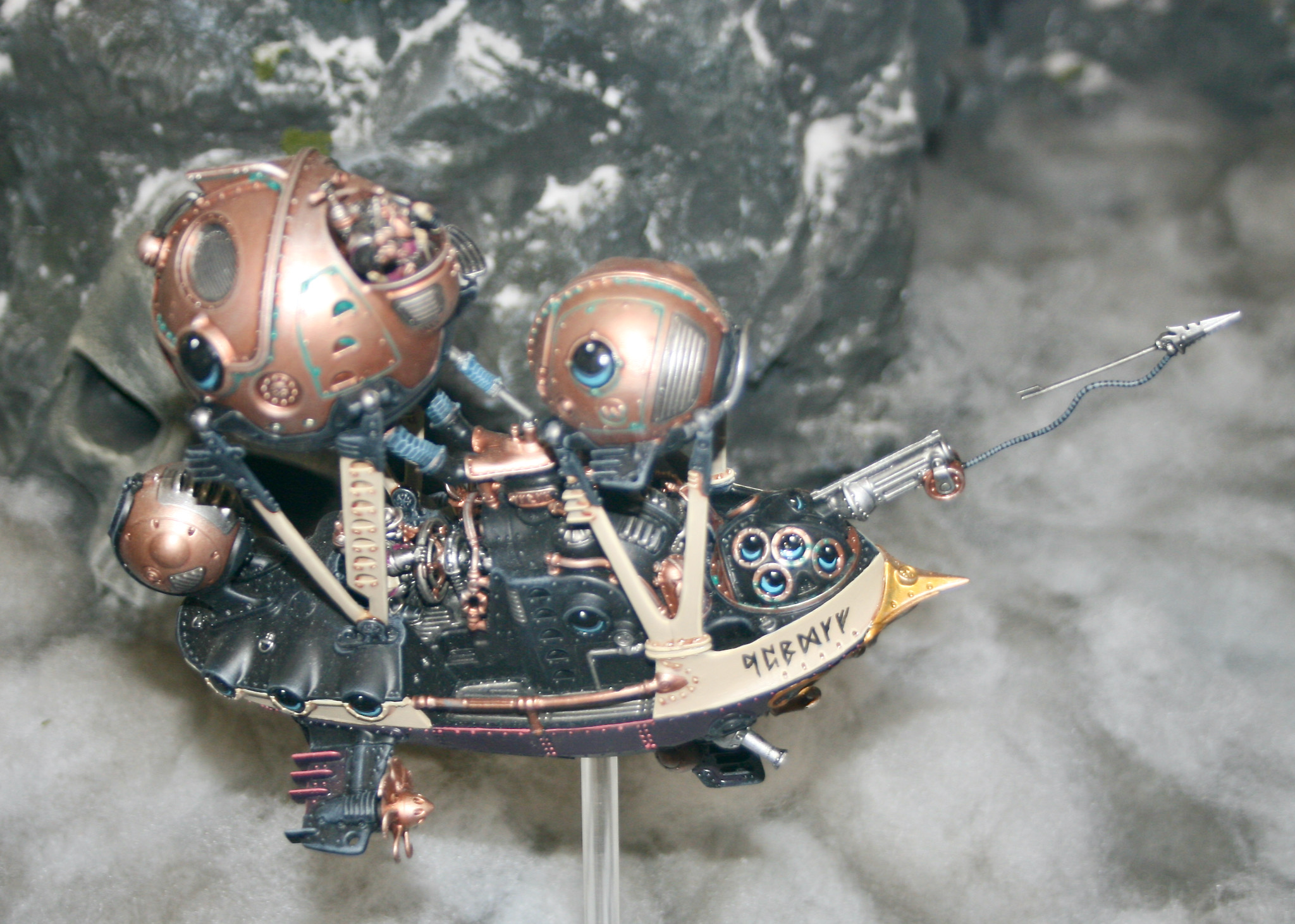
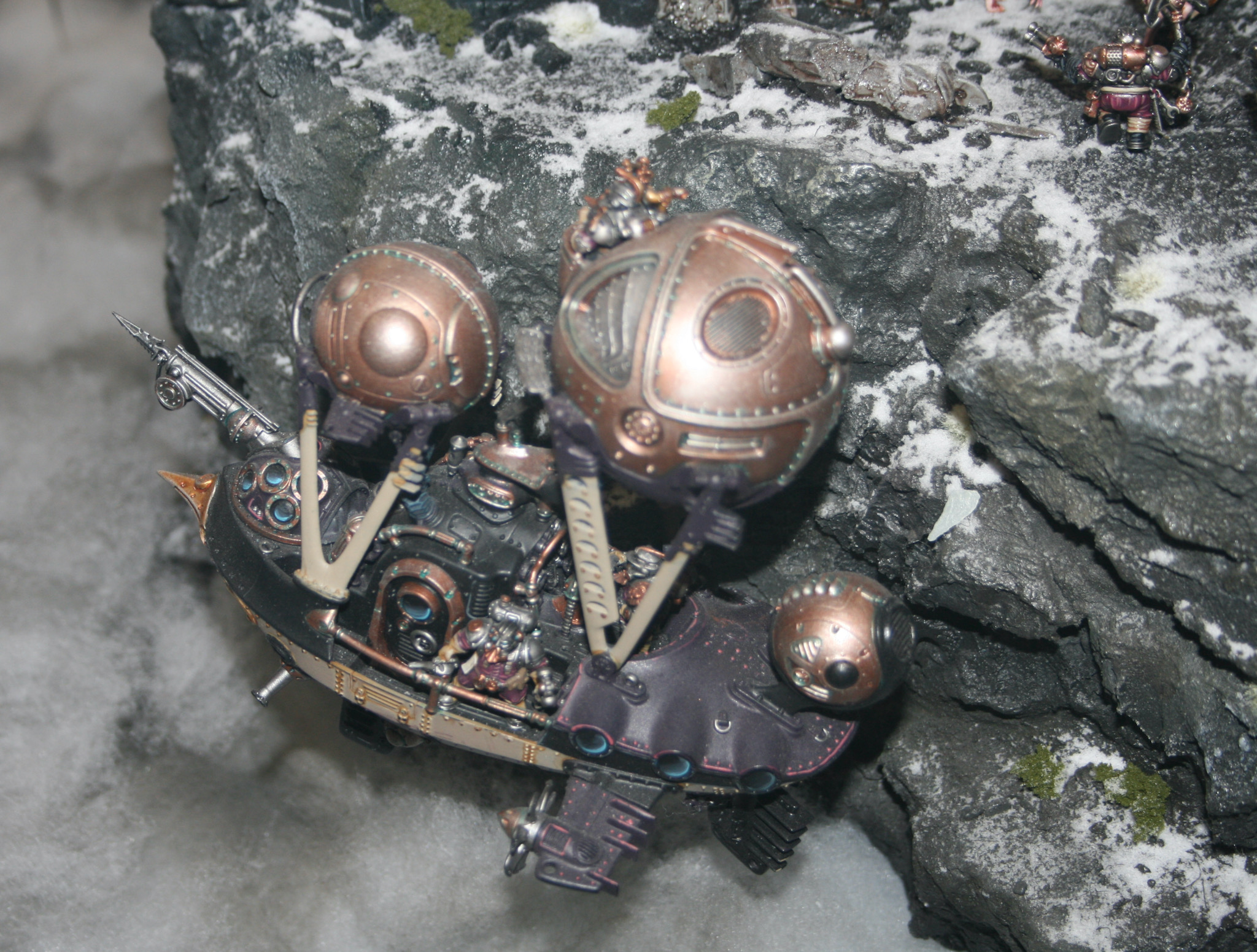
The Arkanaut Frigate is a versatile airship that represents centuries of refinement by the shipwrights of the Endrineers Guild. It is a balance of speed, transport capacity, and firepower, making it a mainstay of the Kharadron Overlords’ airfleets.

Arkanaut Frigates from my January 2020 visit to Warhammer World.

More photographs of The Kharadron Overlords.

RAF Green Goddess Fire Engine

RAF Green Goddess Fire Engine

The Green Goddess is a colloquial name for the RLHZ Self Propelled Pump manufactured by Bedford Vehicles. It was originally used by the Auxiliary Fire Service (AFS), and latterly held in reserve by the Home Office until 2004. The Green Goddess was called into service on two occasions, in 1977 and 2002, to provide fire cover during fire-fighters’ strikes.

The Green Goddess is a large, green-painted vehicle that is based on a Bedford RL series British military truck. It is powered by a 6-cylinder petrol engine that produces 150 horsepower. The Green Goddess has a top speed of 50 mph and a range of 200 miles.

The Green Goddess is equipped with a powerful water pump that can deliver up to 1,000 gallons of water per minute. It also has a variety of other fire-fighting equipment, including hoses, ladders, and axes.

The Green Goddess was used by the RAF during both of the fire-fighters’ strikes. In 1977, the RAF deployed 1,000 Green Goddesses to provide fire cover for the UK. The Green Goddesses were also used during the 2002 fire-fighters’ strike, when the RAF deployed 800 vehicles.

The Green Goddess is a versatile fire engine that can be used in a variety of situations. It is well-suited for providing fire cover during large-scale emergencies, such as fire-fighters’ strikes or natural disasters. The Green Goddess is also a valuable asset for the RAF, as it can be used to provide fire cover at military bases and other strategic locations.

Ork Krooz Missilz

Decided that I would reboot a conversion idea I had for a 40K Ork Trukk with Krooz Missilz. Many years ago I made a simple conversion to create an Epic Ork Trukk with Krooz Missulz (aka an Orkish version of the Imperial Deathstrike Missile Launcher. The model was built using a Flakwagon base, a firing platform from a Pulsa Rokitt and the Krooz Missulz (using a 40k scale Fighta-Bommer Missile).

I had planned to make a 40K version of this rocket many years ago. However like many projects it got shelved and I never made much progress with it. Having found some of the parts I decided to restart the project. I am going to be using one of my unfinished Ork Trukk models as the platform for the rocket. The base for the missile part of the  model will be the fuel tank from a 1/300th Academy Space Shuttle model kit.

I wanted to Orkify the missile, so started to add details using spare parts from various kits and some plasticard and plastic struts.

I used some spare parts from the plastic Ork fighter bomma kit.

I used some slices of plastic rod to make rivets and bolts.

Here is the missile alongside an Imperial Army Guardsman to give you an idea of scale.

The next stage will be a white undercoat.

See the workbench feature on the Ork Trukk with Krooz Missilz.

Legion Kharybdis Assault Claw

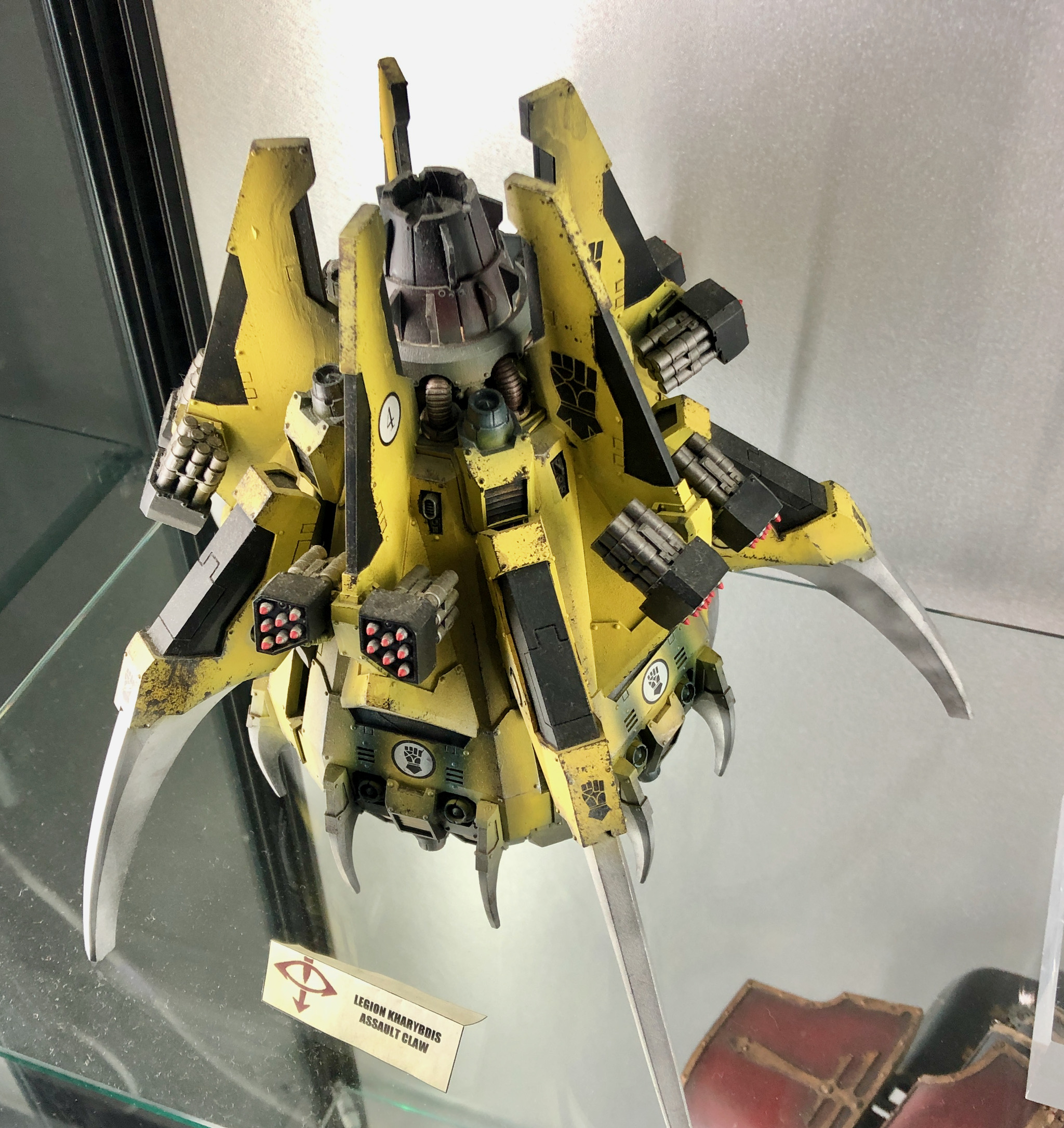
This Legion Kharybdis Assault Claw was on display at Warhammer World.

Legion Kharybdis Assault Claw

The Kharybdis assault claw is a monstrous drop pod used by many Legions as their primary ship-to-ship assault craft. It can carry large assault forces through the void and blast a path through defending small craft with its significant firepower.

The Kharybdis can also serve as an orbit-to-surface transport. In this role, it can use its storm launchers and melta cutters to scour clean its chosen landing zone before disembarking its deadly cargo. Some aggressive commanders even use the Kharybdis as an effective tank hunter, ramming enemy armor in daring low-altitude attack runs.

M3A1 Stuart

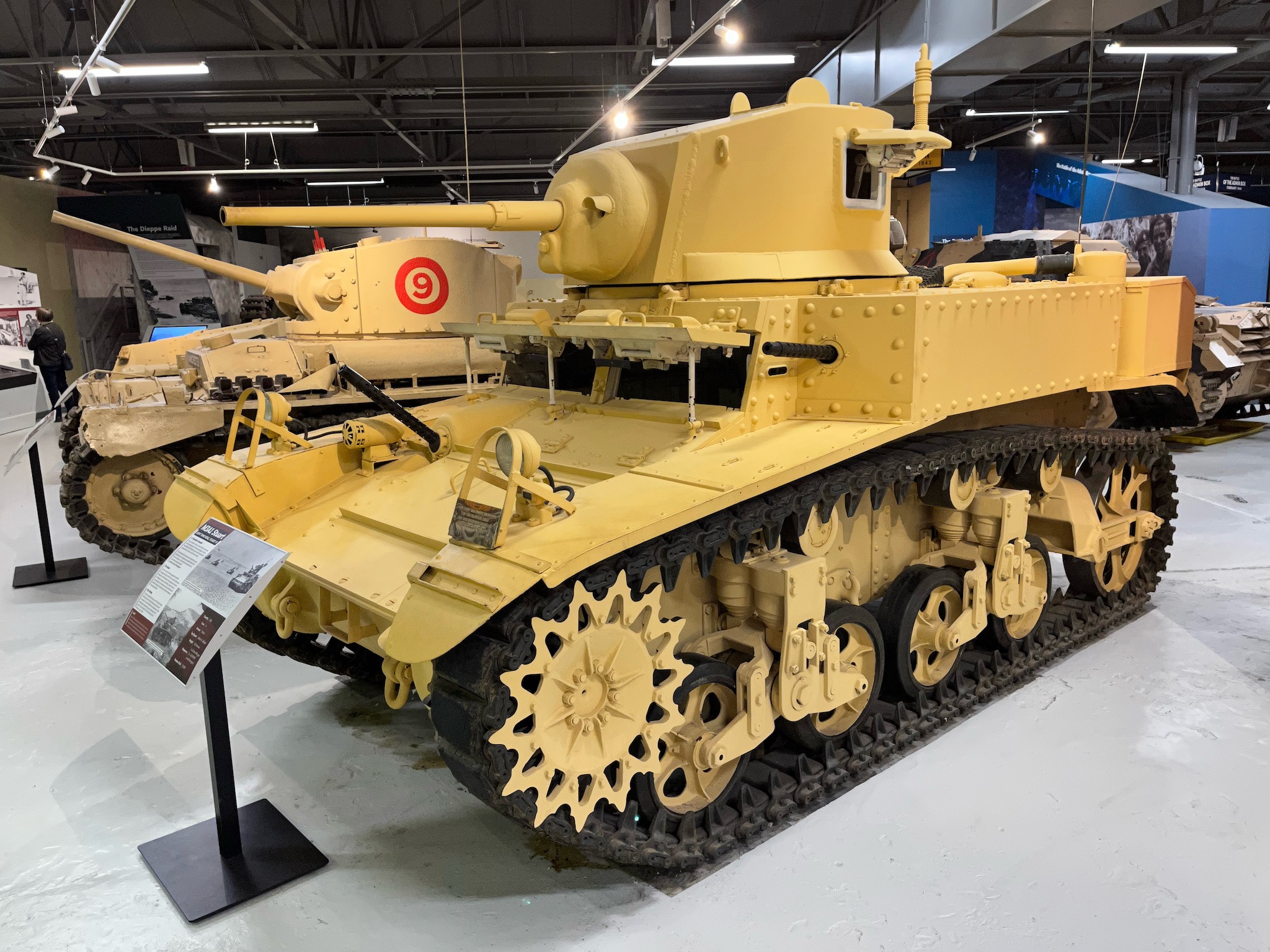
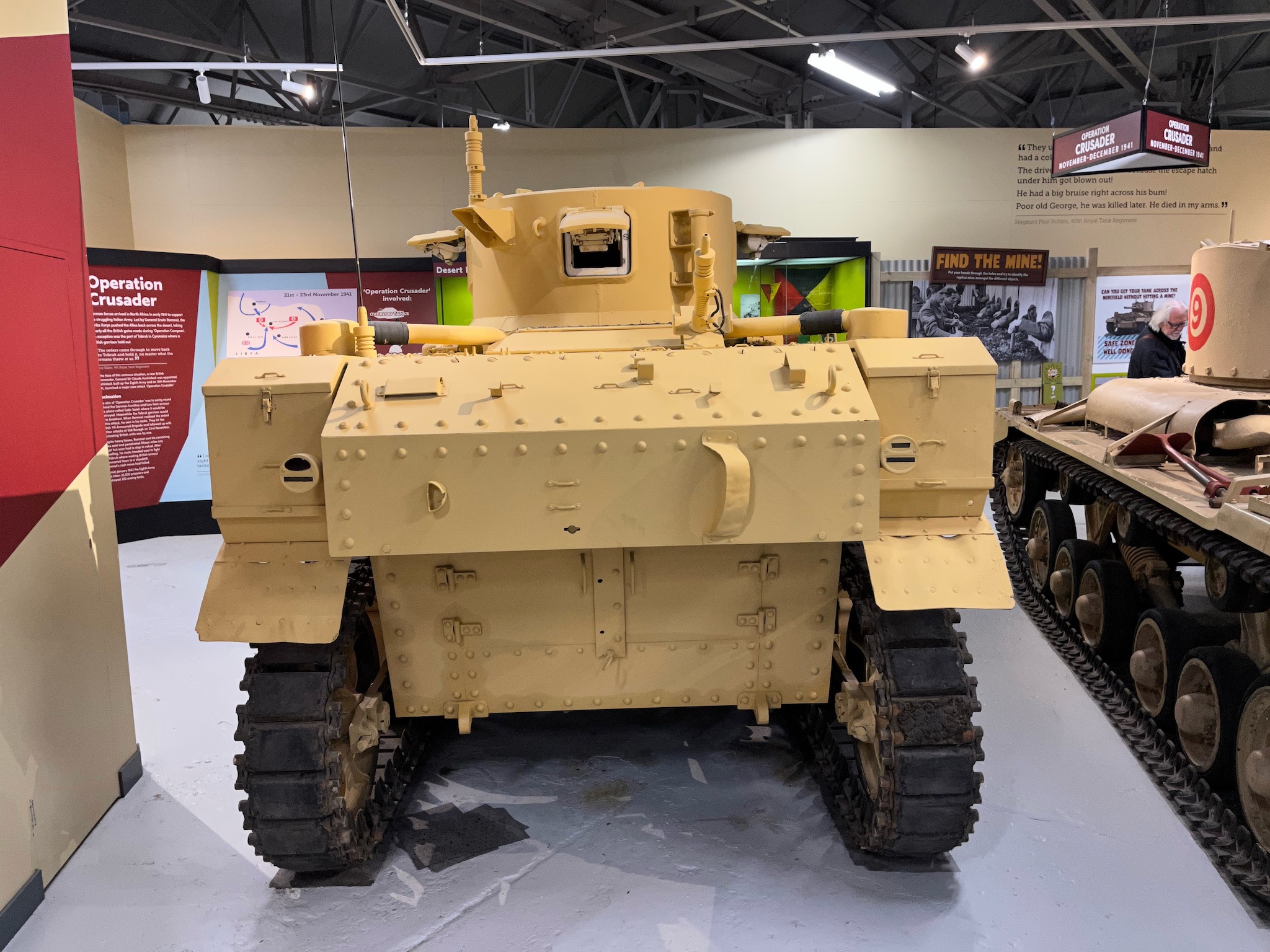
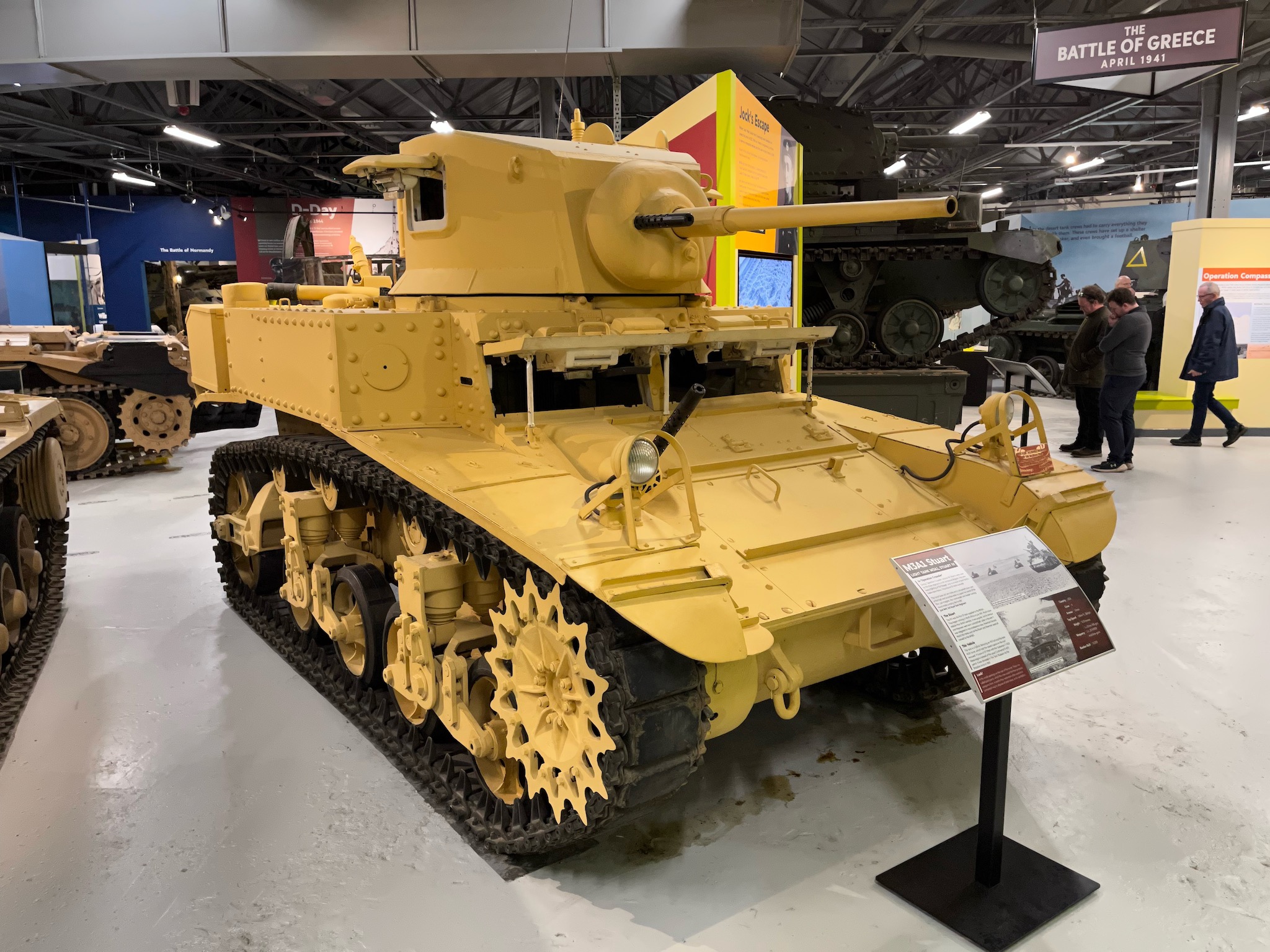
This M3A1 Stuart was on display at The Tank Museum at Bovington.

The M3A1 Stuart was a light tank that was used by the United States and its allies during World War II. The British Army was one of the largest users of the Stuart, and it used the tank in a variety of roles, including reconnaissance, scouting, and infantry support. It was designed as a reconnaissance and scouting vehicle, and was not intended to engage in direct combat with enemy tanks. However, the Stuart was often used in this role, and it sometimes proved to be successful.

The M3A1 Stuart was armed with a 37mm main gun and three .30 caliber machine guns. The main gun was capable of penetrating the armour of most German and Japanese tanks at close range, but it was not effective against the heavier tanks that were fielded later in the war. The machine guns were used for self-defence and for suppressing enemy infantry.

The Stuart was powered by a Continental W670-9A gasoline engine, which gave it a top speed of 36 miles per hour. It had a crew of four: a commander, a gunner, a driver, and an assistant driver. The tank was relatively small and lightweight, which made it easy to transport and manoeuvre.

The Stuart was first used by the British Army in North Africa in 1942. It proved to be effective in this theatre, where the terrain was often open and the enemy tanks were not as heavily armored as those in Europe. However, the Stuart began to struggle against the German Panzer IV tanks that were introduced in 1943.

The Stuart was also used in the European theatre, where it was less successful. The German tanks were generally more heavily armoured and better armed than the Stuart, and the Stuart often had difficulty penetrating their armour. However, the Stuart was still used in a variety of roles, and it sometimes proved to be effective in supporting Allied infantry.

The M3A1 Stuart was produced in large numbers, with over 20,000 tanks being built. It was the most widely produced American tank of World War II. The Stuart was also used by several other countries, including Britain, France, and China.

The M3A1 Stuart was not a perfect tank, but it was a valuable asset to the Allied forces during World War II. It was fast, manoeuvrable, and relatively easy to produce. It was also relatively inexpensive, which made it possible to equip large numbers of Allied units with it.

The Stuart’s light armour and relatively weak main gun made it vulnerable to enemy tanks, but it was still a capable vehicle in the right hands. It was used successfully in a variety of theatres of war, and it played an important role in the Allied victory.

Dwarf High King Thorgrim Grudgebearer

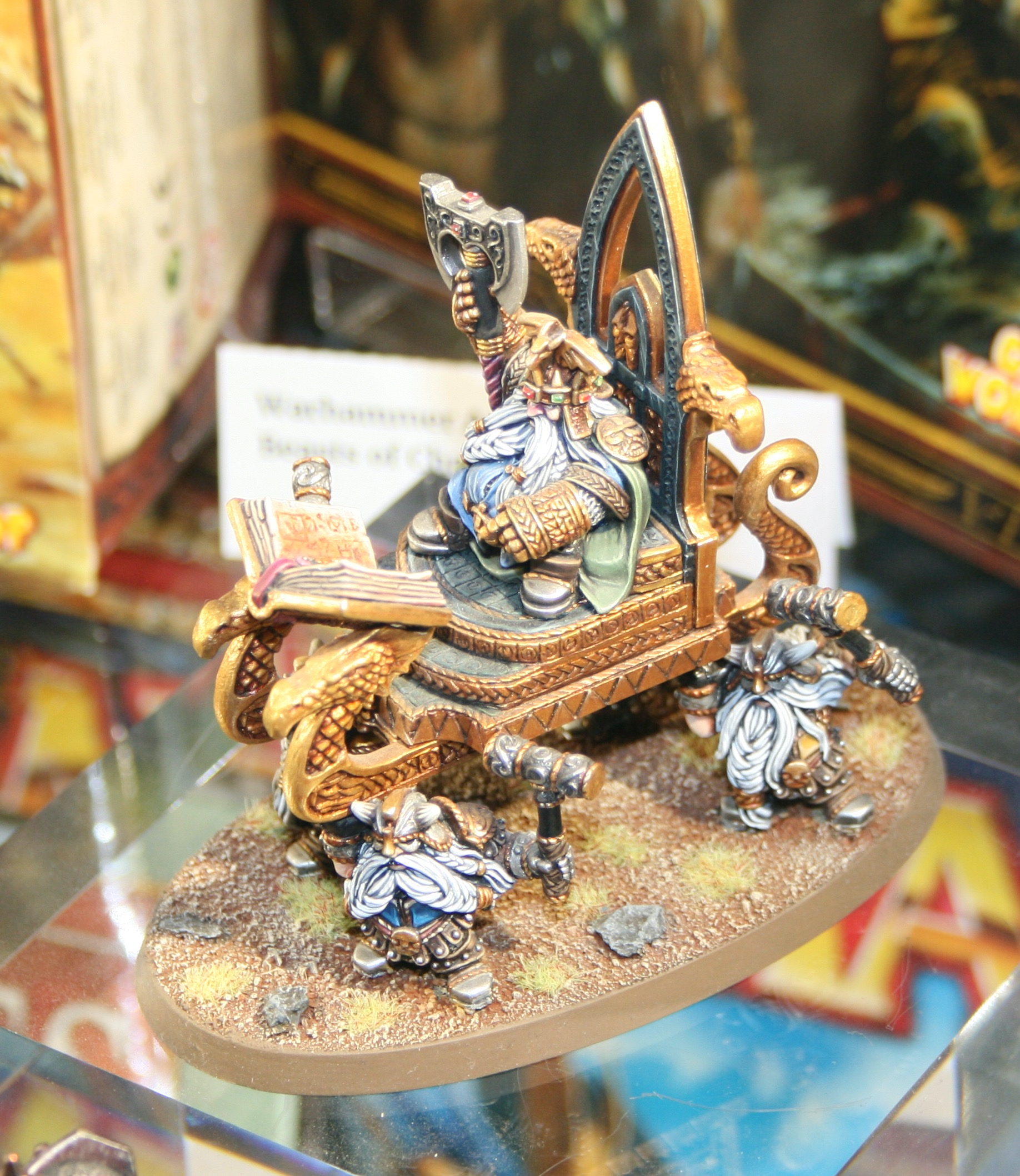
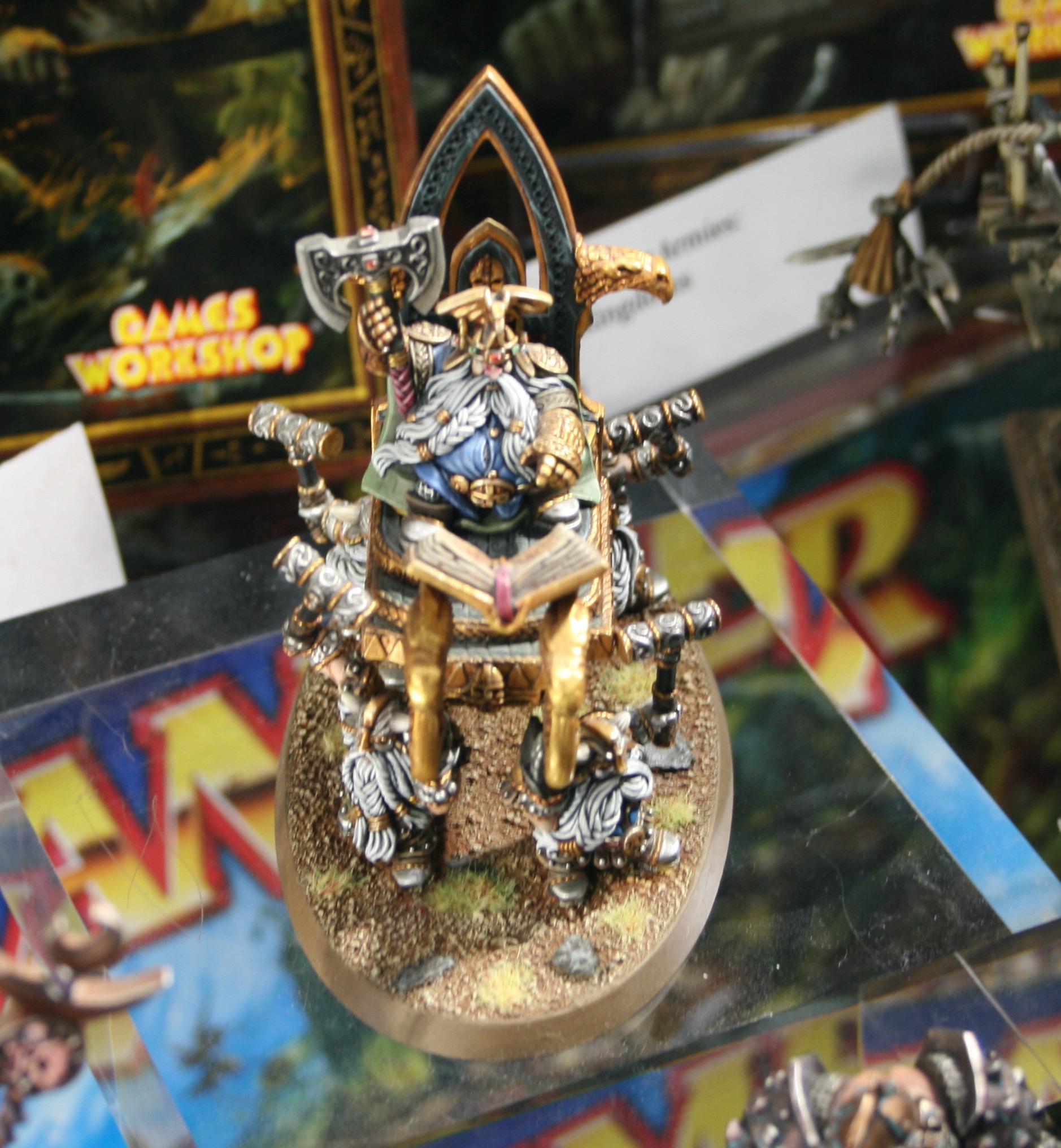
This lovely painted Dwarf High King Thorgrim Grudgebearer was on display at Warhammer World.

Dwarf High King Thorgrim Grudgebearer

Thorgrim is the descendant of the most ancient and noble of all Dwarf lords. The very blood of Grugni flows in his veins and the wisdow of Valaya sits upon his beetling brow.

Dwarf High King Thorgrim Grudgebearer

Thorgrim Grudgebearer is the current High King of the Dwarfs and the ruler of Karaz-a-Karak. He is a throwback to the High Kings of old — eager for new conquests, mighty in battle, and a merciless enemy. Yet upon his worn brow, there also sits a pearl of great wisdom, and he is able to uphold the ancient traditions as well as to accept, if not embrace these needed changes, such as alliances and new technology. Thorgrim is forever brooding upon how to return his people to their former glory. As the ultimate ruler of the Dwarfs, the Dammaz Kron or the Great Book of Grudges is entrusted into his honourable keeping.

This model was painted years ago (years and years ago). I saw it on display at Warhammer World in 2005.