Hovels Ruins

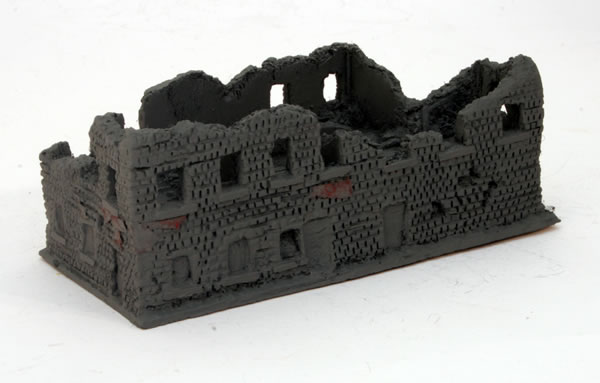
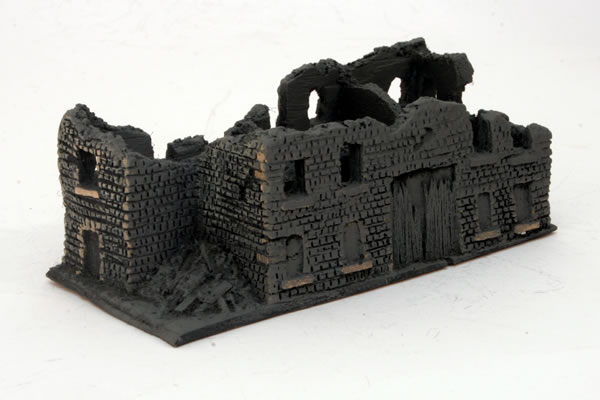
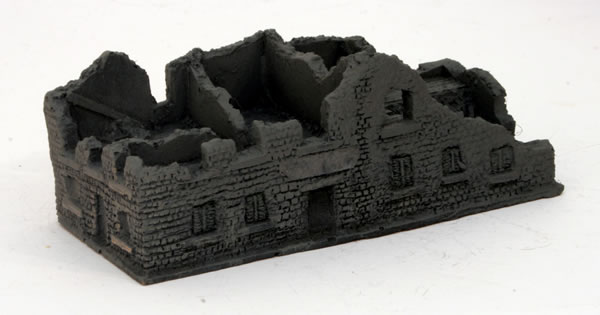
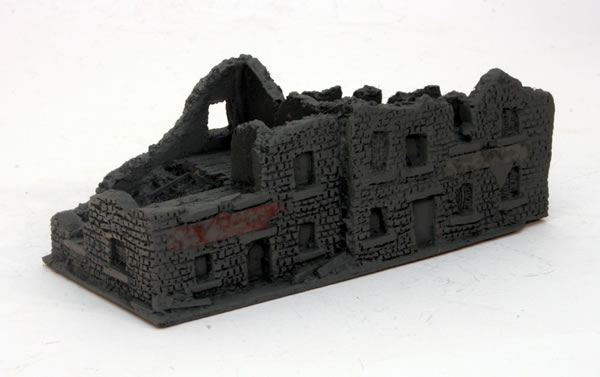
I bought these ruins quite a few years ago. These ruins are in fact 1/200th scale ruins, though they seem to work well with 15mm Flames of War. I had painted these with a black undercoat and then drybrushed them. I also glued some name signs onto them, though I have partly removed them, not very well mind you. As a result I have decided to paint them again. I sprayed them with a Humbrol Dark Grey.

Hovels Ruins

Hovels Ruins

Hovels Ruins

Hovels Ruins

Flames of War Renault FT-17

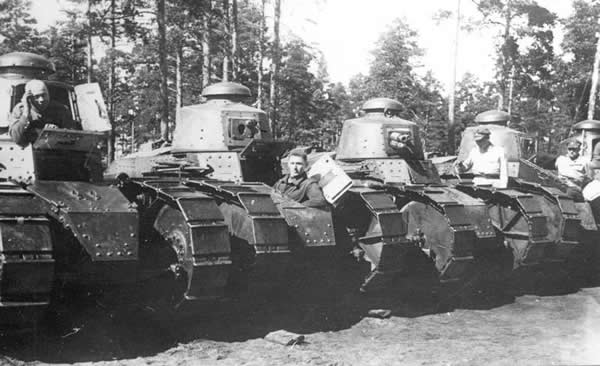
The Renault FT or Automitrailleuse à chenilles Renault FT modèle 1917, inexactly known as the FT-17 or FT17, was a French light tank; it is among the most revolutionary and influential tank designs in history.

Renault FT-17

The FT was the first operational tank with an armament in a fully rotating turret, and its configuration with the turret on top, engine in the back and the driver in front became the conventional one, repeated in most tanks until today; at the time it was a revolutionary innovation.

France still had several thousand First World War Renault FT tanks in 1940. Over 500 of them were still in service in independent bataillons de chars de combat (BCC) tank battalions in the front lines. Although adequate for infantry support, they were totally outclassed by German tanks in a mobile battle.

It is one of my favourite tanks, I have always had a fondness for this little tank, probably as a result of making that Matchbox plastic kit of the Renault and the Char B1 when I was young.

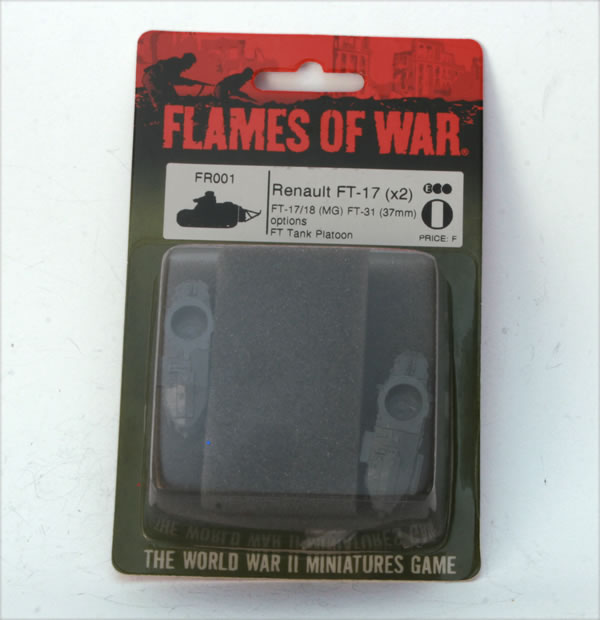
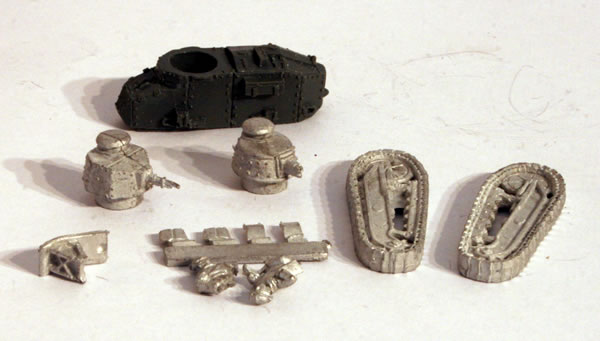
As I am creating an Early War French army I got some of these little tanks for Flames of War.

The tanks were small in real life and were quite small in the 1:76th scale kit, so I am expecting quite a small tank for 15mm. Actually I was surprised by how small the Char B1 is compared to Late War tanks, I don’t know for some reason I thought the Char B1 was a “big” tank, well it might be “big” for Early War, but otherwise it is quite a thin small tank compared to the Cromwells and Panthers you find in 1944. It’s quite incredible the pace of technological change in tank design during the war in just a few years.

I was pleased with the amount of detail in the model.

I like the fact you get two turret variants.
 

15mm P1000 Ratte

From the workbench at Forged in Battle…

15mm P1000 Ratte

If I didn’t know any better I would have said it was the 1st April when I saw this model.

It’s huge! In 15mm scale it’s over a foot long (30cm). Of course in reality it was never built, it never got beyond the drawing stage, with a few plans put together.

Armed with twin 280mm naval guns and powered by two U-Boat engines it would have dominated the landscape before it entered into battle. It would also have been a prime target for allied airpower.

I have written before about Late War Monsters for Flames of War.

I would also like to see some Late War Monsters in a similar vein to the Mid War Monsters that we have seen before. As well as the German Maus, King Tiger II and E series, we could on the allied side see the Centurion and M26 Pershing. There are also the T29 and T30 US Heavy Tanks that could also be fielded.

When I wrote that I didn’t consider the outlandish super heavy tanks, the P1000 Ratte or even the P1500 Monster. Who would have thought that someone would go and make one of these two huge German tank designs.

Orc Rogue Idol

There is a new release from Warhammer Forge, an Orc Rogue Idol.

Orc Rogue Idol

When greenskin tribes gather for war, foetid effigies depicting the Orc gods Gork and Mork will be constructed. Using rock, dung, old battle trophies and other detritus, these ‘statues’ are intended to bring the favour of Mork (or possibly Gork) to the Orcs and Goblins mustering in their shadow. Some are no more than a heap of stones or no larger than a chapel door, but when a Waaagh! is brewing they can grow to immense proportions, and become so infused with the greenskins’ lust for battle that they are roused into life and will lumber forth to crush and bludgeon the enemy.

If a Waaagh! is subsequently defeated, or the concentration of greenskin magic dissipates, the idol will lapse back into immobility. However, when a Storm of Magic rages across the Warhammer world these gigantic devotions to the greenskin gods may rise up again as a Rogue Idol, mindlessly attacking all in their way until the storm blows its course.

When I first saw this model, I wasn’t too sure, but the more I look at it, the more I like it.

I really like the modelling that has been done and the use of scenic materials to make it really look like it is just stones that are drawn together by magic.

Orc Rogue Idol

Also the photographs don’t give real justice to the size of the thing! There is just one comparative photo which shows how big it actually is.

Orc Rogue Idol

I am thinking about how or if I could use this in Warhammer 40K… hmmm! What do you think?

Undercoating the the Flames of War Dingo

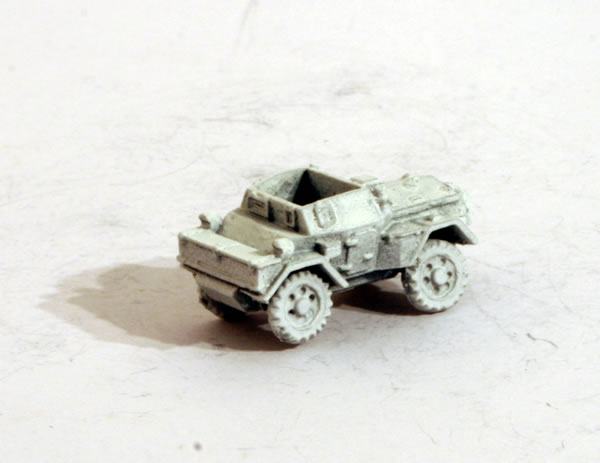
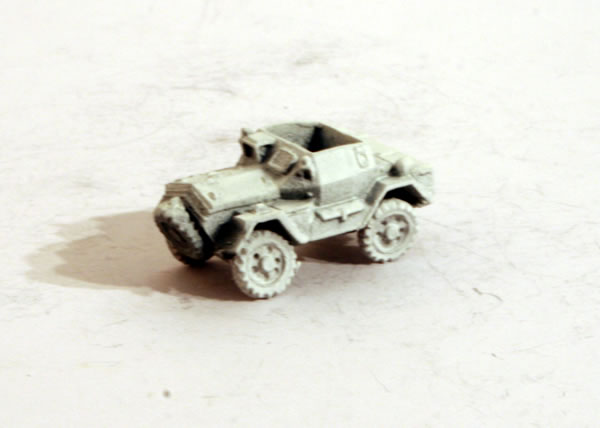
The Daimler Scout Car, known in service as the “Dingo” (after the Australian wild dog), was a British light fast 4WD reconnaissance vehicle also used in the liaison role during the Second World War.

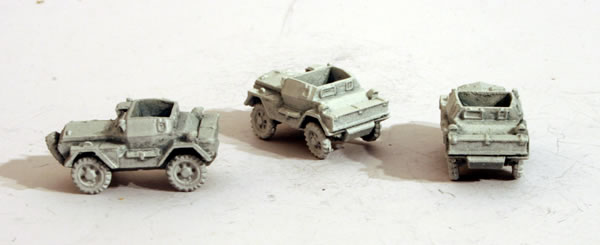
The Flames of War blister comes with three of them. Having constructed the models I gave the vehicles and the crew a white undercoat.

The three undercoated Dingos.

The crew.

See the full workbench feature on the British Daimler Dingo.

Forged in Battle 15mm French Mortar Team

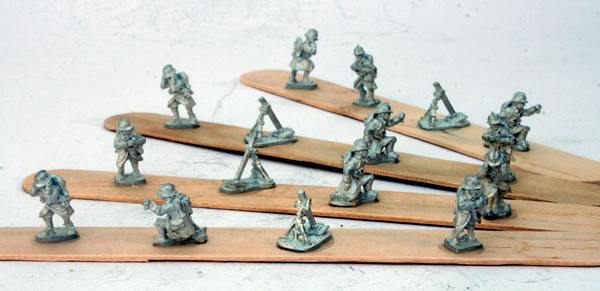
I was recommended these Forged in Battle miniatures at a gaming shop in Birmingham. They look well casted and a similar size to Flames of War infantry.

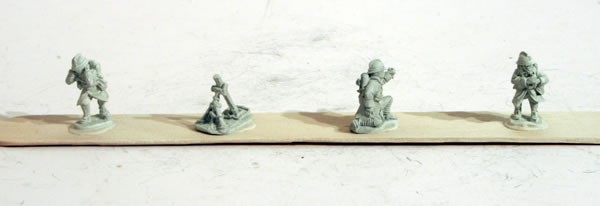
I mounted the mortar teams onto wooden sticks ready for undercoating and painting.

There are four teams altogether.

The next stage was a white undercoat.

See the workbench feature on the Forged in Battle 15mm French Mortar Team.