The Battle of the Pelennor Fields

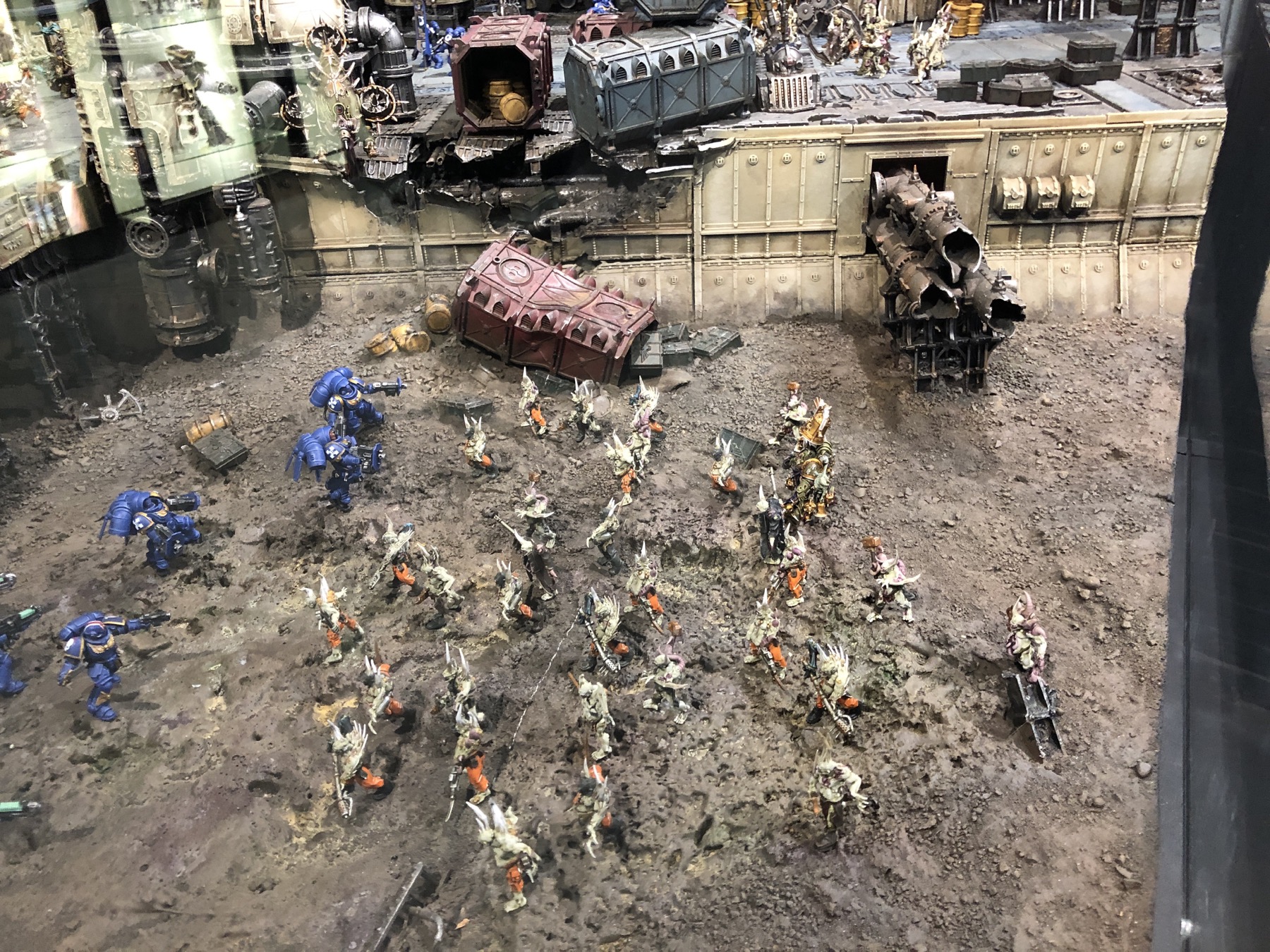
The Battle of the Pelennor Fields was a battle for the city of Minas Tirith, and ultimately for Gondor, immediately following a large-scale siege of Minas Tirith by Sauron’s army. It was the greatest battle of the War of the Ring, and indeed the largest of the entire Third Age. Major casualties resulted from the battle, including the deaths of King Théoden and the Witch-king of Angmar.

This Lord of the Rings Battle Game diorama was on display at Warhammer World.

Panzerjager G13 (Hetzer)

Though painted and presented as a Late War Hetzer at the Imperial War Museum in Duxford, this in fact is a Swiss manufactured copy of the German WW2 self-propelled gun/tank destroyer. It had a crew of 4 and was armed with a 75mm gun and one machine gun.

The vehicle is a post war production model made by Skoda for the Swiss Army in 1947 (which designated it G-13). Vehicles were manufactured on the wartime production line and in many cases left over wartime spares were used (so Swiss G-13 vehicle parts sometimes carry Third Reich parts stampings). Indeed anecdotal evidence suggests some hulls were recovered from the battlefield, remanufactured and sold on to the Swiss (who used them until 1970). The main difference between the 38(t) and the G-13 was the use of a Saurer diesel engine, instead of a Tatra petrol engine in the majority of Swiss vehicles. The IWM example has a diesel engine.

That time when the Imperial Guard used the Land Raider

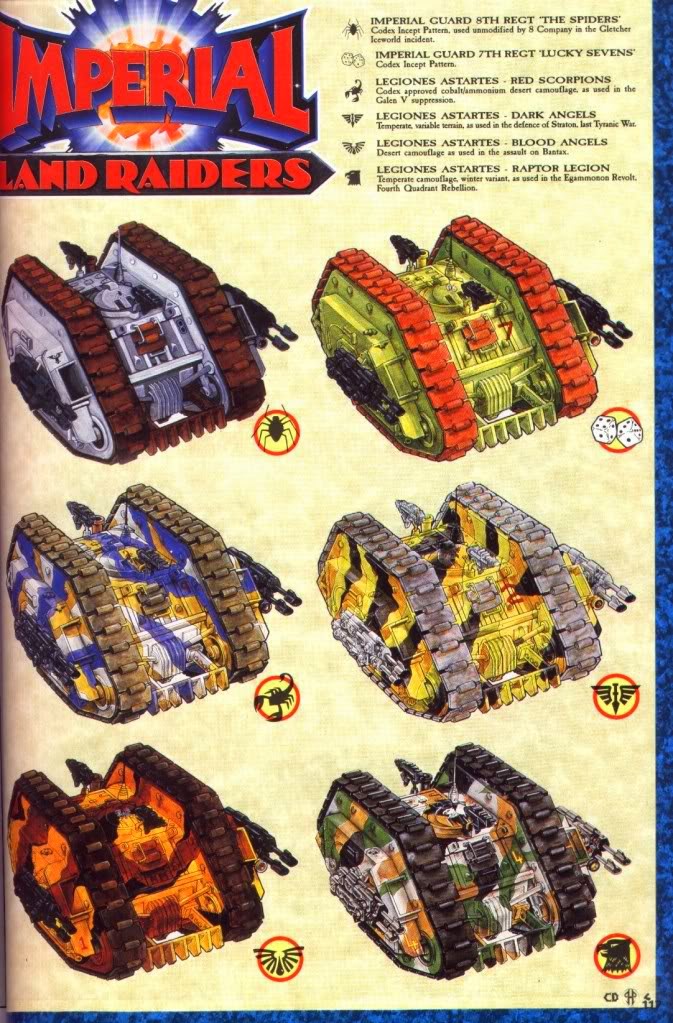
When the Land Raider was first released (and we are talking a long time ago now) there was a real lack of armoured vehicles around, so of course if you had an Imperial Guard force you could have a Land Raider…

The other thing to note, was if you were a Space Marine chapter you could use camouflage instead of the usual chapter colours.

Today, not so much…

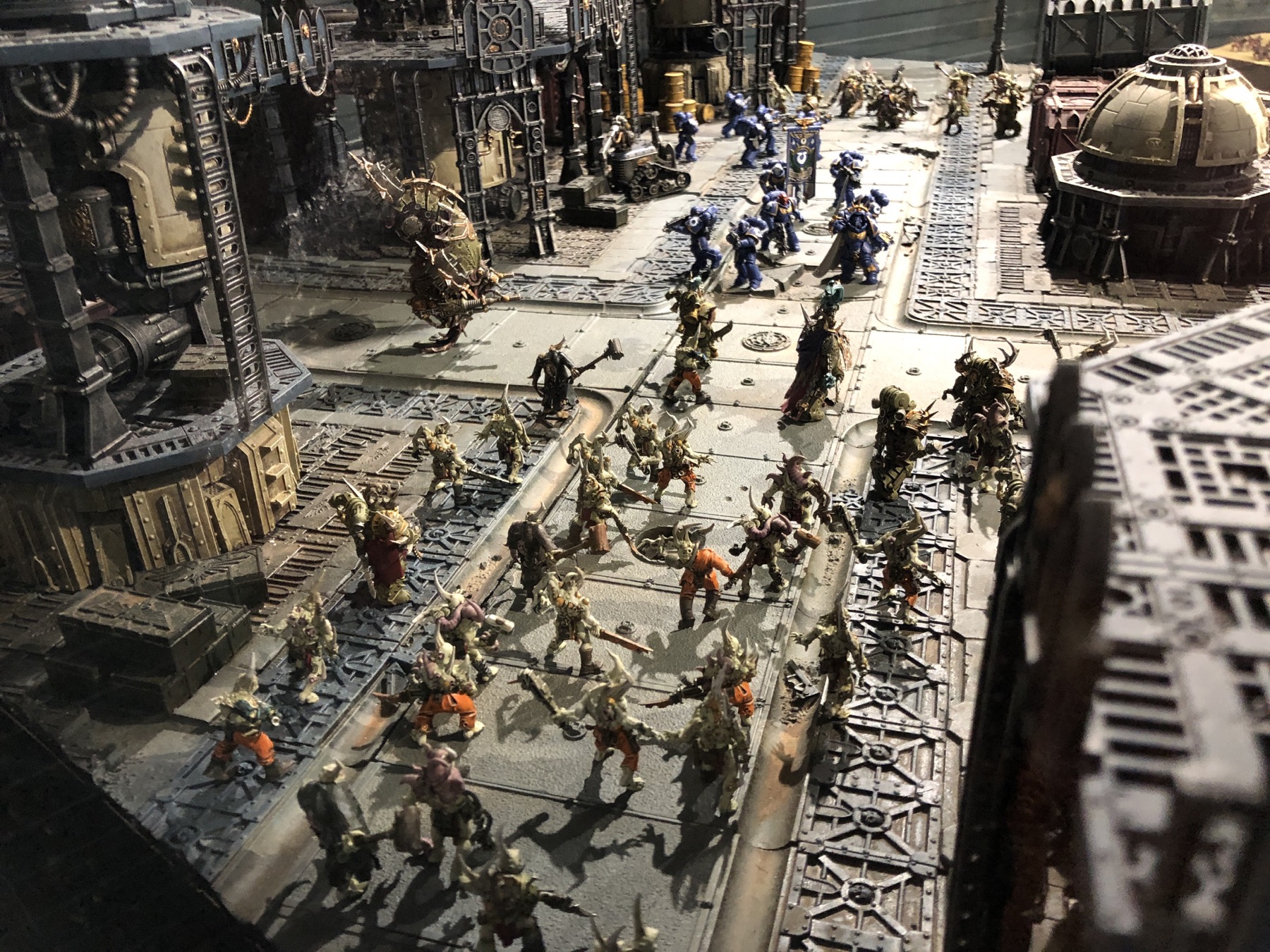
Battle for Cadropolis

Cadropolis is the capital of the agri-world Masali.

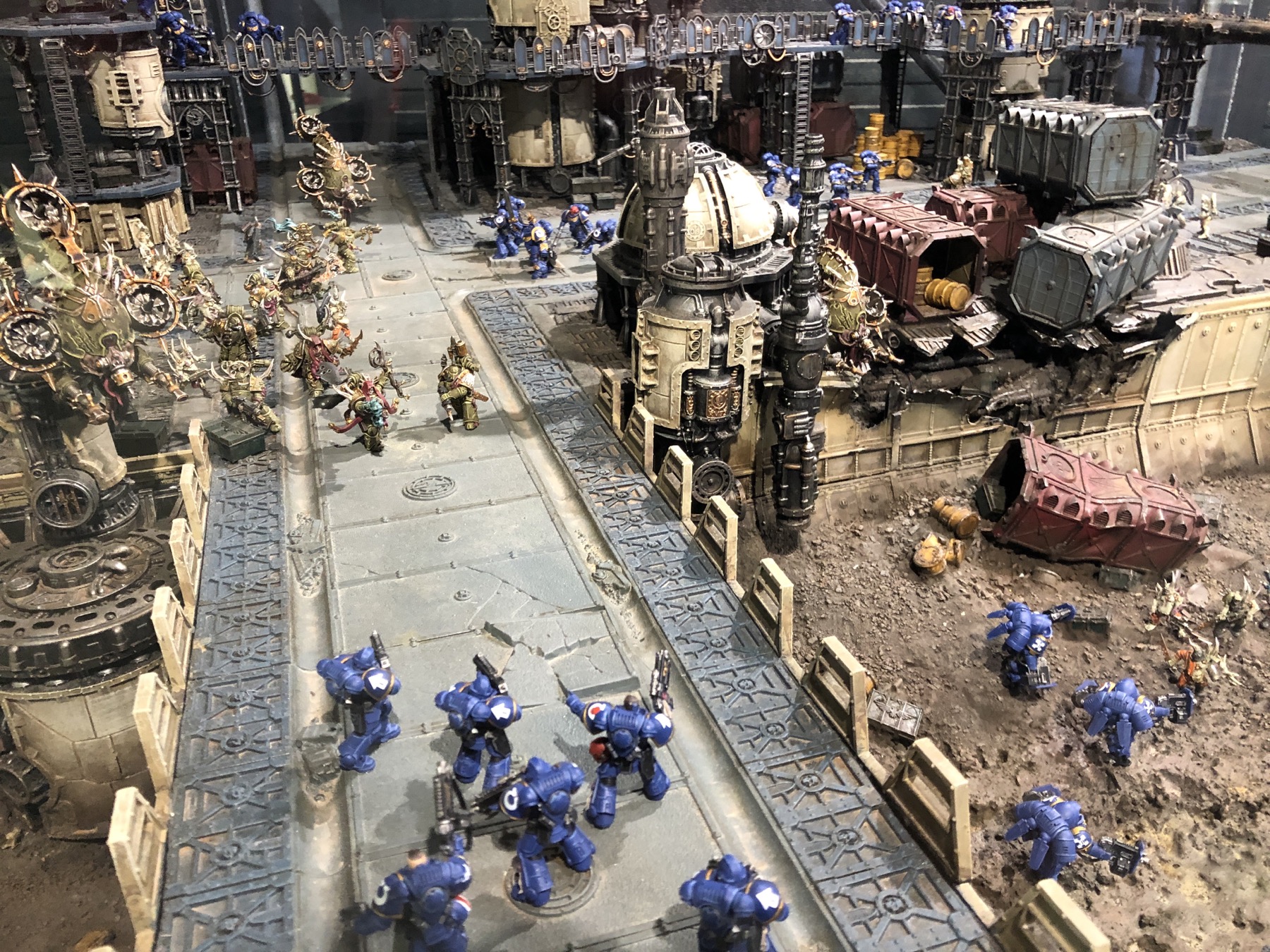
The Tainted Sons have shattered the formidable defences of the hive city with a bombardment of incendiary shells and virus bombs. The Tainted Sons are a vectorium of the Death Guard and is now ready to overrun and destroy the hive city which has vital processor cathedrums.

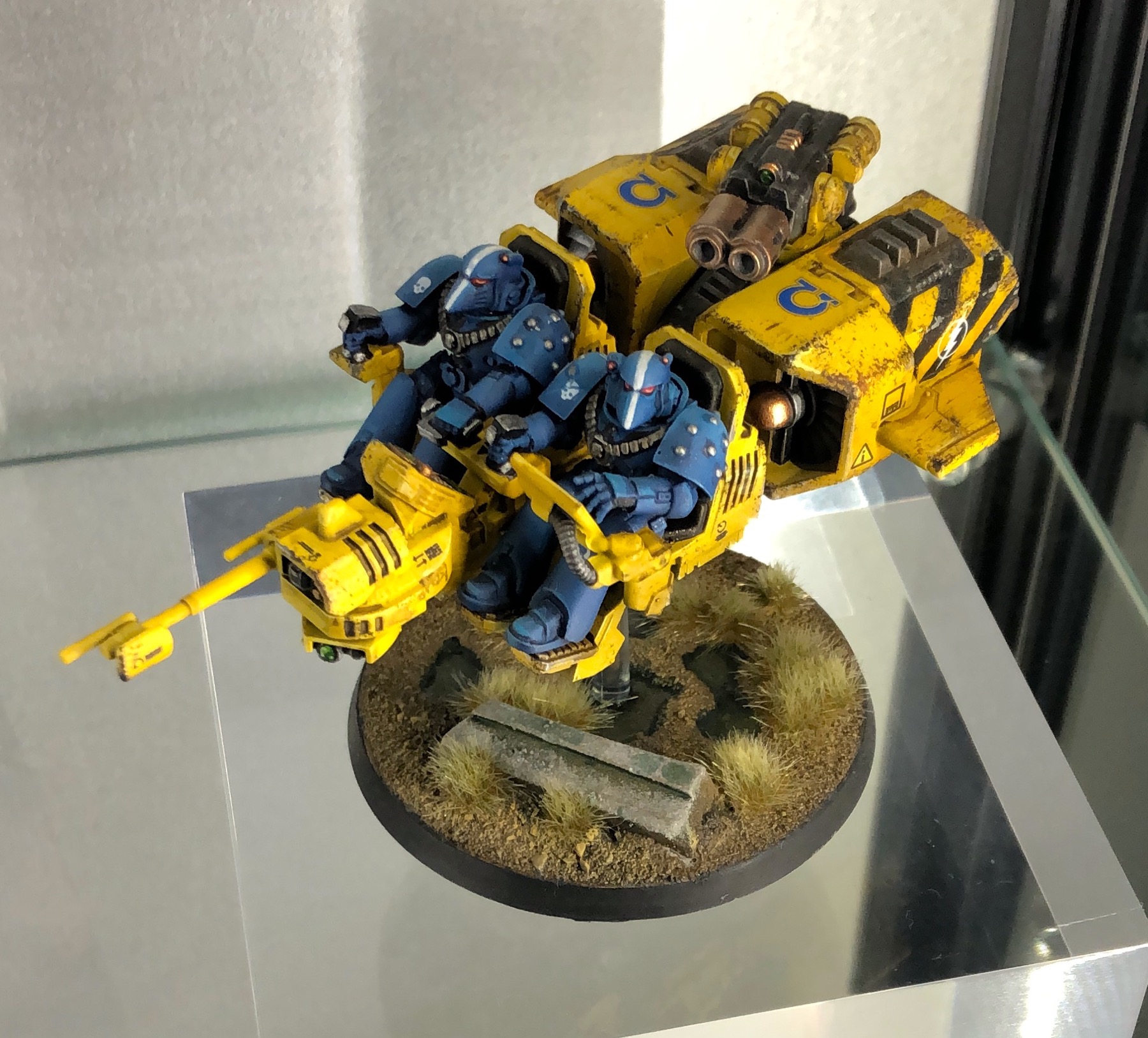
Defending the hive city are Primaris Marines of the 2nd Company of the Ultramarines.

This diorama, at Warhammer World, was created, for the release of the new edition of Warhammer 40000 uses the figures from two Dark Imperium boxed sets (with some additional poxwalkers).

Vickers Medium Mark II*

This is the Vickers Medium Mark II* at the Bovington Tank Museum.

It was the main British tank from 1923 until 1935.

Introduced in 1923 the Vickers Mediums were the first British tanks to see service fitted with a sprung suspension and a rotating turret. Designed to fight on the move, their high speed of 30 mph restored mobility to the battlefield. The hull was riveted. The engine, an air cooled Armstrong Siddeley, was mounted in the front of the tank, alongside the driver. Originally described as a light tank, the advent of even smaller tanks weighing about five tons, resulted in the Vickers’ design being reclassified as a medium tank.

The Medium Mark II was completely obsolete by the beginning of World War II. The survivors were used for training during the first few years of the War. Some were issued to combat forces to make up their strength after the loss of most British first line tanks during the retreat from France in 1940. Others were sent to Egypt as training vehicles and were pressed into service with the Western Desert Force. They were buried as fixed defences at Mersa Matruh and Tobruk.

Vickers sold 15 Medium Tanks to the Soviet Union in 1930, they were used for training. Rather surprisingly, the Finns captured half a dozen of these relics from the Russians in the autumn of 1941. At least one other went to Australia, while a single example of a developed version, the Mark C, was sold to Japan. This vehicle formed the basis of the Japanese Type 89 tank design. A single example of the final version, the Medium Mark D, was sold to Eire where it remained in service until 1940.

These would be the mainstay tanks of any A Very British Civil War scenarios. Difficult to get hold of relevant models though, but you can find 3D printed versions online.

FFI (Forces Françaises de l’Intérieur) Char B1

The French Char B1 is one of my favourite tanks, probably as a result of making that Matchbox plastic kit of the Char B1 and the Renault FT17 when I was young. 

So it was probably a no brainer to get one of these for my French partisan band.

The Char B1 was a specialised break-through vehicle, originally conceived as a self-propelled gun with a 75 mm howitzer in the hull; later a 47 mm gun in a turret was added, to allow it to function also as a Char de Bataille, a “battle tank” fighting enemy armour, equipping the armoured divisions of the Infantry Arm.

Among the most powerfully armed and armoured tanks of its day, the type was very effective in direct confrontations with German armour in 1940 during the Battle of France, but slow speed and high fuel consumption made it ill-adapted to the war of movement then being fought. After the defeat of France, captured Char B1 (bis) would be used by Germany, with some rebuilt as flamethrowers, Munitionspanzer, or mechanised artillery.

What I had discovered in my research about the FFI (Forces Françaises de l’Intérieur) was that they had re-captured many of the German Char B1s and used them against the Germans. 

B1-bis FFI Vercors of 13rd Dragons - La Rochelle, May 1945

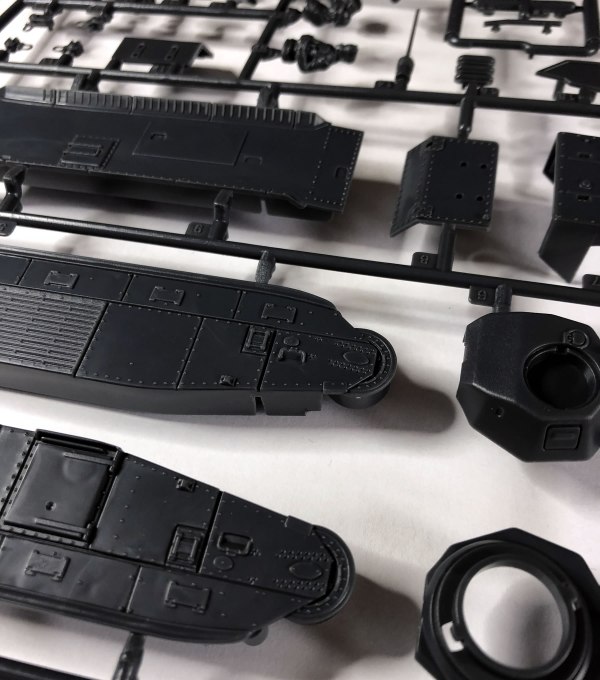
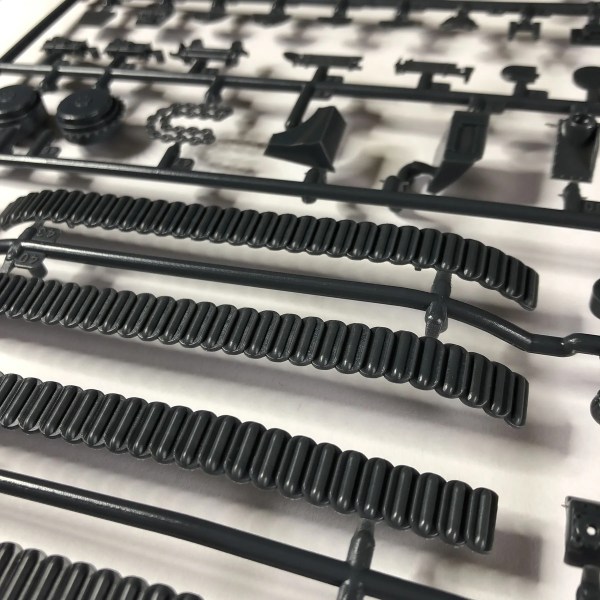
The model is a plastic kit and comes in a nice box complete with decals and instructions.

Bolt Action Char B1 bis

There are two sprues in the box.

The kit does go together relatively easily.

I had a few issues when putting the frontal weapon into place and where the top hull joins the bottom hull.
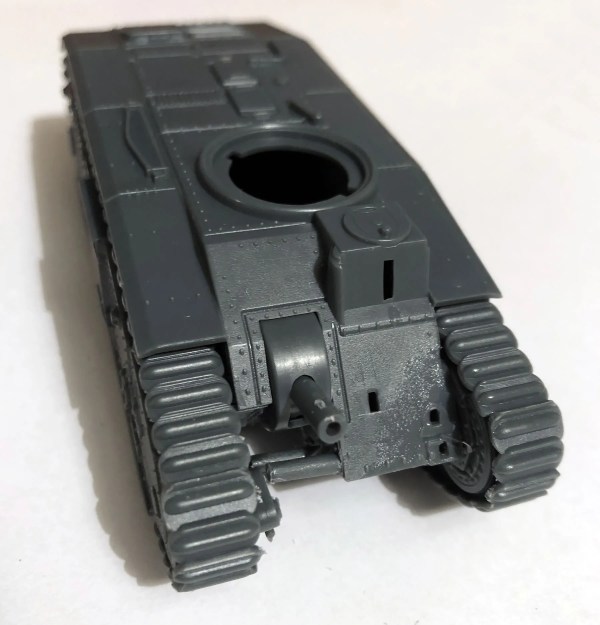
There are quite a few options when it comes to putting it together, if you want an original vanilla French Char B1, a captured German version or, as I am doing a liberated version for use in 1944 and 1945.

See the full workbench feature on the Bolt Action FFI Char B1.

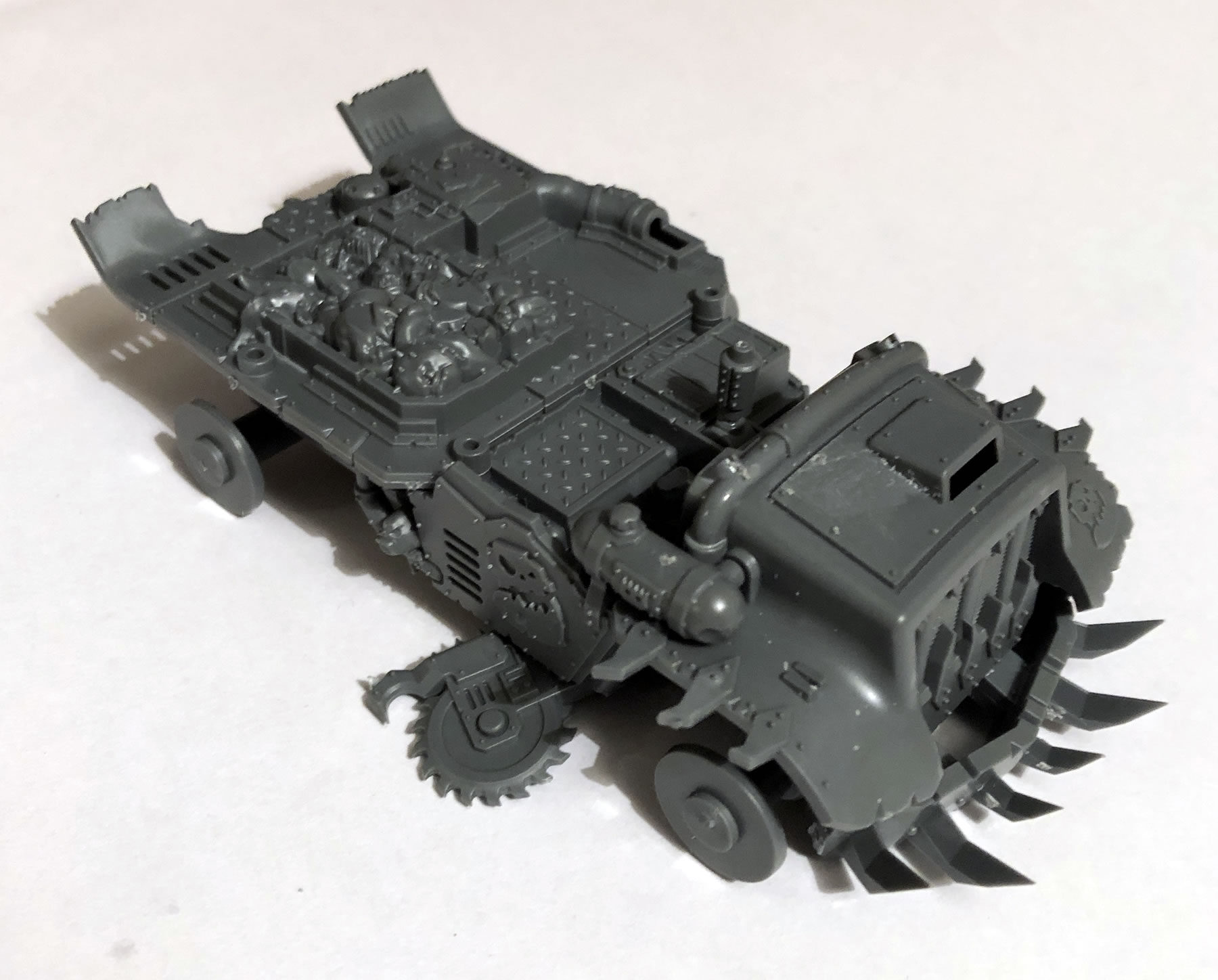
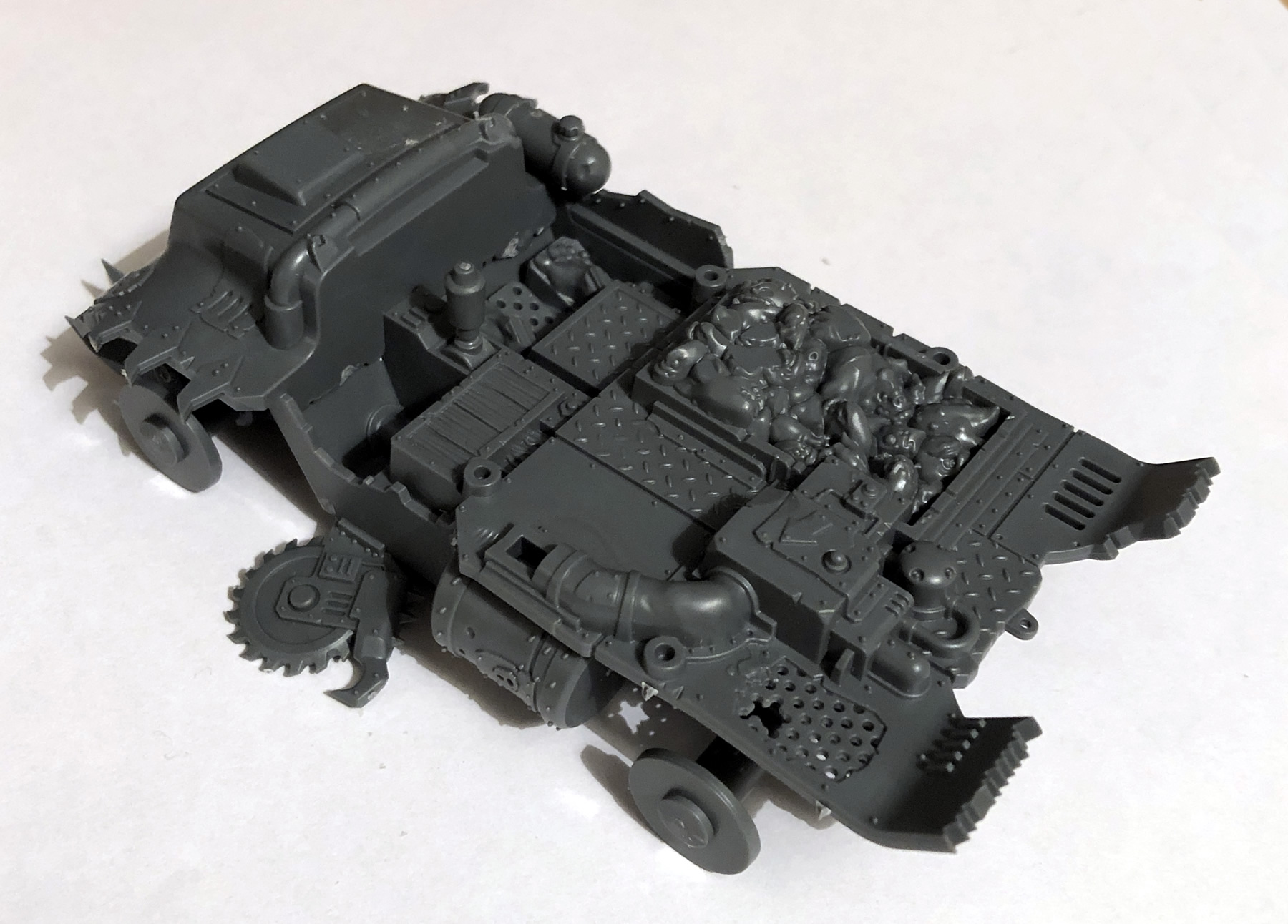
Starting the Rukkatrukk Squigbuggy

The Rukkatrukk Squigbuggy is a type of Ork attack vehicle. The first Rukkatrukk Squigbuggies were invented by enterprising Snakebites in order to feed Speed Freeks on the move. Mobile pens full of edible squigs, the vehicles kept pace with the warband’s Warbikers, buggies and Trukks while their grinning crews hawked their wares at the tops of their lungs.

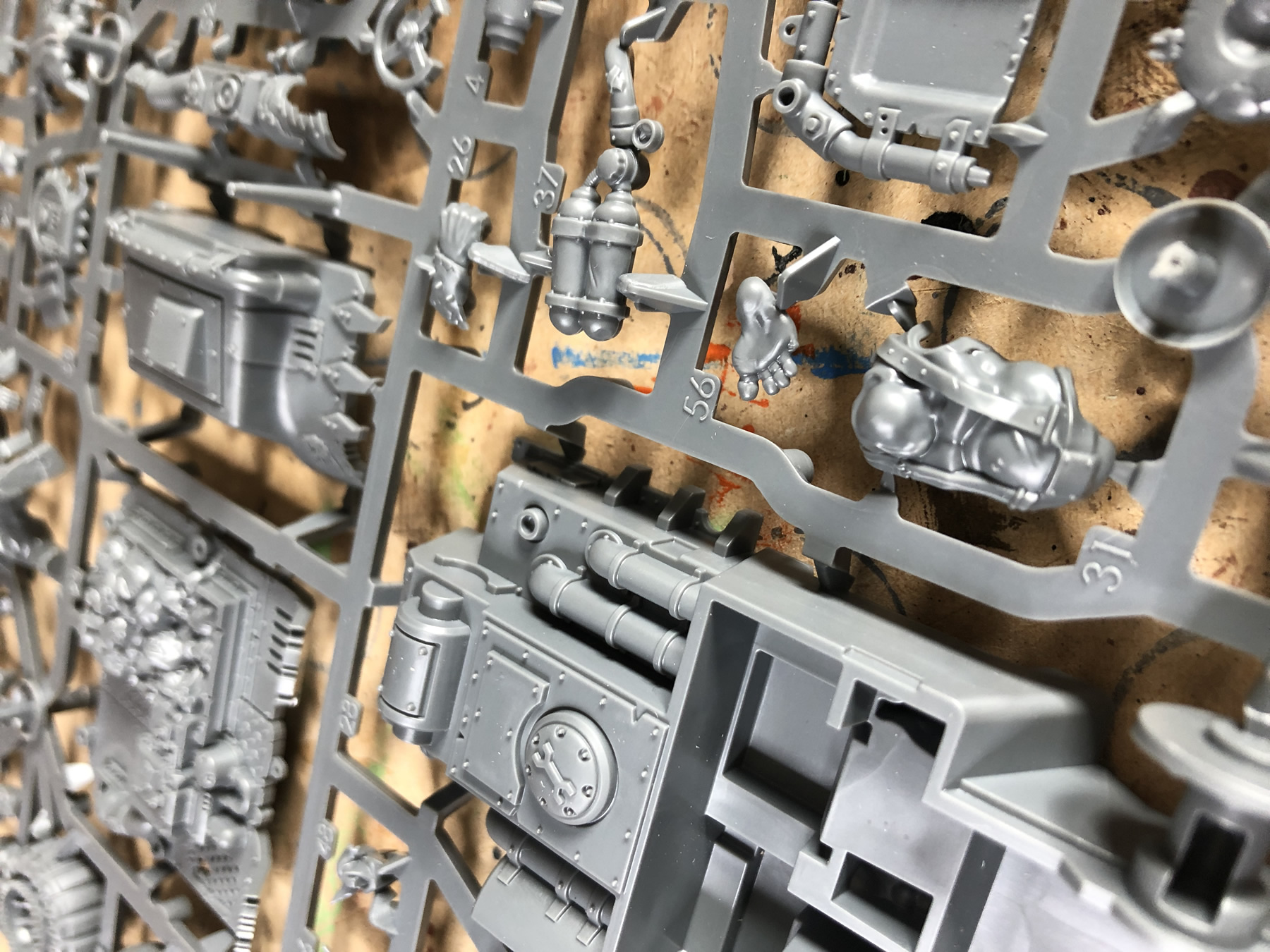
As with most models these days, the kit comes in an A4 sized box.

Rukkatrukk Squigbuggy Box

The entire model comes on a single sprue.

The model goes together quite easily. The instructions are very clear and easy to follow.

However unlike earlier GW models there is less room for variations on the model, so you are quite constrained on how the model is put together.

This means that what you see on the box is what you are going to get. The squigs for example are moulded into the truck, so if you wanted to use the truck as a basis for a different kind of Ork vehicle then you will need to do some serious conversion work to make that work. A lot of the “weaponry” is integrated into the body parts, so you can’t easily omit them from the construction process.

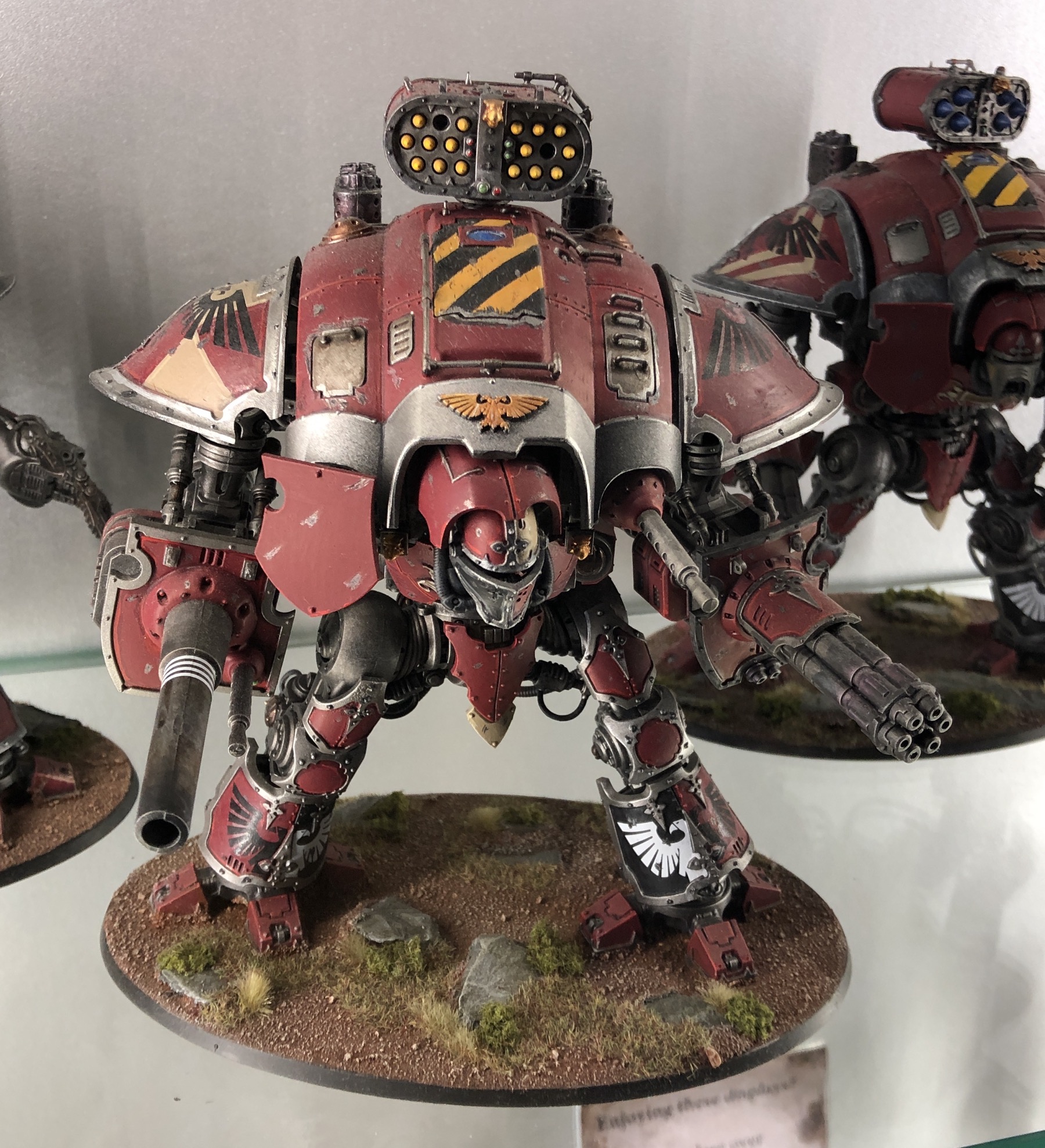
Legio Custodes Telemon Heavy Dreadnought

Legio Custodes Telemon Heavy Dreadnought

Fewer than a handful of Telemon Dreadnoughts are to be found within the ranks of the Legio Custodes, each intended to stand sentinel over its charges no matter the forces brought against it. The honour of interment in one of the few existing Telemon sarcophagi is awarded to only the most celebrated warriors. Rare is the foe who can stand against the array of esoteric, hand-crafted weapons that grace its chassis or the ferocious will and warrior skill of the master Custodian interred within.

Forge World Retro Land Speeder

One of the models I did like at Warhammer World was the Forge World Retro Land Speeder.

Forge World Retro Land Speeder

This is of course based on the classic metal Rogue Trader era Land Speeder model (which was metal, whilst this one is resin). I did have that metal model which came in a boxed set with a Mole Mortar and a Tarantula. My memory of that model was that it was a real pain to put together, I think though as I was using an epoxy glue, that took ages to dry and didn’t really stick. Whereas today I would probably use superglue!