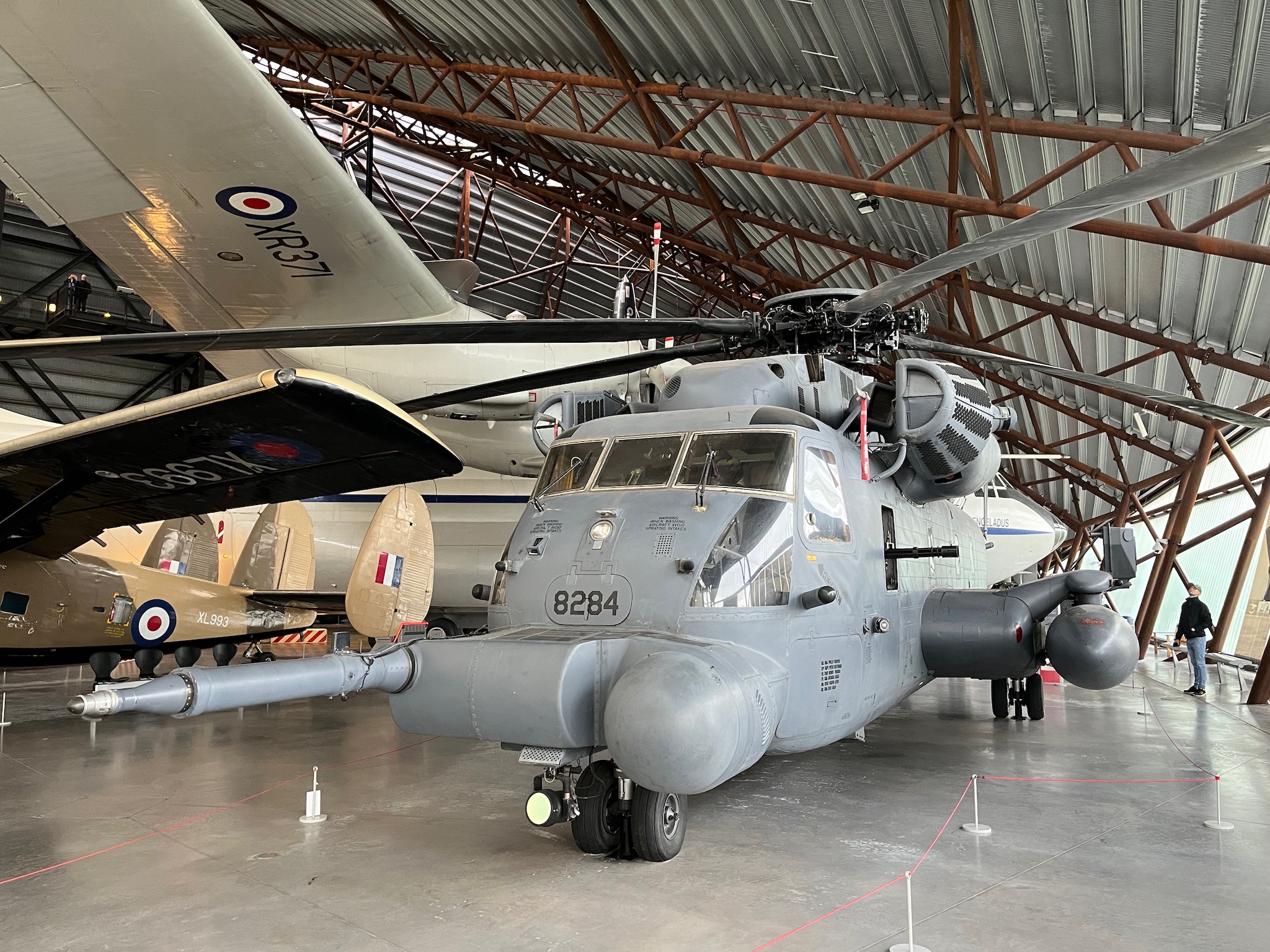
Sikorsky MH-53J Pave Low III

This Sikorsky MH-53J Pave Low III was on display in the Cold War Exhibition at RAF Cosford.
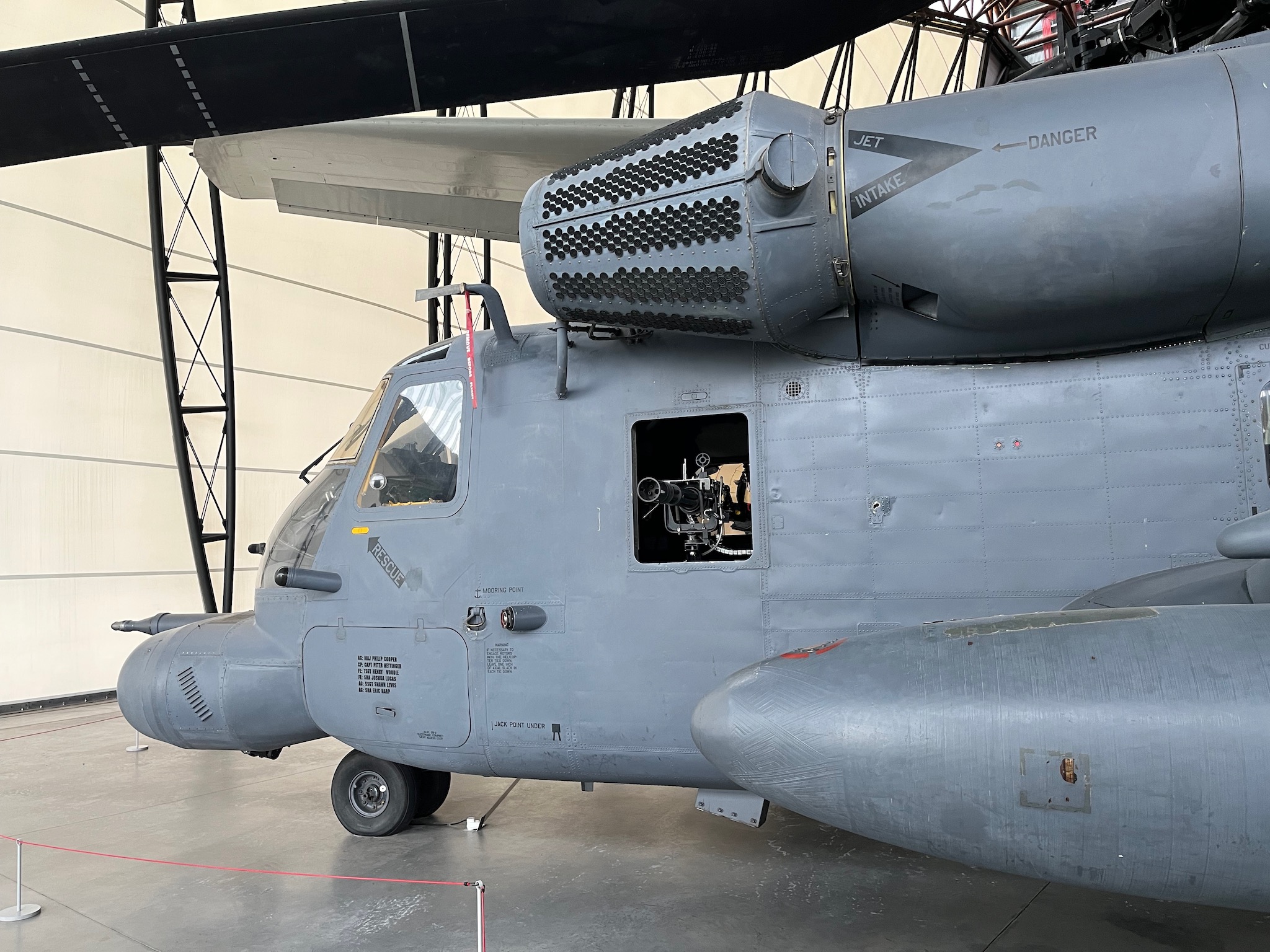
The MH-53J Pave Low III helicopter was the largest, most powerful and technologically advanced transport helicopter in the US Air Force inventory.
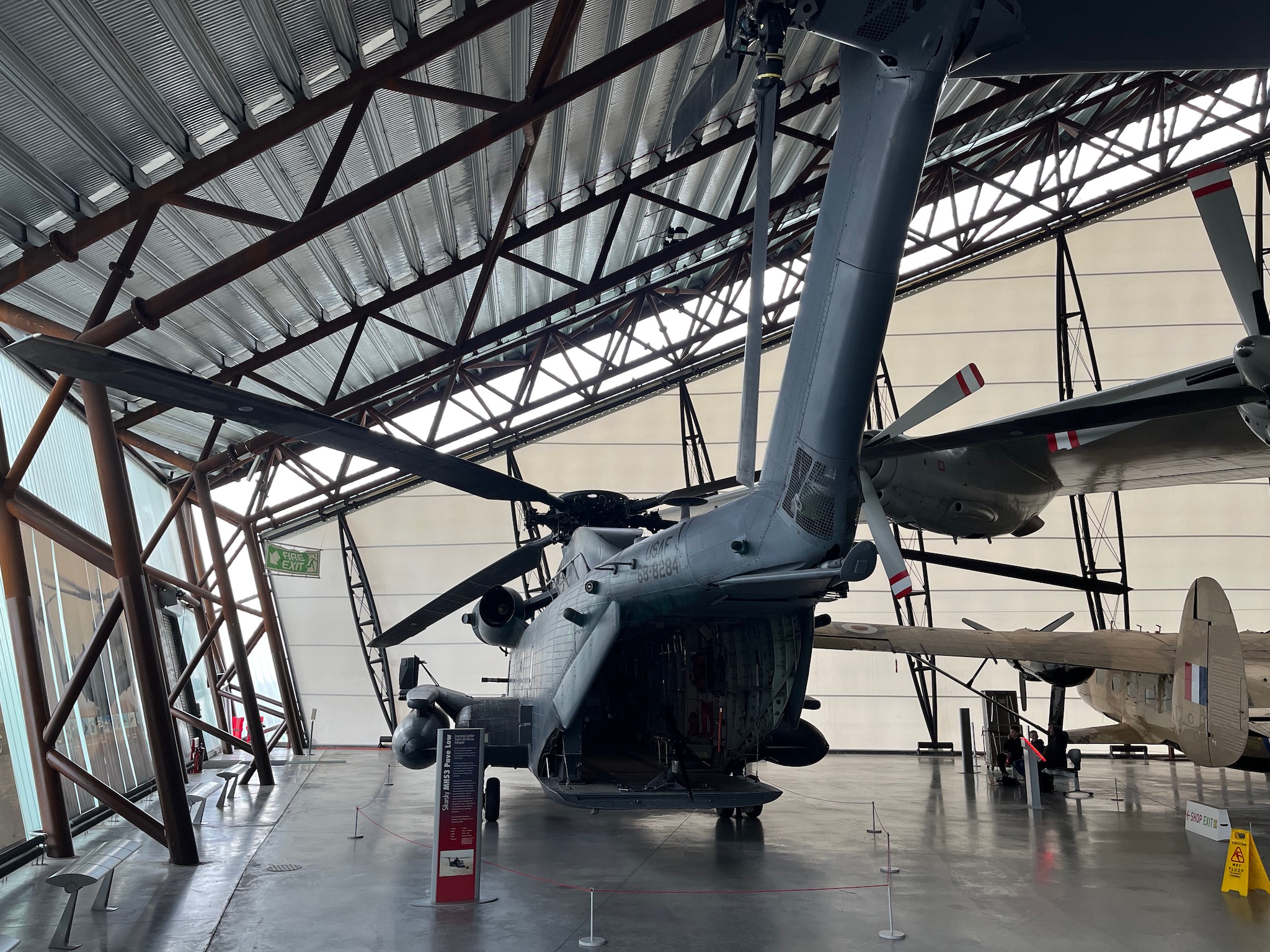
The terrain-following and terrain-avoidance radar, forward looking infrared sensor, inertial navigation system with Global Positioning System, along with a projected map display enable the crew to follow terrain contours and avoid obstacles, making low-level penetration possible.
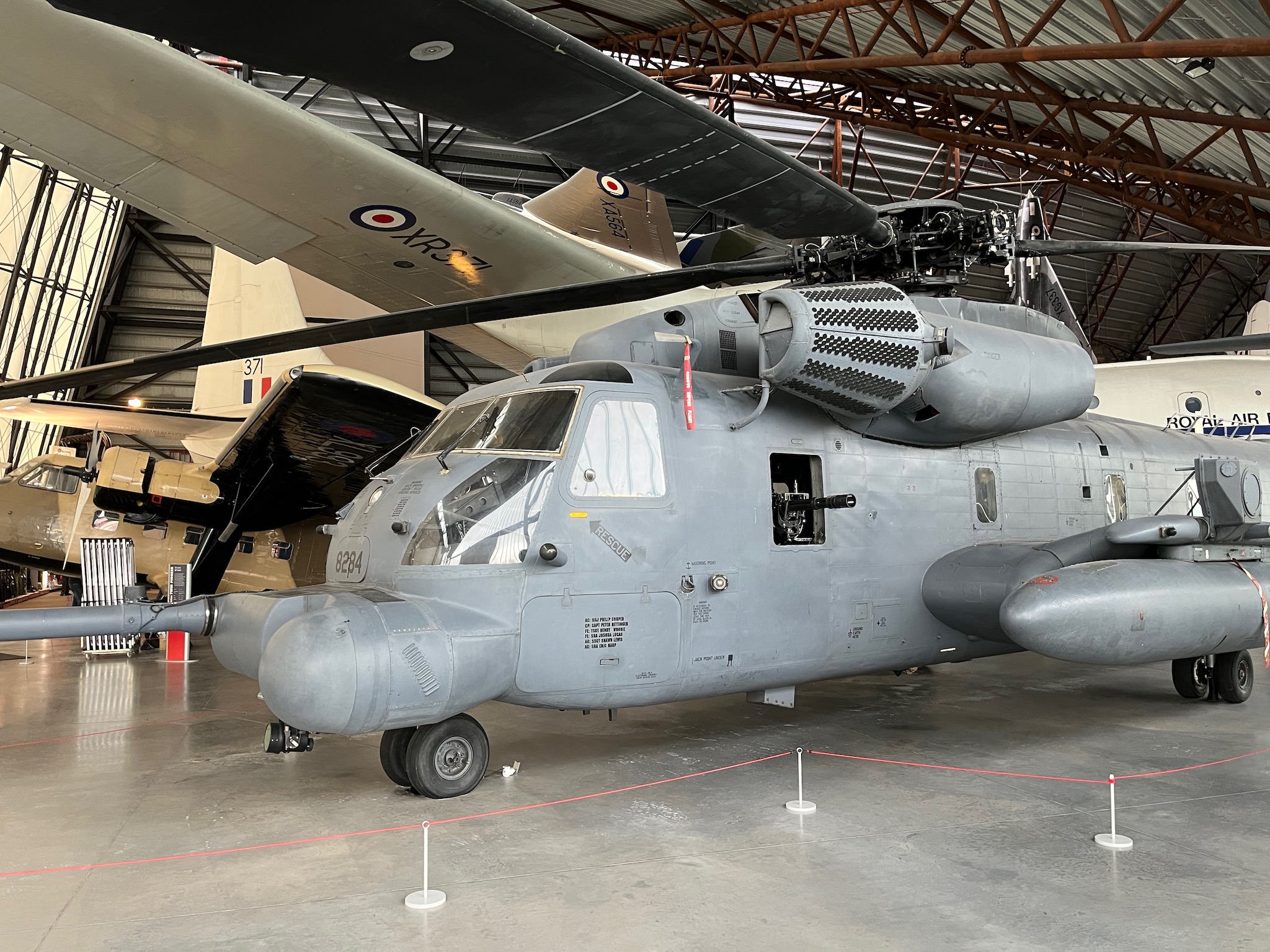
The MH-53J’s main mission was to drop off, supply, and pick up special forces behind enemy lines. It also can engage in combat search and rescue missions.
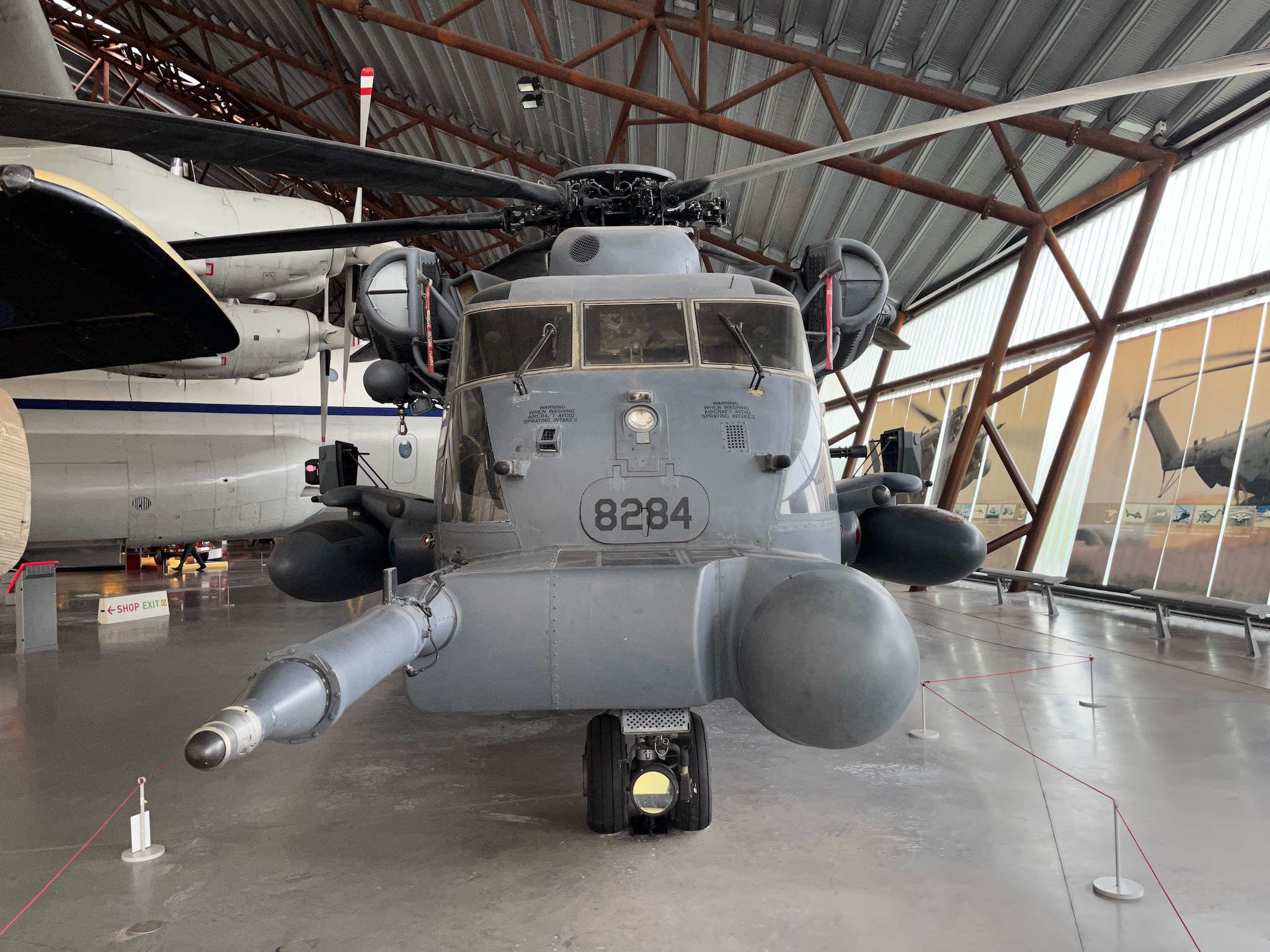
Low-level penetration was made possible by a state-of-the-art terrain following radar, as well as infrared sensors that allow the helicopter to operate in bad weather.
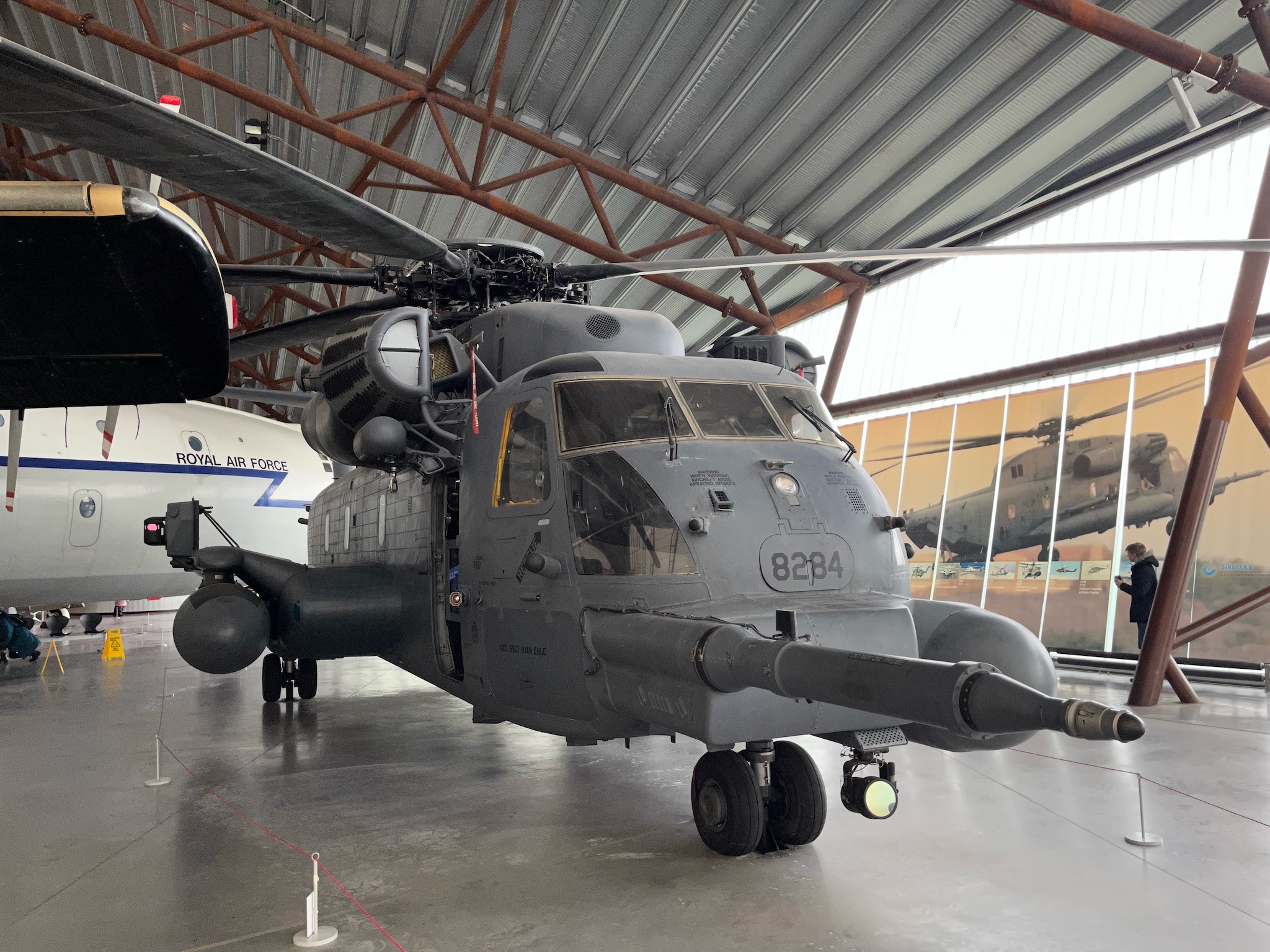
It was equipped with armor plating.
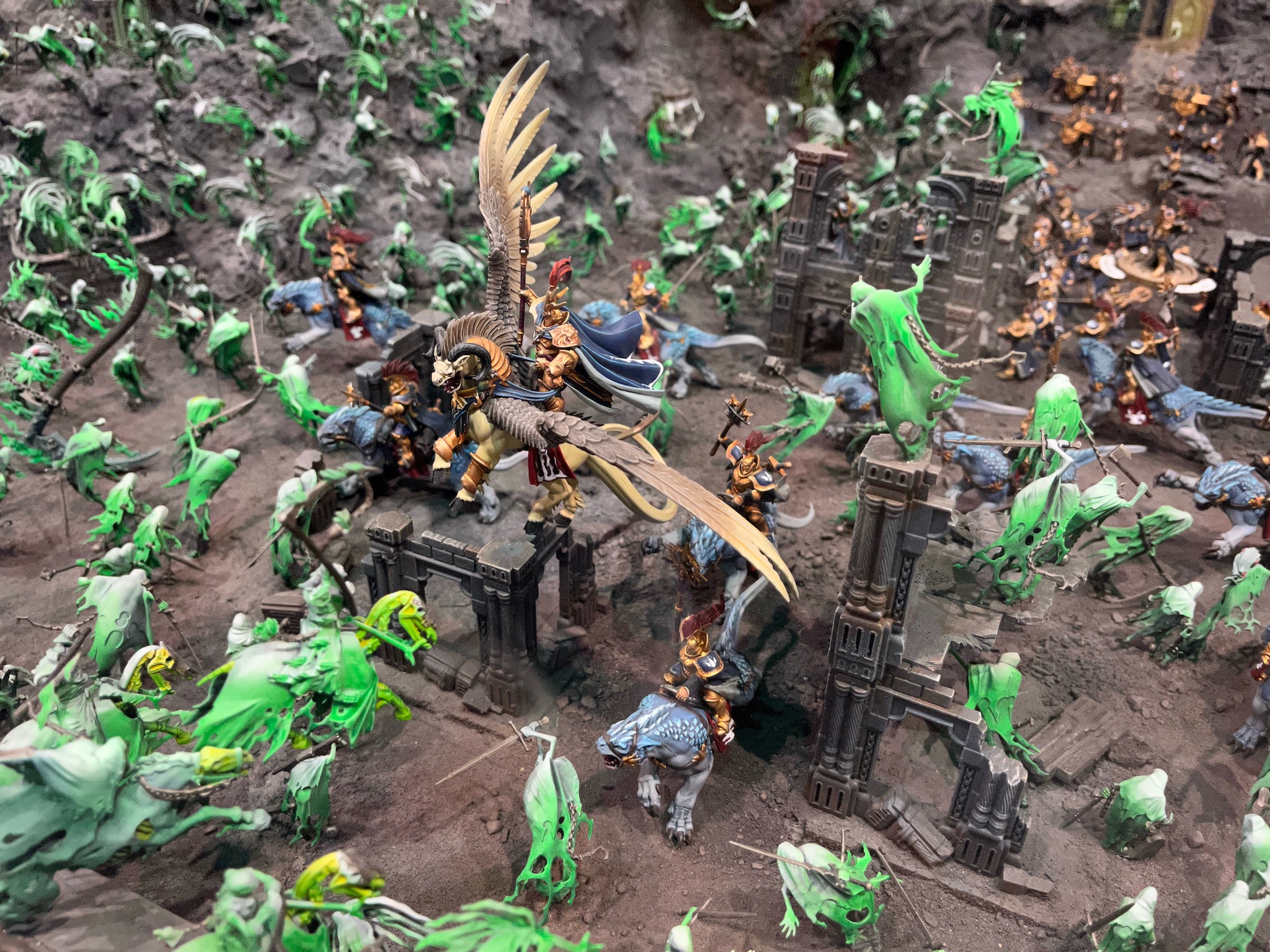
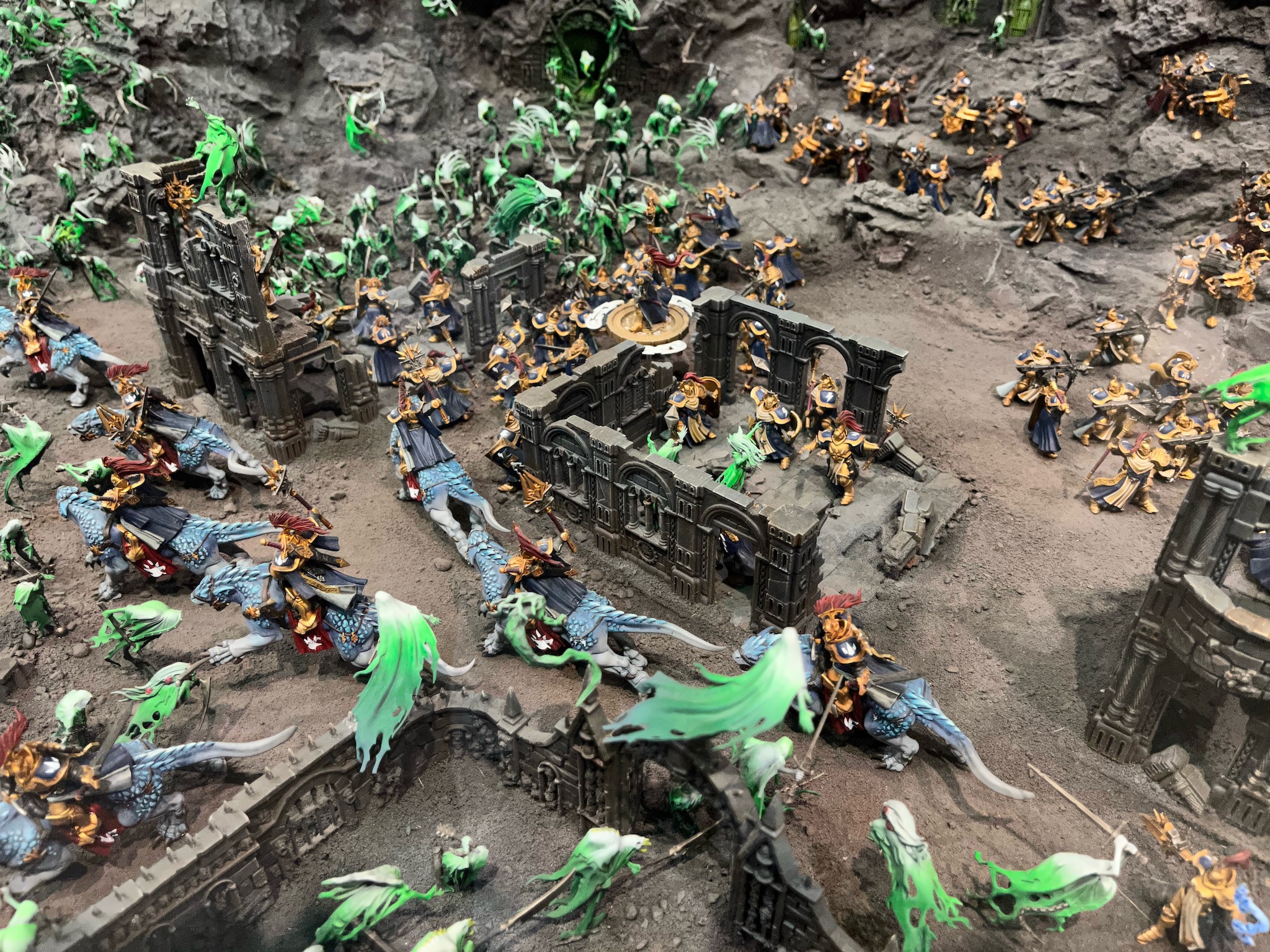
Battle of Signus Prime

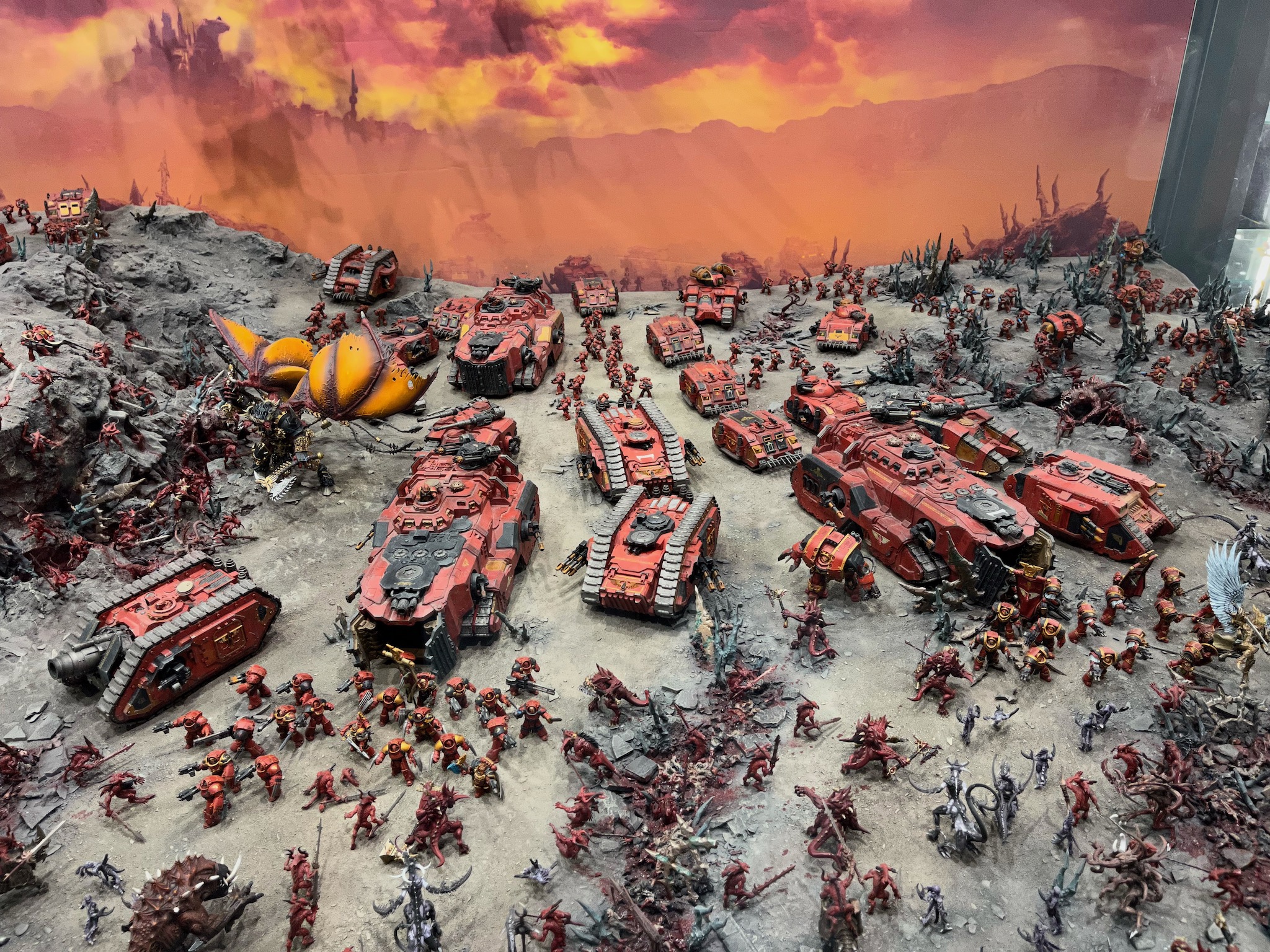
Mastodon Heavy Assault Transports lead the forces into battle.

The Battle of Signus Prime was a diorama at Warhammer World where the Blood Angels Legion are advancing towards the Cathedral of the Mark across the devastated landscape of Signus Prime.

More photographs of the Battle of Signus Prime.

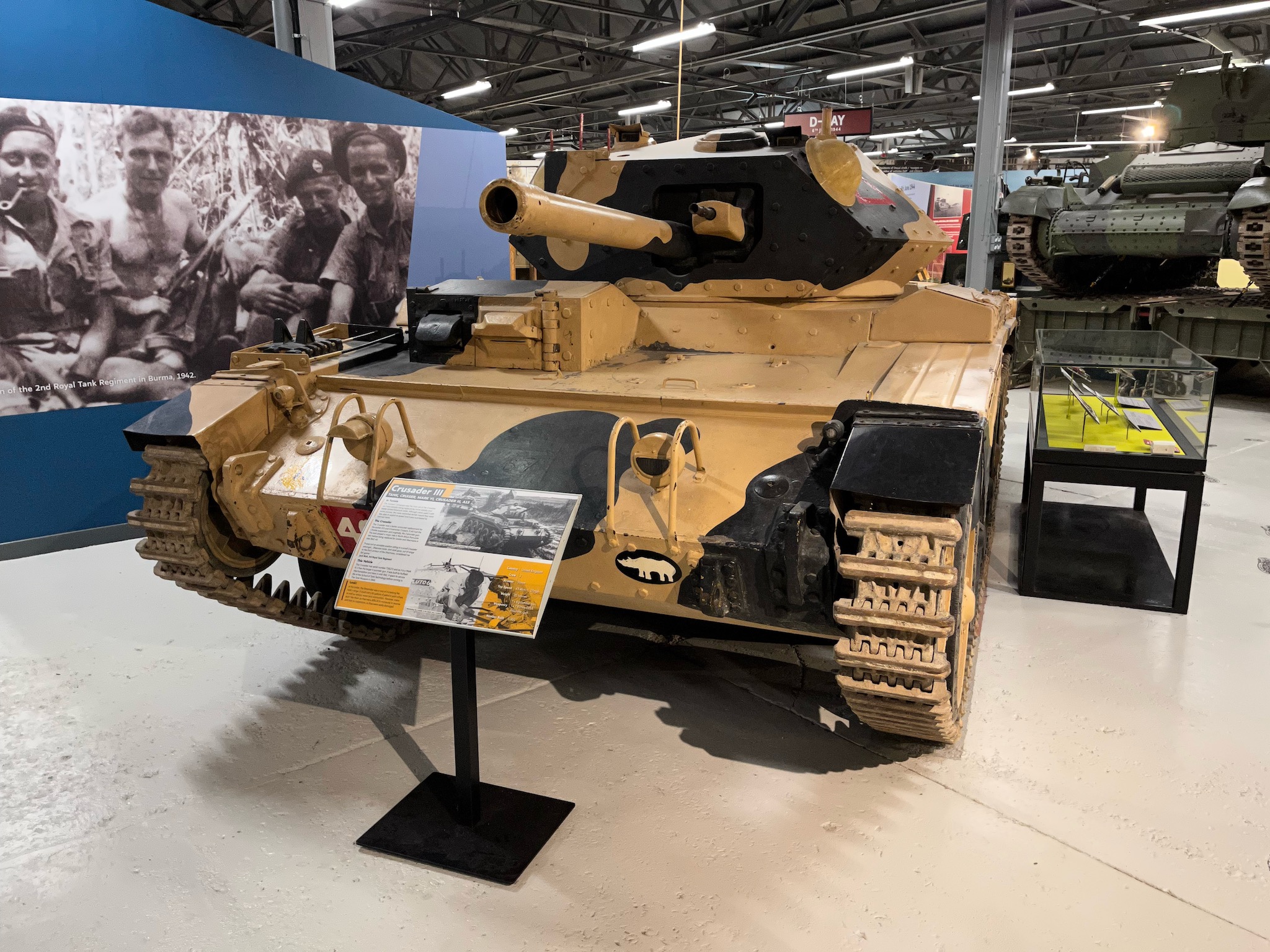
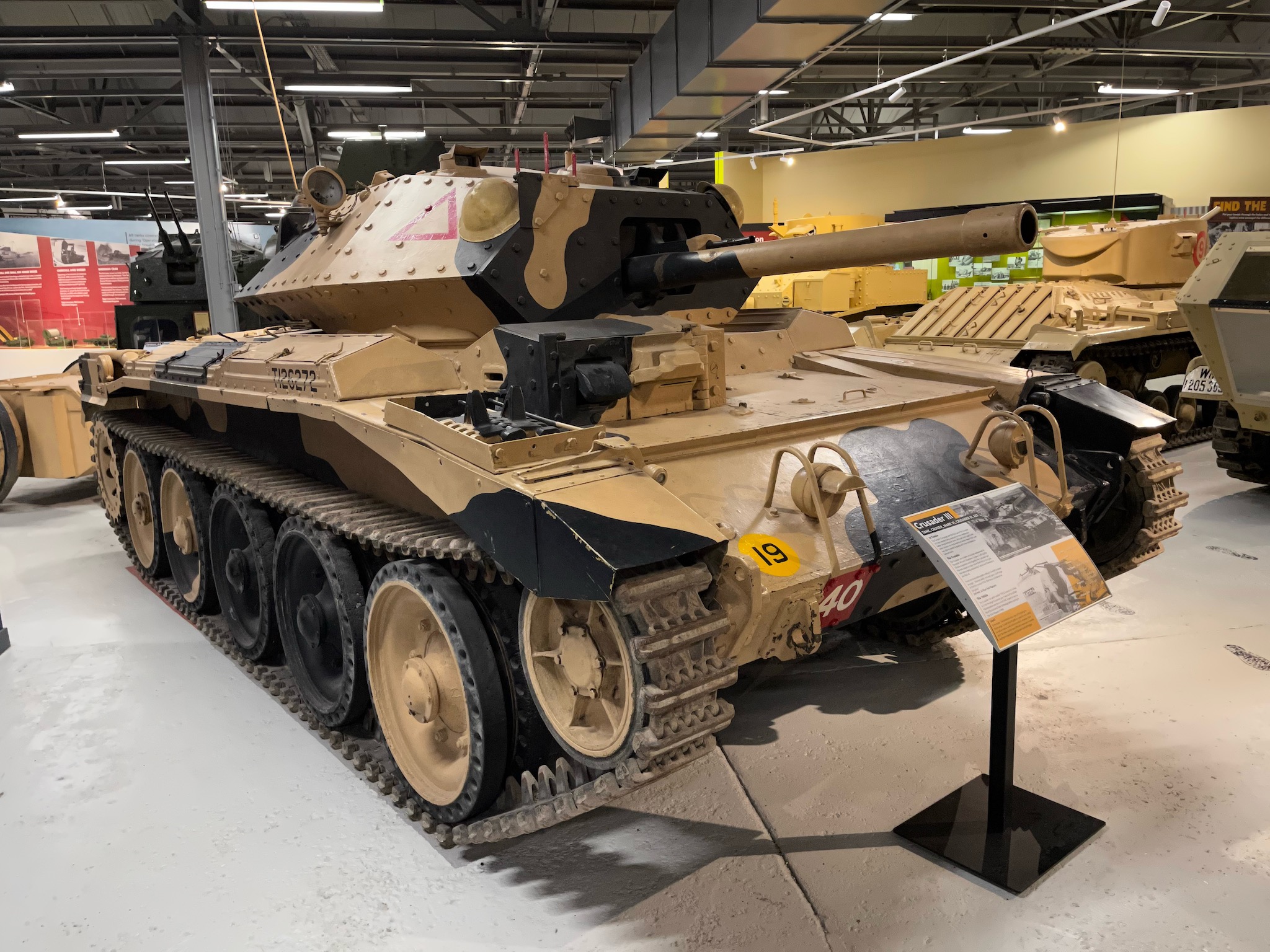
Crusader III Cruiser Tank

The Crusader III cruiser tank was a British tank that was used during World War II. It was the third major variant of the Crusader tank, and it was the most widely produced version. The Crusader III was designed to be a fast and mobile tank that could be used for reconnaissance and flanking attacks. It was armed with a 6-pounder gun, which was a powerful weapon for its time.

This Crusader III was on display at the Tank Museum.

The Crusader III first saw action in the Second Battle of El Alamein in October 1942. It performed well in this battle, and it helped the British to defeat the Axis forces. The Crusader III continued to be used in North Africa, Italy, and the Far East. It was also used by the Free French Forces and the Polish Army.

The Crusader III had a number of advantages. It was fast and maneuverable, and it had a good gun. It was also relatively reliable, and it was easy to maintain. However, the Crusader III also had a number of disadvantages. It had thin armor, and it was vulnerable to enemy fire. It also had a cramped interior, and it was not very comfortable for the crew.

Overall, the Crusader III was a good tank for its time. It was fast, maneuverable, and armed with a powerful gun. However, it was also vulnerable to enemy fire, and it had a cramped interior. The Crusader III was replaced by the Cromwell tank in 1944, but it continued to be used until the end of the war.

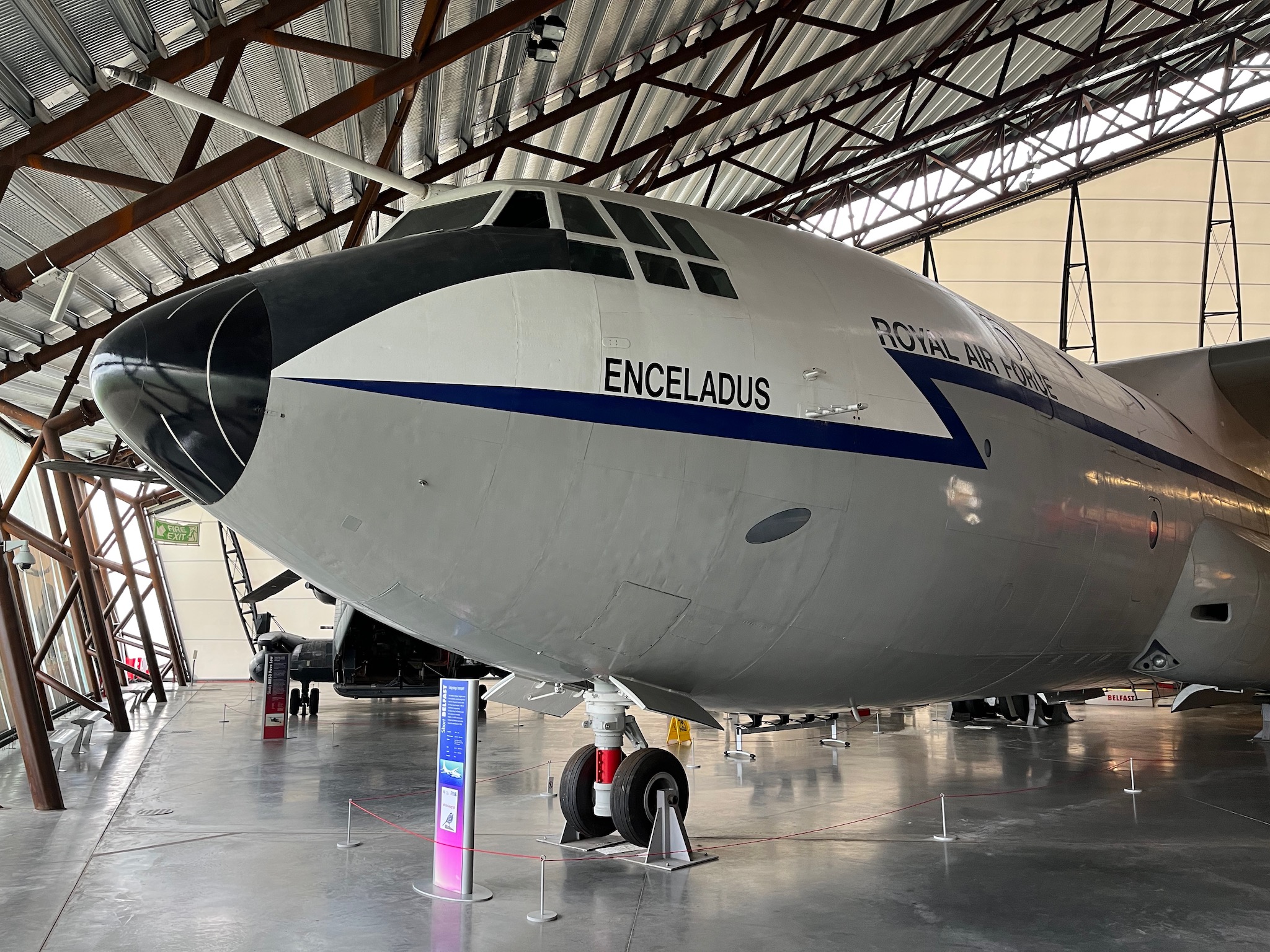
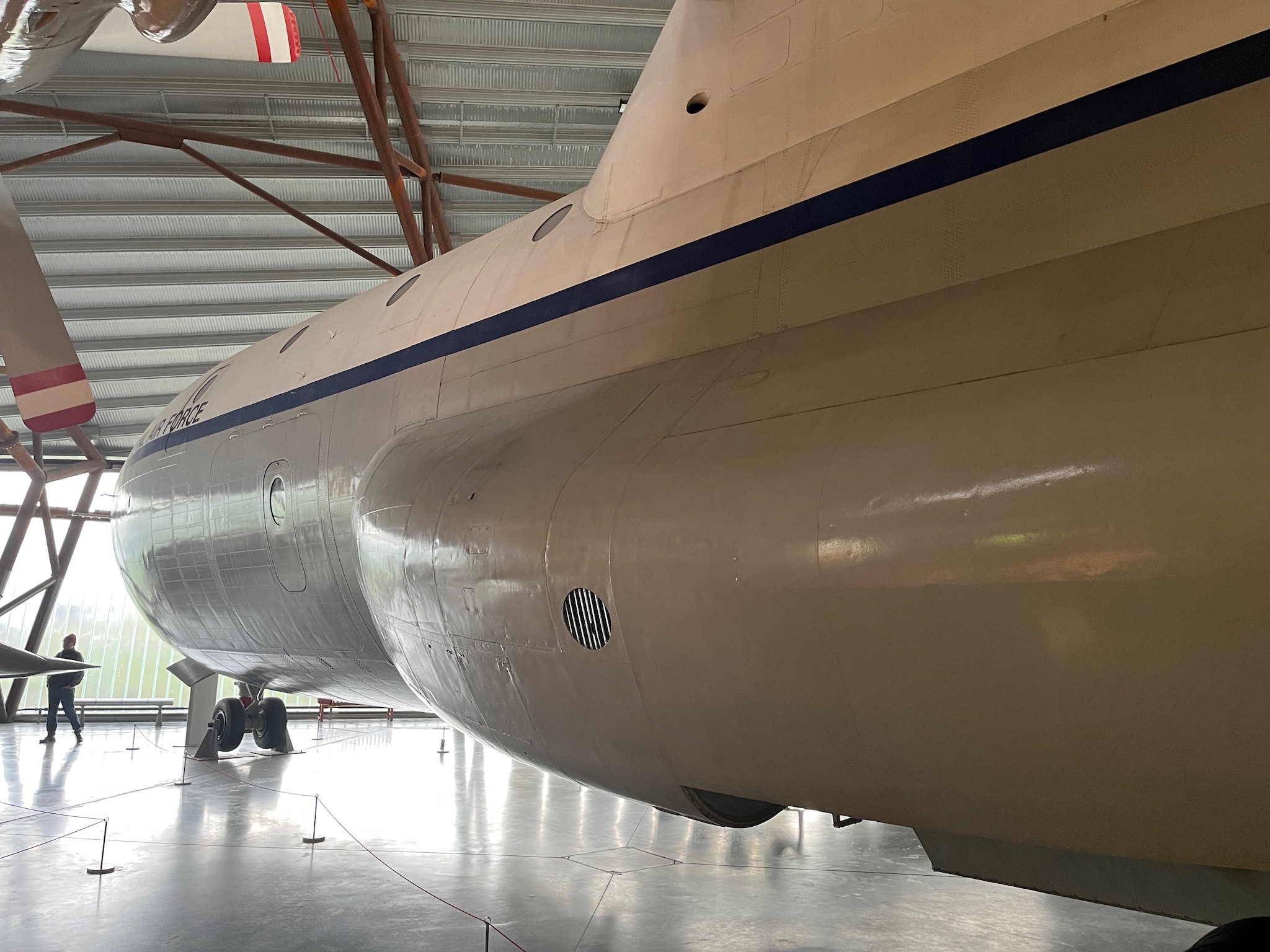
Short Belfast

The Short Belfast is a heavy lift turboprop freighter that was built by British manufacturer Short Brothers at Belfast. Only 10 aircraft were constructed, all of which entered service with the Royal Air Force.

There are two left, one in Cairns Australia and the other at RAF Cosford.

Upon its entry into service, the Belfast held the distinction of becoming the largest aircraft that the British military had ever operated up to that time.

Orruk Megaboss on Maw-krusha

This Orruk Megaboss on Maw-krusha was on display at Warhammer World.

Orruk Megabosses are pretty killy – it’s how they become as huge as they do, all that stompin’ causes them to grow and grow and grow until the power of the Waaagh! flows through them. But for some Megabosses, this isn’t enough! These particularly angry orruks seek out and subdue enormous Maw-krushas (often by yelling really, really loudly at them) – ill-tempered and powerful creatures who enjoy smashing stuff up almost as much as the orruks themselves. This uneasy pairing never really gets along especially well, and the Megaboss needs to constantly remind his Maw-krusha who’s in charge with the liberal application of an iron boot to the back of the head. Despite this, almost nothing on the battlefield can withstand their noisy rampage, and the immense number of kills they rack up inspires nearby orruks to fight ever harder.

When this came out I did think it would be a great model for my Feral Ork army. However as most things, it is still an idea and nowhere near getting anywhere close to the workbench. I would have to buy the model in the first place and there is already too many things on my workbench and on my wish list. I will still think about it though.

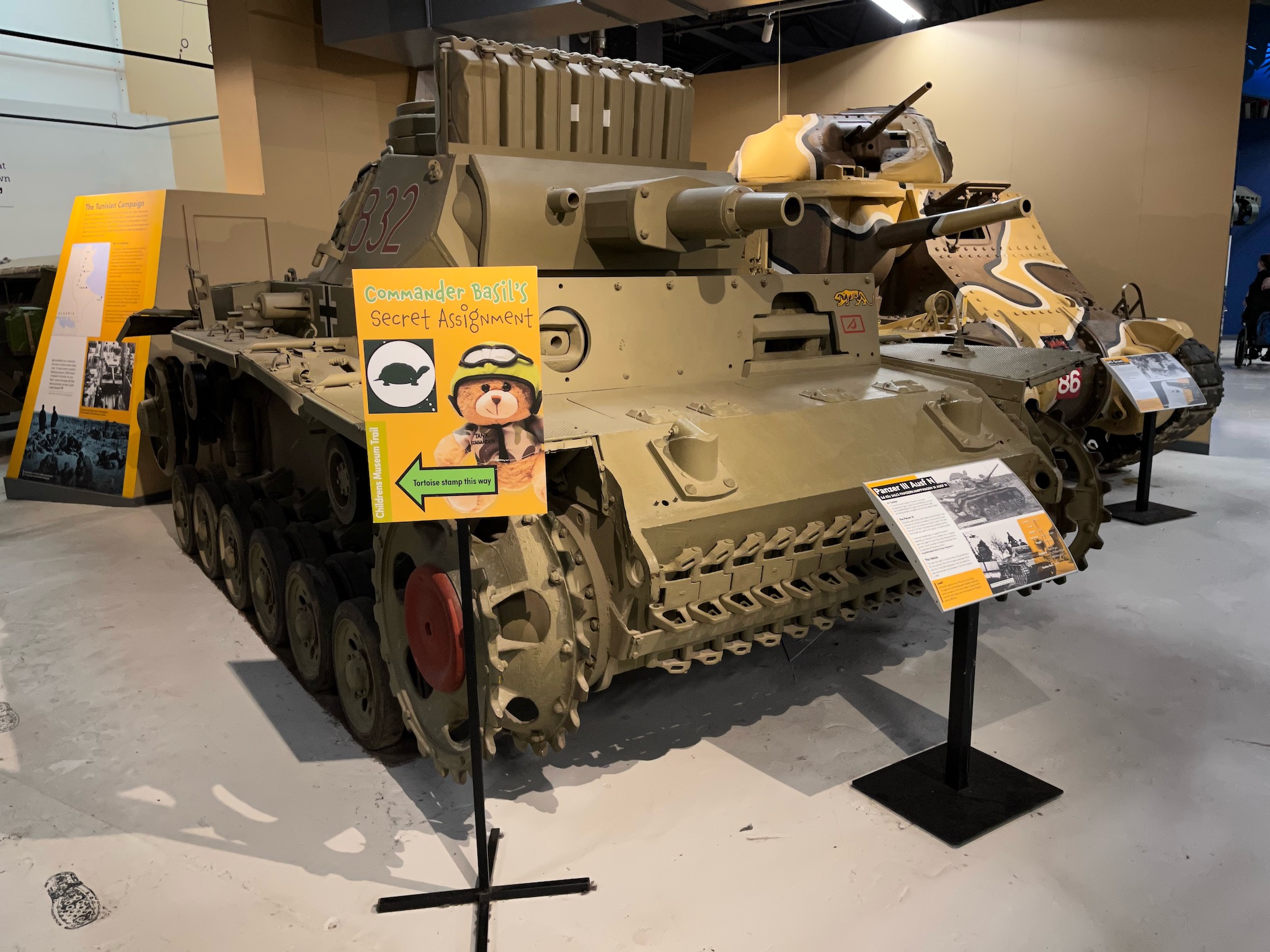
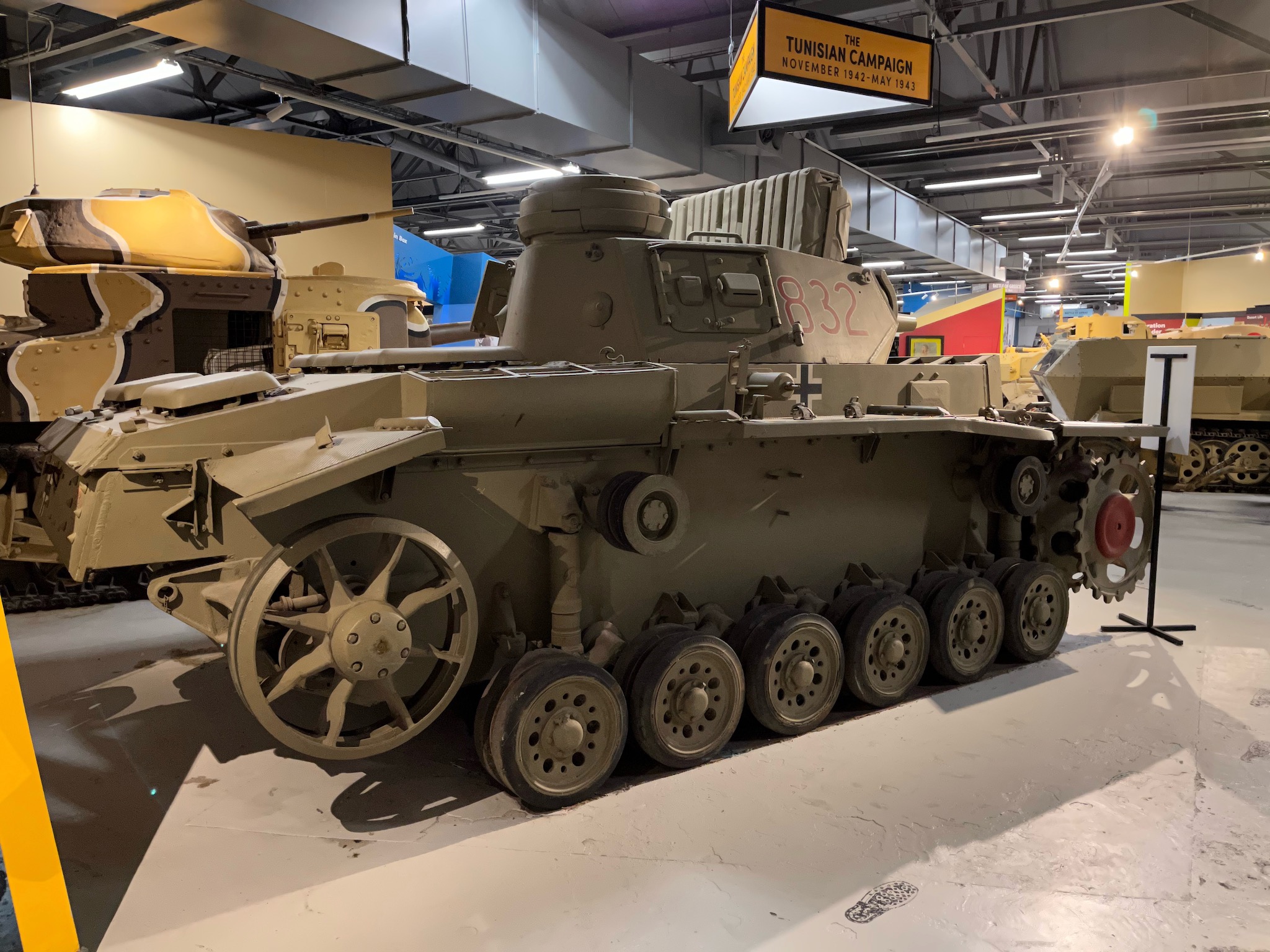
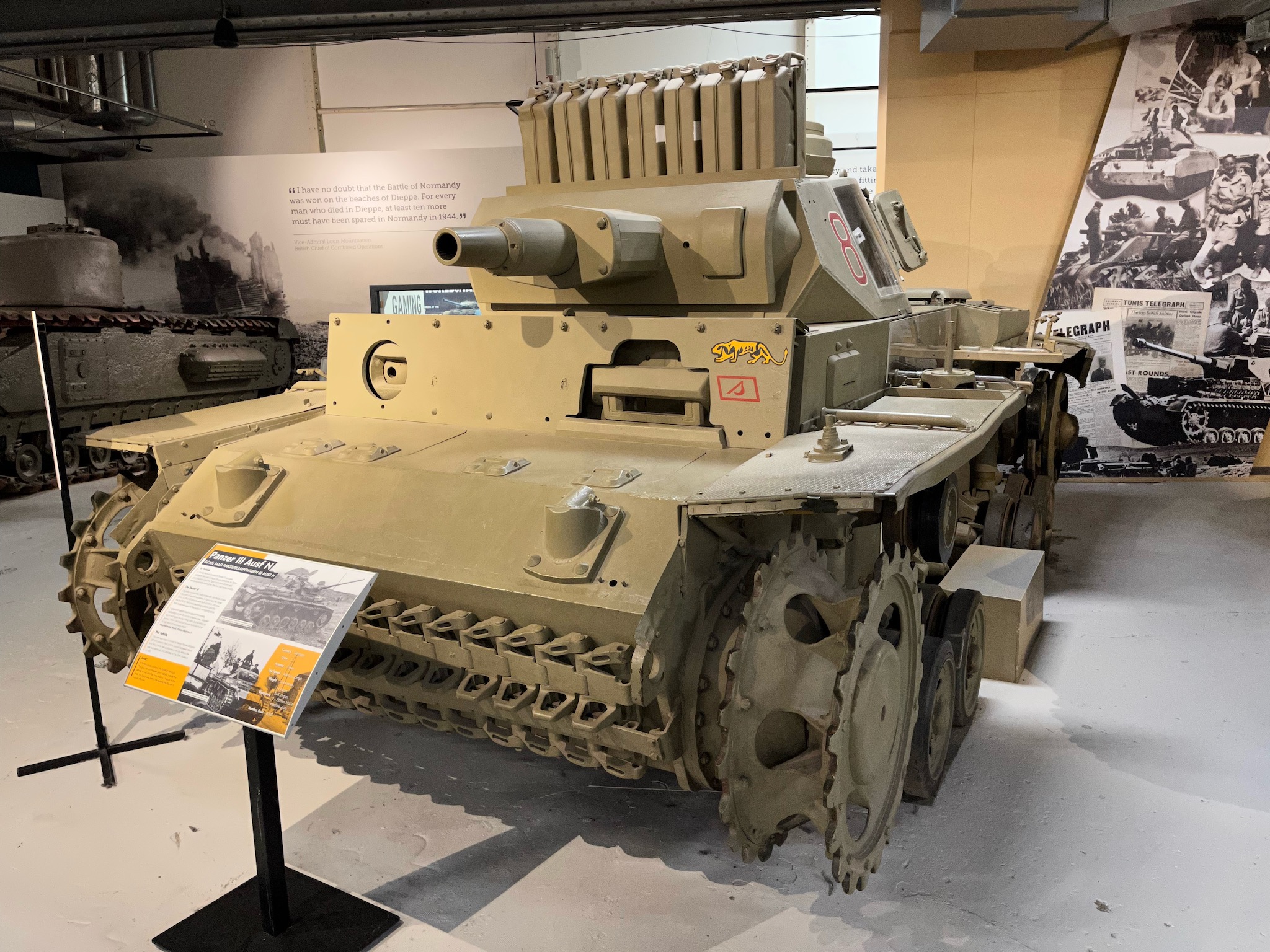
Panzer III Ausf. N

The Panzerkampfwagen III, commonly known as the Panzer III, was a medium tank developed in the 1930s by Germany, and was used extensively in World War II. The Panzer III Ausf. N was an infantry support tank, armed with a short-barrelled 7.5 cm KwK 37 L/24 gun. 700 were produced or re-equipped from 1942 and 1943.

This Panzer III Ausf. N is on display at the Tank Museum.

The tank is based on a chassis ordered as a Panzer III Ausf. L. It was issued to a Tiger I heavy tank battalion, the 501st Schwere Panzer Abteilung and shipped to Bizerta in Tunisia in January 1943. The 501st Abteilung was absorbed into the 10th Panzer Division as the 3rd Abteilung of Panzer Regiment 7 on 26 February 1943.

This tank, which was part of 8. Kompanie, Panzer Regiment 7, had tactical number 832 painted on its turret. It was abandoned at Kzar Mezouar, during Operation Ochsenkopf, also known as the battle of the Hunt’s Gap, in late February, 1943. It was then shipped to the United Kingdom for evaluation and later sectioned to show its interior.

The Panzer III Ausf. L at Bovington.

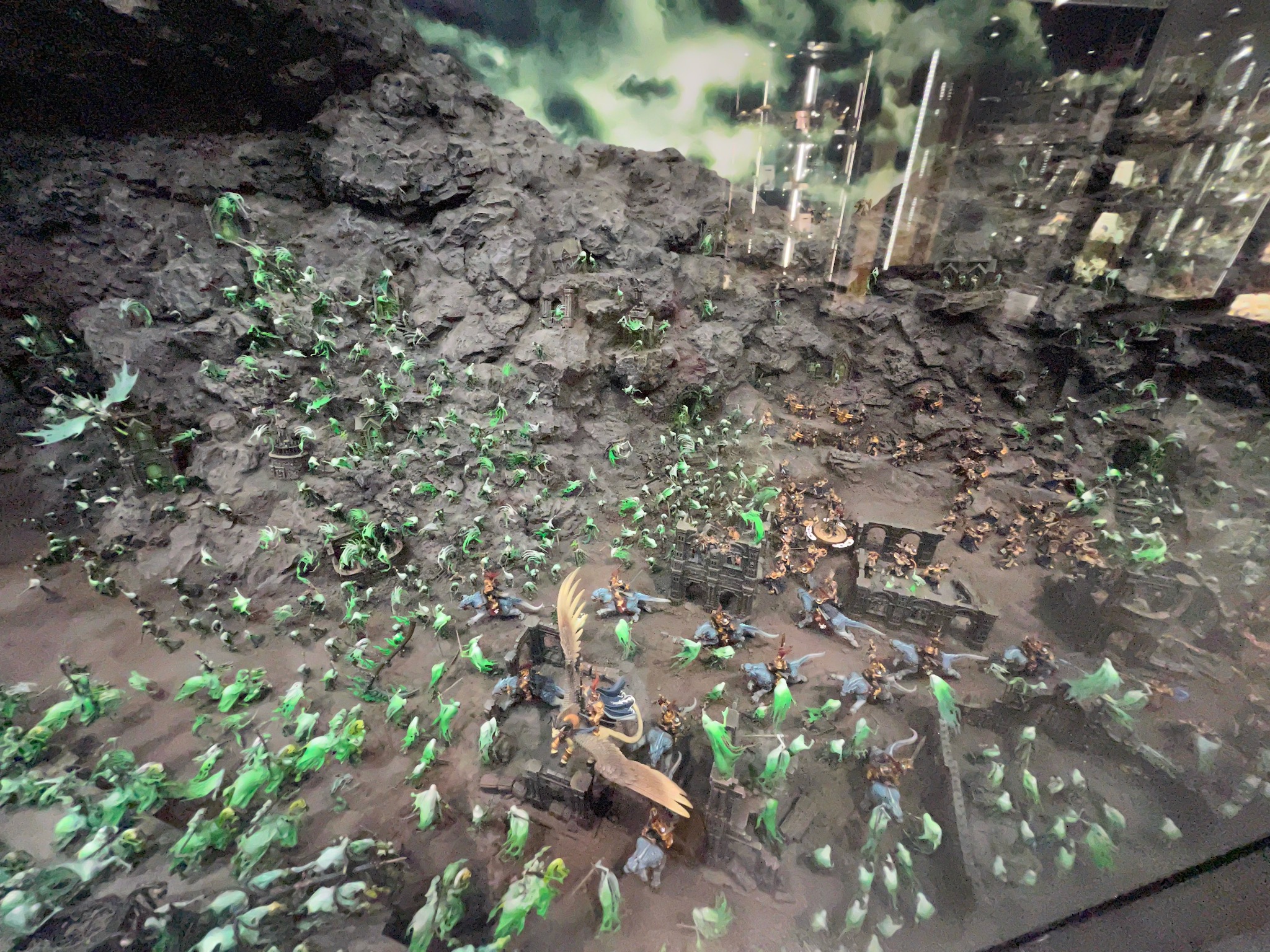
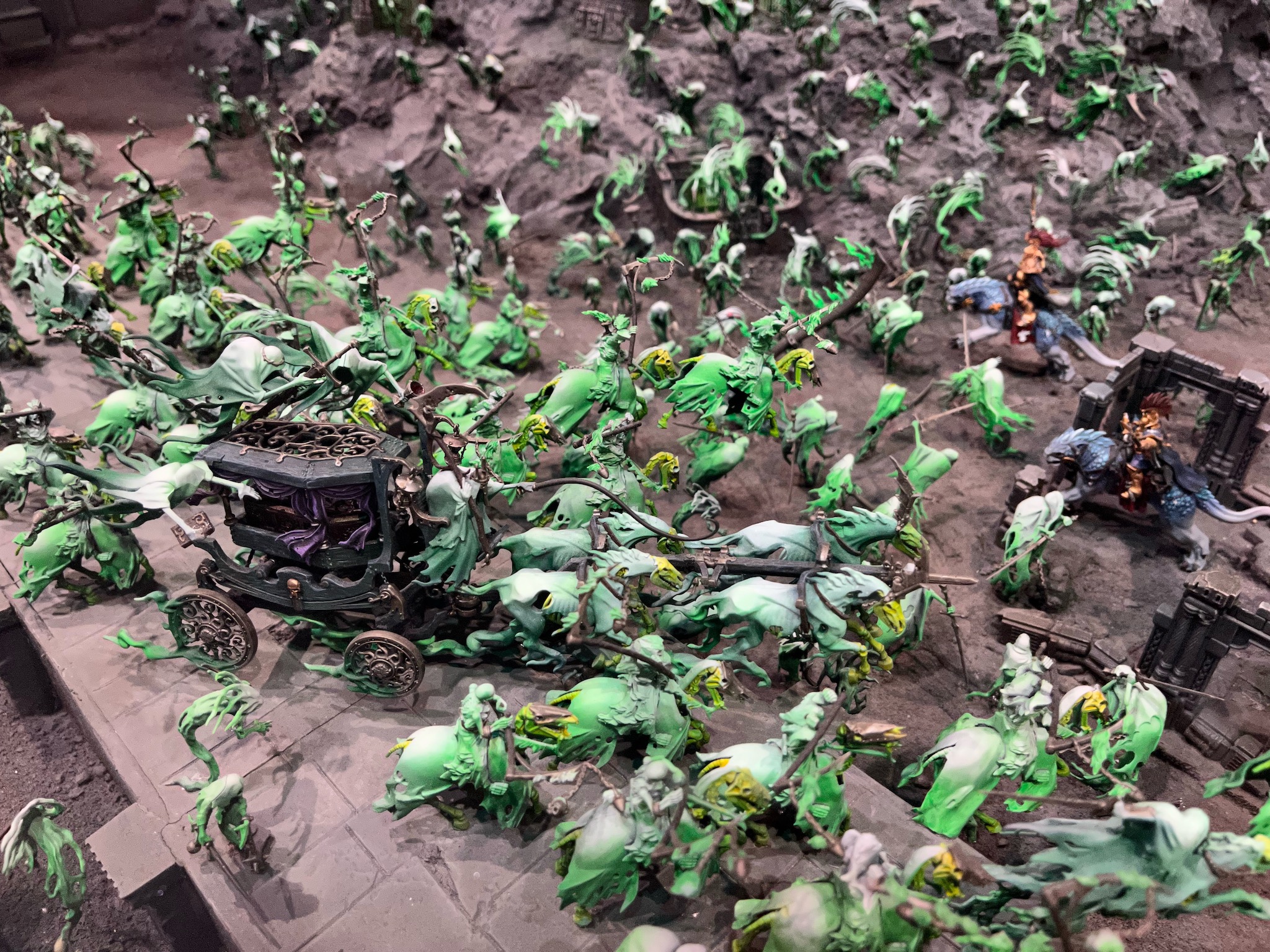
The Gates Of Sharrowmourne

On my most recent visit to Warhammer World I took some more photographs of The Gates Of Sharrowmourne diorama.

In the wake of the Shyish Necroquake the ghostly processions of Lady Olynder, Mortarch of Grief, laid siege to great swathes of the Mortal Realms. Yet beleaguered as the armies of the God-King were, they did not weather this onslaught without answer. At the mausoleum-fortress of Sharrowmourne, in the heart of Lady Olynder?s domain, Lord-Arcanum Aventis Firestrike led a daring assault alongside the elite warriors of his Sacrosanct Chamber.

Bandvagn 202

Bandvagn 202 (Bv 202) is an amphibious oversnow tracked articulated, all-terrain vehicle developed by Bolinder-Munktell, a subsidiary of Volvo, for the Swedish Army in the early 1960’s. The Bv 202 carries a driver and a commander in the front unit and up to 8 troops or 800 kg in the trailer unit. It can be adapted for other applications.

This Bv 202 was on display at RAF Cosford.

Bandvagn 202

Once the British Army took over its NATO role of Northern Flank defence of Norway it selected this fully-tracked and articulated Swedish vehicle for its over-snow performance. 

Bandvagn 202

Since its introduction into British service in the late 1960s it became an indispensable maid-of-all work load carrier.

Bandvagn 202

The Bv 202 was replaced by the Bv 206 and this was then replaced by the BvS10 or as it is known by UK forces, Viking.

Alarielle the Everqueen

Alarielle the Everqueen

Reborn from the land she loved in a soaring crescendo of hope, fury, loss and exhilaration, Alarielle the Everqueen is an ancient and powerful being.

She is the goddess of life magic; where she treads, atop her immense wardroth beetle, new blooms scream forth in a riot of colour, strength and passion.

She scatters soul amphorae across the Mortal Realms, each containing magical pollens that can coax new sylvaneth from the ground, or choke her enemies.

The only match for the courage she instils in her allies is the hatred she feels for her foes – Alarielle the Everqueen burns with a fierce need for vengeance, and her enemies would do well to run.