Flintloque Orc Dragoons

These are a couple of my Flintloque Orc Dragoons that I painted back in the 1990s.

It was my first real success at painting red. I found that red wouldn’t cover the black undecoat, what I did differently this time was to use a dark brown basecoat before painting the red. After this I would often use a different coloured basecoat to get good coverage.

I have to admit I now quite like using the (defunct) Citadel Foundation paints. Interested to try out the new Base paints that Games Workshop recently released to see how they work when painting.
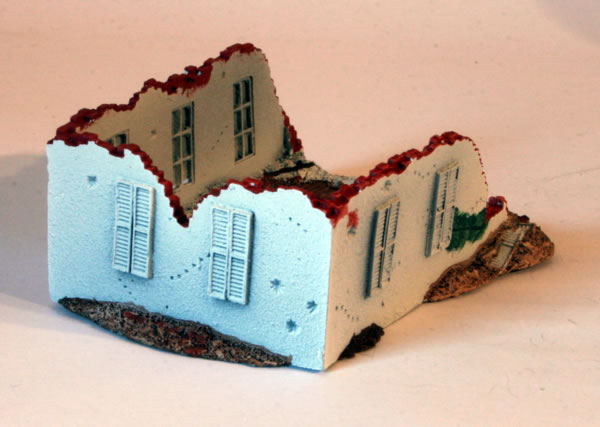
Flames of War Ruins

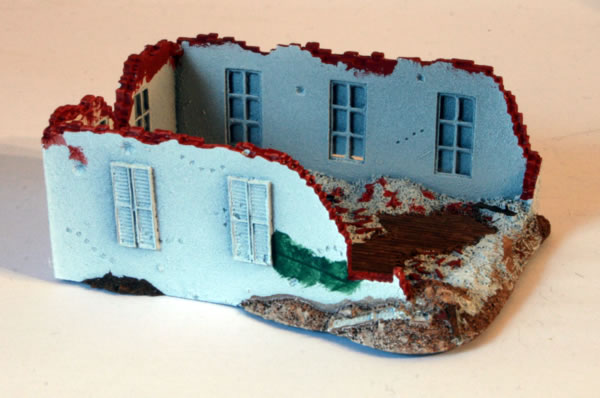
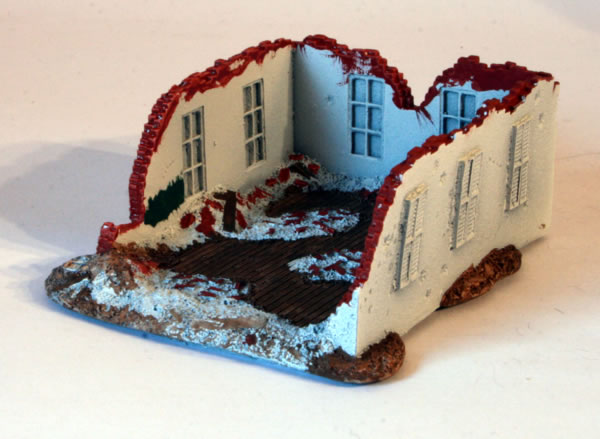
In the Flames of War Jagdpanther boxed set as well as the Jagdpanther you get a set of ruins. After washing the resin I gave the model a white undercoat.

I started to paint the ruins, wooden floor and red brick for the bricks.

I don’t like how it’s turned out, so I might repaint with a more subtle style. I think it’s the contrast between the red bricks and the unpainted walls.

You can see how I am painting the ruined building on this page.

Flames of War Jagdpanther Ruins

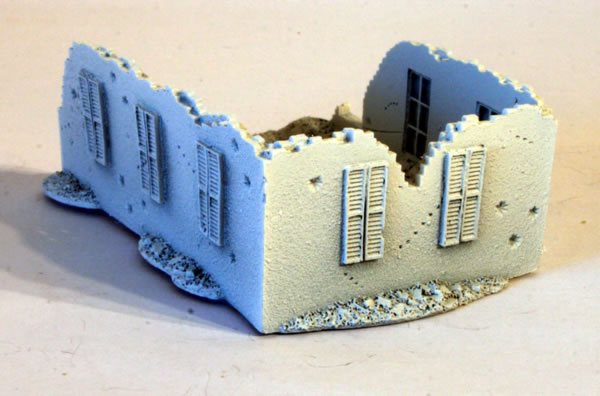
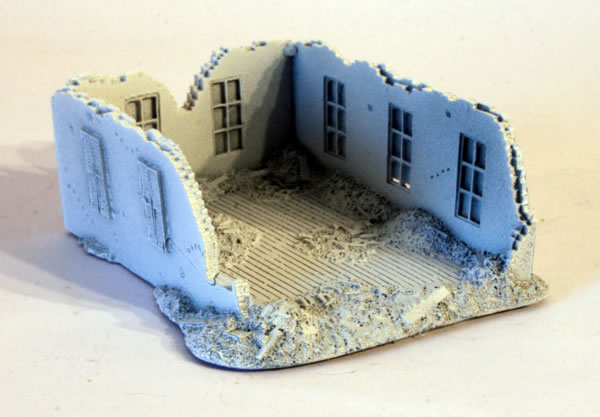
In the Flames of War Jagdpanther boxed set as well as the Jagdpanther you get a set of ruins. After washing the resin I gave the model a white undercoat.

After undercoating I noticed that the model was cracked.

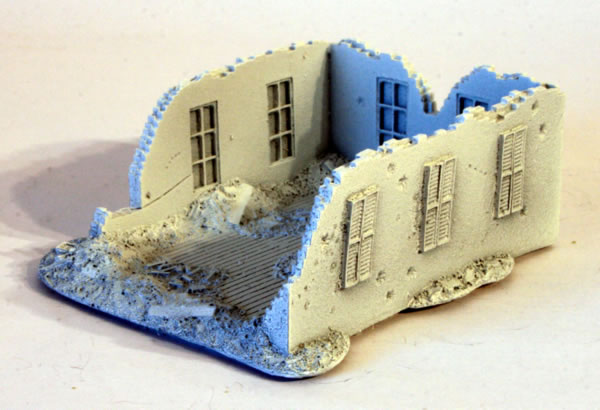
This wasn’t part of the casting, and the model had broken at some point. It could have been before I bought it, or I may have broken it. I decided to fix it with some recently purchased liquid green stuff which seemed ideal for this kind of problem.

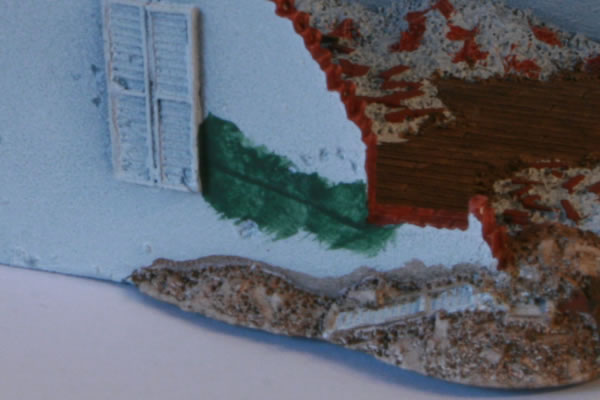
It worked fine as you can see from this shot, it filled the crack quite nicely. I could the use a wet brush to smooth the “filler” down.

You can see how I am painting the ruined building on this page.

Undercoating the Flames of War Jagdpanther

The Jagdpanther was a tank destroyer built by Nazi Germany during World War II based on the chassis of the Panther tank. It entered service late in the war and saw service on the Eastern and Western fronts. Many military historians consider the Jagdpanther to be one of the best tank destroyers of the war due to the combination of the very powerful 8.8 cm KwK 43 cannon and the characteristically excellent armor and suspension of the Panther chassis.

The kit consists of a resin hull and metal components such as tracks and track guards. After constructing the model I gave it a white undercoat.

The next stage was to give the underbody a dark brown basecoat. This will add shadow to the underneath of the model.

See the workbench feature on the  Jagdpanther.

Ninja


This is a Ninja Assassin with pistol from Citadel Miniatures, circa 1990. I think I actually got him in the 1980s at some point. It was about this time that Citadel were selling various miniatures and not just those for Warhammer and Warhammer 40K. It’s very much a Perry design. In terms of painting I was using a black undercoat.

Undercoating the Flames of War French Hotchkiss H-39

Despite having been designed from 1933 as a rather slow but well-armoured light infantry support tank, the type was initially rejected by the French Infantry because it proved difficult to steer while driving cross-country, instead being adopted in 1936 by the French Cavalry. From 1938 an improved version was produced with a stronger engine, the Char léger modèle 1935 H modifié 39, that from 1940 was also fitted with a longer, more powerful 37 mm gun.

Having made up the models, the next stage was to give the models a white undercoat.

Flames of War French Hotchkiss H-39

Flames of War French Hotchkiss H-39

Flames of War French Hotchkiss H-39

Flames of War French Hotchkiss H-39

See the workbench feature on the Flames of War French Hotchkiss H-39.

Talisman Archaeologist

This is probably one of my all-time favourite miniatures, the Talisman Archaeologist.

Talisman Archaeologist

The model was one of the many Talisman miniatures released in the late 1980s and was from the Talisman Timescape supplement. Obviously a pastiche of Indiana Jones he came with a whip and a pistol and of course a fedora hat! I did have all the Talisman miniatures, but in the end sold virtually all of them on eBay as I knew I was never going to get round to painting them all. However I kept “Indy”.

"Talisman

Considering I painted this in the 1980s I am quite pleased with the paintjob, I like the sheen the leather jacket has and the matt of the trousers. I think I may have been able to do the flesh better, but it appears to work.

I am thinking of using the Old West rules for some 1930s pulp adventures, however I will need to paint some more miniatures, one adventurer won’t be enough.

As for the scenery, I can’t remember who made these Aztec style ruins, they were resin and very easy to paint.

15mm German SdKfz 251 Half Track

The SdKfz 251 (Sonderkraftfahrzeug 251) half-track was an armored fighting vehicle designed and first built by Germany’s Hanomag company during World War II. One of the most common, and best armoured of the wartime half-tracks, the SdKfz 251 was designed to transport the panzergrenadiers of the German mechanized infantry corps into battle. Widely known simply as “Hanomags” by both German and Allied forces, they were widely produced throughout the war, with over 15,252 vehicles and variants produced in total by various manufacturers.

This is an old metal model that I think was made by SDD. I am using it as a testbed for which method I should use with my Flames of War resin models and I suspect in the end it will probably end up as a piece of scenery. However before it gets embedded into a ruin or similar, here are some photographs of it.

SDD Sd.Kfz. 251
SDD Sd.Kfz. 251
SDD Sd.Kfz. 251
SDD Sd.Kfz. 251
SDD Sd.Kfz. 251
SDD Sd.Kfz. 251
SDD Sd.Kfz. 251
SDD Sd.Kfz. 251

See the workbench feature on the German SdKfz 251 Armoured Half Track.