The Regiment: The Real Story of the SAS – Book Choice

The Regiment: The Real Story of the SAS - Book Choice
I borrowed this book from my local library.

On 4 May 1980, seven terrorists holding twenty-one people captive in the Iranian Embassy in London’s Prince’s Gate, executed their first hostage. They threatened to kill another hostage every thirty minutes until their demands were met. Minutes later, armed men in black overalls and balaclavas shimmied down the roof on ropes and burst in through windows and doors. In seconds all but one of the terrorists had been shot dead, the other captured.

For most people, this was their first acquaintance with a unit that was soon to become the ideal of modern military excellence – the Special Air Service regiment. Few realized that the SAS had been in existence for almost forty years, playing a discreet, if not secret, role almost everywhere Britain had fought since World War II, and had been the prototype of all modern special forces units throughout the world.

In The Regiment, Michael Asher – a former soldier in 23 SAS Regiment – examines the evolution of the special forces idea and investigates the real story behind the greatest military legend of the late twentieth century.

This is a very “technical” book and what I mean by this there is a a fair bit of jargon used, which isn’t always obvious or explained. However this is still a fascinating and indepth coverage of the SAS from World War Two to the 1991 Gulf War. It was interesting to see how the SAS had to move from Green Ops to Black Ops and back again.

The Falkalands War showed how the SAS struggled against not just the freezing weather of the South Atlantic, but also command problems. Operation Mikado, which was the code name of a military plan by the United Kingdom to use the SAS to attack the home base of Argentina’s Etendard strike fighters at Río Grande, Tierra del Fuego is covered in some detail. The book discusses the near mutiny by SAS soldiers who saw the raid as a suicide mission from which they would never return.

If you are interested in recreating SAS actions on the tabletop, then this book is a good starting point from which to choose from the many different actions that the SAS have taken part in.

Get The Regiment: The Real Story of the SAS at Amazon.

Drybrushing the Tracks

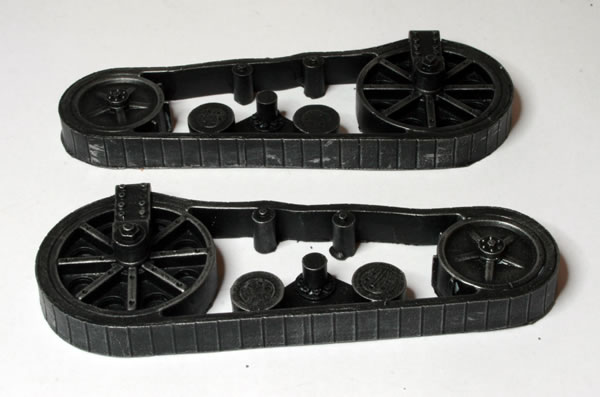
Having given my Steam Tank model a basecoat, I drybrushed the tracks with Boltgun Metal.

Once I have finished painting the model I will add some weathering to the tracks. Simon did point out that he felt the tracks on the tank were a little “flat” and I have to agree with him. You really need proper linked tracks with this kind of model, and especially one at this scale. The tracks on the Tunneller are much better for example. Maybe a potential conversion project for later (or on another model of the Steam Tank).

Dystopian Wars Airfield Set

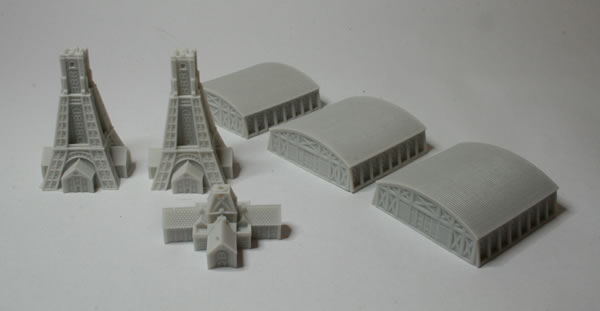
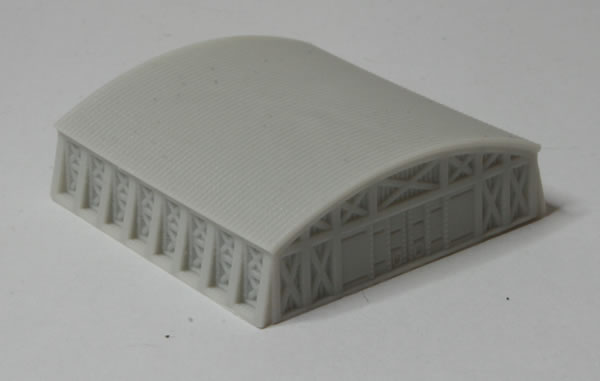
This set contains three medium-sized hangers, two zeppelin towers and one communications building.

This was very much one of those impulse buys, saw it, decided to get a blister, rather than buy something else, or something useful. I was inspired recently by those Dystopian Wars pictures that I posted to the blog.

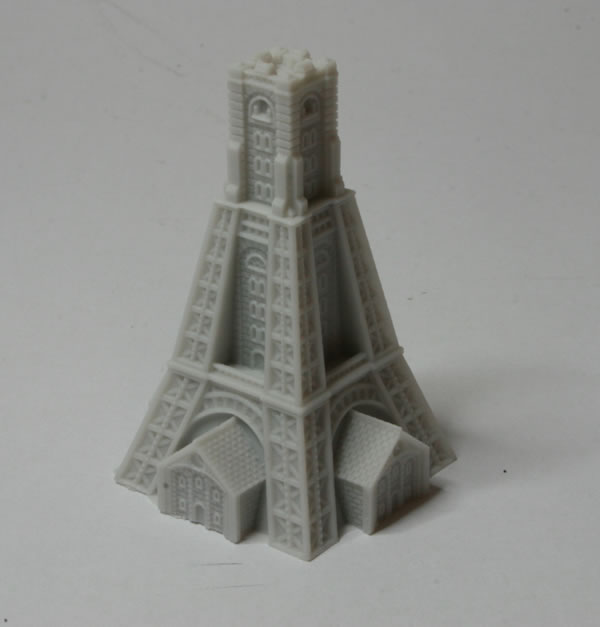
You get two very nice looking airship towers. These are stone and steel towers that can be used to moor your airships, so perfect for the Prussians.

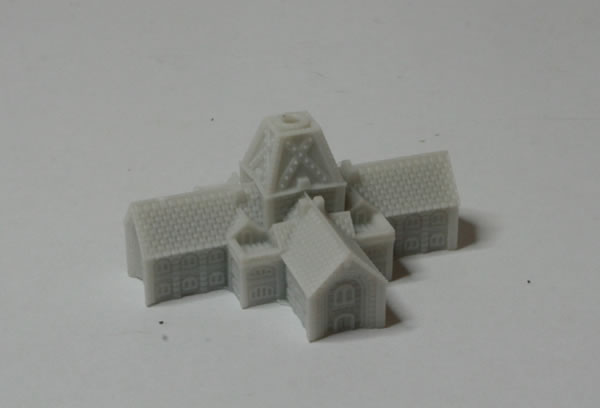
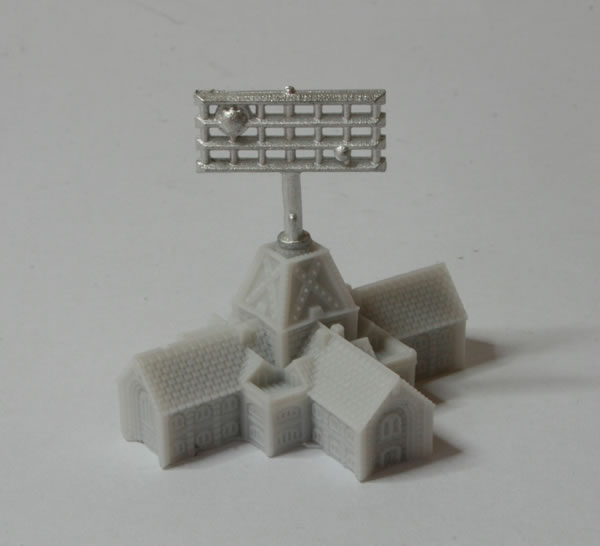
You also get a radar tower.

Not sure if they would have radar, even in a technologically advanced Victorian society, as we find in the Dystopian Wars, but then again, there is this model.

In the blister are also three aircraft hangars, big enough for fighters, but too small for the big bombers you can get.

As with virtually all Dystopian Wars castings these are very clean and no flash.

I name this ship…

Dystopian Wars Kingdom of Britannia Ruler Class Battleship HMS King Richard III
In my last game of Dystopian Wars, Simon suggested that I name my ships, partly to differentiate them during the game, but also to give them character.

For the Kingdom of Britannia ships I am thinking that for the frigates I will name them after areas of Bristol. HMS Clifton, HMS Withywood and so on. I can imagine that they were built in the Bristol docks, the same docks that Brunel built the SS Great Britain. There are nine models, so I need nine areas of Bristol.

For the cruisers, which are Tribal class I will follow the Royal Navy tradition and name them after tribes. As there are three, they will be HMS Nubian, HMS Ashanti and HMS Zulu. The battleship will be the HMS King Richard III.

I also need to name my Prussian ships, this I think will be a little more challenging.

Prussian Empire Arminius Class Frigates

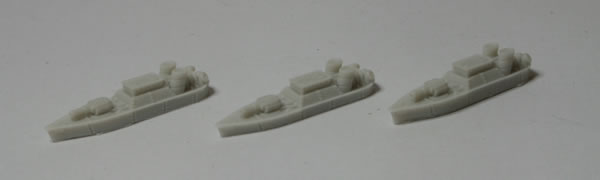
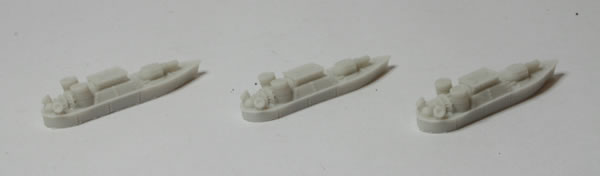
The Dystopian Wars is a miniatures games from Spartan Games. The Prussian Frigate is a simple ship with a single turret and aft Tesla weapons. Squadrons of Frigates are often used to screen larger ships, combine their fire against enemy ships, and sometimes chase down vessels that have submerged below the ocean waves.

There are six models and they come in a single blister pack. The first stage will be washing the resin models and giving them a white undercoat.

These are very small models, but are very well detailed.

Check out the Dystopian Wars Workbench.

Arnhem – Book Choice

Arnhem: The Battle for Survival by John Nichol
I recently read Arnhem: The Battle for Survival by John Nichol.

In September 1944, a mighty shock force of battle-hardened Allied troops dropped from the skies into enemy-occupied Holland in what was hoped would be the decisive final battle of World War II. Landing miles behind the German lines, their daring mission was to secure bridges across the Rhine so that ground forces could make a rapid dash into Nazi Germany. If all went well, the war could be over by Christmas. The plan went terribly wrong …

Seen through the dramatic first-hand accounts of those who were there, Arnhem is the gripping story of a bitter military defeat that became a triumph of the human spirit. It paints a vivid portrait of those in the cauldron of war, fighting for their lives, fighting for their comrades, fighting for their honour, a battle they won hands down.

For fans of A Bridge Too Far, Saving Private Ryan and Band of Brothers, and for readers of Antony Beevor’s Stalingrad and Hugh Sebag-Montefiore’s Dunkirk.

It’s a good book, but I don’t think it really covers the Arnhem battle as detailed and as gripping as Antony Beevor’s Berlin and Stalingrad.

If you have watched A Bridge Too Far then you will find this book useful in finding out more about how the assault on Arnhem actually happened, as well as more details on the British and German forces. As this book is about Arnhem, the rest of the Market Garden operation is covered in minimal detail.

It was a really interesting read and recommended for those interested in this aspect of World War Two.

Buy Arnhem: The Battle for Survival at Amazon.co.uk

MkIIb Land Raider

I seemed to have spent ages painting this model, so I had a look at it the other day to see what I need to do next.

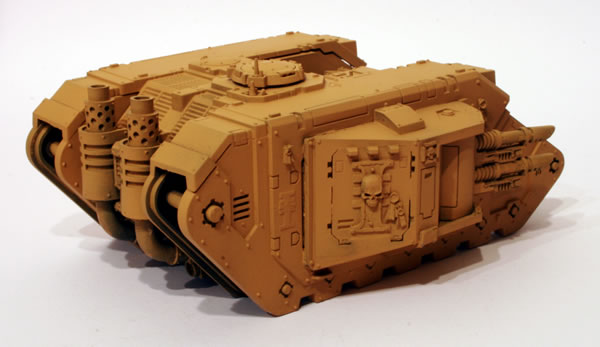
Actually I have done a fair bit to get the basecoat finished now.

The next stage will be to give the model a thin wash to bring out the detail and darken the shadows. The tracks have been painted separately.

This Forge World MkIIb Land Raider is a Grey Knights vehicle, with a desert camouflage for use with my Daemonhunters force.

95th Rifles

The models I am using for the 95th Rifles are very detailed and one of the aspects of a white undercoat I do like is how it brings out and shows off the detail.

Though there aren’t many models in this unit I’m painting, there are a number of officers.

I am thinking that when I do finish painting them and have a game, the scenario would be that a group of officers are separated from the main force, or are on a hunting trip and are then attacked.

I still don’t know which opponents to get for them, probably French Voltigeurs.