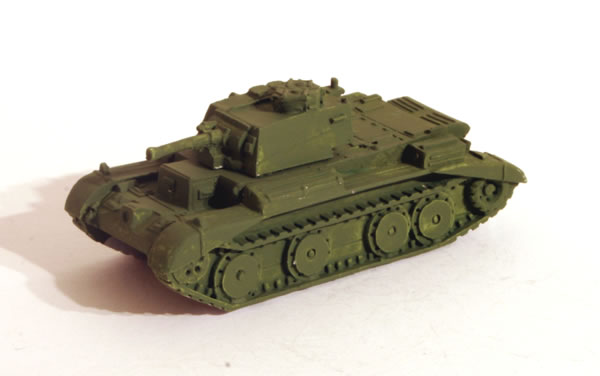
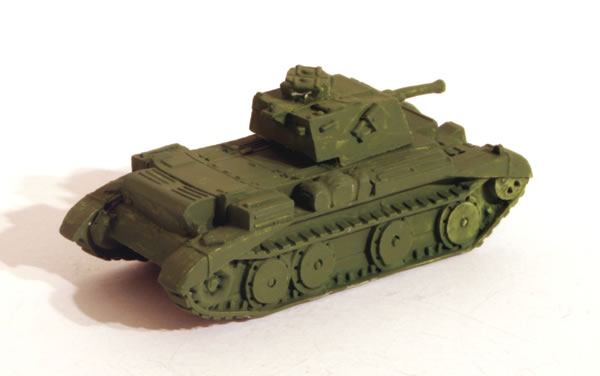
15mm British Vickers Dutchman

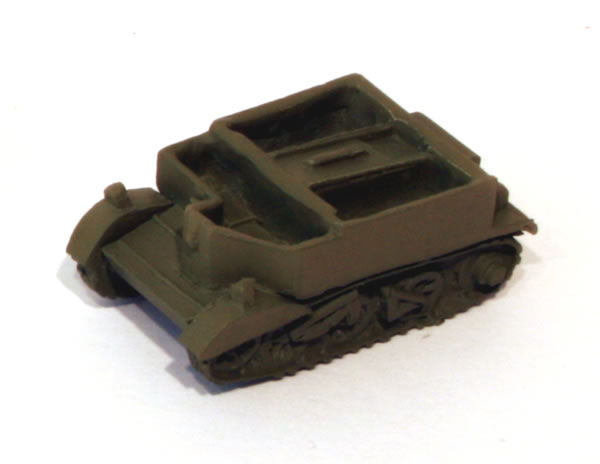
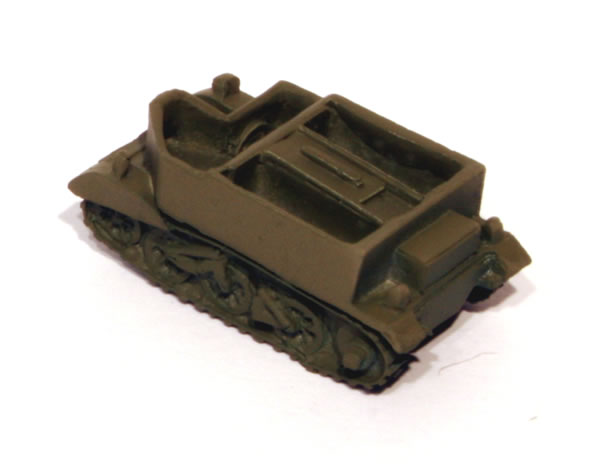
I have had this tank for sometime. Don’t remember the manufacturer. It actually took me a while to work out which tank this was exactly… I used this site as a reference.

Mechanically similar to the Mark IV, though armament and other features were like the Mark II, the “Dutchmen” were a 1936 commercial version. 40 vehicles were sold to the Netherlands. All 40 were taken over by the War Office in 1939 before export. All vehicles were used for training only by the British Army. The term “Dutchmen” or “Dutchman” was an unofficial moniker.

Though never used in service, in the event of a German invasion (Operation Sealion) they probably would have been used to help defend the country.

After a bit of internet research I believe it is an old SDD miniature. Not convinced totally, but other miniatures in the box it was in carry SDD codes.

After giving the model a white undercoat, the next stage was a basecoat of Brown Violet (887).

As you can see it will need a second coat.

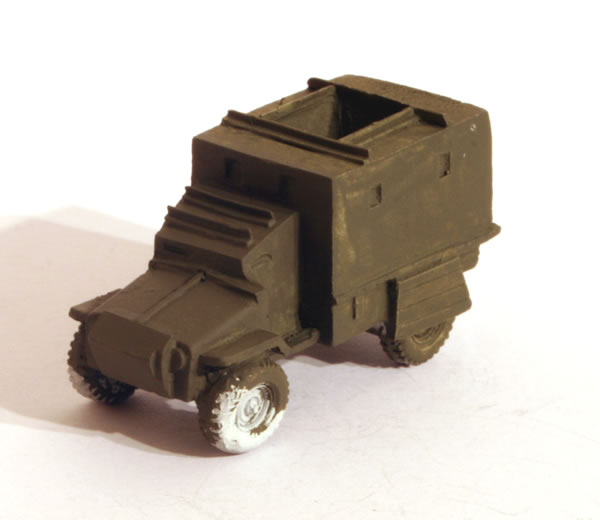
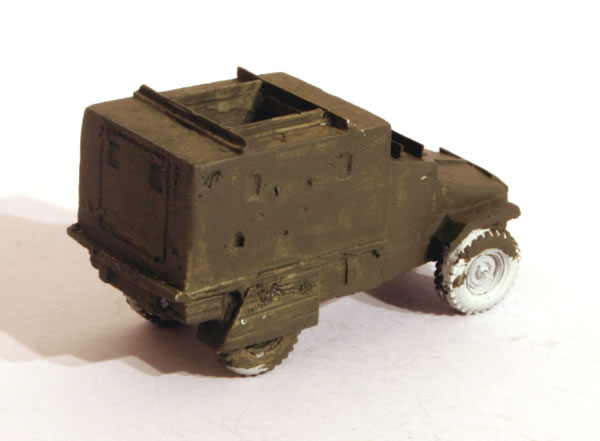
15mm Home Guard Bedford OXA

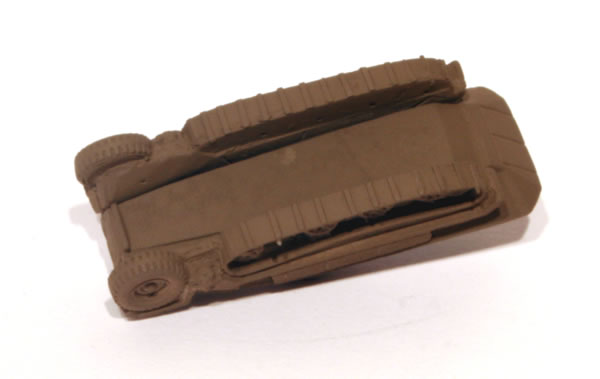
The Bedford OXA was a gun truck or improvised British heavy armoured car built during World War II by mounting an armoured body onto a Bedford OXD 1.5 ton truck chassis. 948 units were built in 1940-1941. The vehicle was used by British Home Guard units until 1942. As with many of my 15mm metal vehicles I don’t recall who the manufacturer was.

I gave the model a white undercoat. The next stage was a basecoat of Brown Violet (887).

This is a solid whitemetal casting.

I think it might need a second coat.

I also need to think about how best to “hold” the model so I can paint it more easily. Got use to painting models with bases for a while now, vehicles (especially small 15mm vehicles) take a bit of getting use to.

15mm Afrika Korps PzKpfw II

The Panzer II was the common name for a family of German tanks used in World War II. The official German designation was Panzerkampfwagen II (abbreviated PzKpfw II). Although the vehicle had originally been designed as a stopgap while more advanced tanks were developed, it nonetheless went on to play an important role in the early years of World War II, during the Polish and French campaigns. By the end of 1942 it had been largely removed from front line service, and production of the tank itself ceased by 1943.

Though you can buy a resin version of the Pz II I was plesantly surprised to find a plastic 1/100th scale kit of the Pz II in a model shop for just £1.25. Bargain!

Made my Zveda, a Russian firm, they also do a 1/100th scale RussianT-26. Alas the accompanying kits for infantry are 1/72nd and the aircraft are 1/144th. Would have been nice if the models were all in the same scale. It would appear from the back of the box that this was designed for some kind of miniatures game.

You get one sprue in grey plastic. I don’t have any other 15mm Pz II models, so difficult to compare it to other 15mm models.

I did manage to pick up three of them. I am going to make them up as PzKpfw IIs for the Western Desert.

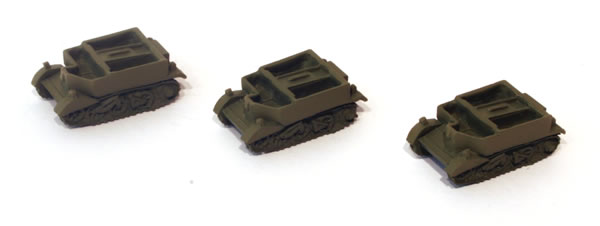
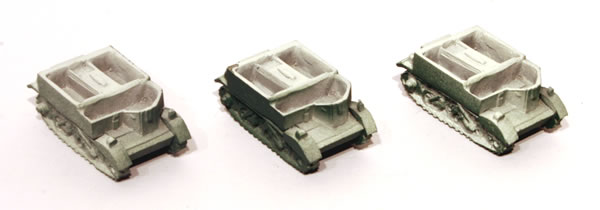
Basecoat for the Universal Carriers

The Universal Carrier, also known as the Bren Gun Carrier is a common name describing a family of light armoured tracked vehicles built by Vickers-Armstrong.

Having given them a white undercoat, the next stage was to spray a basecoat of Humbrol Dark Green to the underneath of the model to add shadow. The next stage  was a basecoat of Warpaint British Armour.

Full workbench feature on the Universal Carriers.

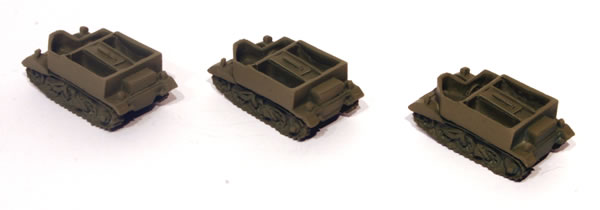
Additional undercoat for the Universal Carriers

The Universal Carrier, also known as the Bren Gun Carrier is a common name describing a family of light armoured tracked vehicles built by Vickers-Armstrong.

Produced between 1934 and 1960, the vehicle was used widely by Allied forces during the Second World War. Universal Carriers were usually used for transporting personnel and equipment, mostly support weapons, or as machine gun platforms. With some 113,000 built in the United Kingdom and abroad, it was the most numerous armoured fighting vehicle in history.

As with some of my other metal models I can’t remember the manufacturer of these.These metal models are not as well defined as the Flames of War resin models, so in the end I might use them for scenery or objectives.

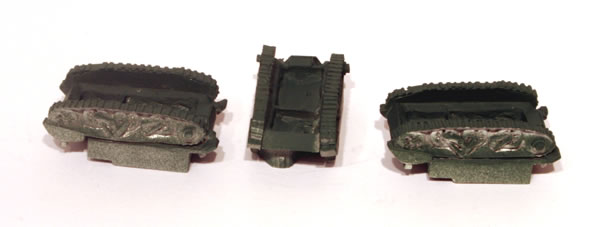
Having given them a white undercoat, the next stage was to spray a basecoat of Humbrol Dark Green to the underneath of the model to add shadow when I do the main basecoat.

The idea is the keep the main part of the model with a white undercoat and the undersides to be darker than the rest of the model.

Full workbench feature on the Universal Carriers.

15mm German SdKfz 251 Armoured Half Track

The SdKfz 251 (Sonderkraftfahrzeug 251) half-track was an armored fighting vehicle designed and first built by Nazi Germany’s Hanomag company during World War II. One of the most common, and best armoured of the wartime half-tracks, the SdKfz 251 was designed to transport the panzergrenadiers of the German mechanized infantry corps into battle. Widely known simply as “Hanomags” by both German and Allied forces, they were widely produced throughout the war, with over 15,252 vehicles and variants produced in total by various manufacturers.

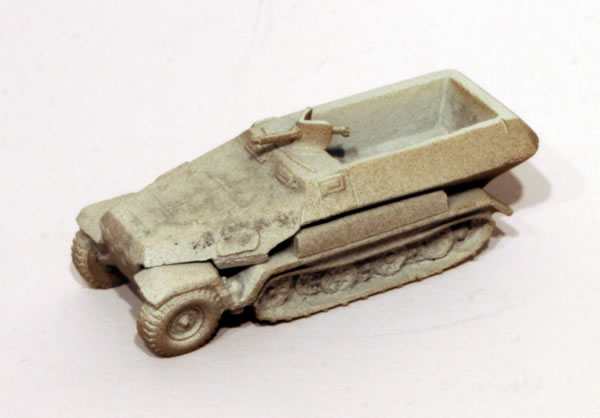
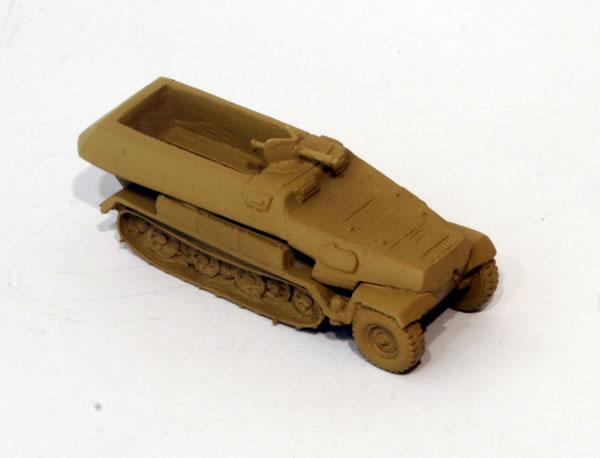
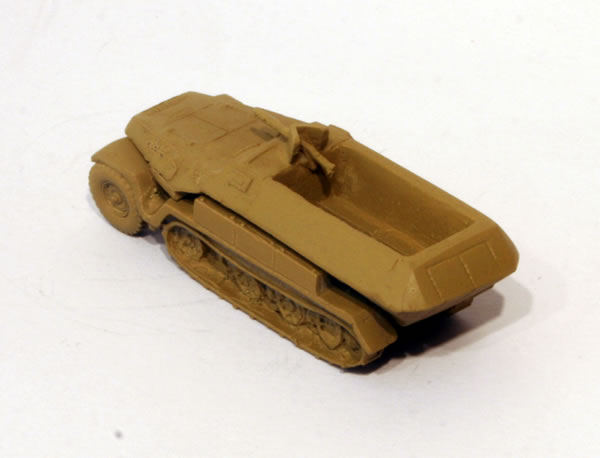
This is an old metal model that I think was made by SDD. I am using it as a testbed for which method I should use with my Flames of War resin models and I suspect in the end it will probably end up as a piece of scenery.

Having given the model a white undercoat I gave the underneath of the model an undercoat of Humbrol Dark Brown spray.

This will add shadow to the underneath of the model.

I then gave the model a basecoat of Warpaint German Armour.

The next stage will be to add the disruptive camouflage.

See the workbench feature on the German SdKfz 251 Armoured Half Track.

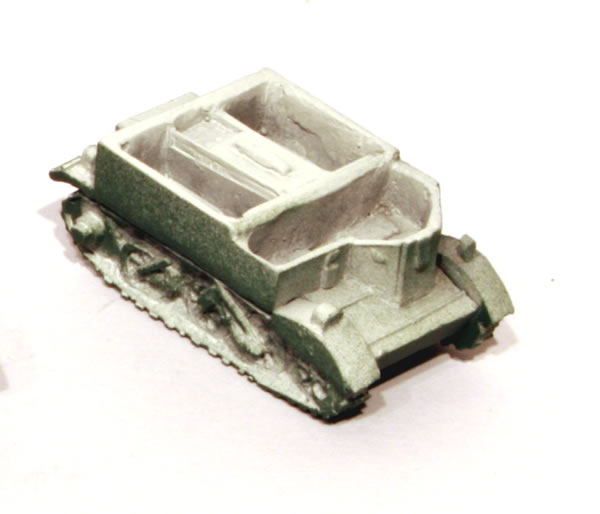
Undercoating the Universal Carriers

The Universal Carrier, also known as the Bren Gun Carrier is a common name describing a family of light armoured tracked vehicles built by Vickers-Armstrong.

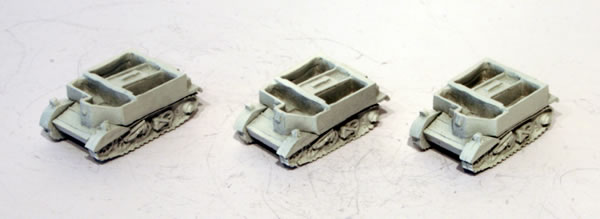
Produced between 1934 and 1960, the vehicle was used widely by Allied forces during the Second World War. Universal Carriers were usually used for transporting personnel and equipment, mostly support weapons, or as machine gun platforms. With some 113,000 built in the United Kingdom and abroad, it was the most numerous armoured fighting vehicle in history.

As with some of my other metal models I can’t remember the manufacturer of these.These metal models are not as well defined as the Flames of War resin models, so in the end I might use them for scenery or objectives.

I gave them a white undercoat.

Full workbench feature on the Universal Carriers.

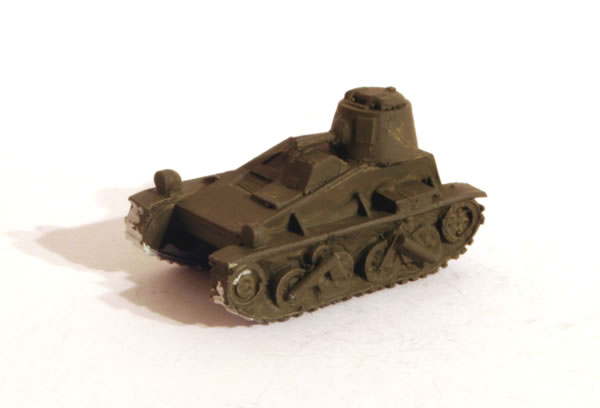
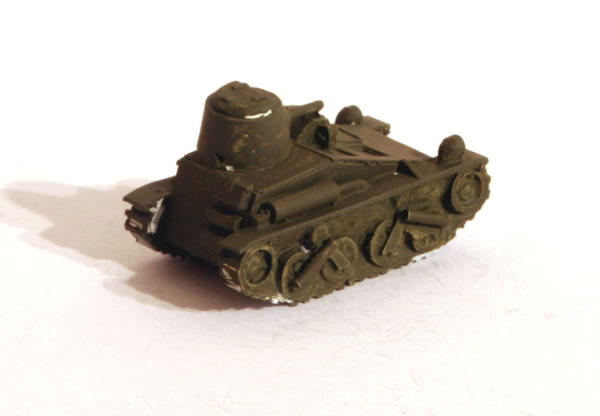
French Renault R35

The Renault R35, an abbreviation of Char léger Modèle 1935 R or R 35, was a French light infantry tank of the Second World War. Designed from 1933 and produced from 1936, the type was intended as a light infantry support tank, equipping autonomous tank battalions, that would be allocated to individual infantry divisions to assist them in executing offensive operations. To this end it was relatively well-armoured but slow and lacking a good antitank-capacity, fitted with a short 37 mm gun. At the outbreak of the war, the antitank-rôle was more emphasized leading to the development and eventual production from April 1940 of a subtype with a more powerful longer gun, the Renault R40. It was planned to shift new production capacity to the manufacture of other, faster, types, but due to the defeat of France the R35/40 remained the most numerous French tank of the war, about 1685 vehicles having been produced in June 1940.

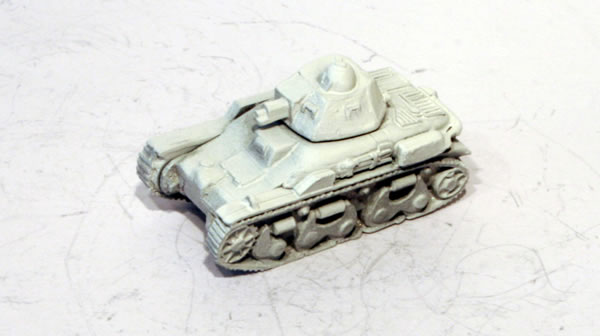
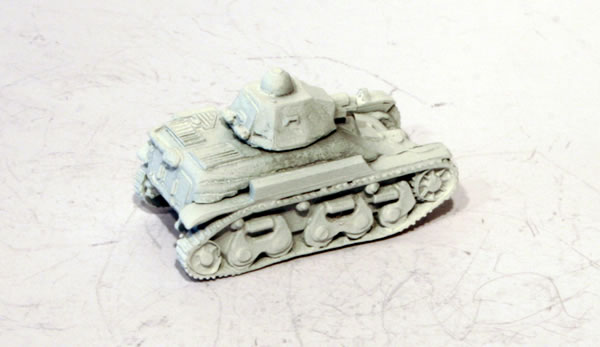
Like some of my other models I am unsure of the manufacturer of this one. After a bit of internet research I believe it is an old SDD miniature. Not convinced totally, but other miniatures in the box it was in carry SDD codes.

I am going to use this one as the test vehicle for my Flames of War French tanks to try out different paint schemes. Tempted though to paint as a captured German version.

I gave the model a white undercoat.

15mm British Vickers Dutchman

I have had this tank for sometime. Don’t remember the manufacturer. It actually took me a while to work out which tank this was exactly… I used another website as a reference.

Mechanically similar to the Mark IV, though armament and other features were like the Mark II, the “Dutchmen” were a 1936 commercial version. 40 vehicles were sold to the Netherlands. All 40 were taken over by the War Office in 1939 before export. All vehicles were used for training only by the British Army. The term “Dutchmen” or “Dutchman” was an unofficial moniker.

Though never used in service, in the event of a German invasion (Operation Sealion) they probably would have been used to help defend the country.

After a bit of internet research I believe it is an old SDD miniature. Not convinced totally, but other miniatures in the box it was in carry SDD codes.

I gave the model a white undercoat.