Full circle

My first “experience” of wargaming was back in the 1970s with those bendy and flexible Airfix and Matchbox model soldiers and using Britain’s matchstick firing weapons.

One of my favourite toys and probably the thing that got me into gaming was the 1:32nd Matchbox Counter Attack Playset.

Matchbox Counter Attack

Combining Americans and Germans, with an M8 Greyhound, air pump weapons and an incredible building that you could knock down and put back together. It was an incredible toy that I really loved playing with.

There were of course other models you could buy and I remember having some, but aspired to buy some of those Airfix plastic 1:32 models, such as the Cromwell as well as other Matchbox figures like these Commandos.

Matchbox Commandos

I did move onto more “serious” gaming using Airfix Napoleonics. Then I started to paint them, but like a lot of gamers back then, realised the flexibility of the plastic meant that the paint would come off quite easily during games. The magazines of the time (we didn’t have the web back then) had articles about painting the bare plastic with PVA (white glue) and after painting use a range of varnishing techniques (heavy gloss varnish followed by a matt varnish) to protect the paintwork even further. The reality was that I remember discussing with friends what we really wanted were plastic soldiers made out of hard plastic., like that was ever going to happen…

Lets fast forward to last week…

I usually quite enjoy the weekly updates on the Flames of War website. Never quite sure why they feel the need to save all their updates for Thursday, why can’t they post them as and when they’re done. The main result of this is I go the website once a week rather than more regularly.

So what’s the connection?

Battlefront announced they were, having moved from metal to hard plastic, were going to move now to flexible plastic. I had to check twice, was Battlefront really going to release flexible plastic toy soldiers.

Battlefront announced they were, having moved from metal to hard plastic, were going to move now to flexible plastic.

Hmmm.

The articles talks about the advantages of this *new* material compared to metal, resin and hard plastic.

The new figures are made of a flexible ABS plastic, and combine most of the good points of the other materials.

Like with hard plastic, the casting process involves injecting the plastic into a rigid mould. The moulds themselves are not machined in the same way, but cast – it’s faster and cheaper. Unlike the hard plastic, the material itself is slightly flexible after it cures, so small undercuts are possible – not as much as with metal or resin in a soft mould, but more than with hard plastic.

They also make the point…

The tough new plastic is almost unbreakable – you could drop a rulebook on them and they will bounce straight back.

Guessing dropping rulebooks on them wouldn’t do much for the paintwork. However that would be the same for any model regardless of what material it was made from.

There must be very good reasons why Battlefront are going down this road and these are outlined in the article.

The biggest benefit is the cost – we can produce flexible plastic figures almost 40% cheaper than metal equivalent, and this will be reflected in the price, which is surely good news for everyone!

Cheaper models are always nice, but cost is just one factor amongst many when it comes to choosing models to wargame with. Personally I think it’s a backward retro step, time to ensure I have enough metal models in the cupboard. I don’t mind paying the extra.

Back to the 1970s here we come….

A22 Churchill Mk I

The Tank Museum is a collection of armoured fighting vehicles at Bovington Camp in Dorset, South West England.

Outside the entrance to the car park at the museum is an A22 Churchill Mark I.

A22 Churchill Tank

The Tank, Infantry, Mk IV (A22) Churchill was a British heavy infantry tank used in the Second World War, best known for its heavy armour, large longitudinal chassis with all-around tracks with multiple bogies, its ability to climb steep slopes, and its use as the basis of many specialist vehicles. It was one of the heaviest Allied tanks of the war.

The origins of the design lay in the expectation that war in Europe might be fought under similar conditions to those of the First World War, and emphasised the ability to cross difficult ground. The Churchill was rushed into production to build up British defences against a possible German invasion. The first vehicles had flaws that had to be overcome before the Churchill was accepted for wide use. After several Marks had been built, a better armoured version, the Mark VII, entered service.

The Churchill was used by British and Commonwealth forces in North Africa, Italy and North-West Europe. In addition, a few hundred were supplied to the USSR and used on the Eastern Front.

This A22 Churchill at the Tank Museum appears to have been completed as a Mark II but has since been altered to resemble a Mark I.

A22 Churchill Tank

The Curse of Dead Man’s Hand

I have really enjoyed playing Great Escape Games’ rules, Dead Man’s Hand. It is an enjoyable set of rules that allow for games in the Old West. I like the mechanics and the ease of playing.

Great Escape have taken their rules into 1920s prohibition with The Chicago Way and these rules allow you to recreate the Untouchables.

Their next set of rules look very interesting with the addition of what looks like the undead into the Old West, with their new set, The Curse of Dead Man’s Hand.

he Curse of Dead Man's Hand source book

The curse has finally come to Dead Man’s Hand.Get together anybody you can, time to put petty rivalries aside and stand together against an enemy who shows no mercy, who will take it all, and leave you with nothing, not even your soul.

You need a copy of the Dead Man’s Hand rule book to use the source book.

The Curse of Dead Man's Hand

As well as rules, there are going to be some new buildings from 4Ground, which you can see as background in these photographs from Great Escape Games.

The Curse of Dead Man's Hand

These buildings look like they will also be useful for “normal” games of Dead Man’s Hand.

SDD Matilda II

Matilda II
By No 1 Army Film & Photographic Unit [Public domain], via Wikimedia Commons

The Infantry Tank Mark II, best known as the Matilda, was a British infantry tank. The design began as the A12 specification in 1936, as a gun-armed counterpart to the first British infantry tank, the machine gun armed, two-man A11 Infantry Tank Mark I. The Mark I was also known as Matilda, and the larger A12 was initially known as the Matilda II, Matilda senior or Waltzing Matilda. The Mark I was abandoned in 1940, and from then on the A12 was almost always known simply as “the Matilda”.

With its heavy armour, the Matilda II was an excellent infantry support tank but with somewhat limited speed and armament. It was the only British tank to serve from the start of the war to its end, although it is particularly associated with the North Africa Campaign. It was replaced in front-line service by the lighter and less costly Infantry Tank Mk III Valentine beginning in late 1941.

This model is an SDD white metal kit that I bought in the 1990s.

Matilda II

SDD 15mm Tiger I

Panzerkampfwagen VI Tiger Ausf. E
By Capt. Tanner, War Office official photographer [Public domain], via Wikimedia Commons

Tiger I is the common name of a German heavy tank used in World War II, developed in 1942. The final official German designation was Panzerkampfwagen Tiger Ausf. E, often shortened to Tiger. It was an answer to the unexpectedly formidable Soviet armour encountered in the initial months of Operation Barbarossa, particularly the T-34 and the KV-1. The Tiger I design gave the Wehrmacht its first tank mounting the 88 mm gun, which had previously demonstrated its effectiveness against both air and ground targets. During the course of the war, the Tiger I saw combat on all German battlefronts. It was usually deployed in independent tank battalions, which proved to be quite formidable..

SDD Panzerkampfwagen VI Tiger Ausf. E

I have already purchased a Flames of War blister of the German Tiger I E. This model is an SDD white metal kit that I bought in the 1990s. Unlike the Flames of War model this has just four parts.

SDD Panzerkampfwagen VI Tiger Ausf. E

I am thinking that I might use it as an objective or in some kind of terrain, one of the reasons for using the image above as inspiration.

British Bedford OXD

British Bedford OXD
By Zandcee (Own work) [GFDL (http://www.gnu.org/copyleft/fdl.html) or CC BY-SA 3.0 (http://creativecommons.org/licenses/by-sa/3.0)], via Wikimedia Commons
The Bedford OY is an army lorry built by Bedford for the British Armed Forces and introduced in 1939. It was based on Bedford’s O-series commercial vehicles with a modified front end and single rear tyres. The OXD was a general service vehicle, a short-wheelbase version of the OY, designed for a 30 cwt (1.5 ton) payload.

This is a photograph of a Bedford OXD in German army service in Hungary. So I was thinking I could paint it in this style.

British Bedford OXD
Bundesarchiv, Bild 101I-715-0212A-26A / Kreutzer, Wilhelm / CC-BY-SA 3.0 [CC BY-SA 3.0 de (http://creativecommons.org/licenses/by-sa/3.0/de/deed.en)], via Wikimedia Commons
This is an SDD model I bought in the 1990s.

SDD British Bedford OXD

It comprises three parts in white metal.

SDD British Bedford OXD

After cleaning the castings the model will be stuck together and undercoated.

4Ground Single Storey Small Building Under Construction

4Ground Single Storey Small Building Under Construction

This is a laser-cut mdf building from 4Ground for Great Escape Games’ Dead Man’s Hand set of rules.

When a camp town started becoming more prosperous the residents would start producing town buildings, these were often frame buildings in which the timber frame was built as a shell and then the rest of the building was built in and around it.

This was easiest to do in areas with large amounts of lumber (or easy access to it by railroad). Many towns would have this kind of building almost under constant construction at one location or another as the towns grew.

These buildings make great terrain pieces as they can provide cover without blocking line of sight.

This is just the skeleton of a house.

4Ground Single Storey Small Building Under Construction

You do need to take care pressing this out, as it is a little more delicate than those models with complete walls.

I would say the roof is very challenging, so take your time and it can’t be rushed.

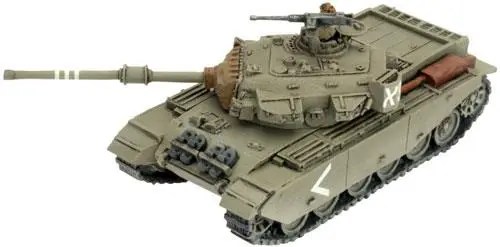
I have no Centurions

Alas it wasn’t to be….

In a previous post I said

So I ordered and purchased a couple of Sho’T models from the Flames of War Fate of a Nation range and will paint them up as British Army Centurions for use in Team Yankee games.

They never arrived…

Centurion Mk 5

Alas the supplier was unable to supply the models, as Battlefront have made them a direct-only order item, so I will need to order them from there.

15mm Sarissa Precision Chateau

This is a laser cut MDF (and card) model of a Chateau from Sarissa Precision.

Sarissa Precision Chateau

It is unpainted model and comes as a flat pack of MDF and card.

The chateau has steps back and front. They comprise the steps and go together quite easily.

15mm Sarissa Precision Chateau

I like the railings which work well and don’t look too bulky for this small model.

15mm Sarissa Precision Chateau

The back steps are constructed in a similar manner.

15mm Sarissa Precision Chateau

15mm Sarissa Precision Chateau

The use of card for the window frames, shutters and plinths works well.

15mm Sarissa Precision Chateau

15mm Sarissa Precision Chateau

15mm Sarissa Precision Chateau

15mm Sarissa Precision Chateau

15mm Sarissa Precision Chateau

The most challenging aspect of the model was the roof. It had multiple dormer windows as well as a flat roof with railings (or balustrades)

15mm Sarissa Precision Chateau

There were multiple components and the construction was quite challenging.

15mm Sarissa Precision Chateau

The finished models looks very effective, I do think though I do need to give it a coat of paint.

Sarissa Precision Chateau

The rear view.

15mm Sarissa Precision Chateau

If I was to do this again, I think I might paint the card first, as I did with my Gaslamp buildings.