15mm Ruined Houses

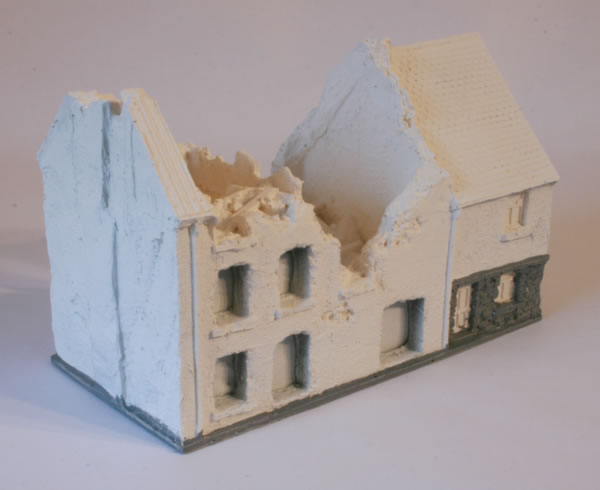
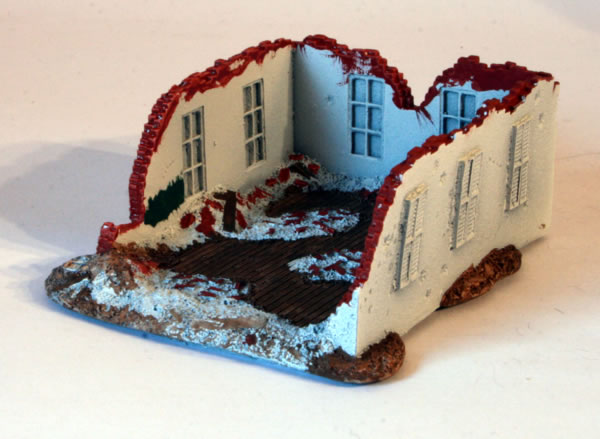
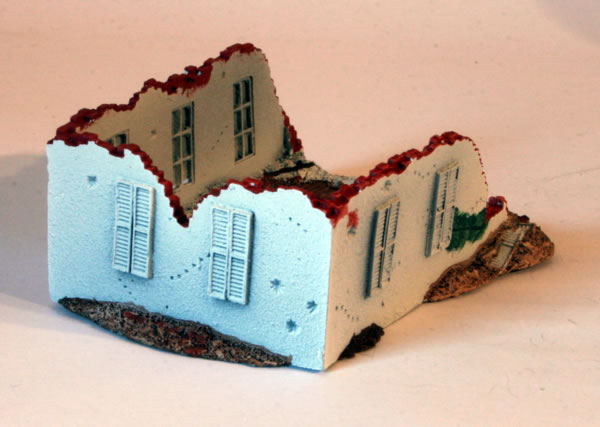
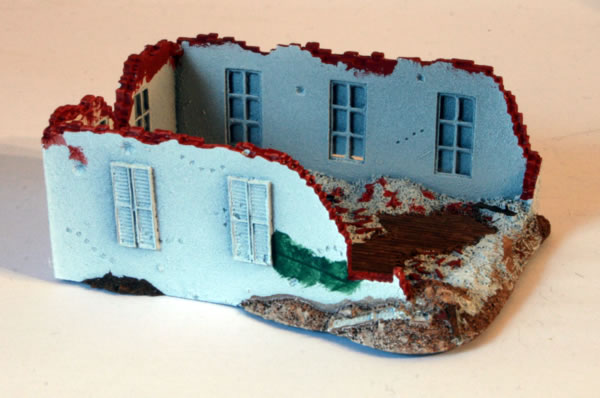
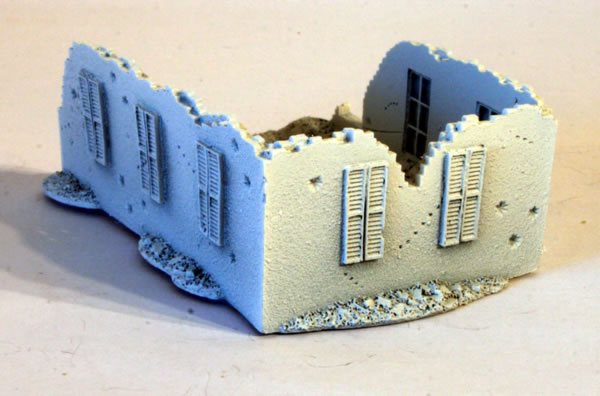
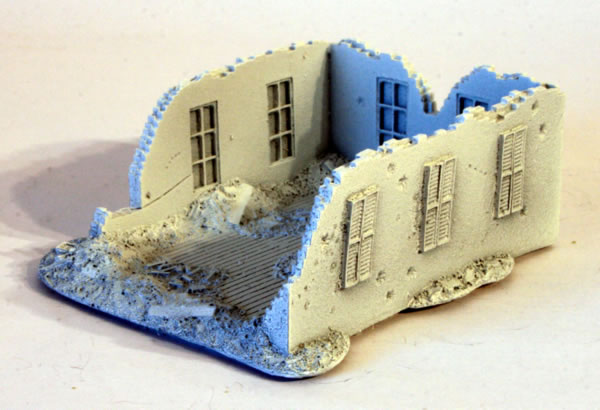
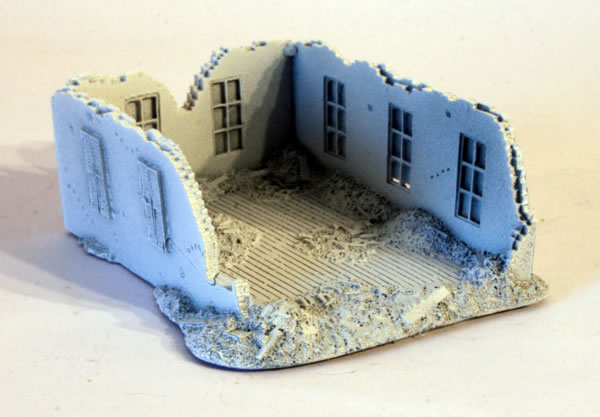
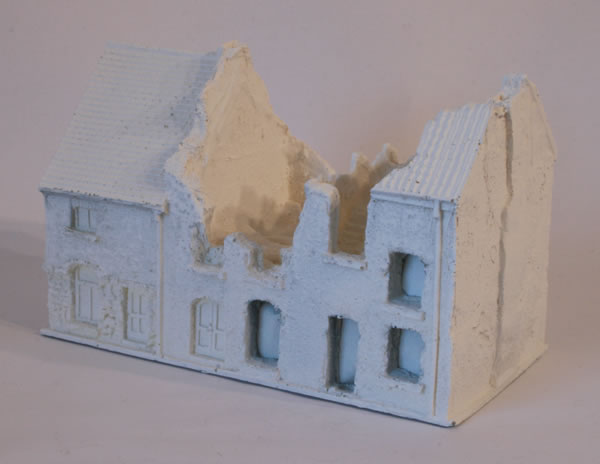
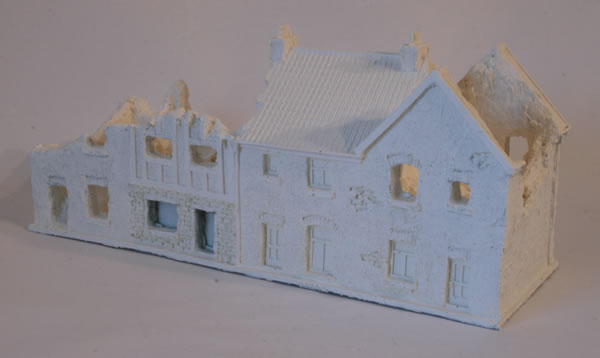
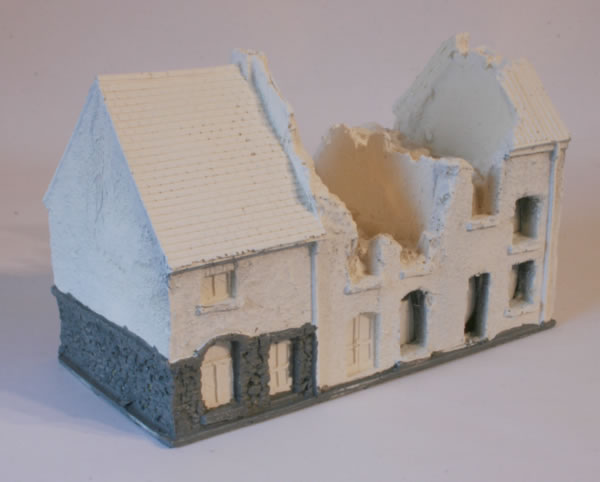
I have the ruined row of three houses and the ruined row of four houses, from Total Battle Miniatures.

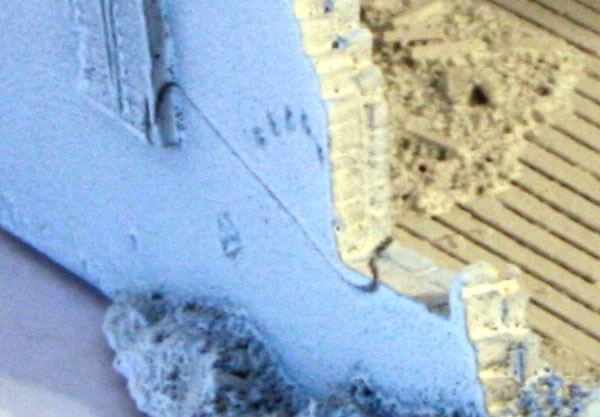
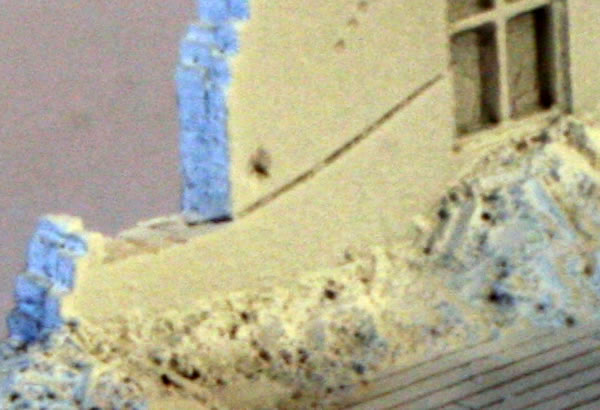
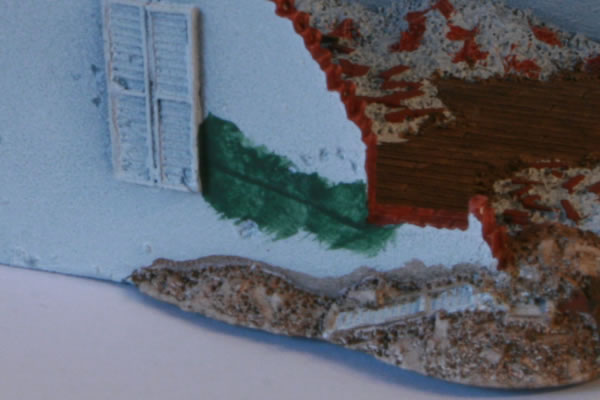
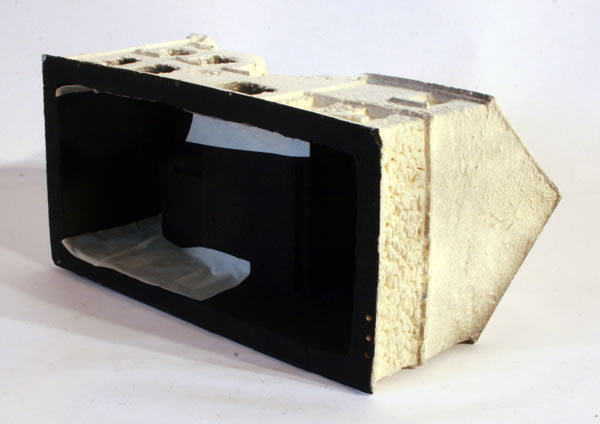
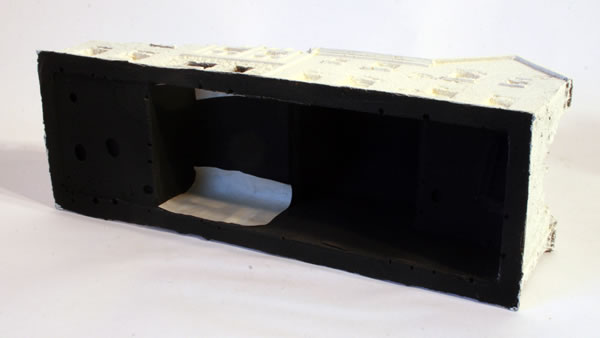
Having cleaned the models, I gave the inside of the models a black undercoat and then masked the inside of the windows (with masking tape) before I give the model a white undercoat on the outer side of the model.

The models were then given a white undercoat.

Flames of War General de Gaulle

A veteran of World War I, in the 1920s and 1930s de Gaulle came to the fore as a proponent of mobile armoured divisions, which he considered would become central in modern warfare. During World War II, he reached the temporary rank of Brigadier General, leading one of the few successful armoured counter-attacks during the 1940 Fall of France, and then briefly served in the French government as France was falling.

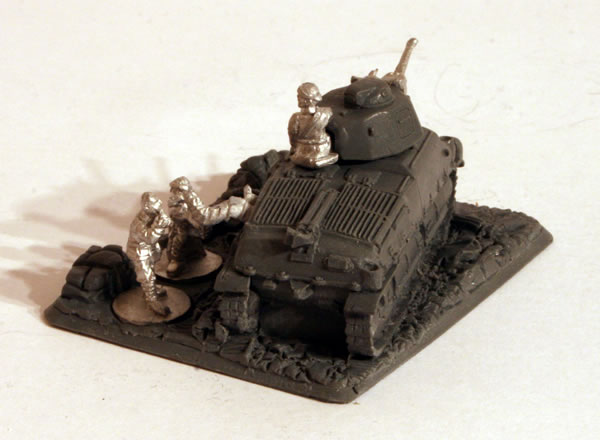
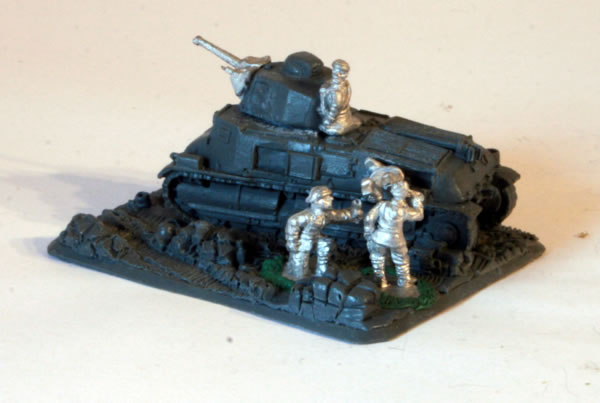
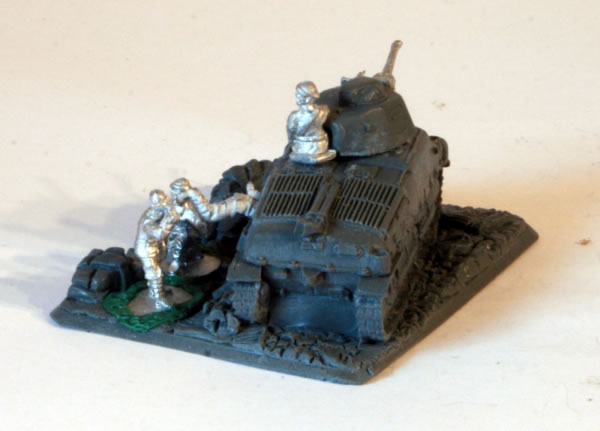
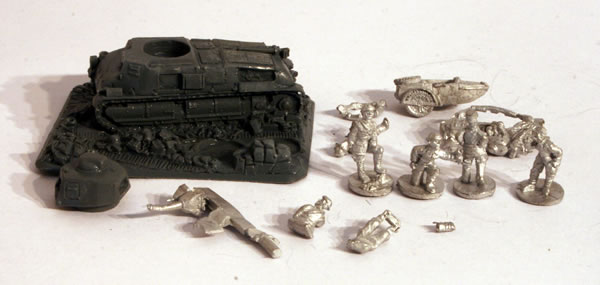
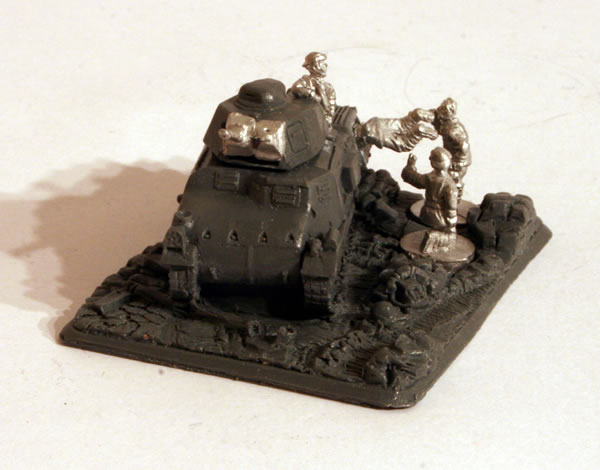
Charles de Gaulle is available for Flames of War and comes with a Somau S35 objective. The blister contains the metal parts and resin objective.

Flames of War General de Gaulle

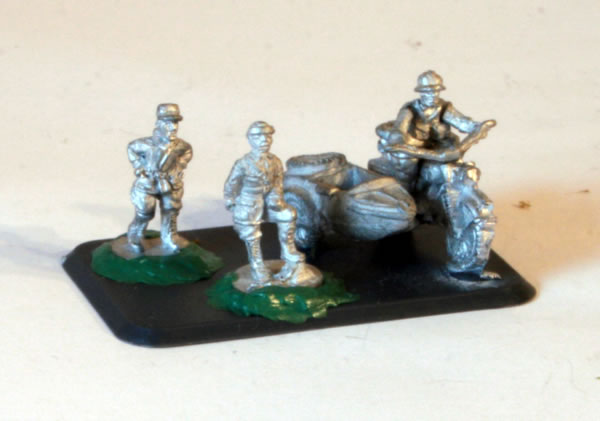
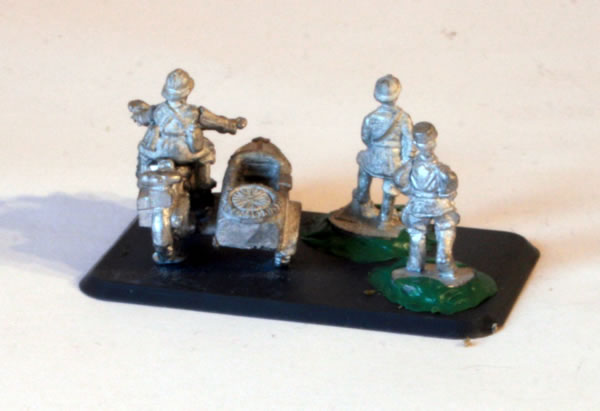
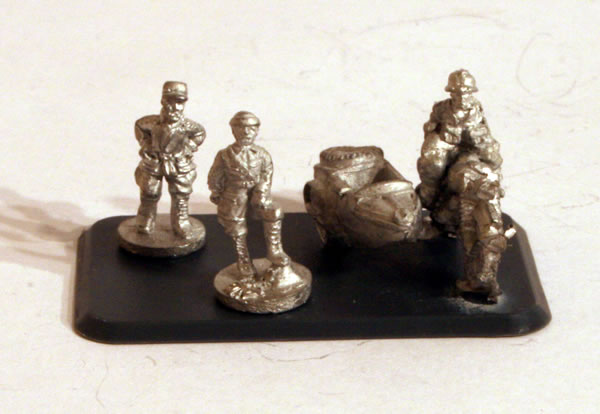
The base for De Gaulle is quite simple, De Gaulle, a staff officer and a motorcycle combination.

The most challenging part of this base is the motorcycle combination. At one point I did consider leaving it off entirely….

Flames of War General de Gaulle

Has certainly put me off buying any French motorcycle combination platoons!

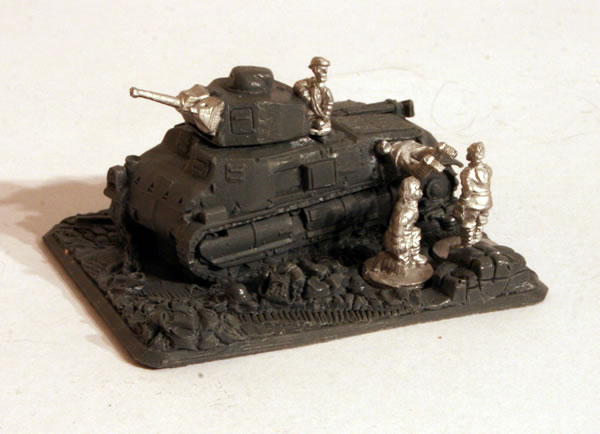
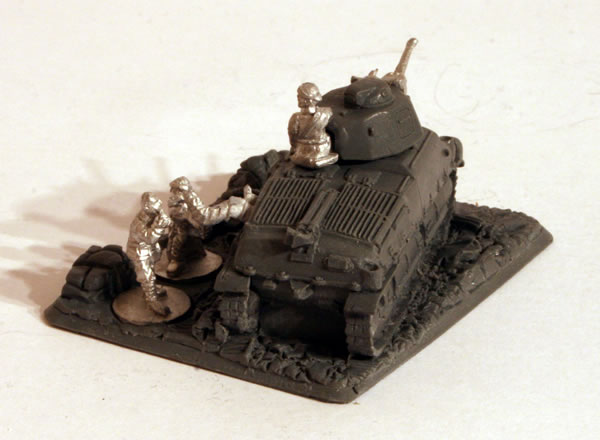
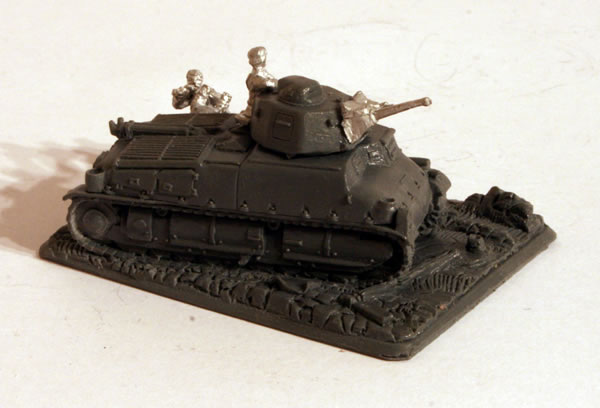
The Somau S35 objective was much easier to put together.

Flames of War General de Gaulle

Flames of War General de Gaulle

Flames of War General de Gaulle

Flames of War General de Gaulle

See the workbench feature on General de Gaulle.
Wheeling the Dingo

The Daimler Scout Car, known in service as the “Dingo” (after the Australian wild dog), was a British light fast 4WD reconnaissance vehicle also used in the liaison role during the Second World War.

The Flames of War blister comes with three of them. I gave the vehicles a basecoat of Warpaint British Armour. I started to paint the wheels using German Grey (995), I might add some black to the mix though.

See the full workbench feature on the British Daimler Dingo.

Tracking the Challenger

The Tank, Cruiser, Challenger (A30) was a British tank of World War 2. It mounted the 17 Pounder gun on the Cromwell chassis to add heavier anti-tank firepower to the cruiser tank units.

The next stage was detailing the tracks and equipment. I started to paint the tracks using German Grey (995).

See the full workbench feature on my Challenger A30.

Tracking the Flames of War Cromwell IV

The Cromwell Tank was one of the most successful series of cruiser tanks fielded by Britain in World War II. The Cromwell first saw action in June 1944, with the reconnaissance regiments of the Royal Armoured Corps.
Having given the Cromwells a basecoat, the

next stage will be detailing the tracks and equipment. I started to paint the tracks using German Grey (995).

See the full workbench feature on the Flames of War Cromwell IV.

15mm German SdKfz 251 Half Track

The SdKfz 251 (Sonderkraftfahrzeug 251) half-track was an armored fighting vehicle designed and first built by Germany’s Hanomag company during World War II. One of the most common, and best armoured of the wartime half-tracks, the SdKfz 251 was designed to transport the panzergrenadiers of the German mechanized infantry corps into battle. Widely known simply as “Hanomags” by both German and Allied forces, they were widely produced throughout the war, with over 15,252 vehicles and variants produced in total by various manufacturers.

This is an old metal model that I think was made by SDD. I am using it as a testbed for which method I should use with my Flames of War resin models and I suspect in the end it will probably end up as a piece of scenery.

Having given the model a basecoat of Warpaint German Armour the next stage was to add the disruptive camouflage. I thought long and hard about how to do this, and I didn’t have or really wanted to buy an airbrush, even though that appears to be the accepted method for doing late war German camouflage. What I did was take an old paintbrush and cut off the bristles leaving a quarter inch. This brush is then used to stipple on the camouflage pattern. I used Reflective Green (890) and Chocolate Brown (872).

I was quite pleased with the initial effect.

Though the official German manual during the war told how the camo pattern was to be applied, it said the raw paint mixture was to be mixed with petrol and sprayed onto the vehicles. Reality and short supplies of petrol meant that more often the camo pattern was “painted” onto the vehicles, sometimes with brushes and sometimes with rags.

I do like the effect that the airbrush gives these models, I am not sure if I have the requisite skill to do it justice on small models like this.

The next stage was to paint the tyres and tracks and I used German Grey (995). I then gave the models a wash using Devlan Mud wash from Games Workshop.

Quite pleased with the end result, though I think I might have used a lighter or thinner wash next time.

I painted the MG with German Grey (995) and dry brushed the model with Middlestone (882).

See the workbench feature on the German SdKfz 251 Armoured Half Track.

Flames of War French Hotchkiss H-39

Despite having been designed from 1933 as a rather slow but well-armoured light infantry support tank, the type was initially rejected by the French Infantry because it proved difficult to steer while driving cross-country, instead being adopted in 1936 by the French Cavalry. From 1938 an improved version was produced with a stronger engine, the Char léger modèle 1935 H modifié 39, that from 1940 was also fitted with a longer, more powerful 37 mm gun.

Having made up the hulls, the next stage was to sort the turrets out.  The metal components were fitted to the turret.

Flames of War French Hotchkiss H-39

Flames of War French Hotchkiss H-39

Flames of War French Hotchkiss H-39

Flames of War French Hotchkiss H-39

See the workbench feature on the Flames of War French Hotchkiss H-39.

15mm Ruined Houses

One of my Christmas presents was a couple of ruins from Total Battle Miniatures.

I got the ruined row of three houses and the ruined row of four houses.

What you get , if you go for the unpainted version is a nice resin casting.

The first stage was to wash the resin to remove the mould lubricant and then clean the flash from the casting, especially the windows and the doors.