The Mark IX tank was a British armoured fighting vehicle from the First World War. It was the world’s first specialised armoured personnel carrier (APC).
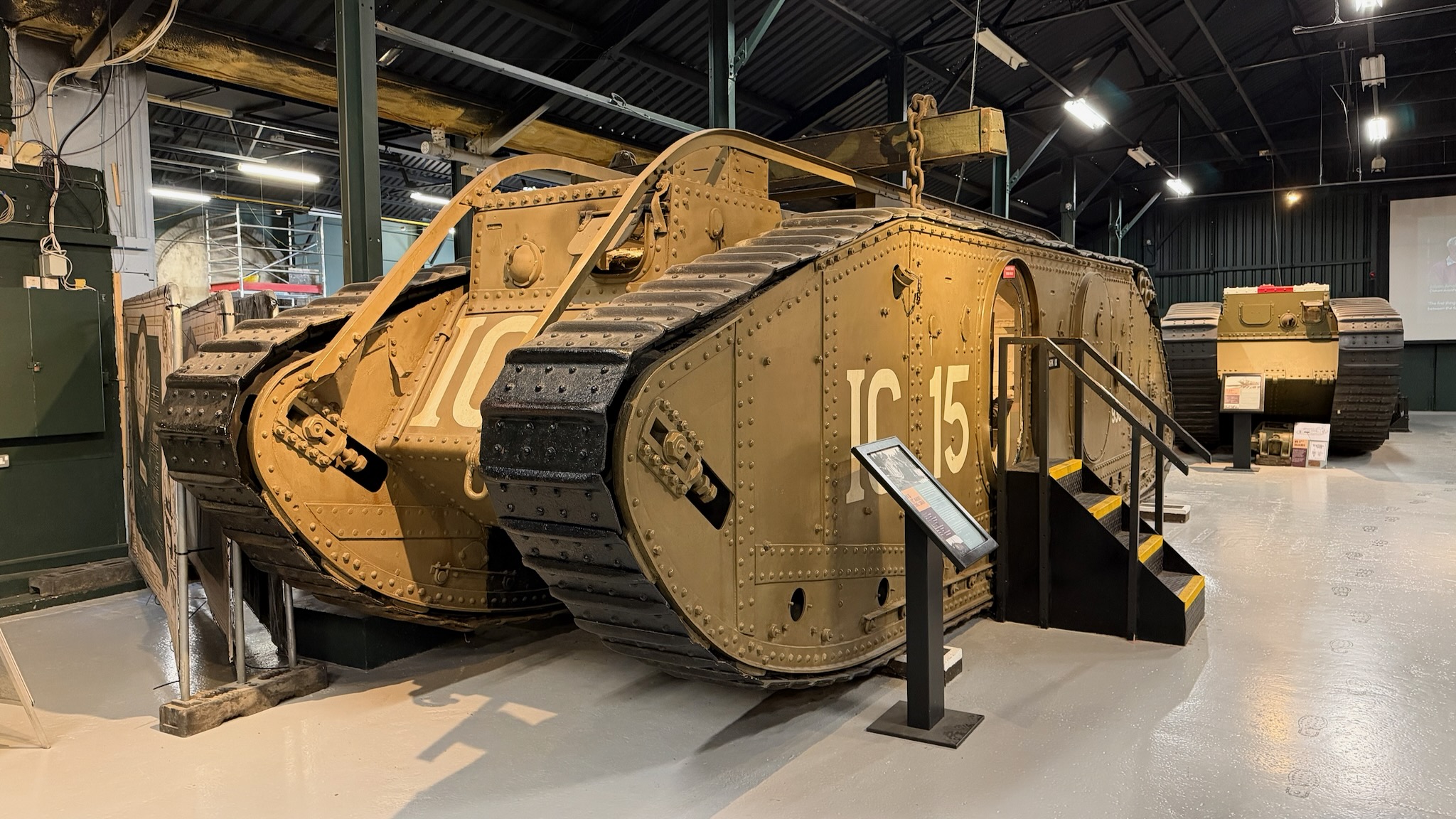
During the first actions with tanks, it became clear that infantry often could not keep up with the tanks, It wasn’t that the soldiers were too slow, the early tanks themselves could only move at a walking pace, but because soldiers on foot remained vulnerable to enemy machine gun fire. In many actions, positions gained at great cost were immediately lost for lack of infantry to consolidate.
At the end of the Great War only three had been finished, out of a total ultimate production run of thirty-four, following an order for two hundred.
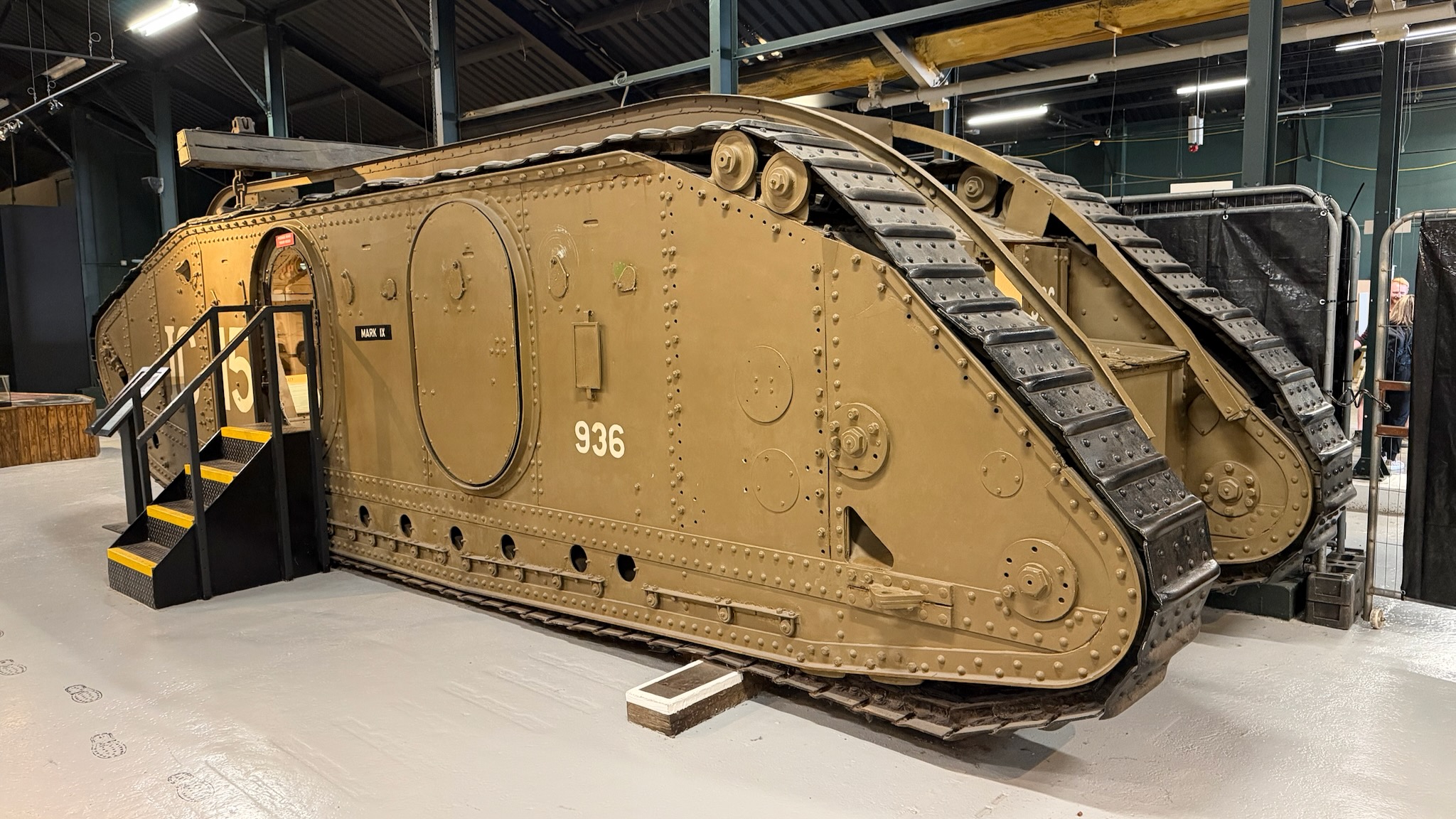
If there had been, as I discussed in an earlier blog post, an alternate timeline in which there was a revolution in Great Britain in 1919.
In Great Britain the government feared a bolshevik uprising and was quick to oppress any potential threat to the established order. One of the biggest areas for concern were the labour movements and trade unions. One strike in Glasgow in 1919 eventually resulted in a street battle between strikers and police, which was so bad, the army was called in. The “Battle of George Square”, also known as “Bloody Friday” and “Black Friday”, was one of the most intense riots in the history of Glasgow; it took place on Friday, 31 January 1919. Clashes between the City of Glasgow Police and protesters broke out, prompting the War Cabinet to make soldiers available to the civil power, to prevent the violence from escalating.
If there has been such a conflict the Mark IX Tank, or APC I suspect would have been widely used to move troops around, and to protect them from attack
These metal monsters designed in an era when they didn’t really know what they were doing and there was a lot of trial and error. The Mark IX reminds us that the APC is as old as the tank.